Exodus 3
כתבי הקודש · Tap a verse to see its cross-references.
1וּמֹשֶׁ֗ה הָיָ֥ה רֹעֶ֛ה אֶת־צֹ֛אן יִתְרֹ֥ו חֹתְנֹ֖ו כֹּהֵ֣ן מִדְיָ֑ן וַיִּנְהַ֤ג אֶת־הַצֹּאן֙ אַחַ֣ר הַמִּדְבָּ֔ר וַיָּבֹ֛א אֶל־הַ֥ר הָאֱלֹהִ֖ים חֹרֵֽבָה׃ 2וַ֠יֵּרָא מַלְאַ֨ךְ יְהֹוָ֥ה אֵלָ֛יו בְּלַבַּת־אֵ֖שׁ מִתֹּ֣וךְ הַסְּנֶ֑ה וַיַּ֗רְא וְהִנֵּ֤ה הַסְּנֶה֙ בֹּעֵ֣ר בָּאֵ֔שׁ וְהַסְּנֶ֖ה אֵינֶ֥נּוּ אֻכָּֽל׃ 3וַיֹּ֣אמֶר מֹשֶׁ֔ה אָסֻֽרָה־נָּ֣א וְאֶרְאֶ֔ה אֶת־הַמַּרְאֶ֥ה הַגָּדֹ֖ל הַזֶּ֑ה מַדּ֖וּעַ לֹא־יִבְעַ֥ר הַסְּנֶֽה׃ 4וַיַּ֥רְא יְהוָ֖ה כִּ֣י סָ֣ר לִרְאֹ֑ות וַיִּקְרָא֩ אֵלָ֨יו אֱלֹהִ֜ים מִתֹּ֣וךְ הַסְּנֶ֗ה וַיֹּ֛אמֶר מֹשֶׁ֥ה מֹשֶׁ֖ה וַיֹּ֥אמֶר הִנֵּֽנִי׃ 5וַיֹּ֖אמֶר אַל־תִּקְרַ֣ב הֲלֹ֑ם שַׁל־נְעָלֶ֙יךָ֙ מֵעַ֣ל רַגְלֶ֔יךָ כִּ֣י הַמָּקֹ֗ום אֲשֶׁ֤ר אַתָּה֙ עֹומֵ֣ד עָלָ֔יו אַדְמַת־קֹ֖דֶשׁ הֽוּא׃ 6וַיֹּ֗אמֶר אָנֹכִי֙ אֱלֹהֵ֣י אָבִ֔יךָ אֱלֹהֵ֧י אַבְרָהָ֛ם אֱלֹהֵ֥י יִצְחָ֖ק וֵאלֹהֵ֣י יַעֲקֹ֑ב וַיַּסְתֵּ֤ר מֹשֶׁה֙ פָּנָ֔יו כִּ֣י יָרֵ֔א מֵהַבִּ֖יט אֶל־הָאֱלֹהִֽים׃ 7וַיֹּ֣אמֶר יְהוָ֔ה רָאֹ֥ה רָאִ֛יתִי אֶת־עֳנִ֥י עַמִּ֖י אֲשֶׁ֣ר בְּמִצְרָ֑יִם וְאֶת־צַעֲקָתָ֤ם שָׁמַ֙עְתִּי֙ מִפְּנֵ֣י נֹֽגְשָׂ֔יו כִּ֥י יָדַ֖עְתִּי אֶת־מַכְאֹבָֽיו׃ 8וָאֵרֵ֞ד לְהַצִּילֹ֣ו ׀ מִיַּ֣ד מִצְרַ֗יִם וּֽלְהַעֲלֹתֹו֮ מִן־הָאָ֣רֶץ הַהִוא֒ אֶל־אֶ֤רֶץ טֹובָה֙ וּרְחָבָ֔ה אֶל־אֶ֛רֶץ זָבַ֥ת חָלָ֖ב וּדְבָ֑שׁ אֶל־מְקֹ֤ום הַֽכְּנַעֲנִי֙ וְהַ֣חִתִּ֔י וְהָֽאֱמֹרִי֙ וְהַפְּרִזִּ֔י וְהַחִוִּ֖י וְהַיְבוּסִֽי׃ 9וְעַתָּ֕ה הִנֵּ֛ה צַעֲקַ֥ת בְּנֵי־יִשְׂרָאֵ֖ל בָּ֣אָה אֵלָ֑י וְגַם־רָאִ֙יתִי֙ אֶת־הַלַּ֔חַץ אֲשֶׁ֥ר מִצְרַ֖יִם לֹחֲצִ֥ים אֹתָֽם׃ 10וְעַתָּ֣ה לְכָ֔ה וְאֶֽשְׁלָחֲךָ֖ אֶל־פַּרְעֹ֑ה וְהֹוצֵ֛א אֶת־עַמִּ֥י בְנֵֽי־יִשְׂרָאֵ֖ל מִמִּצְרָֽיִם׃ 11וַיֹּ֤אמֶר מֹשֶׁה֙ אֶל־הָ֣אֱלֹהִ֔ים מִ֣י אָנֹ֔כִי כִּ֥י אֵלֵ֖ךְ אֶל־פַּרְעֹ֑ה וְכִ֥י אֹוצִ֛יא אֶת־בְּנֵ֥י יִשְׂרָאֵ֖ל מִמִּצְרָֽיִם׃ 12וַיֹּ֙אמֶר֙ כִּֽי־אֶֽהְיֶ֣ה עִמָּ֔ךְ וְזֶה־לְּךָ֣ הָאֹ֔ות כִּ֥י אָנֹכִ֖י שְׁלַחְתִּ֑יךָ בְּהֹוצִֽיאֲךָ֤ אֶת־הָעָם֙ מִמִּצְרַ֔יִם תַּֽעַבְדוּן֙ אֶת־הָ֣אֱלֹהִ֔ים עַ֖ל הָהָ֥ר הַזֶּֽה׃ 13וַיֹּ֨אמֶר מֹשֶׁ֜ה אֶל־הָֽאֱלֹהִ֗ים הִנֵּ֨ה אָנֹכִ֣י בָא֮ אֶל־בְּנֵ֣י יִשְׂרָאֵל֒ וְאָמַרְתִּ֣י לָהֶ֔ם אֱלֹהֵ֥י אֲבֹותֵיכֶ֖ם שְׁלָחַ֣נִי אֲלֵיכֶ֑ם וְאָֽמְרוּ־לִ֣י מַה־שְּׁמֹ֔ו מָ֥ה אֹמַ֖ר אֲלֵהֶֽם׃ 14וַיֹּ֤אמֶר אֱלֹהִים֙ אֶל־מֹשֶׁ֔ה אֶֽהְיֶ֖ה אֲשֶׁ֣ר אֶֽהְיֶ֑ה וַיֹּ֗אמֶר כֹּ֤ה תֹאמַר֙ לִבְנֵ֣י יִשְׂרָאֵ֔ל אֶֽהְיֶ֖ה שְׁלָחַ֥נִי אֲלֵיכֶֽם׃ 15וַיֹּאמֶר֩ עֹ֨וד אֱלֹהִ֜ים אֶל־מֹשֶׁ֗ה כֹּֽה־תֹאמַר֮ אֶל־בְּנֵ֣י יִשְׂרָאֵל֒ יְהוָ֞ה אֱלֹהֵ֣י אֲבֹתֵיכֶ֗ם אֱלֹהֵ֨י אַבְרָהָ֜ם אֱלֹהֵ֥י יִצְחָ֛ק וֵאלֹהֵ֥י יַעֲקֹ֖ב שְׁלָחַ֣נִי אֲלֵיכֶ֑ם זֶה־שְּׁמִ֣י לְעֹלָ֔ם וְזֶ֥ה זִכְרִ֖י לְדֹ֥ר דֹּֽר׃ 16לֵ֣ךְ וְאָֽסַפְתָּ֞ אֶת־זִקְנֵ֣י יִשְׂרָאֵ֗ל וְאָמַרְתָּ֤ אֲלֵהֶם֙ יְהוָ֞ה אֱלֹהֵ֤י אֲבֹֽתֵיכֶם֙ נִרְאָ֣ה אֵלַ֔י אֱלֹהֵ֧י אַבְרָהָ֛ם יִצְחָ֥ק וְיַעֲקֹ֖ב לֵאמֹ֑ר פָּקֹ֤ד פָּקַ֙דְתִּי֙ אֶתְכֶ֔ם וְאֶת־הֶעָשׂ֥וּי לָכֶ֖ם בְּמִצְרָֽיִם׃ 17וָאֹמַ֗ר אַעֲלֶ֣ה אֶתְכֶם֮ מֵעֳנִ֣י מִצְרַיִם֒ אֶל־אֶ֤רֶץ הַֽכְּנַעֲנִי֙ וְהַ֣חִתִּ֔י וְהָֽאֱמֹרִי֙ וְהַפְּרִזִּ֔י וְהַחִוִּ֖י וְהַיְבוּסִ֑י אֶל־אֶ֛רֶץ זָבַ֥ת חָלָ֖ב וּדְבָֽשׁ׃ 18וְשָׁמְע֖וּ לְקֹלֶ֑ךָ וּבָאתָ֡ אַתָּה֩ וְזִקְנֵ֨י יִשְׂרָאֵ֜ל אֶל־מֶ֣לֶךְ מִצְרַ֗יִם וַאֲמַרְתֶּ֤ם אֵלָיו֙ יְהוָ֞ה אֱלֹהֵ֤י הָֽעִבְרִיִּים֙ נִקְרָ֣ה עָלֵ֔ינוּ וְעַתָּ֗ה נֵֽלֲכָה־נָּ֞א דֶּ֣רֶךְ שְׁלֹ֤שֶׁת יָמִים֙ בַּמִּדְבָּ֔ר וְנִזְבְּחָ֖ה לַֽיהוָ֥ה אֱלֹהֵֽינוּ׃ 19וַאֲנִ֣י יָדַ֔עְתִּי כִּ֠י לֹֽא־יִתֵּ֥ן אֶתְכֶ֛ם מֶ֥לֶךְ מִצְרַ֖יִם לַהֲלֹ֑ךְ וְלֹ֖א בְּיָ֥ד חֲזָקָֽה׃ 20וְשָׁלַחְתִּ֤י אֶת־יָדִי֙ וְהִכֵּיתִ֣י אֶת־מִצְרַ֔יִם בְּכֹל֙ נִפְלְאֹתַ֔י אֲשֶׁ֥ר אֽ͏ֶעֱשֶׂ֖ה בְּקִרְבֹּ֑ו וְאַחֲרֵי־כֵ֖ן יְשַׁלַּ֥ח אֶתְכֶֽם׃ 21וְנָתַתִּ֛י אֶת־חֵ֥ן הָֽעָם־הַזֶּ֖ה בְּעֵינֵ֣י מִצְרָ֑יִם וְהָיָה֙ כִּ֣י תֵֽלֵכ֔וּן לֹ֥א תֵלְכ֖וּ רֵיקָֽם׃ 22וְשָׁאֲלָ֨ה אִשָּׁ֤ה מִשְּׁכֶנְתָּהּ֙ וּמִגָּרַ֣ת בֵּיתָ֔הּ כְּלֵי־כֶ֛סֶף וּכְלֵ֥י זָהָ֖ב וּשְׂמָלֹ֑ת וְשַׂמְתֶּ֗ם עַל־בְּנֵיכֶם֙ וְעַל־בְּנֹ֣תֵיכֶ֔ם וְנִצַּלְתֶּ֖ם אֶת־מִצְרָֽיִם׃
Did you know?
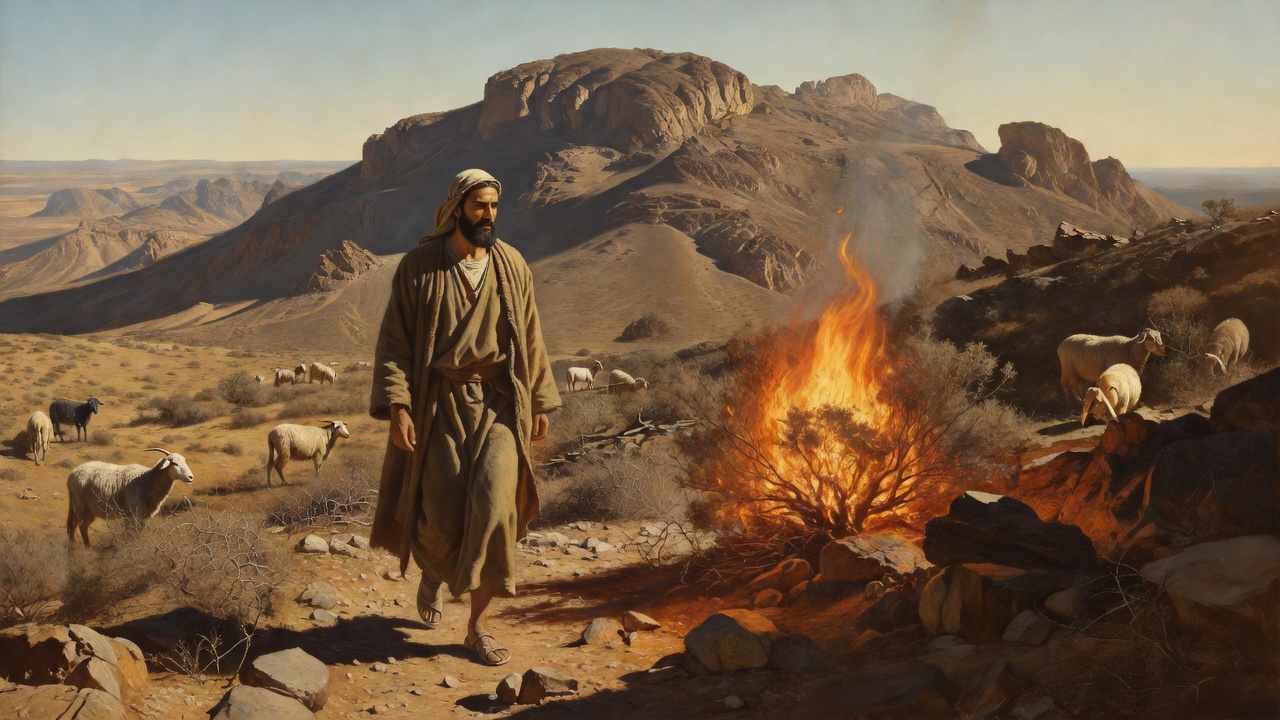
The Call of Moses at the Burning Bush
- Moses is shepherding in Midian when this chapter begins. The Midianites were a nomadic Arabian tribe descended from Midian, Abraham's fourth son by Keturah, whose name is explained as strife. They lived chiefly in the desert north of Arabia, and the Sinai peninsula was grazing land for their flocks; it was there, after fleeing Egypt, that Moses became a servant and then the priest's son-in-law.Sources: the Bible text itself · Midian · Midian
- His father-in-law is Jethro, called the priest of Midian. Easton's Bible Dictionary (1897) equates that priest with Raguel and says that, if the two names belong to one man, Raguel may be regarded as his personal name and Jethro, meaning excellency, as an official title.Sources: the Bible text itself · Jethro
- Moses leads the flock to Horeb, the mountain of God. The name is explained as desert, or mountain, of the dried-up ground, a general term for the whole range of which Sinai was one summit; Easton's Bible Dictionary (1897) gives the modern name of the range as Jebel Musa and describes a huge block about two miles long and about one mile wide, with a very spacious plain called Er Rahah at its north-east end, where the Israelites later camped for nearly a year.Sources: the Bible text itself · Horeb
Notes written with AI assistance from open sources (Theographic Bible Metadata, CC BY-SA 4.0; Easton’s Bible Dictionary, public domain) and reviewed before publishing.
Places in this chapter
- Midian · 28.495, 35.012 · verse 1
- Mount Horeb · Today: Jebel Musa · 28.540, 33.973 · verse 1
- Egypt · 30.129, 31.308 · verses 7, 8, 10, 11, 12, 16, 17, 18, 19, 20, 22
Only places identified with high confidence are shown (90% or more according to the scholarly sources compiled by OpenBible). Period map: DARE (Digital Atlas of the Roman Empire), CC BY 4.0; modern map: © OpenStreetMap contributors; places: OpenBible.info (CC BY 4.0).
Credits and license for this translation
כתבי הקודש
The Old Testament in ancient Hebrew, following the Masoretic Text
Public Domain
Language: עברית (Hebrew)
Dialect: Biblical/Ancient
2013-12-11
Source: http://ebible.org/hbo/ · eBible.org