Revelation 21
Bib Sen An · Tap a verse to see its cross-references.
1Epi mwen te wè yon syèl tounèf ak yon tè tounèf. Paske premye syèl la ak premye tè a te pase, e nanpwen lanmè ankò.
2Mwen te wè vil sen an, Jérusalem tounèf la, desann sòti nan syèl la kote Bondye. Li te prepare tankou yon lamarye ki abiye pou mari li.
3Epi konsa, mwen te tande yon gwo vwa sòti nan twòn nan ki t ap di: “Gade, tabènak Bondye a pami lèzòm, e Li va rete pami yo. Yo va pèp Li, e Li va Bondye yo. Li menm, va pami yo tankou Bondye yo. 4Li va siye tout dlo ki sòti nan zye yo. P ap gen lanmò ankò. P ap genyen lamante ankò, ni kriye, ni doulè, paske premye bagay yo fin pase.”
5Epi Sila ki te chita sou twòn nan te di: “Gade, m ap fè tout bagay vin tounèf.” Epi Li te di: “Ekri, paske pawòl sa yo fidèl e vrè.”
6Answit, Li te di mwen: “Mwen se Alfa a ak Omega a, kòmansman an ak lafen an. Mwen va bay a sila ki swaf yo nan sous dlo lavi a san frè. 7Sila ki venkè a va eritye bagay sa yo. Mwen va Bondye Li e li va fis Mwen.
8Men pou kapon yo, enkredil yo, abominab ak asasen yo, moun imoral yo, majisyen yo, idolat ak tout mantè yo, pati pa yo va nan lak ki brile avèk dife ak souf la, ki se dezyèm lanmò a.”
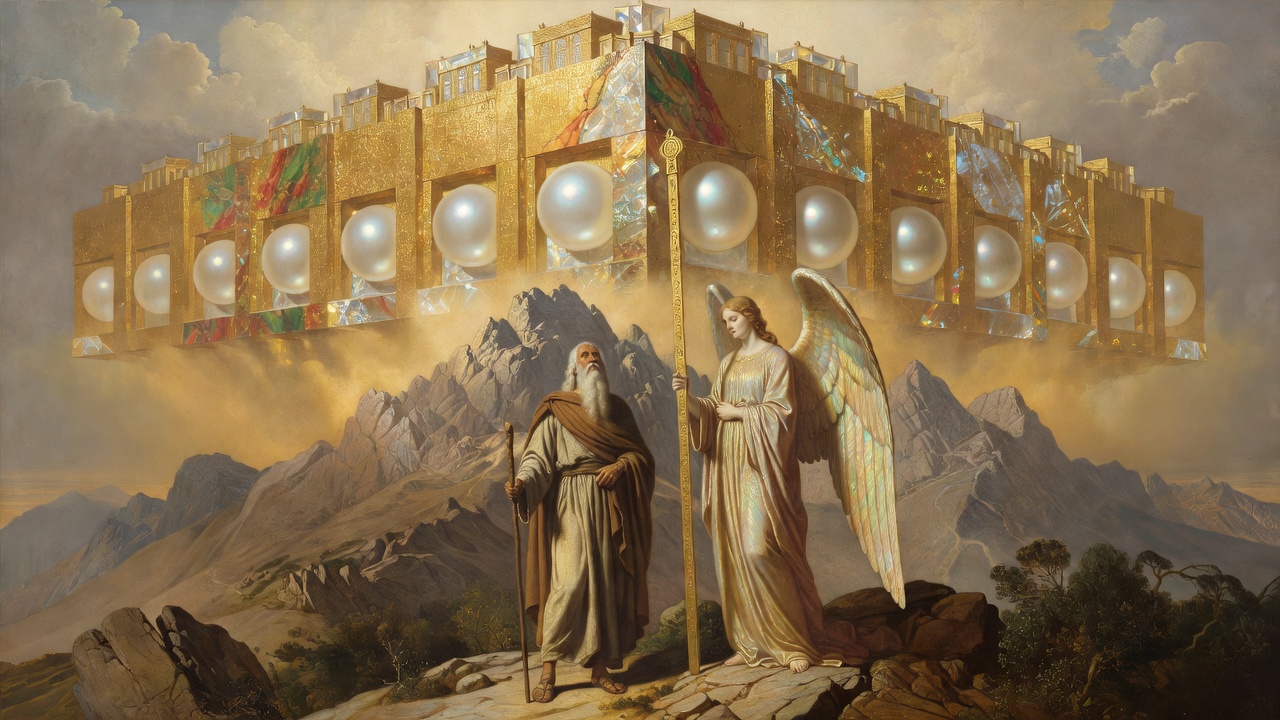
9Answit, youn nan sèt zanj ki te gen sèt gode ki te plen avèk sèt dènye fleyo yo te vini pale avè m. Li t ap di: “Vini isit la. Mwen va montre ou lamarye a, madanm Jèn Mouton an.” 10Konsa, li te pote mwen ale nan lespri a nan yon gwo mòn wo, e li te montre m vil sen an, Jérusalem, ki t ap desann sòti nan syèl la kote Bondye. 11Li te gen laglwa Bondye. Li te klere tankou yon pyè presye ki koute trè chè, tankou yon pyè jasp klè tankou kristal. 12Li te gen yon gwo miray wo avèk douz pòt. Nan pòt yo, te gen douz zanj, epi non yo te ekri sou yo, ki se non a douz tribi a fis Israël yo. 13Te gen twa pòt nan lès, twa pòt nan nò, twa pòt nan sid, e twa pòt nan lwès. 14Epi miray vil la te gen douz wòch nan fondasyon an, e sou yo, se te douz non a douz apot Jèn Mouton an.
15Sila ki te pale avè m nan te gen yon baton mezi ki te fèt an lò pou mezire vil la, pòtay li yo, ak miray li a. 16Vil la te fèt kon yon kare. Longè li te menm fòs ak lajè li. Li te mezire vil la avèk baton an: de-mil-de-san kilomèt. Longè li, lajè li ak wotè li te egal. 17Epi li te mezire miray li a, swasann-douz mèt, selon mezi a yon moun, sa vle di, yon zanj.
18Materyèl miray la te jasp. Vil la se te lò pi, tankou vit klè. 19Fondasyon pou miray vil la te dekore avèk tout kalite pyè presye. Wòch premye fondasyon an se te jasp, dezyèm nan, Safi, twazyèm nan, agat, katriyèm nan, emwod, 20senkyèm nan, oniks, sizyèm nan, sadwàn, setyèm nan, krizolit, uityèm nan, beril, nevyèm nan, topaz, dizyèm nan, krizopraz, onzyèm nan, tikwaz, douzyèm nan, ametis. 21Epi douz pòtay yo se te douz pèl. Chak pòtay te yon sèl pèl. Epi ri vil la te an lò pi, tankou vit klè.
22Mwen pa t wè tanp ladann, paske Senyè Bondye Toupwisan an ak Jèn Mouton an se te tanp li. 23Vil la pa gen bezwen solèy oubyen lalin pou klere sou li, paske laglwa Bondye te klere li, e lanp li se te Jèn Mouton an. 24Nasyon yo va mache pa limyè li. E wa latè yo va pote laglwa nasyon yo ladann.
25Nan lajounen (paske p ap gen lannwit la), pòtay li yo p ap janm fèmen.
26Konsa, yo va pote laglwa ak lonè a nasyon yo ladann pou yo ka antre.
27P ap gen anyen ki pa pwòp. Moun ki pratike abominasyon ak manti p ap janm antre ladann, men sèlman sila ke non yoekri nan liv lavi a Jèn Mouton an.
Did you know?
The New Jerusalem
- In this vision the city coming down from heaven is called the holy city, the new Jerusalem. Jerusalem was also known as the holy city and the city of God, and in Arabic it is el-Khuds, meaning the holy. Its name is in a dual form and means possession of peace or foundation of peace.Sources: the Bible text itself · Jerusalem
- The seer is carried in the Spirit to a great and high mountain and shown that holy city descending. Jerusalem is described as a mountain city enthroned on a mountain stronghold, and the dual form of the name probably refers to the two mountains on which it was built, Zion and Moriah, or, as some suppose, to the upper and lower city.Sources: the Bible text itself · Jerusalem
- The city wall has twelve gates, three on each side, inscribed with the names of the twelve tribes of Israel. Israel is another name for Jacob, explained as one who follows on another's heels, or as a supplanter.Sources: the Bible text itself · Jacob (Israel)
Notes written with AI assistance from open sources (Theographic Bible Metadata, CC BY-SA 4.0; Easton’s Bible Dictionary, public domain) and reviewed before publishing.
Places in this chapter
Only places identified with high confidence are shown (90% or more according to the scholarly sources compiled by OpenBible). Period map: DARE (Digital Atlas of the Roman Empire), CC BY 4.0; modern map: © OpenStreetMap contributors; places: OpenBible.info (CC BY 4.0).
Credits and license for this translation
Bib Sen An
The Holy Bible in Haitian Creole, 2023 update
copyright © 2017-2023 Ron Smith
Language: Kreyòl Ayisyen (Haitian)
Translation by: Ron Smith
Contributor: Felix Nixon
This translation is made available to you under the terms of the
Creative Commons Attribution Share-Alike license 4.0.
You have permission to share and redistribute this Bible translation in any format and to make reasonable revisions and adaptations of this translation, provided that:
You include the above copyright and source information.
If you make any changes to the text, you must indicate that you did so in a way that makes it clear that the original licensor is not necessarily endorsing your changes.
If you redistribute this text, you must distribute your contributions under the same license as the original.
Pictures included with Scriptures and other documents on this site are licensed just for use with those Scriptures and documents.
For other uses, please contact the respective copyright owners.
Note that in addition to the rules above, revising and adapting God's Word involves a great responsibility to be true to God's Word. See Revelation 22:18-19.
2026-06-11
Source: http://ebible.org/hatbsa/ · eBible.org