Deuteronomy 8
Bib Sen An · Tap a verse to see its cross-references.
1“Tout kòmandman ke Mwen ap kòmande nou jodi a, nou va fè atansyon pou fè yo, pou nou kapab viv, miltipliye, e antre ladann pou posede peyi ke SENYÈ a te sèmante a zansèt nou yo.
2“Nou va sonje tout jan ke SENYÈ a, Bondye nou an, te mennen nou nan dezè a pandan karantan sila yo, pou Li te kapab fè nou vin enb e pase nou a leprèv, pou konnen kisa ki te nan kè nou, pou wè si nou pa t ap kenbe kòmandman Li yo.
3“Li te fè nou vin enb e grangou. Epi konsa, Li te bannou manje lamàn ke nou pa t janm konnen, ni zansèt nou yo pa t konnen, pou Li te kapab fè nou konprann ke lòm pa viv sèlman pa pen, men lòm viv pa tout bagay ki sòti nan bouch SENYÈ a. 4Rad nou yo pa t epwize sou nou, ni pye nou pa t anfle pandan karantan sila yo. 5Konsa, nou fèt pou konnen nan kè nou, ke SENYÈ a, Bondye nou an, t ap korije nou jis jan ke yon mesye korije fis li.
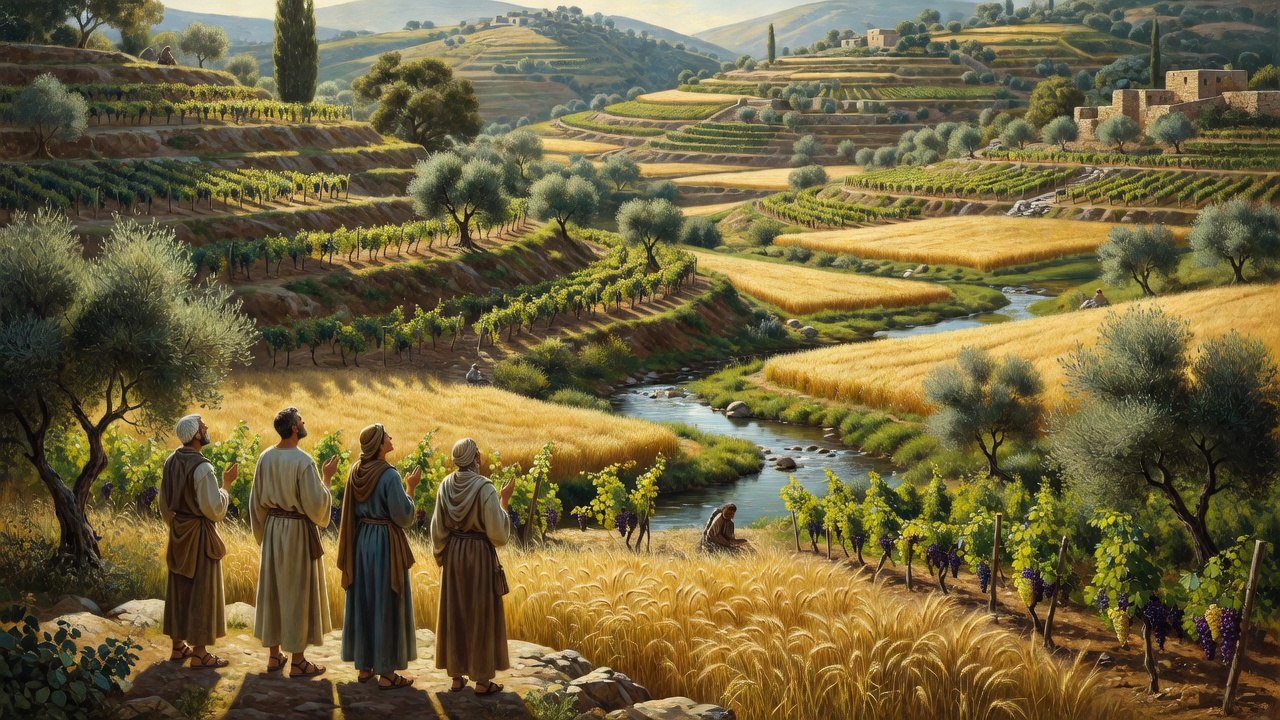
6“Pou sa, nou va kenbe kòmandman a SENYÈ yo, Bondye nou an, pou mache nan chemen Li an, e pou krent Li. 7Paske SENYÈ a, Bondye nou an, ap mennen nou antre nan yon bon peyi, yon peyi ki gen anpil ti rivyè ak sous dlo; sous k ap koule, k ap kouri nan vale ak ti mòn yo; 8yon peyi avèk ble ak lòj, avèk pye rezen, pye fig, avèk grenad, yon peyi avèk lwil doliv ak siwo myèl; 9yon peyi kote nou va manje manje san manke. Ladan l nou p ap manke anyen; yon peyi kote wòch se fè; epi kote nan ti mòn yo, nou kab fouye kwiv.
10“Lè nou fin manje e satisfè, nou va beni SENYÈ a, Bondye nou an, pou bon peyi ke Li te bannou an. 11Veye pou nou pa bliye SENYÈ a, Bondye nou an, epi pa kenbe kòmandman Li yo, lwa Li yo avèk règleman Li yo ke Mwen ap kòmande nou jodi a. 12Otreman, lè nou te manje e satisfè, e fin bati bon kay pou nou viv nan yo, 13epi lè twoupo nou avèk bann mouton nou yo vin miltipliye, ajan avèk lò nou yo vin anpil, e tout sa nou posede vin miltipliye, 14alò, kè nou va vin plen ak ògèy, e nou va bliye SENYÈ a, Bondye nou an, ki te mennen nou sòti nan peyi Égypte la, andeyò kay esklavaj la. 15Li te mennen nou nan gran dezè tèrib sa a, avèk sèpan pwazon ak eskòpyon, ak tè swaf kote ki pa t gen dlo. Li te fè dlo sòti pou nou nan wòch silèks la. 16Nan dezè a, Li te bannou lamàn ke zansèt nou yo pa t konnen, pou Li te kapab fè nou vin enb, e pou Li te kapab fè nou pase a leprèv, pouke alafen, sa te kab ale byen pou nou. 17Otreman, nou ta di nan kè nou: “Se fòs nou avèk kouraj nou ki te bannou tout richès sa a.” 18Men nou va sonje SENYÈ a, Bondye nou an, paske se Li ki ap bannou pouvwa pou fè richès, pou Li kapab konfime akò ke Li te sèmante a zansèt nou yo, jan sa ye jodi a. 19Li va rive ke si nou bliye SENYÈ a, Bondye nou an, pou swiv lòt dye yo pou adore yo, Mwen ap fè temwayaj kont nou jodi a menm, ke anverite nou va peri. 20Jan nasyon ke SENYÈ a ap fè peri devan nou yo, konsa nou va peri, akoz ke nou pa t koute vwa a SENYÈ a, Bondye nou an.”
Did you know?
Remembering God in the Good Land
- Moses reminded the Israelites of their forty years of wandering in a harsh wilderness filled with venomous snakes, scorpions, and drought. During this testing period, God sustained them with manna and water from flint rock, and their clothing did not wear out nor did their feet swell.Sources: the Bible text itself
- The Promised Land is described not only by its natural water springs and streams, but also by seven primary agricultural products: wheat, barley, grapevines, fig trees, pomegranates, olive oil, and honey, along with valuable mineral deposits of iron and copper.Sources: the Bible text itself
- The chapter includes a strong warning against pride that can arise from prosperity. Moses cautioned the people that after building fine houses, expanding herds, and accumulating silver and gold, they might forget their liberation from Egyptian slavery and credit their own strength for their wealth.Sources: the Bible text itself · Egypt
Notes written with AI assistance from open sources (Theographic Bible Metadata, CC BY-SA 4.0; Easton’s Bible Dictionary, public domain) and reviewed before publishing.
Places in this chapter
- Egypt · 30.129, 31.308 · verse 14
Only places identified with high confidence are shown (90% or more according to the scholarly sources compiled by OpenBible). Period map: DARE (Digital Atlas of the Roman Empire), CC BY 4.0; modern map: © OpenStreetMap contributors; places: OpenBible.info (CC BY 4.0).
Credits and license for this translation
Bib Sen An
The Holy Bible in Haitian Creole, 2023 update
copyright © 2017-2023 Ron Smith
Language: Kreyòl Ayisyen (Haitian)
Translation by: Ron Smith
Contributor: Felix Nixon
This translation is made available to you under the terms of the
Creative Commons Attribution Share-Alike license 4.0.
You have permission to share and redistribute this Bible translation in any format and to make reasonable revisions and adaptations of this translation, provided that:
You include the above copyright and source information.
If you make any changes to the text, you must indicate that you did so in a way that makes it clear that the original licensor is not necessarily endorsing your changes.
If you redistribute this text, you must distribute your contributions under the same license as the original.
Pictures included with Scriptures and other documents on this site are licensed just for use with those Scriptures and documents.
For other uses, please contact the respective copyright owners.
Note that in addition to the rules above, revising and adapting God's Word involves a great responsibility to be true to God's Word. See Revelation 22:18-19.
2026-06-11
Source: http://ebible.org/hatbsa/ · eBible.org