Deuteronomy 9
Bib Sen An · Tap a verse to see its cross-references.
1“Koute O Israël! Nou travèse lòtbò Jourdain an jodi a pou antre nan peyi a, e pou deplase nasyon ki pi gran e pi pwisan ke nou yo; gran vil yo byen fòtifye jis rive nan syèl yo. 2Yon pèp ki gran e wo, fis a Anak yo jeyan yo, ke nou konnen e te tande yo di: ‘Kilès ki kab kanpe devan fis Anak yo?’ 3Pou sa, konnen ke jodi a, se SENYÈ a, Bondye nou an, ki ap travèse devan nou tankou yon dife devoran. Li va detwi yo e Li va donte yo devan nou pou nou kapab chase yo sòti e detwi yo byen vit, jis jan ke SENYÈ a te pale nou an.
4“Pa di nan kè nou, lè SENYÈ a, Bondye nou an, fin chase yo deyò devan nou, ‘Se akoz ladwati mwen, SENYÈ a te mennen mwen antre pou posede peyi sa a.’ Paske se akoz mechanste a nasyon sila yo ke SENYÈ a ap fè yo deplase devan nou. 5Se pa akoz ladwati nou, ni kè dwat nou, ki fè nou ap vin posede peyi a, men akoz mechanste a nasyon sila yo ke SENYÈ a, Bondye nou an, ap chase yo devan nou, e pou konfime pawòl la ke SENYÈ a te fè avèk zansèt nou yo, Abraham, Isaac, ak Jacob.
6“Pou sa, byen konnen ke se pa akoz ladwati nou ke SENYÈ a ap bannou bon peyi sa a pou posede, paske nou se yon pèp tèt di.
7“Sonje, pa bliye jan nou te pwovoke SENYÈ a, Bondye nou an, a lakòlè nan dezè a. Depi jou ke nou te kite peyi Égypte la jiskaske lè nou te rive nan kote sa a, nou tap fè rebèl kont SENYÈ a. 8Menm nan Horeb, nou te pwovoke SENYÈ a lakòlè. SENYÈ a te tèlman fache avèk nou ke Li te prèt pou detwi nou.
9“Lè mwen te monte nan mòn nan pou resevwa tablo wòch yo, tablo akò ke SENYÈ a te fè avèk nou an, alò, mwen te rete sou mòn nan pandan karant jou ak karant nwit. Mwen pa t manje pen ni bwè dlo. 10SENYÈ a te ban mwen de tab wòch ki te ekri ak dwèt Bondye. Sou yo te tout pawòl ke SENYÈ a te pale avèk nou nan mòn nan, nan mitan dife a nan jou asanble a.
11“Li te vin rive nan fen karant jou ak karant nwit yo, ke SENYÈ a te ban mwen de tablo wòch, tab akò yo. 12Alò, SENYÈ a te di mwen: ‘Leve, desann soti isit la byen vit, paske pèp ou a ke nou te fè sòti an Égypte la te vin konwonpi. Yo te vire akote chemen ke Mwen te kòmande a. Yo te fè yon imaj fonn pou kont yo!’
13“SENYÈ a te pale plis avè m e te di: ‘Mwen te wè pèp sa a, vrèman, li se yon pèp ki di. 14Kite Mwen sèl pou M kapab detwi yo, e efase non yo soti anba syèl la; Mwen va fè a ou menm yon nasyon pi pwisan e pi gran ke yo.’
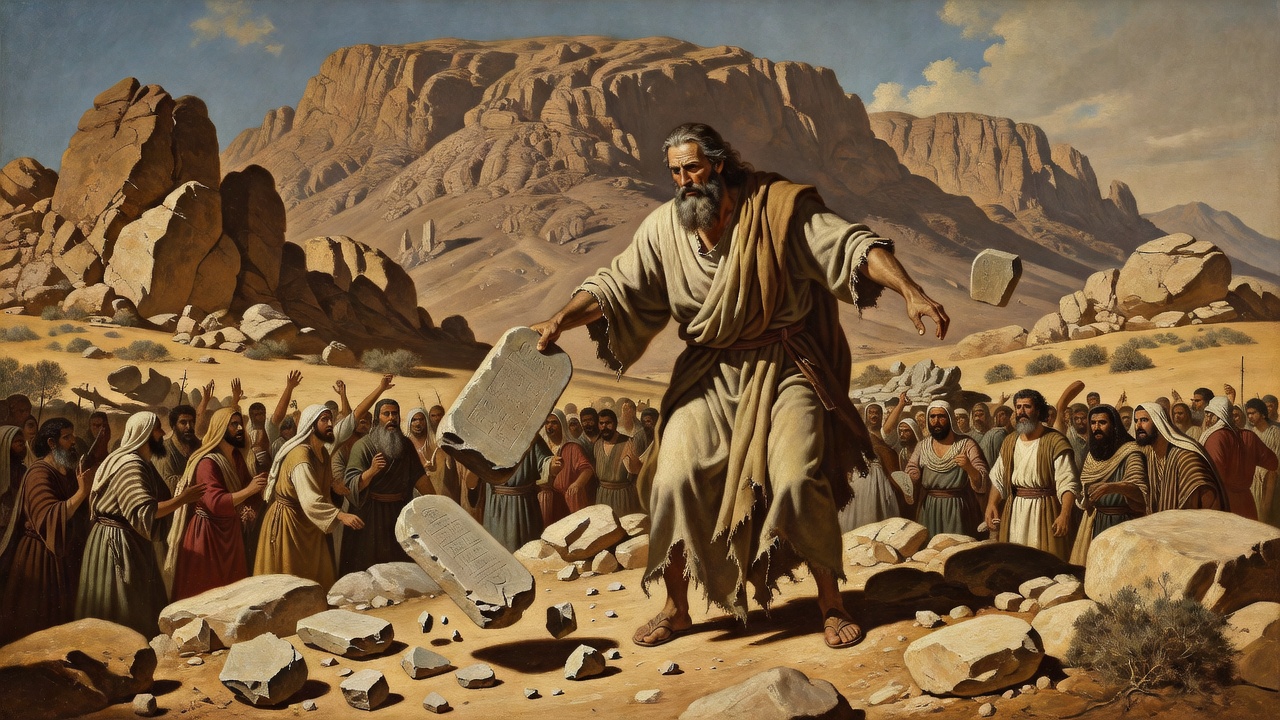
15“Epi mwen te vire desann mòn nan pandan mòn nan t ap brile avèk dife a, ak de tab akò yo nan de men m yo. 16Epi konsa, mwen te wè ke vrèman, nou te peche kont SENYÈ a Bondye nou an. Nou te fè pou nou menm yon ti bèf fonn. Nou te vire detounen byen vit kite chemen ke SENYÈ a te kòmande nou an. 17Mwen te pran de tab sa yo; mwen te jete yo sòti nan men m, e te kraze yo devan zye nou.
18“Mwen te tonbe ba devan SENYÈ a, yon fwa ankò. Pandan karant jou ak karant nwit mwen pa t manje pen ni bwè dlo akoz tout peche ke nou te fè nan fè sa ki mal nan zye SENYÈ a, pou pwovoke Li a lakòlè. 19Paske Mwen te pè lakòlè ak chalè mekontantman avèk sila SENYÈ a te fache kont nou pou L te kapab detwi nou an. Men SENYÈ a te koute mwen fwa sa a tou.
20“SENYÈ a te ase fache avèk Aaron pou detwi li. Konsa, mwen te priye anplis pou Aaron nan menm lè sa a.
21“Mwen te pran peche nou an, ti bèf ke nou te fè a, e mwen te brile li avèk dife. Mwen te kraze li fen jiskaske li te vin tankou poud, epi mwen te jete poud li nan ti flèv dlo ki te pase desann nan mòn nan.
22“Ankò, nan Tabeéra, nan Massa, ak nan Kibroth-Hattaava, nou te pwovoke SENYÈ a lakòlè. 23Lè SENYÈ a te voye nou soti Kadés-Barnéa, Li te di: ‘Ale monte pou posede tè ke mwen te bannou an.’ Men nou te fè rebèl kont kòmand SENYÈ a, Bondye nou an. Nou pa t kwè Li, ni koute vwa Li. 24Nou te fè rebèl kont SENYÈ a depi jou ke m te konnen nou an.
25“Konsa, mwen te vin tonbe devan SENYÈ a pandan karant jou ak karant nwit, ke m te tonbe a, akoz SENYÈ a te di Li t ap detwi nou. 26Mwen te priye a SENYÈ a e mwen te di: ‘O SENYÈ a, pa detwi pèp Ou a, eritaj Ou menm nan, ke Ou te peye ranson selon grandè Ou, pou Ou te mennen sòti an Égypte avèk yon men pwisan.
27“Sonje sèvitè Ou yo, Abraham, Isaac, ak Jacob. Pa gade rebelyon a pèp sila a, ni sou mechanste yo oswa peche yo. 28Otreman, peyi kote Ou te mennen nou sòti a, kapab di: ‘Akoz SENYÈ a pa t kapab mennen yo antre nan peyi ke Li te pwomèt yo a, e akoz Li te rayi yo, Li te mennen yo deyò pou touye yo nan dezè a.’ 29Men se pèp Ou yo ye, eritaj Ou menm, ke Ou te mennen sòti pa gran pouvwa avèk bra lonje.”
Did you know?
Not by Israel's Righteousness
- Moses warns Israel that their entry into Canaan is not earned through moral uprightness, directly calling them a stubborn or stiff-necked people. Instead, their conquest is attributed to the moral corruption of the resident nations and God's faithfulness to the covenant sworn to Abraham, Isaac, and Jacob.Sources: the Bible text itself · Abraham · Isaac · Jacob (Israel)
- The passage refers to the Anakim, descendants of Anak renowned for their great height and strength, who occupied heavily fortified cities in Canaan. Their reputation had previously intimidated the Israelites from attempting to enter the land.Sources: the Bible text itself · Anak
- To emphasize Israel's history of rebellion, Moses recounts the golden calf at Horeb where he shattered the two stone tablets and interceded for the people and Aaron. He also highlights repeated crises during the wilderness journey, including incidents at Taberah, Massah, and Kibroth-hattaavah.Sources: the Bible text itself · Horeb · Aaron · Taberah
Notes written with AI assistance from open sources (Theographic Bible Metadata, CC BY-SA 4.0; Easton’s Bible Dictionary, public domain) and reviewed before publishing.
Places in this chapter
- Jordan · Today: Jordan River · 31.761, 35.558 · verse 1
- Egypt · 30.129, 31.308 · verses 7, 12, 26, 29
- Mount Horeb · Today: Jebel Musa · 28.540, 33.973 · verse 8
Only places identified with high confidence are shown (90% or more according to the scholarly sources compiled by OpenBible). Period map: DARE (Digital Atlas of the Roman Empire), CC BY 4.0; modern map: © OpenStreetMap contributors; places: OpenBible.info (CC BY 4.0).
Credits and license for this translation
Bib Sen An
The Holy Bible in Haitian Creole, 2023 update
copyright © 2017-2023 Ron Smith
Language: Kreyòl Ayisyen (Haitian)
Translation by: Ron Smith
Contributor: Felix Nixon
This translation is made available to you under the terms of the
Creative Commons Attribution Share-Alike license 4.0.
You have permission to share and redistribute this Bible translation in any format and to make reasonable revisions and adaptations of this translation, provided that:
You include the above copyright and source information.
If you make any changes to the text, you must indicate that you did so in a way that makes it clear that the original licensor is not necessarily endorsing your changes.
If you redistribute this text, you must distribute your contributions under the same license as the original.
Pictures included with Scriptures and other documents on this site are licensed just for use with those Scriptures and documents.
For other uses, please contact the respective copyright owners.
Note that in addition to the rules above, revising and adapting God's Word involves a great responsibility to be true to God's Word. See Revelation 22:18-19.
2026-06-11
Source: http://ebible.org/hatbsa/ · eBible.org