Deuteronomy 13
Bib Sen An · Tap a verse to see its cross-references.
1“Si yon pwofèt, oswa yon moun ki konn fè rèv leve pami nou; si l anonse de nou yon sign oswa yon mèvèy, 2epi sign oswa mèvèy ke li te pale a vin vrè, konsènan lè li te pale avèk nou an, pou l te di: ‘Annou ale apre lòt dye (ke nou pa t konnen yo); epi annou sèvi yo,’ 3nou pa pou koute pawòl a pwofèt sila yo oswa moun rèv sa yo. Paske SENYÈ a, Bondye nou an, ap pase nou a leprèv pou wè si nou renmen SENYÈ a, Bondye nou an, avèk tout kè nou, e avèk tout nanm nou.
4“Nou va swiv SENYÈ a, Bondye nou an, e krent Li. Nou va kenbe kòmandman Li yo, e obeyi vwa Li. Nou va sèvi Li, e kenbe fèm nèt ak Li. 5Men pwofèt la oswa sila ki fè rèv sila a, va vin mete a lanmò, akoz li te konseye rebelyon kont SENYÈ a, Bondye nou an, ki te mennen nou sòti nan peyi Égypte la, epi ki te peye ranson nou pou soti nan kay esklavaj la, pou sedwi nou nan chemen ke SENYÈ a, Bondye nou an, te kòmande nou mache a. Konsa, nou va retire mechanste sa a pami nou.
6“Si frè ou a, fis a manman ou a, oswa fis pa w la, oswa fi pa w la, oswa madanm ke nou renmen anpil la, oswa zanmi nou ki tankou pwòp nanm nou an, vin sedwi nou an sekrè pou di: ‘Annou ale sèvi lòt dye yo,’ (ke ni nou menm ni zansèt nou yo, pa t konnen), 7nan dye pèp ki antoure nou yo, kit li touprè, kit li lwen, soti nan yon pwent latè jis rive nan lòt pwent lan), 8nou pa pou dakò avè l, ni koute li. “Ni zye noupa pou fè pitye de li. Nou p ap fè pa li, ni pwoteje li. 9Men anverite, nou va touye li. Men ou va premye itilize pou mete li a lanmò, epi apre, men a tout pèp la. 10Konsa, nou va lapide li ak kout wòch jiska lanmò, akoz li te chache sedwi nou pou kite SENYÈ a, Bondye nou an, ki te mennen nou sòti nan peyi Égypte la, andeyò kay esklavaj la. 11Konsa, tout Israël va tande pou vin gen lakrent; epi pèsòn pami nou p ap janm fè yon bagay mechan konsa ankò.
12“Si nou tande de youn nan vil ke SENYÈ a ap bannou pou viv ladann yo, 13ke kèk sanzave te sòti pami nou pou te sedwi abitan a vil pa yo, e te di: ‘Annou ale sèvi lòt dye’ (ke nou pa t janm konnen yo), 14alò, nou va fè ankèt pou byen chache.
“Si se vrè, zafè a vin etabli ke abominasyon te fèt pami nou, 15nou va, vrèman, frape sila ki viv nan vil sa a avèk lam nepe. Nou va detwi li nèt avèk tout sa ki ladan l, ni bèt li yo avèk lam nepe. 16Konsa, nou va ranmase tout byen ki sezi nan mitan lari li, epi brile vil la avèk tout byen li avèk dife, kòm yon ofrann brile konplè bay SENYÈ a, Bondye nou an. Li va rete yon pil mazi jis pou tout tan. Li p ap janm rebati.
17“Anyen nan zafè entèdi sa a p ap kole nan men nou, pou SENYÈ a kapab detounen nan kòlè Li k ap brile a, epi montre mizerikòd anvè nou, gen konpasyon pou nou, e fè nou vin miltipliye jan Li te sèmante a zansèt nou yo, 18si nou va koute vwa a SENYÈ a, Bondye nou an, e kenbe tout kòmandman Li yo ke mwen ap kòmande nou jodi a; epi fè sa ki dwat nan zye SENYÈ a, Bondye nou an.
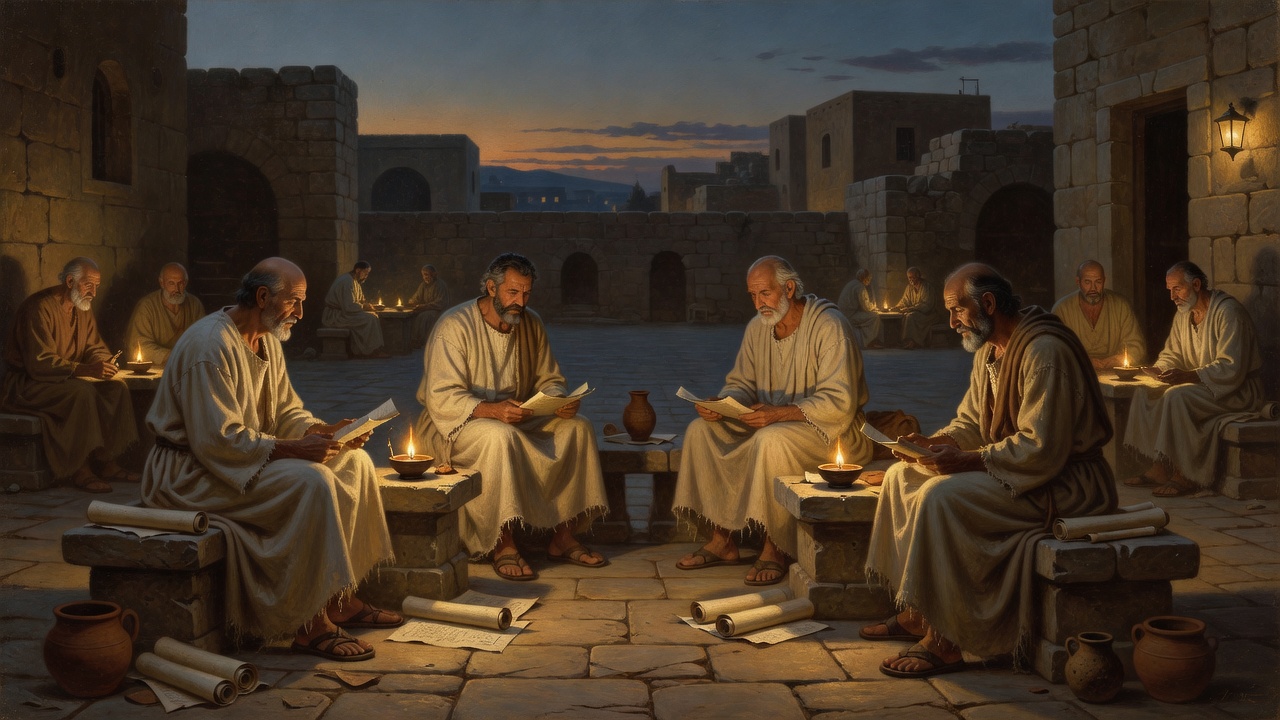
Did you know?
Safeguarding Loyalty and Warning Against Apostasy
- Deuteronomy specifies that a sign or wonder coming to pass does not automatically authenticate a prophet. If the prophet advocates following other gods, the message is considered a test of the community's loyalty rather than genuine divine guidance.Sources: the Bible text itself
- When addressing secret enticements to idolatry by close family members or friends, the law required the accuser to cast the first stone. This placed immediate personal responsibility on the witness and discouraged false accusations.Sources: the Bible text itself
- Before taking collective action against an entire town accused of apostasy, the community was strictly required to conduct a thorough inquiry and investigation to verify the facts with certainty.Sources: the Bible text itself
Notes written with AI assistance from open sources (Theographic Bible Metadata, CC BY-SA 4.0; Easton’s Bible Dictionary, public domain) and reviewed before publishing.
Places in this chapter
Only places identified with high confidence are shown (90% or more according to the scholarly sources compiled by OpenBible). Period map: DARE (Digital Atlas of the Roman Empire), CC BY 4.0; modern map: © OpenStreetMap contributors; places: OpenBible.info (CC BY 4.0).
Credits and license for this translation
Bib Sen An
The Holy Bible in Haitian Creole, 2023 update
copyright © 2017-2023 Ron Smith
Language: Kreyòl Ayisyen (Haitian)
Translation by: Ron Smith
Contributor: Felix Nixon
This translation is made available to you under the terms of the
Creative Commons Attribution Share-Alike license 4.0.
You have permission to share and redistribute this Bible translation in any format and to make reasonable revisions and adaptations of this translation, provided that:
You include the above copyright and source information.
If you make any changes to the text, you must indicate that you did so in a way that makes it clear that the original licensor is not necessarily endorsing your changes.
If you redistribute this text, you must distribute your contributions under the same license as the original.
Pictures included with Scriptures and other documents on this site are licensed just for use with those Scriptures and documents.
For other uses, please contact the respective copyright owners.
Note that in addition to the rules above, revising and adapting God's Word involves a great responsibility to be true to God's Word. See Revelation 22:18-19.
2026-06-11
Source: http://ebible.org/hatbsa/ · eBible.org