Deuteronomy 14
Bib Sen An · Tap a verse to see its cross-references.
1“Nou se fis a SENYÈ a, Bondye nou an. Nou p ap blese kò nou, ni pase razwa sou fwon nou pou koz lanmò. 2Paske nou se yon pèp ki sen a SENYÈ a, Bondye nou an. SENYÈ a te chwazi ou kòm yon pèp pou pwòp posesyon pa Li, sòti nan tout pèp ki sou sifas tè a.
3“Nou pa pou manje okenn bagay abominab. 4Sila yo se bèt ke nou kapab manje: bèf, mouton, kabrit, 5Sèf, kabrit mawon, den, bèf mawon, boukten, antilòp, ak mouton mòn. 6Nenpòt bèt ak zago divize ki remonte manje li pami tout bèt yo, sila nou kapab manje.
7“Sepandan, pami sila ki remonte manje yo, oswa sila ki divize zago an de yo: chamo, lapèn ak daman; akoz, malgre yo remonte manje, yo pa divize zago yo, yo pa pwòp pou nou. 8Kochon, paske li divize zago a, men pa remonte manje, li pa pwòp pou nou. Nou pa pou manje anyen nan chè li, ni touche kò mouri yo.
9“Sila nou kapab manje nan tout sa ki nan dlo yo: Nou ka manje nenpòt sa ki gen zèl naje avèk kal, 10men okenn nan yo ki pa gen zèl naje avèk kal, nou pa pou manje yo; se pa pwòp pou nou.
11“Nou kapab manje nenpòt zwazo ki pwòp. 12Men sila ke nou pa pou manje yo: èg, lòfre ak malfini lanmè, 13milan wouj, otou, votou ak tout kalite parèy yo, 14kòbo ak tout kalite parèy yo, 15otrich, ibou, poul dlo, ak malfini avèk tout kalite parèy yo, 16koukou, frize, gwo kana mawon blan, 17grangozye, plonjon, chwèt, 18sigòy, krabye, ak kalite parèy yo, sèpantye, tchotcho ak chòv-souri.
19“Tout reptil avèk zèl pa pwòp pou nou. Yo pa pou manje. 20Nou kapab manje nenpòt zwazo ki pwòp.
21“Nou pa pou manje okenn bagay ki mouri pou kont li. Nou gen dwa bay li a etranje ki rete nan vil nou, pou li kab manje l, oswa nou kapab vann li a yon etranje; paske nou se yon pèp ki sen a SENYÈ a, Bondye nou an. Nou pa pou bouyi yon jenn ti kabrit ki nan lèt manman.
22“Chak ane, nou va, anverite, bay ladim nan tout pwodwi a sila ke nou plante yo, ki sòti nan chan. 23Nou va manje nan prezans SENYÈ a, kote Li chwazi pou etabli non Li an, dim a sereyal nou, a diven nèf nou, a lwil nou, premye ne a twoupo nou ak bann mouton nou, pou nou kapab vin aprann krent SENYÈ a, Bondye nou an, jis pou tout tan.
24“Si distans lan tèlman gran pou nou, pou nou pa kapab pote yon dim, akoz kote SENYÈ Bondye nou an chwazi pou mete non Li an twò lwen nou, lè SENYÈ Bondye nou an, beni nou, 25alò, nou va twoke li pou lajan; epi mare lajan an nan men nou pou ale kote SENYÈ Bondye nou an, chwazi a. 26Nou kapab depanse lajan an pou nenpòt sa ke kè nou dezire: pou bèf kabwèt, oswa mouton, oswa diven, oswa bwason ki fò, oswa nenpòt sa kè nou dezire; epi la, nou va manje nan prezans SENYÈ a, Bondye nou an; epi rejwi nou menm avèk tout lakay nou. 27Osi, nou p ap neglije Levit ki nan vil nou an, paske li pa gen pati ni eritaj pami nou.
28“Nan fen chak twazyèm ane, nou va pote tout dim a sila nou pwodwi pou ane sa a, e nou va depoze li nan pwòp vil pa nou an. 29Levit la, akoz li pa gen pati oswa eritaj pami nou, e etranje, òfelen, ak vèv ki nan vil nou yo, yo va manje e satisfè, jis pou SENYÈ a, Bondye nou an, beni nou nan tout travay ke men nou fè.
Did you know?
Dietary Regulations and Tithe Provisions
- The dietary laws in Deuteronomy 14 distinguish clean from unclean land animals based on two physical criteria: having completely divided hooves and chewing the cud. Aquatic creatures were considered clean for consumption only if they possessed both fins and scales.Sources: the Bible text itself
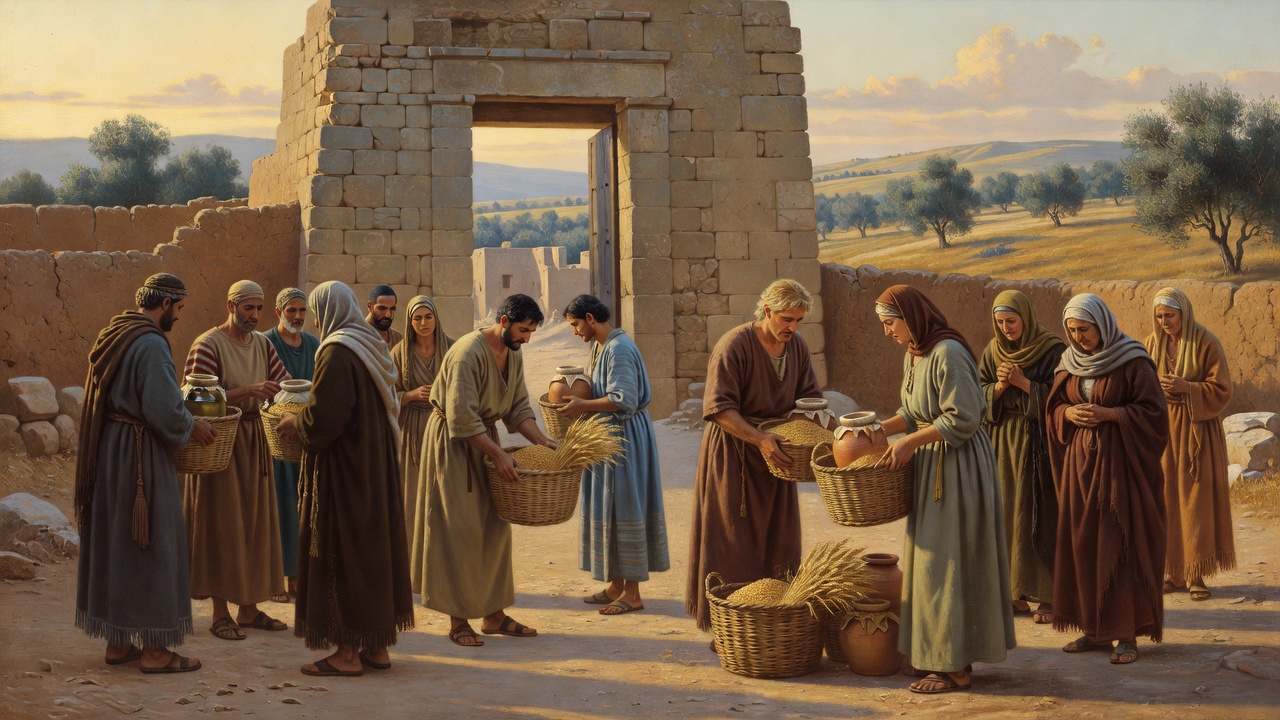
- To accommodate families who lived far from the designated sanctuary, the law allowed agricultural tithes to be converted into silver for travel. Upon arriving at the central sanctuary, worshippers could use the money to purchase festive food and drink to celebrate with their households.Sources: the Bible text itself
- Every third year, the annual tithe was gathered and stored within local towns rather than taken to the central sanctuary. This food was set aside to support community members without land inheritances, specifically Levites, resident foreigners, orphans, and widows.Sources: the Bible text itself
Notes written with AI assistance from open sources (Theographic Bible Metadata, CC BY-SA 4.0; Easton’s Bible Dictionary, public domain) and reviewed before publishing.
Credits and license for this translation
Bib Sen An
The Holy Bible in Haitian Creole, 2023 update
copyright © 2017-2023 Ron Smith
Language: Kreyòl Ayisyen (Haitian)
Translation by: Ron Smith
Contributor: Felix Nixon
This translation is made available to you under the terms of the
Creative Commons Attribution Share-Alike license 4.0.
You have permission to share and redistribute this Bible translation in any format and to make reasonable revisions and adaptations of this translation, provided that:
You include the above copyright and source information.
If you make any changes to the text, you must indicate that you did so in a way that makes it clear that the original licensor is not necessarily endorsing your changes.
If you redistribute this text, you must distribute your contributions under the same license as the original.
Pictures included with Scriptures and other documents on this site are licensed just for use with those Scriptures and documents.
For other uses, please contact the respective copyright owners.
Note that in addition to the rules above, revising and adapting God's Word involves a great responsibility to be true to God's Word. See Revelation 22:18-19.
2026-06-11
Source: http://ebible.org/hatbsa/ · eBible.org