Acts 7
Bib Sen An · Tap a verse to see its cross-references.
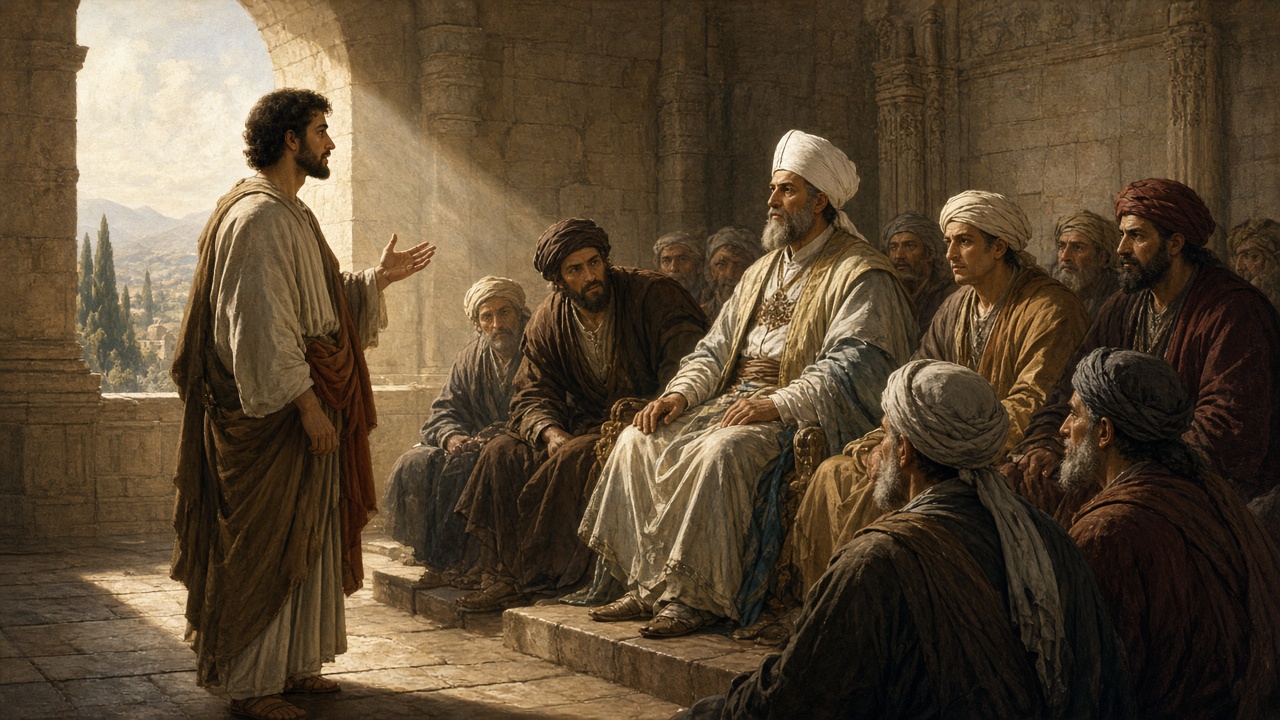
1Wo prèt la te di: “Èske bagay sa yo se vre?”
2Li te di: “Koute m frè m yo ak ansyen mwen yo!” Bondye laglwa a te parèt devan zansèt nou, Abraham lè li te nan Mésopotamie, avan ke li te rete Charran. 3E Li te di li: “Kite peyi ou, ak fanmi ou, pou vini nan peyi ke Mwen menm va montre ou a”.
4Konsa, li te kite peyi a Kaldeyen yo pou vin rete nan Charran. Depi la, lè papa l te vin mouri, Bondye te fè l deplase vin nan peyi sila a kote nou rete koulye a. 5Men Li pa t ba li yon eritaj ladann, ni menm yon mòso tè, men menm lè li pa t gen pitit, Li te pwomèt li ke Li ta ba li sa kòm yon posesyon, e a desandan aprè li yo.
6Men Bondye te pale konsa: Ke desandan li yo ta etranje nan yon peyi etranje, pou yo ta nan esklavaj e maltrete pandan kat-san lane. 7“Epi nenpòt nasyon ki ta mete yo nan esklavaj, Bondye te di: ‘Mwen Menm, Mwen va jije’, epi apre sa, yo va sòti la pou sèvi Mwen nan plas sila a.”
8Li te bay li akò sikonsizyon an, epi Abraham te vin papa a Isaac, Li te sikonsi li nan uityèm jou a. Isaac te vin papa a Jacob, e Jacob a douz patriyach yo.
9Patriyach yo te vin jalou de Joseph e yo te vann li an Égypte. Men Bondye te avèk li 10e Li te delivre li nan tout afliksyon li yo. Konsa li te bay li favè avèk sajès devan Pharaon, wa Égypte la, e te fè li vin gouvènè sou Égypte, ak tout lakay li.
11Alò yon gwo grangou te parèt nan tout Égypte ak Canaan, avèk gwo mizè, e zansèt nou yo pa t kab twouve manje. 12Men lè Jacob te tande ke te gen manje an Égypte, li te voye zansèt nou yo la pou premye fwa a.
13Nan dezyèm vizit la Joseph te fè frè l yo dekouvri ki moun li te ye, efanmi Joseph te vin entwodwi a Pharaon. 14Alò Joseph te voye envite Jacob, papa li avèk tout fanmi li pou vin kote l. Te gen swasann-kenz moun antou.
15Konsa, Jacob te desann an Égypte e li menm avèk zansèt nou yo te mouri la. 16Depi la kò yo te deplase retounen nan Sichem, pou te antere yo nan tonm nan ke Abraham te achte pou yon sòm lajan nan men fis a Hémor yo, an Sichem.
17Men pandan tan a pwomès ke Bondye te pwomèt a Abraham nan t ap pwoche pèp la te vin ogmante e te miltipliye an Égypte, 18jiskaske Yon lòt wa te leve sou Égypte ki pa t konnen anyen de Joseph. 19Se te li menm ki te sèvi gwo koken pou pran avantaj sou ras nou an, e maltrete zansèt nou pou yo ta kab fè zanfan pa nou yo pa t kab viv.
20Se te nan tan sila a ke Moïse te ne. Li te byen bèl nan zye Bondye, e li te okipe pandan twa mwa lakay papa li. 21Epi lè l te abandone, fi Pharaon an te pran li e te nouri li kòm pwòp fis pa li. 22Moïse te enstwi nan tout konesans Ejipsyen an, e li te vin yon nonm byen fò nan pawòl ak nan zak.
23Men lè l t ap pwoche laj karant ane, sa te antre nan tèt li pou vizite frè li yo, fis Israël yo.
24Konsa, lè l te wè youn nan yo byen maltrete, li te defann li, e te vanje pou sila ki te oprime a, e konsa, te touye Ejipsyen an. 25Li te sipoze ke frè li yo te konprann ke Bondye t ap bay yo delivrans atravè li menm, men yo pa t konprann.
26“Nan jou swivan an, li te parèt a yo menm pandan yo t ap goumen youn avèk lòt. Li te eseye rekonsilye yo nan lapè e te di: ‘Moun yo, se frè nou ye. Poukisa nou ap fè mal a youn lòt?’
27“Men sila ki t ap fè frè l la mal la te bourade l e te di: ‘Kilès ki te fè ou yon chèf ak jij sou nou? 28Èske ou gen entansyon touye m menm jan ke ou te touye Ejipsyen an ayè a?’
29“Akoz pawòl sila a Moïse te sove ale, e te vin yon etranje nan peyi Madian, kote li te vin papa a de fis.
30“Apre karant ane te pase, Yon zanj te parèt a li menm nan dezè Mòn Sinaï nan flanm a yon touf bwa. 31Lè Moïse te wè l, li te etone de sa l te wè a. Lè l te pwoche pou gade pi pre, vwa Senyè a te vini sou li: 32‘Mwen menm se Bondye a zansèt nou yo, Bondye Abraham nan, Isaac ak Jacob la’. Moïse te tranble avèk laperèz e pa t menm vle pran chans gade.
33“Men SENYÈ a te di l: ‘Retire sapat nan pye ou, paske lye kote ou kanpe a se tè sen. 34Mwen anverite wè soufrans pèp Mwen an an Égypte e tande plent yo, e Mwen gen tan vini desann pou delivre yo. Vini koulye a e Mwen va voye ou an Égypte.’
35“Menm Moïse sila a ke yo te rejte lè yo te di: ‘Kilès ki te fè ou yon chèf e yon jij?’ Se sila a ke Bondye te voye pou li ta kapab non sèlman yon chèf, men yon liberatè avèk èd zanj ki te parèt kote li nan touf bwa a. 36Mesye sila a te mennen yo sòti, e te fè mèvèy ak sign nan peyi Égypte, ak nan Lamè Wouj, epi pandan karant ane nan dezè a. 37Se te Moïse sila a ki te di a fis Israël yo: ‘Bondye va fè leve pou nou yon pwofèt tankou mwen ki sòti nan frè nou yo.’
38“Sa se li menm ki te nan asanble nan dezè a; ki te avèk zanj ki t ap pale avè l sou Mòn Sinaï a, e avèk zansèt nou yo, ki te te resevwa pawòl vivan yo pou pase bannou.
39“Zansèt nou yo pa t dakò obeyisan a li menm, men yo te rejte l, e nan kè yo, yo te vire tounen an Égypte. 40Konsa yo di a Aaron: ‘Fè pou nou dye yo ki va ale devan nou. Paske Moïse sila a ki te mennen nou sòti an Égypte la, nou pa menm konnen kisa ki rive li.’ 41Nan tan sa a yo te fè yon jenn bèf. Yo te pote yon sakrifis pou zidòl la, e yo t ap rejwi yo nan zèv a pwòp men yo.
42“Men Bondye te vire do Li, e te livre yo pou adore dye a zetwal syèl yo, jan sa ekri nan liv pwofèt yo:
‘Se pa t a Mwen menm ke nou te ofri
ofrann ak sakrifis
karant ane nan dezè a, O lakay Israël.
43Men nou te pran anplis, tabènak Moloch la,
ak zetwal a dye Remphan an;
imaj ke nou te fè pou adore yo.
Pou sa a Mwen osi va retire nou jis rive lòtbò Babylone.’
44“Zansèt nou yo te gen tabènak temwayaj nan dezè a, menm jan ke Sila ki te pale avèk Moïse la te kòmande li pou fè, selon modèl ke li te wè a.
45“Konsa, zansèt nou yo ki te resevwa li nan lè pa yo, te pote li avèk Josué lè l te depouye nasyon ke Bondye te chase devan yo jis rive nan tan David la. 46David te twouve favè nan zye Bondye, e te mande pou li ta kapab jwenn yon mezon pou Bondye Jacob la abite. 47Men se te Salomon ki te bati yon kay pou Li.
48“Poutan Trè Wo a pa rete nan kay ki fèt pa men moun, jan pwofèt la di a:
49‘Syèl la se twòn Mwen,
E tè a se ban pou pye Mwen.
Ki kalite kay ou kapab fè pou Mwen?’
‘Oubyen ki plas ki gen pou repo Mwen?
50Se pa t men Mwen ki te fè tout bagay sa yo?’
51“Nou menm, ki se moun kou rèd e ensikonsi nan kè, avèk zòrèy ki toujou ap reziste a Lespri Sen an, n ap fè menm bagay ke zansèt nou yo te konn fè yo. 52Kilès nan pwofèt yo ke zansèt nou yo pa t pèsekite? Yo te touye sila yo ki avan lè te anonse ke Sila Ki Jis la t ap vini; ke nou menm koulye a trayi e asasine. 53Nou menm ki te resevwa Lalwa kòm yon òdonans pa zanj yo, te vyole li.”
54Alò, lè yo te tande sa, yo te blese byen fon, e t ap manje dan yo sou li.
55Men ranpli avèk Lespri Sen an, li te fikse zye l anwo nan syèl la e te wè glwa Bondye ak Jésus ki te kanpe bò men dwat Bondye. 56Li te di: “Gade byen, Mwen wè syèl la vin louvri, e Fis a lòm nan ki kanpe bò men dwat Bondye.”
57Konsa yo te kriye fò avèk yon gwo vwa, e te kouvri zòrèy yo. Yo te kouri sou li ansanm a lafwa, 58e lè yo te fin pouse li deyò vil la, yo te kòmanse lapide l avèk wòch. Temwen sila yo te depoze vètman yo nan pye a yon jennonm yo te rele Saul.
59Yo te kontinye lapide Étienne pandan li te rele Senyè a, e te di: “Senyè Jésus, resevwa Lespri mwen”. 60Konsa, li te tonbe sou jenou li, e te kriye avèk yon gwo vwa: “Senyè, pa kenbe peche sa a kont yo!” Lè l fin di sa, li te mouri.
Did you know?
Stephen retells Israel's story
- Stephen opens his speech with Abraham still in Mesopotamia, before he settled in Haran, when he was told to leave his country and his kindred. Mesopotamia—Hebrew Aram-naharaim, “Syria of the two rivers”—was the name Greeks and Romans gave the region between the Euphrates and the Tigris; the Old Testament also calls it Padan-aram, “the plain of Aram,” and the north of that plateau was the early home of the Hebrews’ ancestors. Easton's Bible Dictionary (1897) notes that this first call is not mentioned in the Old Testament, though Genesis 12 implies it, and that Abraham left Ur in Chaldea and traveled about 300 miles north to Haran.Sources: the Bible text itself · Mesopotamia · Abraham
- Stephen says the bones of Jacob and the fathers were carried back to Shechem and placed in the tomb Abraham had bought from the sons of Hamor. Easton's Bible Dictionary (1897) identifies Hamor as a Hivite whose name means “he-ass,” notes that Acts 7:16 calls him Emmor, and says Jacob bought from him the plot at Shechem in which Joseph was later buried. The entry adds that Hamor’s son Shechem founded the city that took his name.Sources: the Bible text itself · Hamor
- Stephen places the burning bush in the desert near Mount Sinai and says Moses received living words there from the angel who spoke to him on the mountain. Easton's Bible Dictionary (1897) treats Sinai—a name linked with Sin, a moon god—as the same mountain district also called Horeb. The entry says the Hebrews reached that region in the third month after the Exodus, after a journey of about 150 miles from the Red Sea, including all the windings of the route, and remained encamped for about a year.Sources: the Bible text itself · Mount Sinai
Notes written with AI assistance from open sources (Theographic Bible Metadata, CC BY-SA 4.0; Easton’s Bible Dictionary, public domain) and reviewed before publishing.
Places in this chapter
- Haran · Today: Harran · 36.864, 39.033 · verses 2, 4
- Mesopotamia · Today: Aram-naharaim · 36.864, 39.033 · verse 2
- Chaldea · 30.962, 46.104 · verse 4
- Egypt · 30.129, 31.308 · verses 9, 10, 11, 12, 14, 15, 17, 18, 34, 36, 39, 40
- Canaan · 32.767, 35.333 · verse 11
- Shechem · Today: Tell Balatah · 32.214, 35.282 · verse 16
- Nile · Today: Nile River · 31.465, 30.367 · verse 19
- Midian · 28.495, 35.012 · verse 29
- Babylon · 32.543, 44.422 · verse 43
Only places identified with high confidence are shown (90% or more according to the scholarly sources compiled by OpenBible). Period map: DARE (Digital Atlas of the Roman Empire), CC BY 4.0; modern map: © OpenStreetMap contributors; places: OpenBible.info (CC BY 4.0).
Credits and license for this translation
Bib Sen An
The Holy Bible in Haitian Creole, 2023 update
copyright © 2017-2023 Ron Smith
Language: Kreyòl Ayisyen (Haitian)
Translation by: Ron Smith
Contributor: Felix Nixon
This translation is made available to you under the terms of the
Creative Commons Attribution Share-Alike license 4.0.
You have permission to share and redistribute this Bible translation in any format and to make reasonable revisions and adaptations of this translation, provided that:
You include the above copyright and source information.
If you make any changes to the text, you must indicate that you did so in a way that makes it clear that the original licensor is not necessarily endorsing your changes.
If you redistribute this text, you must distribute your contributions under the same license as the original.
Pictures included with Scriptures and other documents on this site are licensed just for use with those Scriptures and documents.
For other uses, please contact the respective copyright owners.
Note that in addition to the rules above, revising and adapting God's Word involves a great responsibility to be true to God's Word. See Revelation 22:18-19.
2026-06-11
Source: http://ebible.org/hatbsa/ · eBible.org