Job 6
Bib La · Tap a verse to see its cross-references.
1Jòb pran lapawòl, li di konsa: 2-Si yo te ka pran pèz lapenn mwen, si yo te ka peze tout malè mwen yo nan balans, 3yo ta jwenn yo pi lou pase tout sab ki bò lanmè. Lè sa a, nou pa ta sezi tande m' pale jan m'ap pale a. 4Bondye ki gen tout pouvwa a plante flèch li yo sou mwen. Pwazon yo a anvayi tout kò m'. Bondye voye sou mwen tout kalite malè pou fè kè m' kase. 5Bourik mawon pa ranni lè li gen zèb pou l' manje. Ni bèf pa rele lè li gen manje devan l'. 6Moun pa manje manje ki san gou, manje ki san sèl. Blan ze pa gen bon gou nan bouch. 7Mwen pa menm gen apeti pou bagay konsa. Tou sa mwen manje fè kè m' tounen. 8Si Bondye te ka ban mwen sa m' mande l' la! Si li te ka fè m' jwenn sa m'ap tann lan! 9Si sèlman sa ta fè l' plezi pou l' touye m'! Si li ta vle lonje men l' pou l' disparèt mwen! 10Se ta va yon gwo konsolasyon pou mwen. Malgre tout soufrans mwen yo, mwen ta danse, mwen ta fè fèt, paske mwen konnen mwen pa janm dezobeyi lòd Bondye ki apa a bay. 11Mwen pa gen fòs pou m' tann ankò. Pa gen ankenn espwa pou mwen. Sa m' bezwen viv toujou fè? 12Se pa wòch mwen ye. Se pa bout fè kò m' ye. 13Mwen pa gen fòs ankò pou m' kenbe. Kote m' vire, mwen pa jwenn sekou. 14Nan tray m'ap pase koulye a, mwen bezwen bon zanmi ki pou soutni m', menm si mwen ta vire do bay Bondye. 15Men, frè m' yo, nou p'ap di m' anyen la a. Nou tankou ravin chèch ki pa gen dlo depi lapli pa tonbe. 16Nan sezon fredi, lè lanèj ap fonn, yo plen dlo sal ki frèt kou glas. 17Men, nan sezon lesèk, pa yon gout dlo! Chalè solèy la cheche yo nèt. 18Bann vwayajè yo kite chemen yo pou y' al dèyè dlo. Yo pèdi nan dezè a. Yo mouri. 19Vwayajè ki soti nan peyi Cheba ak nan peyi Saba ap touye tèt yo chache dlo. 20Yo pa ka jwenn. Rive devan ravin lan, yo pa konn sa pou yo fè. 21Wi, mezanmi. Nou tankou yon ravin chèch pou mwen. Nou wè nan ki eta mwen ye, nou pè, n'ap renka kò nou dèyè. 22Eske m' te mande nou pou nou fè m' kado kichòy? Osinon pou nou fè yon moun kado pou mwen nan sa nou genyen? 23Eske mwen te mande nou pou nou vin wete m' anba grif yon lènmi, osinon pou nou delivre m' anba men yon moun k'ap fè m' soufri? 24Bon. Pale avè m'. Si m' antò, fè m' wè kote m' antò a. Lè sa a, m'a pe bouch mwen. M'a koute nou. 25Pawòl ki pale verite bon pou tande. Men, m' pa wè sa nou vle di m' la a. 26Ou di mwen fin dekouraje. Se depale m'ap depale. Poukisa atò w'ap kritike pawòl mwen yo konsa? 27Konsa tou, ou ta rive jwe lajan sou tèt timoun san papa. Ou ta fè lajan sou tèt bon zanmi ou. 28Koulye a, monchè, tanpri, gade m' nan je. Mwen p'ap ba ou manti. 29Tounen non! Pa fè m' lenjistis sa a! Tounen, mwen di ou. Se kòz mwen m'ap defann. 30Eske se manti m'ap bay? Dapre nou, mwen pa konnen sa ki byen ak sa ki mal?
Did you know?
Job's Anguish and Unreliable Friends
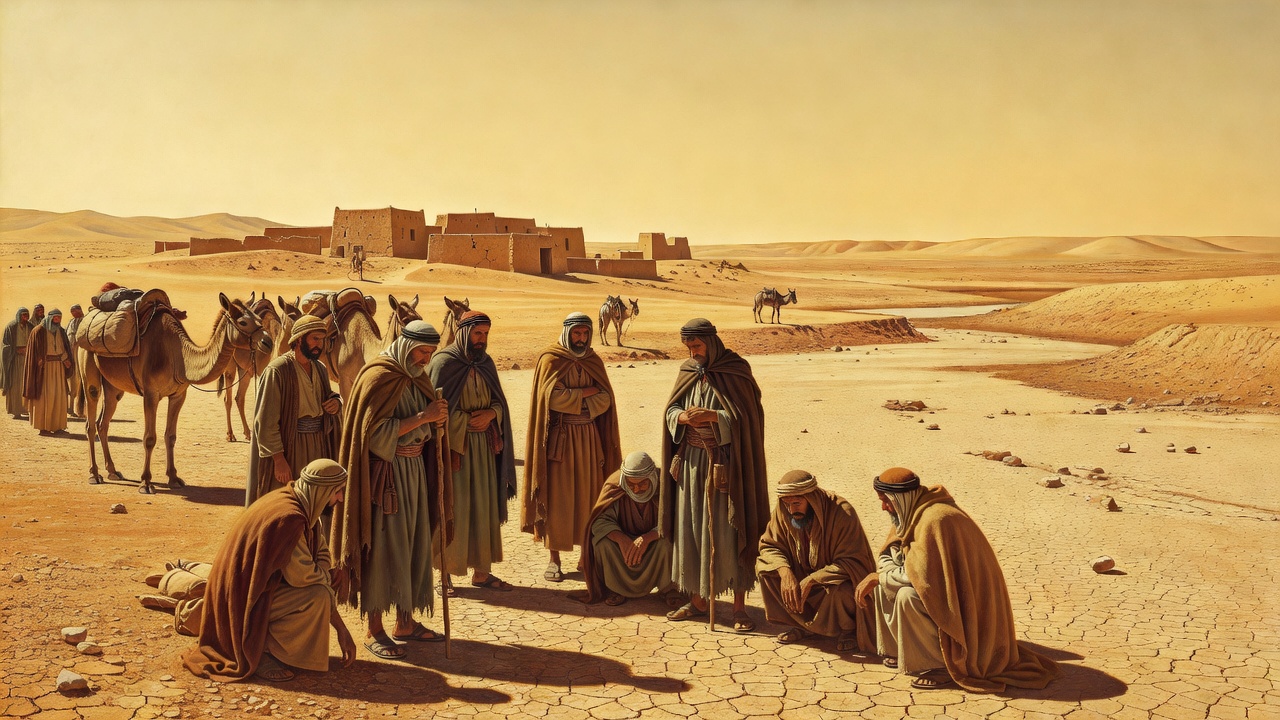
- Job compares his unsupportive companions to seasonal desert streams that overflow with melted ice and snow during cold weather, but completely vanish during the heat of the dry season when water is needed most.Sources: the Bible text itself
- The passage references merchant caravans from Tema in northern Arabia and travelers from Sheba in southern Arabia. Job describes these desert traders searching hopefully for water in seasonal streambeds, only to suffer bitter disappointment when the channels are dry.Sources: the Bible text itself · Tema · Sheba
Notes written with AI assistance from open sources (Theographic Bible Metadata, CC BY-SA 4.0; Easton’s Bible Dictionary, public domain) and reviewed before publishing.
Places in this chapter
Only places identified with high confidence are shown (90% or more according to the scholarly sources compiled by OpenBible). Period map: DARE (Digital Atlas of the Roman Empire), CC BY 4.0; modern map: © OpenStreetMap contributors; places: OpenBible.info (CC BY 4.0).
Credits and license for this translation
Bib La
The Holy Bible in Haitian Creole
Public Domain
Language: Kreyòl Ayisyen (Haitian)
In the Public Domain due to publication without copyright notice in 1985, and without subsequent registration within 5 years.
2020-03-10
Source: http://ebible.org/hat/ · eBible.org