Hosea 13
Bib La · Tap a verse to see its cross-references.
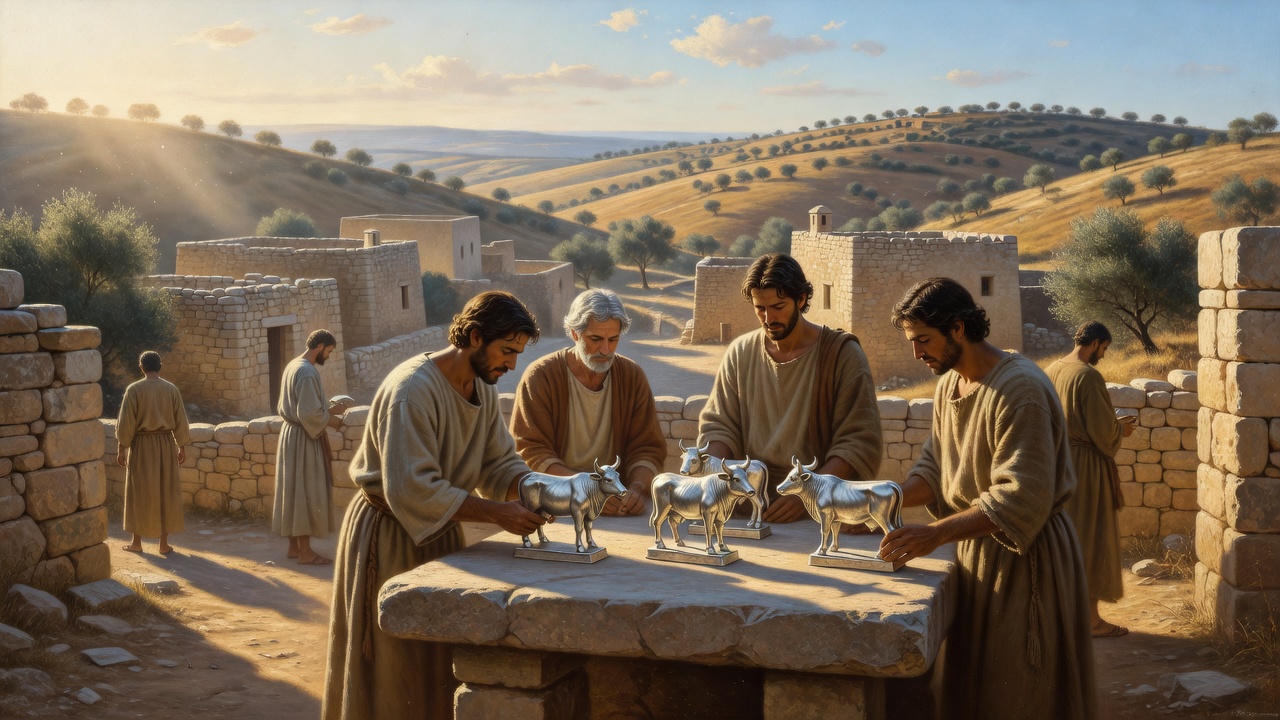
1Nan tan lontan, lè moun Efrayim yo te pale, tout moun te pran tranble. Yo te rive chèf sou tout lòt branch fanmi Izrayèl la. Men, y' al fè sa ki mal. Y' al adore Baal. Se poutèt sa yo pèdi pye. 2Jouk koulye a, y'ap fè peche toujou. Y'ap pran kwiv, y'ap fonn li pou fè estati zidòl. Y'ap fè bèl zidòl an ajan jan yo konnen. Tou sa se travay atizan fè ak men yo. Apre sa yo di: Ann ofri bèt pou touye ba yo! Koulye a nou wè se moun k'ap bo estati bèf! 3Konsa, moun sa yo ap disparèt tankou yon vapè ki leve granmaten, tankou lawouze lè solèy fin leve. Y'ap tankou pay van an ap leve soti sou glasi. Y'ap tankou lafimen k'ap soti nan yon fetay kizin. 4Seyè a di ankò: Se mwen menm ki Seyè a, Bondye ou la. Se mwen menm ki te fè soti kite peyi Lejip. Ou pa konn lòt bondye pase mwen menm. Se mwen menm ase ki ka sove ou. 5Mwen te okipe ou lè ou te nan dezè a, nan peyi ki pa gen dlo menm lan. 6Men, lè yo rive nan peyi ki gen bon tè a, yo manje plen vant yo, lògèy vire tèt yo, se konsa yo bliye m'. 7Se poutèt sa, m'ap tonbe sou yo tankou yon lyon. Tankou yon leyopa, mwen pral anbiske kò m' sou wout yo ap tann yo. 8M'ap tonbe sou yo tankou yon manman lous yo pran pitit li. M'ap dechire yo. M'ap devore yo lamenm tankou yon fenmèl lyon. M'ap dechire yo tankou yon bèt nan bwa. 9M'ap detwi nou, nou menm pèp Izrayèl la, paske nou vire sou do mwen, mwen menm ki tout sekou nou. 10Nou te mande pou yo ban nou yon wa ansanm ak lòt chèf. Men, kote wa ki pou te sove nou an? Kote tout chèf ki pou te defann nou yo? 11Mwen te fè kòlè, mwen te ban nou wa a. Men, apre sa, nou fè m' fache pi rèd, mwen wete l' nan mitan nou. 12Mwen make tou sa Efrayim fè ki mal sou papye. Mwen sere l' byen lwen. 13Nan tout malè sa a, Efrayim te gen yon chans ankò pou l' ta sove. Men, li twò sòt, l'ap pèdi chans lan. Se tankou yon ti bebe ki rive sou dat pou l' fèt men ki pa vle soti nan vant manman l'. 14Mwen p'ap sove pèp la anba lanmò. Mwen p'ap anpeche yo desann nan peyi kote mò yo ye a. Annavan, lanmò! Vini ak tout malè ou yo! Nou menm ki chèf nan peyi kote mò yo ye a, vin detwi pèp la. Mwen p'ap janm gen pitye pou pèp sa a ankò. 15Menm si Izrayèl ta fleri tankou wozo bò dlo, m'ap fè yon van leve nan dezè kote solèy leve a, m'ap fè l' vante sou li, l'ap cheche tout sous dlo ak tout fontenn li yo. L'ap pran tout bagay ki gen valè nan byen l' yo, l'ap pote yo ale. 16Peyi Samari a pral peye pou sa l' fè a, paske li te leve sou do Bondye li a. Yo pral mouri nan lagè. Y'ap pran pitit yo, y'ap kraze yo atè, y'ap fann vant fanm ansent yo.
Did you know?
The Fall of Ephraim and Samaria
- Hosea 13 opens by recounting that Ephraim, once exalted in Israel, brought about its own ruin through the worship of Baal. Baal was the principal male deity of the Phoenicians, and his cult had long influenced the northern tribes.Sources: the Bible text itself · Baal
- The chapter recalls that God had been Israel's God ever since the land of Egypt and had known them in the arid wilderness. However, once the people had pasture and were satisfied, their hearts grew proud and they forgot their helper.Sources: the Bible text itself · Egypt
- The prophecy ends with an announcement of judgment on Samaria, the capital city established by King Omri on the hill of Shomeron. Hosea declares that Samaria will bear her guilt and suffer violent destruction for rebelling against God.Sources: the Bible text itself · Samaria
Notes written with AI assistance from open sources (Theographic Bible Metadata, CC BY-SA 4.0; Easton’s Bible Dictionary, public domain) and reviewed before publishing.
Places in this chapter
Only places identified with high confidence are shown (90% or more according to the scholarly sources compiled by OpenBible). Period map: DARE (Digital Atlas of the Roman Empire), CC BY 4.0; modern map: © OpenStreetMap contributors; places: OpenBible.info (CC BY 4.0).
Credits and license for this translation
Bib La
The Holy Bible in Haitian Creole
Public Domain
Language: Kreyòl Ayisyen (Haitian)
In the Public Domain due to publication without copyright notice in 1985, and without subsequent registration within 5 years.
2020-03-10
Source: http://ebible.org/hat/ · eBible.org