Ecclesiastes 4
Bib La · Tap a verse to see its cross-references.
1Apre sa, mwen gade tout lenjistis k'ap fèt sou latè. Dlo ap koule konsa nan je moun y'ap maltrete yo. Pa gen pesonn pou ede yo. Moun k'ap maltrete yo gen lafòs avèk yo. Pesonn pa ka fè anyen pou yo. 2Mwen wè sò moun mouri yo miyò pase sò moun vivan yo. 3Men, gen yon lòt moun ankò ki pi bon pase yo tou de: Se moun ki pa t' janm fèt la, paske li pa janm wè move zak k'ap fèt sou tè a. 4Mwen vin wè tout travay di lèzòm ap travay di a, tout bèl bagay y'ap reyalize nan lavi a, se paske yonn vle gen plis pase lòt. Men, sa tou, sa pa vo anyen, sa pa rapòte anyen. 5Pawòl la di: Moun sòt rete san fè anyen, yo pito grangou. 6Men, pito ou pran ti repo ou tanzantan ak kè poze pase pou ou touye tèt ou ap travay di, lèfini pou sa pa rapòte anyen. 7Mwen wè yon lòt bagay nan lavi a ki pa vo anyen ankò. 8Se te yon nonm ki t'ap viv pou kont li, san zanmi. Li pa t' gen pitit gason, li pa t' gen frè. Li travay san pran souf. Li pa t' janm gen ase. Pou ki moun li t'ap travay di konsa, san bay tèt li yon ti plezi? Li pa t' janm gen tan pou mande tèt li sa. Sa a tou, sa pa vo anyen, se pa yon bon jan pou moun viv. 9Lè ou gen yon lòt moun avèk ou, li pi bon pase lè ou pou kont ou, paske ansanm nou bay pi bon rannman nan travay nou. 10Si yonn tonbe, lòt la va ba l' men pou l' leve. Men, malè pou moun k'ap viv pou kont li! Si l' tonbe, p'ap gen moun pou ba l' men. 11Konsa tou, lè fè frèt, si yo kouche ansanm, yonn va chofe lòt. Men, si li pou kont li, ki jan pou l' fè chofe kò l'? 12Kote dezòm ka kenbe tèt ak yon moun k'ap atake yo, yon sèl p'ap kapab. Yon kòd trese an twa pa fasil pou kase. 13-(we vèsè pwochen) 14Yon nonm ka soti nan mizè pou l' rive chèf nan peyi l'. Ou ankò li ka soti nan prizon epi yo mete l' chèf pou gouvènen. Pito ou annafè ak yon ti moun ki pòv men ki gen lespri pase pou ou annafè ak yon wa ki fin granmoun, ki fin gaga, ki pa ka pran konsèy. 15Mwen kalkile, mwen gade tout moun k'ap viv sou latè, mwen di nan mitan tout moun sa yo gen jenn gason ki pral pran plas wa a. 16Ou pa ka konte kantite moun yon wa ka gouvènen, kantite moun yon wa ka dirije. Men lè l' mouri, pesonn p'ap chonje di l' mèsi pou sa li te fè pou yo. Tou sa pa vo anyen. Sa pa rapòte anyen.
Did you know?
Oppression, Companionship, and Fleeting Acclaim
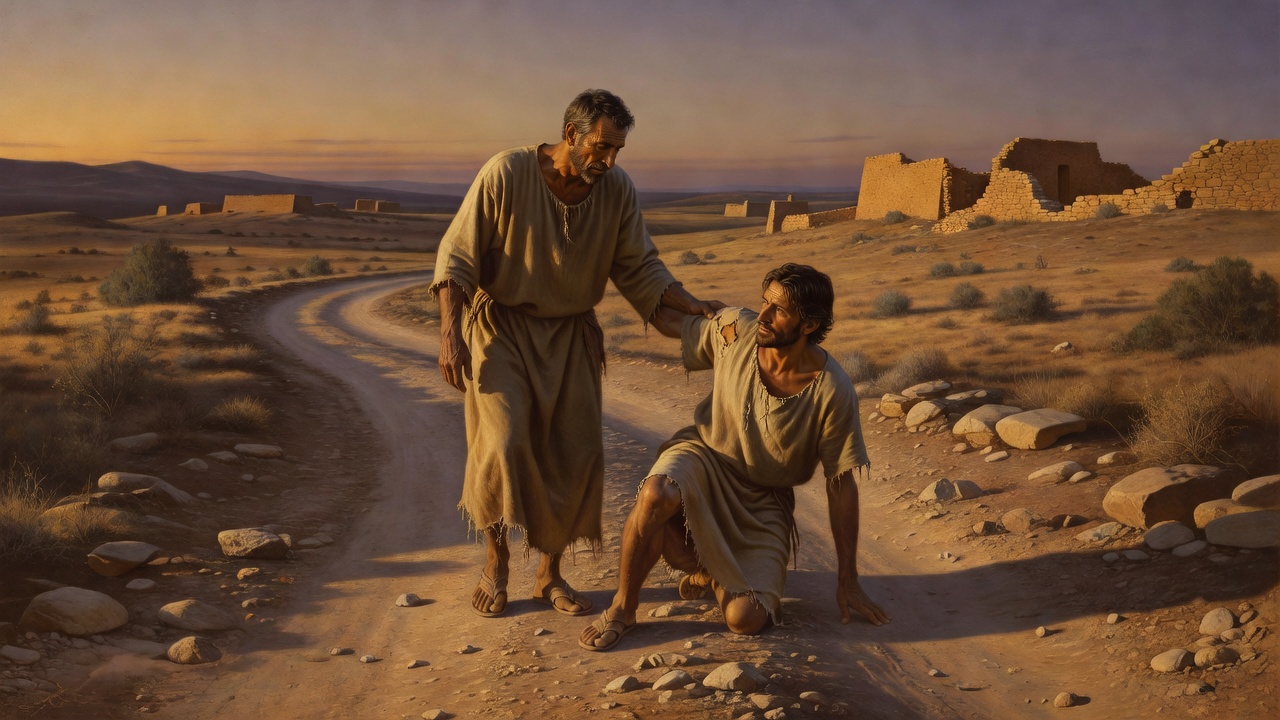
- Ecclesiastes highlights the practical value of companionship in daily life, explaining that two workers achieve a better return on their labor, can help each other up after a fall, provide shared warmth when lying down, and resist attackers together.Sources: the Bible text itself
- The passage contrasts the misery of solitary toil with the peacefulness of moderation, noting that some hoard wealth endlessly despite having no companion, son, or brother with whom to share it.Sources: the Bible text itself
- The text illustrates the fleeting nature of political fame through the figure of a poor, wise youth who rises from prison to replace an unteachable king, gaining massive popularity that is later forgotten by future generations.Sources: the Bible text itself
Notes written with AI assistance from open sources (Theographic Bible Metadata, CC BY-SA 4.0; Easton’s Bible Dictionary, public domain) and reviewed before publishing.
Credits and license for this translation
Bib La
The Holy Bible in Haitian Creole
Public Domain
Language: Kreyòl Ayisyen (Haitian)
In the Public Domain due to publication without copyright notice in 1985, and without subsequent registration within 5 years.
2020-03-10
Source: http://ebible.org/hat/ · eBible.org