Numbers 1
Tupàn ze'eg · Tap a verse to see its cross-references.
About this book
About Numbers
- Numbers is the fourth book of the Pentateuch. In Hebrew it is called be-midbar, “in the wilderness”; the Greek Septuagint called it Numbers, the name still usual, because it records a census in the wilderness of Sinai and a later census on the plain of Moab.Sources: Easton: Numbers, Book of
- Easton's Bible Dictionary (1897) presents Numbers, like the other books of the Pentateuch, as written by Moses. The history it contains runs from the second month of the second year after the Exodus to the beginning of the eleventh month of the fortieth year, about thirty-eight years and ten months.Sources: Easton: Numbers, Book of
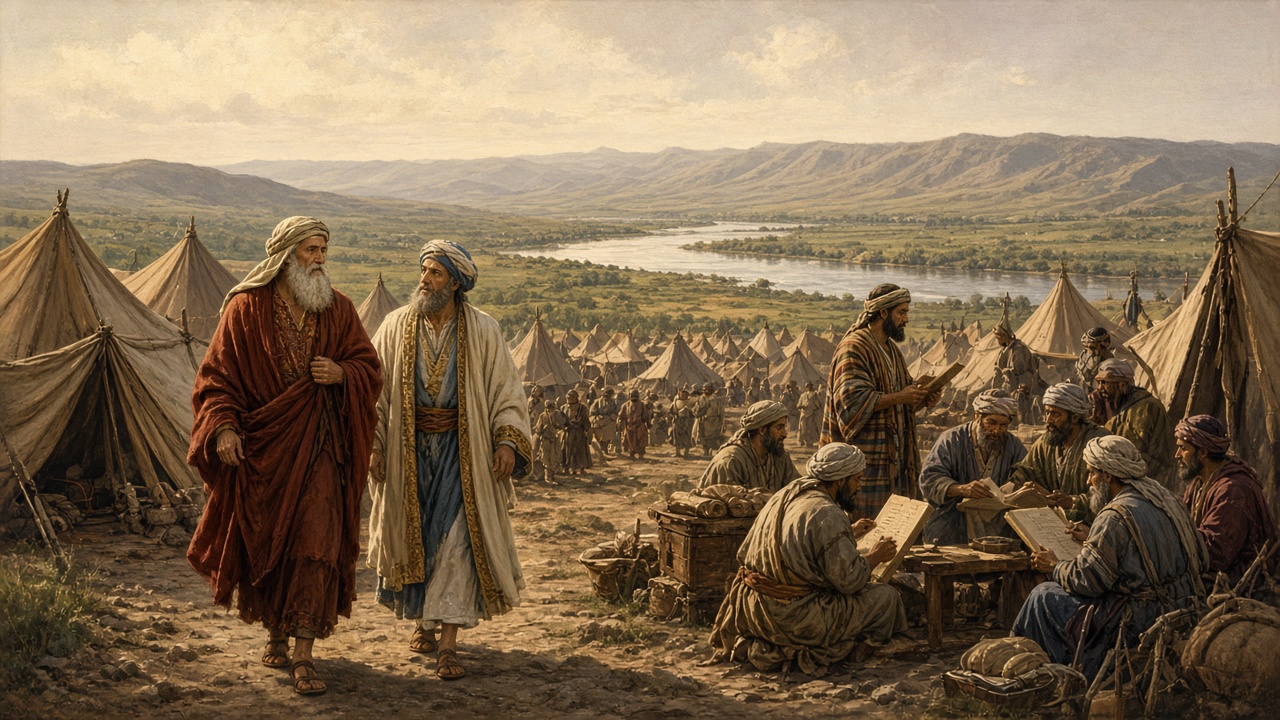
- The narrative begins at Sinai, the mountain district Israel reached in the third month after the Exodus and where they camped for about a year, and follows their route and encampments through the wilderness. It ends on the plains of Moab, east of the Jordan and the Dead Sea, opposite Jericho, their last camp before entering Canaan, the country west of the Jordan. Easton describes those years as a time of wandering in which that generation died in the wilderness, and notes that the people were fewer then than when they left Egypt.Sources: Easton: Numbers, Book of · Sinai · Moab · Canaan
- Easton divides the book into three parts: the census at Sinai and preparations to resume the march, including the Nazirite vow (1–10:10); the journey from Sinai to Moab, the sending of the spies and the report they brought back, and the people’s murmurings, eight times, at the hardships of the way (10:11–21:20); and the events on the plain of Moab before the crossing of the Jordan (21:21–36).Sources: Easton: Numbers, Book of
- While Israel was camped on the plains of Moab, Balak, son of Zippor and king of Moab, fearing them, sent to Pethor in Mesopotamia for Balaam, son of Beor, to curse them; the narrative says Balaam was unable to do so. Numbers 21:14 also cites “the book of the wars of the Lord,” a work that Easton says is uncertain, perhaps a lost writing of Israel or an Amorite record of the victories of their king Sihon.Sources: Easton: Numbers, Book of · Balaam · Balak
Notes written with AI assistance from open sources (Theographic Bible Metadata, CC BY-SA 4.0; Easton’s Bible Dictionary, public domain) and reviewed before publishing.
Mitài haw teko wapapar haw
1Izaew izuapyapyr oho Ezit ywy wi wà. Umumaw mokoz kwarahy wata pà wà. Mokoz haw zahy rehe pitài haw 'ar mehe Tupàn Tuweharupi Wiko Ma'e uze'eg Moizez pe ywyxiguhu Xinaz her ma'e rehe tàpuzràn Tupàn pe imonokatu pyrer pupe a'e kury.
2— Ne nehe, neryky'yr Àràw a'e nehe no, pepapar teko Izaew izuapyapyr paw pe wà nehe. Pemono'og uzeànàànàm ma'e pe wà nehe. 3Pemuapyk awa waner pape rehe nehe, aze wereko 20 kwarahy nehe, aze wereko wera'u nehe. A'e mehe upuner zauxiapekwer romo weko haw rehe wà nehe. 4Penoz putar amo uzeànàm ma'e wanuwihaw pitàitàigatu pe wà nehe. Pepytywà putar wemiaihu wapapar pà wà nehe. 5Na'aw awa penemipytywà àràm waner xe wà. Izypy mehe amume'u putar Izaew ta'yr her nehe. A'e re amume'u putar izuapyr her nehe no. Humen: Erizur, Xeneur ta'yr. Ximeàw: Xerumiew, Zurixanaz ta'yr. Zuta: Nazom, Aminanaw ta'yr. Ixakar: Netanew, Zuar ta'yr. Zemurom: Eriaw, Erom ta'yr. Eparai: Erizàm, Amiu ta'yr. Manaxe: Kamariew, Penazur ta'yr. Mezàmi: Aminà, Zineoni ta'yr. Nà: Aiezer, Amizanaz ta'yr. Azer: Paziew, Okirà ta'yr. Kaz: Eriazap, Newew ta'yr. Napitari: Aira, Enà ta'yr. Amumaw waner wamume'u haw kwez kury. Moizez wexaexak Izaew izuapyapyr wanuwihaw pitàitàigatu wà, uzeànàànàm ma'e wanekuzaromo har romo wà.
17Na'e mokoz haw zahy rehe pitài haw 'ar mehe Moizez a'e, Àràw a'e no, a'e 12 awa a'e wà nehe no, omono'og teko paw rupi wà kury. Upapar uzeànàànàmaw waneta haw wà. Umuapyk awa zauxiapekwer romo weko haw rehe upuner ma'e waner pape rehe wà. 19Nezewe Moizez upapar waneta haw ywyxiguhu Xinaz her ma'e rehe waneko mehe, Tupàn Tuweharupi Wiko Ma'e ize'eg awer rupi katete a'e wà.
20Awa 20 henataromo kwarahy hereko har zauxiapekwer romo weko haw rehe upuner ma'e umuapyk kar uwer paw rupi pape rehe wà, wànàm wanehe we wà, wamono'ogaw rehe we wà. Uzypyrog Humen Zako ta'yr ipy izuapyapyr wanehe we wà. Na'aw Zako ta'yr izuapyapyr waneta haw xe. Humen izuapyapyr wà: 46.500 awa wà. 22Ximeàw izuapyapyr wà: 59.300 awa wà. 24Kaz izuapyapyr wà: 45.650 awa wà. 26Zuta izuapyapyr wà: 74.600 awa wà. 28Ixakar izuapyapyr wà; 54.400 awa wà. 30Zemurom izuapyapyr wà: 57.400 awa wà. 32Eparai izuapyapyr wà: 40.500 awa wà. 34Manaxe izuapyapyr wà: 32.200 awa wà. 36Mezàmi izuapyapyr wà: 35.400 awa wà. 38Nà izuapyapyr wà: 62.700 awa wà. 40Azer izuapyapyr wà: 41.500 awa wà. 42Napitari izuapyapyr wà: 53.400 awa wà. 44Nezewe mehe upapar awa 20 henataromo kwarahy hereko har zauxiapekwer romo weko haw rehe upuner ma'e wà. Heta 603.550 wà.
Erewi wà
47Nupapar kwaw Erewi izuapyapyr wà. 48Ta'e Tupàn Tuweharupi Wiko Ma'e uze'eg nezewe Moizez pe a'e xe.
49— Aw zauxiapekwer romo weko haw rehe upuner ma'e wapapar mehe epapar zo Erewi izuapyapyr ne wà nehe. 50Emuzekaiw kar Erewi izuapyapyr tàpuzràn ihewe imonokatu pyrer rehe ne wà nehe. Uzekaiw putar tenaw ipupe har nànàn wà nehe, amo ma'e ipupe har nànàn no. Weraha putar tàpuzràn wà nehe, hehe we har paw wà nehe no. Uzapo putar hemuwete haw ipupe wà nehe. Umuapyk putar wàpuzràn izywyr wà nehe no. 51Aze weraha tàpuzràn ihewe imonokatu pyrer amo me wà nehe, umuàgà'ym putar wà nehe. Aze umuapyk wi amo me nehe, umuàgà'ym wi putar wà nehe no. Aze amo nuiko kwaw Erewi izuapyr romo nehe, aze uhem tàpuzràn ihewe imonokatu pyrer huwake nehe, pezuka nehe. 52Amogwer Izaew izuapyapyr upyta putar weko haw pe pitàitàigatu wà nehe, pànuhu ter heta haw huwake wà nehe, wànàm wanuwake wà nehe. 53Erewi izuapyapyr wiko putar tàpuzràn ihewe imonokatu pyrer izywyr wà nehe, hehe uzekaiw pà wà nehe. Nezewe mehe ni amo nuhem kwaw huwake wà nehe. Nezewe mehe naikwahy kwaw Izaew wanupe ihe nehe.
54Na'e teko uzapo ma'e paw Tupàn Tuweharupi Wiko Ma'e ize'eg Moizez pe imono pyrer rupi katete wà.
Did you know?
The Census in the Wilderness of Sinai
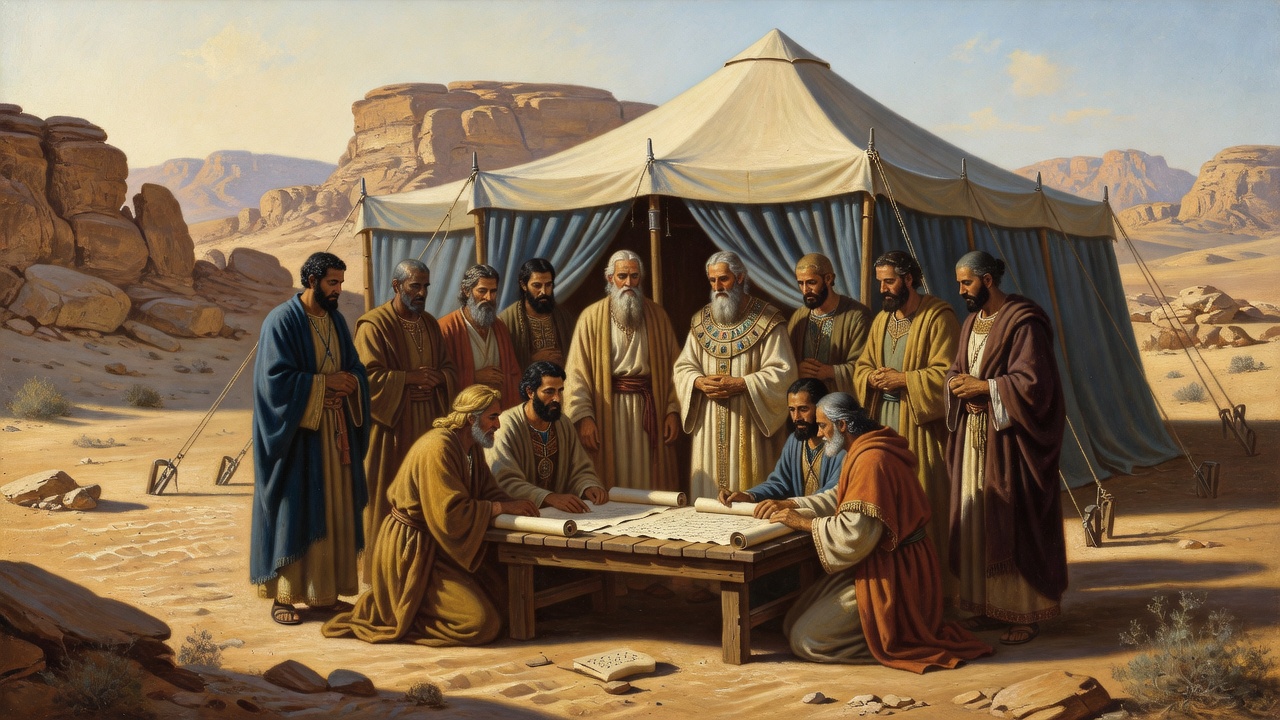
- The census was ordered in the Wilderness of Sinai on the first day of the second month in the second year after the Israelites departed Egypt. It counted every male aged twenty or older who was able to serve in the army, arriving at a total of 603,550 fighting men.Sources: the Bible text itself · Sinai
- Moses and Aaron conducted the registration alongside twelve appointed tribal leaders. Joseph was represented as two distinct tribal divisions named after his sons, Ephraim and Manasseh.Sources: the Bible text itself · Ephraim · Manasseh (son of Joseph)
- The tribe of Levi was entirely exempted from the military count. Instead, the Levites were assigned exclusively to care for, transport, assemble, and guard the tabernacle of the Testimony and its furnishings.Sources: the Bible text itself
Notes written with AI assistance from open sources (Theographic Bible Metadata, CC BY-SA 4.0; Easton’s Bible Dictionary, public domain) and reviewed before publishing.
Places in this chapter
- Egypt · 30.129, 31.308 · verse 1
- Wilderness of Sinai · Today: about 50 km around Jebel Musa · 28.540, 33.973 · verses 1, 19
Only places identified with high confidence are shown (90% or more according to the scholarly sources compiled by OpenBible). Period map: DARE (Digital Atlas of the Roman Empire), CC BY 4.0; modern map: © OpenStreetMap contributors; places: OpenBible.info (CC BY 4.0).
Credits and license for this translation
Tupàn ze'eg
Bible without Deuterocanon in Guajajára (BR:gub:Guajajára)
copyright © 2007 Wycliffe Bible Translators, Inc.
Language: Guajajára
Translation by: Wycliffe Bible Translators, Inc.
Guajajára [gub], Brazil
Copyright Information
© 2007, Wycliffe Bible Translators, Inc. All rights reserved.
This translation text is made available to you under the
terms of the Creative Commons License: Attribution-Noncommercial-No Derivative Works.
( http://creativecommons.org/licenses/by-nc-nd/3.0/ )
In addition, you have permission to port the text to different file formats, as long as you
do not change any of the text or punctuation of the Bible.
You may share, copy, distribute, transmit, and extract portions
or quotations from this work, provided that you include the above copyright
information:
You must give Attribution to the work.
You do not sell this work for a profit.
You do not make any derivative works that change any of the actual words or punctuation of the Scriptures.
Permissions beyond the scope of this license may be
available if you contact
us with your request.
Printed book ISBN 9788531109713
The Bible without Deuterocanon
in Guajajára
© 2007, Wycliffe Bible Translators, Inc. All rights reserved.
This translation is made available to you under the terms of the
Creative Commons Attribution-Noncommercial-No Derivatives license 4.0.
You may share and redistribute this Bible translation or extracts from it in any format, provided that:
You include the above copyright and source information.
You do not sell this work for a profit.
You do not change any of the words or punctuation of the Scriptures.
Pictures included with Scriptures and other documents on this site are licensed just for use with those Scriptures and documents.
For other uses, please contact the respective copyright owners.
2020-03-30
Source: http://ebible.org/gubBl/ · eBible.org