Números 1
Tupàn ze'eg · Toca un versículo para ver sus referencias cruzadas.
Acerca de este libro
Acerca de Números
- Números es el cuarto libro del Pentateuco. En hebreo se llama be-midbar, “en el desierto”; la Septuaginta griega lo llamó Números, el nombre que sigue siendo usual, porque registra un censo en el desierto de Sinaí y otro posterior en la llanura de Moab.Fuentes: Easton: Numbers, Book of
- El Easton's Bible Dictionary (1897) presenta Números, como los demás libros del Pentateuco, como escrito por Moisés. La historia que contiene va del segundo mes del segundo año después del Éxodo al comienzo del undécimo mes del cuadragésimo año, unos treinta y ocho años y diez meses.Fuentes: Easton: Numbers, Book of
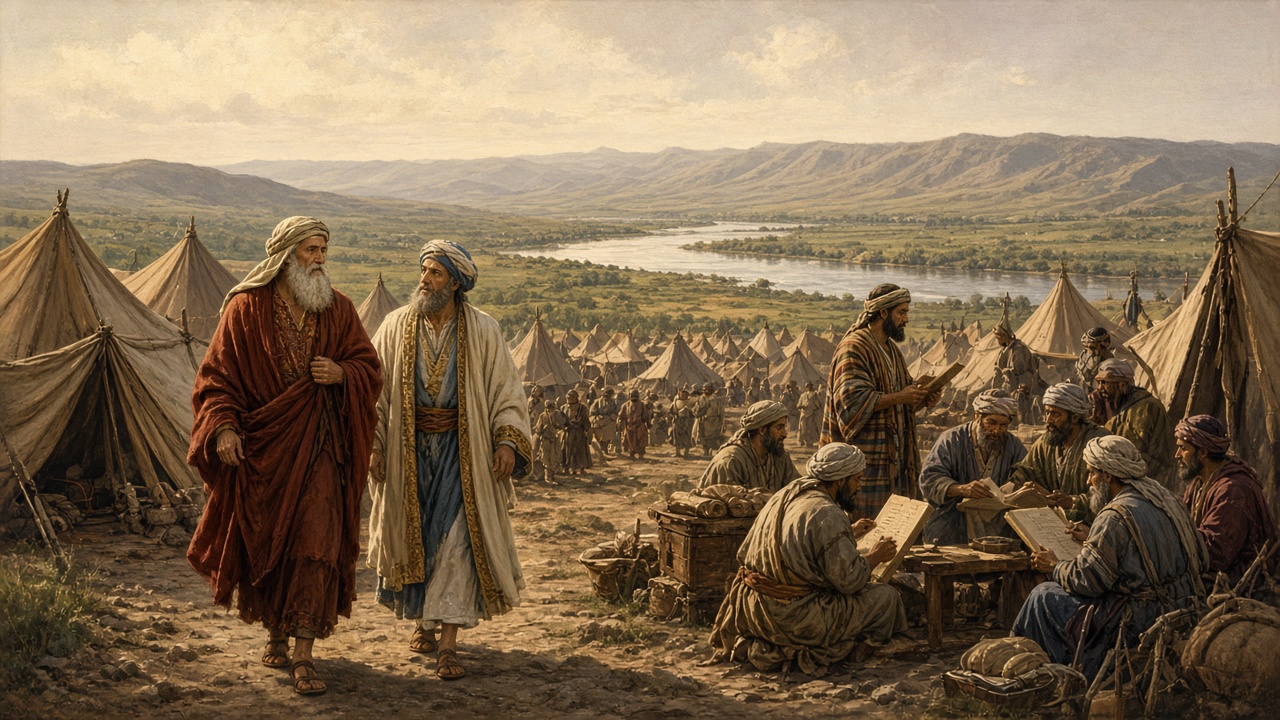
- La narración comienza en Sinaí, la región montañosa a la que Israel llegó en el tercer mes después del Éxodo y donde acampó cerca de un año, y sigue su ruta y sus campamentos por el desierto. Termina en las llanuras de Moab, al este del Jordán y del mar Muerto, frente a Jericó, su último campamento antes de entrar en Canaán, el país al oeste del Jordán. Easton describe esos años como un tiempo de peregrinación en el que aquella generación murió en el desierto, y señala que el pueblo era entonces menos numeroso que cuando salió de Egipto.Fuentes: Easton: Numbers, Book of · Sinai · Moab · Canaan
- Easton divide el libro en tres partes: el censo en Sinaí y los preparativos para reanudar la marcha, incluido el voto de nazareo (1–10:10); el viaje de Sinaí a Moab, el envío de los espías y el informe que trajeron, y las murmuraciones del pueblo, ocho veces, por las penurias del camino (10:11–21:20); y los sucesos en la llanura de Moab antes de cruzar el Jordán (21:21–36).Fuentes: Easton: Numbers, Book of
- Mientras Israel estaba acampado en las llanuras de Moab, Balac, hijo de Zipor y rey de Moab, por temor a ellos, mandó buscar a Petor, en Mesopotamia, a Balaam, hijo de Beor, para maldecirlos; la narración dice que Balaam no pudo hacerlo. Números 21:14 cita también “el libro de las guerras del Señor”, una obra que Easton dice que es incierta, quizá un escrito de Israel hoy perdido o un registro amorreo de las victorias de su rey Sehón.Fuentes: Easton: Numbers, Book of · Balaam · Balak
Notas escritas con ayuda de IA a partir de fuentes abiertas (Theographic Bible Metadata, CC BY-SA 4.0; Easton’s Bible Dictionary, dominio público) y revisadas antes de publicarse.
Mitài haw teko wapapar haw
1Izaew izuapyapyr oho Ezit ywy wi wà. Umumaw mokoz kwarahy wata pà wà. Mokoz haw zahy rehe pitài haw 'ar mehe Tupàn Tuweharupi Wiko Ma'e uze'eg Moizez pe ywyxiguhu Xinaz her ma'e rehe tàpuzràn Tupàn pe imonokatu pyrer pupe a'e kury.
2— Ne nehe, neryky'yr Àràw a'e nehe no, pepapar teko Izaew izuapyapyr paw pe wà nehe. Pemono'og uzeànàànàm ma'e pe wà nehe. 3Pemuapyk awa waner pape rehe nehe, aze wereko 20 kwarahy nehe, aze wereko wera'u nehe. A'e mehe upuner zauxiapekwer romo weko haw rehe wà nehe. 4Penoz putar amo uzeànàm ma'e wanuwihaw pitàitàigatu pe wà nehe. Pepytywà putar wemiaihu wapapar pà wà nehe. 5Na'aw awa penemipytywà àràm waner xe wà. Izypy mehe amume'u putar Izaew ta'yr her nehe. A'e re amume'u putar izuapyr her nehe no. Humen: Erizur, Xeneur ta'yr. Ximeàw: Xerumiew, Zurixanaz ta'yr. Zuta: Nazom, Aminanaw ta'yr. Ixakar: Netanew, Zuar ta'yr. Zemurom: Eriaw, Erom ta'yr. Eparai: Erizàm, Amiu ta'yr. Manaxe: Kamariew, Penazur ta'yr. Mezàmi: Aminà, Zineoni ta'yr. Nà: Aiezer, Amizanaz ta'yr. Azer: Paziew, Okirà ta'yr. Kaz: Eriazap, Newew ta'yr. Napitari: Aira, Enà ta'yr. Amumaw waner wamume'u haw kwez kury. Moizez wexaexak Izaew izuapyapyr wanuwihaw pitàitàigatu wà, uzeànàànàm ma'e wanekuzaromo har romo wà.
17Na'e mokoz haw zahy rehe pitài haw 'ar mehe Moizez a'e, Àràw a'e no, a'e 12 awa a'e wà nehe no, omono'og teko paw rupi wà kury. Upapar uzeànàànàmaw waneta haw wà. Umuapyk awa zauxiapekwer romo weko haw rehe upuner ma'e waner pape rehe wà. 19Nezewe Moizez upapar waneta haw ywyxiguhu Xinaz her ma'e rehe waneko mehe, Tupàn Tuweharupi Wiko Ma'e ize'eg awer rupi katete a'e wà.
20Awa 20 henataromo kwarahy hereko har zauxiapekwer romo weko haw rehe upuner ma'e umuapyk kar uwer paw rupi pape rehe wà, wànàm wanehe we wà, wamono'ogaw rehe we wà. Uzypyrog Humen Zako ta'yr ipy izuapyapyr wanehe we wà. Na'aw Zako ta'yr izuapyapyr waneta haw xe. Humen izuapyapyr wà: 46.500 awa wà. 22Ximeàw izuapyapyr wà: 59.300 awa wà. 24Kaz izuapyapyr wà: 45.650 awa wà. 26Zuta izuapyapyr wà: 74.600 awa wà. 28Ixakar izuapyapyr wà; 54.400 awa wà. 30Zemurom izuapyapyr wà: 57.400 awa wà. 32Eparai izuapyapyr wà: 40.500 awa wà. 34Manaxe izuapyapyr wà: 32.200 awa wà. 36Mezàmi izuapyapyr wà: 35.400 awa wà. 38Nà izuapyapyr wà: 62.700 awa wà. 40Azer izuapyapyr wà: 41.500 awa wà. 42Napitari izuapyapyr wà: 53.400 awa wà. 44Nezewe mehe upapar awa 20 henataromo kwarahy hereko har zauxiapekwer romo weko haw rehe upuner ma'e wà. Heta 603.550 wà.
Erewi wà
47Nupapar kwaw Erewi izuapyapyr wà. 48Ta'e Tupàn Tuweharupi Wiko Ma'e uze'eg nezewe Moizez pe a'e xe.
49— Aw zauxiapekwer romo weko haw rehe upuner ma'e wapapar mehe epapar zo Erewi izuapyapyr ne wà nehe. 50Emuzekaiw kar Erewi izuapyapyr tàpuzràn ihewe imonokatu pyrer rehe ne wà nehe. Uzekaiw putar tenaw ipupe har nànàn wà nehe, amo ma'e ipupe har nànàn no. Weraha putar tàpuzràn wà nehe, hehe we har paw wà nehe no. Uzapo putar hemuwete haw ipupe wà nehe. Umuapyk putar wàpuzràn izywyr wà nehe no. 51Aze weraha tàpuzràn ihewe imonokatu pyrer amo me wà nehe, umuàgà'ym putar wà nehe. Aze umuapyk wi amo me nehe, umuàgà'ym wi putar wà nehe no. Aze amo nuiko kwaw Erewi izuapyr romo nehe, aze uhem tàpuzràn ihewe imonokatu pyrer huwake nehe, pezuka nehe. 52Amogwer Izaew izuapyapyr upyta putar weko haw pe pitàitàigatu wà nehe, pànuhu ter heta haw huwake wà nehe, wànàm wanuwake wà nehe. 53Erewi izuapyapyr wiko putar tàpuzràn ihewe imonokatu pyrer izywyr wà nehe, hehe uzekaiw pà wà nehe. Nezewe mehe ni amo nuhem kwaw huwake wà nehe. Nezewe mehe naikwahy kwaw Izaew wanupe ihe nehe.
54Na'e teko uzapo ma'e paw Tupàn Tuweharupi Wiko Ma'e ize'eg Moizez pe imono pyrer rupi katete wà.
¿Sabías que…?
El censo en el desierto de Sinaí
- El censo se ordenó en el desierto de Sinaí el primer día del segundo mes del segundo año después de que los israelitas salieron de Egipto. Se contó a cada varón de veinte años o más apto para el servicio militar, sumando un total de 603.550 hombres.Fuentes: el propio texto bíblico · Sinai
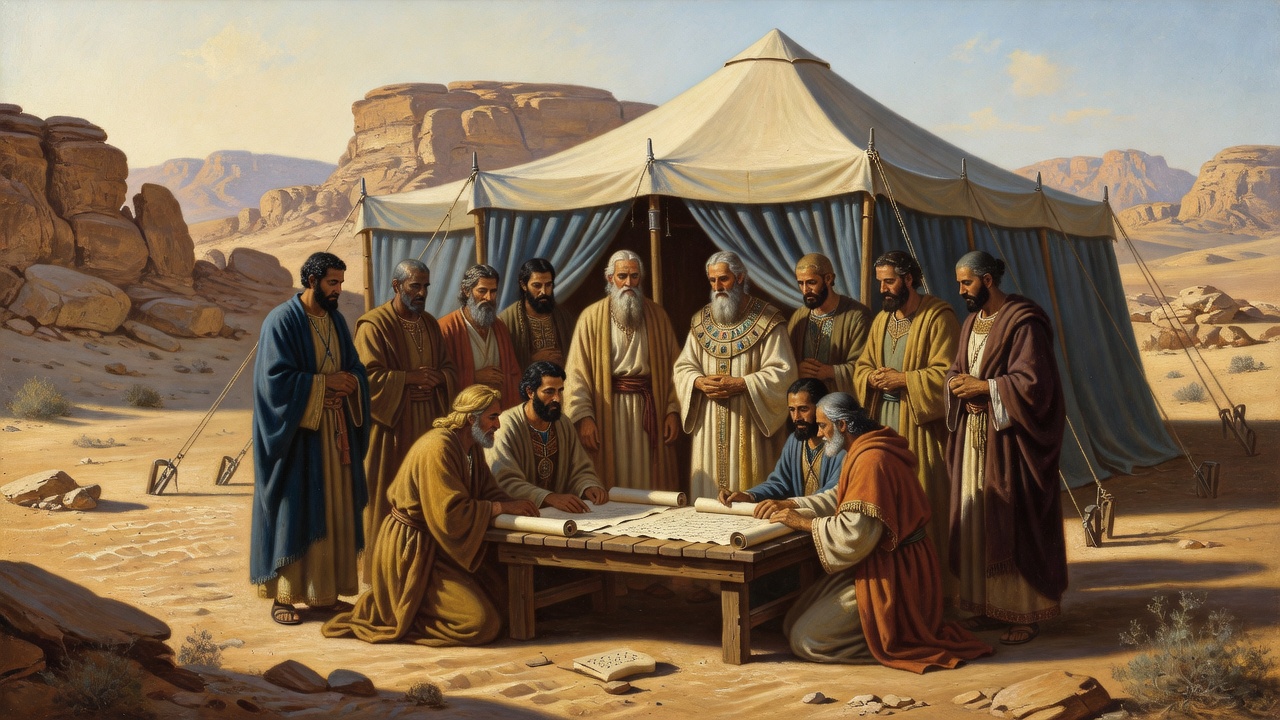
- Moisés y Aarón llevaron a cabo el registro junto con doce líderes tribales designados. José estuvo representado por dos divisiones tribales distintas con los nombres de sus hijos, Efraín y Manasés.Fuentes: el propio texto bíblico · Ephraim · Manasseh (son of Joseph)
- La tribu de Leví quedó totalmente excluida del censo militar. En su lugar, los levitas fueron asignados exclusivamente a cuidar, transportar, levantar y custodiar el tabernáculo del Testimonio y todos sus utensilios.Fuentes: el propio texto bíblico
Notas escritas con ayuda de IA a partir de fuentes abiertas (Theographic Bible Metadata, CC BY-SA 4.0; Easton’s Bible Dictionary, dominio público) y revisadas antes de publicarse.
Lugares de este capítulo
- Egypt · 30.129, 31.308 · versículo 1
- Wilderness of Sinai · Hoy: about 50 km around Jebel Musa · 28.540, 33.973 · versículos 1, 19
Solo aparecen lugares identificados con alta confianza (90 % o más según las fuentes académicas reunidas por OpenBible). Mapa de la época: DARE (Digital Atlas of the Roman Empire), CC BY 4.0; mapa actual: © colaboradores de OpenStreetMap; lugares: OpenBible.info (CC BY 4.0).
Créditos y licencia de esta traducción
Tupàn ze'eg
Bible without Deuterocanon in Guajajára (BR:gub:Guajajára)
copyright © 2007 Wycliffe Bible Translators, Inc.
Language: Guajajára
Translation by: Wycliffe Bible Translators, Inc.
Guajajára [gub], Brazil
Copyright Information
© 2007, Wycliffe Bible Translators, Inc. All rights reserved.
This translation text is made available to you under the
terms of the Creative Commons License: Attribution-Noncommercial-No Derivative Works.
( http://creativecommons.org/licenses/by-nc-nd/3.0/ )
In addition, you have permission to port the text to different file formats, as long as you
do not change any of the text or punctuation of the Bible.
You may share, copy, distribute, transmit, and extract portions
or quotations from this work, provided that you include the above copyright
information:
You must give Attribution to the work.
You do not sell this work for a profit.
You do not make any derivative works that change any of the actual words or punctuation of the Scriptures.
Permissions beyond the scope of this license may be
available if you contact
us with your request.
Printed book ISBN 9788531109713
The Bible without Deuterocanon
in Guajajára
© 2007, Wycliffe Bible Translators, Inc. All rights reserved.
This translation is made available to you under the terms of the
Creative Commons Attribution-Noncommercial-No Derivatives license 4.0.
You may share and redistribute this Bible translation or extracts from it in any format, provided that:
You include the above copyright and source information.
You do not sell this work for a profit.
You do not change any of the words or punctuation of the Scriptures.
Pictures included with Scriptures and other documents on this site are licensed just for use with those Scriptures and documents.
For other uses, please contact the respective copyright owners.
2020-03-30
Fuente: http://ebible.org/gubBl/ · eBible.org