Exodus 3
Η Παλαιά Διαθήκη κατά τη μετάφραση των εβδομήκοντα (Ο') | SEPTUAGINTA · Tap a verse to see its cross-references.
1ΚΑΙ Μωυσῆς ἦν ποιμαίνων τὰ πρόβατα Ἰοθόρ τοῦ γαμβροῦ αὐτοῦ τοῦ ἱερέως Μαδιὰμ καὶ ἤγαγε τὰ πρόβατα ὑπὸ τὴν ἔρημον καὶ ἦλθεν εἰς τὸ ὄρος Χωρήβ. 2ὤφθη δὲ αὐτῷ ἄγγελος Κυρίου ἐν πυρὶ φλογὸς ἐκ τοῦ βάτου, καὶ ὁρᾷ ὅτι ὁ βάτος καίεται πυρί, ὁ δὲ βάτος οὐ κατεκαίετο. 3εἶπε δὲ Μωυσῆς· παρελθὼν ὄψομαι τὸ ὅραμα τὸ μέγα τοῦτο, ὅτι οὐ κατακαίεται ὁ βάτος. 4ὡς δὲ εἶδε Κύριος ὅτι προσάγει ἰδεῖν, ἐκάλεσεν αὐτὸν ὁ Κύριος ἐκ τοῦ βάτου λέγων· Μωυσῆ, Μωυσῆ. ὁ δὲ εἶπε· τί ἐστι; 5ὁ δὲ εἶπε· μή ἐγγίσῃς ὧδε. λῦσαι τὸ ὑπόδημα ἐκ τῶν ποδῶν σου· ὁ γὰρ τόπος, ἐν ᾧ σὺ ἕστηκας, γῆ ἁγία ἐστί. 6καὶ εἶπεν· ἐγώ εἰμι ὁ Θεὸς τοῦ πατρός σου, Θεὸς Ἁβραὰμ καὶ Θεὸς Ἰσαὰκ καὶ Θεὸς Ἰακώβ. ἀπέστρεψε δὲ Μωυσῆς τὸ πρόσωπον αὐτοῦ· εὐλαβεῖτο γὰρ κατεμβλέψαι ἐνώπιον τοῦ Θεοῦ. 7εἶπε δὲ Κύριος πρὸς Μωυσῆν· ἰδὼν εἶδον τὴν κάκωσιν τοῦ λαοῦ μου τοῦ ἐν Αἰγύπτῳ καὶ τῆς κραυγῆς αὐτῶν ἀκήκοα ἀπὸ τῶν ἐργοδιωκτῶν· οἶδα γὰρ τὴν ὀδύνην αὐτῶν, 8καὶ κατέβην ἐξελέσθαι αὐτοὺς ἐκ χειρὸς τῶν Αἰγυπτίων καὶ ἐξαγαγεῖν αὐτοὺς ἐκ τῆς γῆς ἐκείνης καὶ εἰσαγαγεῖν αὐτοὺς εἰς γῆν ἀγαθὴν καὶ πολλήν, εἰς γῆν ρέουσαν γάλα καὶ μέλι, εἰς τὸν τόπον τῶν Χαναναίων καὶ Χετταίων καὶ Ἀμορραίων καὶ Φερεζαίων καὶ Γεργεσαίων καὶ Εὐαίων καὶ Ἰεβουσαίων 9καὶ νῦν ἰδοὺ κραυγὴ τῶν υἱῶν Ἰσραὴλ ἥκει πρός με, κἀγὼ ἑώρακα τὸν θλιμμόν, ὃν οἱ Αἰγύπτιοι θλίβουσιν αὐτούς. 10καὶ νῦν δεῦρο ἀποστείλω σε πρὸς Φαραὼ βασιλέα Αἰγύπτου, καὶ ἐξάξεις τὸν λαόν μου τοὺς υἱοὺς Ἰσρὴλ ἐκ γῆς Αἰγύπτου. 11καὶ εἶπε Μωυσῆς πρὸς τὸν Θεόν· τίς εἰμι ἐγώ, ὅτι πορεύσομαι πρὸς Φαραὼ βασιλέα Αἰγύπτου, καὶ ὅτι ἐξάξω τοὺς υἱοὺς Ἰσραὴλ ἐκ γῆς Αἰγύπτου; 12εἶπε δὲ ὁ Θεὸς Μωυσῇ λέγων· ὅτι ἔσομαι μετὰ σοῦ, καὶ τοῦτό σοι τὸ σημεῖον, ὅτι ἐγώ σε ἐξαποστέλλω ἐν τῷ ἐξαγαγεῖν σε τὸν λαόν μου ἐξ Αἰγύπτου καὶ λατρεύσετε τῷ Θεῷ ἐν τῷ ὄρει τούτῳ. 13καὶ εἶπε Μωυσῆς πρὸς τὸν Θεόν· ἰδοὺ ἐγὼ ἐξελεύσομαι πρὸς τοὺς υἱοὺς Ἰσραήλ, καὶ ἐρῶ πρὸς αὐτούς· ὁ Θεὸς τῶν πατέρων ἡμῶν ἀπέσταλκέ με πρὸς ὑμᾶς. ἐρωτήσουσί με· τί ὄνομα αὐτῷ; τί ἐρῶ πρὸς αὐτούς; 14καὶ εἶπεν ὁ Θεὸς πρὸς Μωυσῆν λέγων· ἐγώ εἰμι ὁ ὤν. καὶ εἶπεν· οὕτως ἐρεῖς τοῖς υἱοῖς Ἰσραήλ· ὁ ὢν ἀπέσταλκέ με πρὸς ὑμᾶς. 15καὶ εἶπεν ὁ Θεὸς πάλιν πρὸς Μωυσῆν· οὕτως ἐρεῖς τοῖς υἱοῖς Ἰσραήλ· Κύριος ὁ Θεὸς τῶν πατέρων ἡμῶν, Θεὸς Ἁβραὰμ καὶ Θεὸς Ἰσαὰκ καὶ Θεὸς Ἰακὼβ ἀπέσταλκέ με πρὸς ὑμᾶς· τοῦτό μού ἐστιν ὄνομα αἰώνιον καὶ μνημόσυνον γενεῶν γενεαῖς. 16ἐλθὼν οὖν συνάγαγε τὴν γερουσίαν τῶν υἱῶν Ἰσραὴλ καὶ ἐρεῖς πρὸς αὐτούς· Κύριος ὁ Θεὸς τῶν πατέρων ἡμῶν ὦπταί μοι, Θεὸς Ἀβραὰμ καὶ Θεὸς Ἰσαὰκ καὶ Θεὸς Ἰακώβ, λέγων· ἐπισκοπῇ ἐπέσκεμμαι ὑμᾶς καὶ ὅσα συμβέβηκεν ὑμῖν ἐν Αἰγύπτῳ. 17καὶ εἶπεν· ἀναβιβάσω ὑμᾶς ἐκ τῆς κακώσεως τῶν Αἰγυπτίων εἰς τὴν γῆν τῶν Χαναναίων καὶ Χετταίων καὶ Ἀμορραίων καὶ Φερεζαίων καὶ Γεργεσαίων καὶ Εὐαίων καὶ Ἰεβουσαίων, εἰς γῆν ρέουσαν γάλα καὶ μέλι. 18καὶ εἰσακούσονταί σου τῆς φωνῆς· καὶ εἰσελεύσῃ σὺ καὶ ἡ γερουσία Ἰσραὴλ πρὸς Φαραὼ βασιλέα Αἰγύπτου καὶ ἐρεῖς πρὸς αὐτόν· ὁ Θεὸς τῶν Ἑβραίων προσκέκληται ἡμᾶς· πορευσόμεθα οὖν ὁδὸν τριῶν ἡμερῶν εἰς τὴν ἔρημον, ἵνα θύσωμεν τῷ Θεῷ ἡμῶν. 19ἐγὼ δὲ οἶδα ὅτι οὐ προήσεται ὑμᾶς Φαραὼ βασιλεὺς Αἰγύπτου πορευθῆναι, ἐὰν μὴ μετὰ χειρὸς κραταιᾶς. 20καὶ ἐκτείνας τὴν χεῖρα πατάξω τοὺς Αἰγυπτίους ἐν πᾶσι τοῖς θαυμασίοις μου, οἷς ποιήσω ἐν αὐτοῖς, καὶ μετὰ ταῦτα ἐξαποστελεῖ ὑμᾶς. 21καὶ δώσω χάριν τῷ λαῷ τούτῳ ἐναντίον τῶν Αἰγυπτίων· ὅταν δὲ ἀποτρέχητε, οὐκ ἀπελεύσεσθε κενοί· 22ἀλλὰ αἰτήσει γυνὴ παρὰ γείτονος καὶ συσκήνου αὐτῆς σκεύη ἀργυρᾶ καὶ χρυσᾶ καὶ ἱματισμόν, καὶ ἐπιθήσετε ἐπὶ τοὺς υἱοὺς ὑμῶν καὶ ἐπὶ τὰς θυγατέρας ὑμῶν καὶ σκυλεύσετε τούς Αἰγυπτίους.
Did you know?
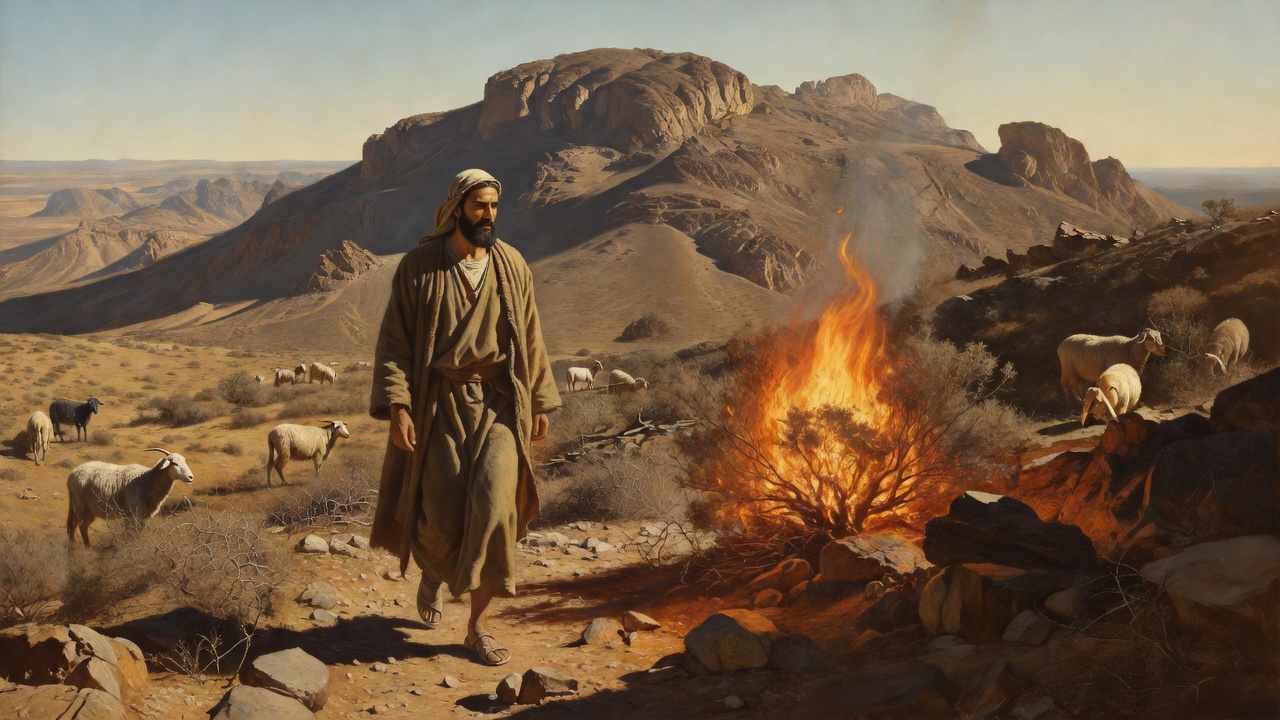
The Call of Moses at the Burning Bush
- Moses is shepherding in Midian when this chapter begins. The Midianites were a nomadic Arabian tribe descended from Midian, Abraham's fourth son by Keturah, whose name is explained as strife. They lived chiefly in the desert north of Arabia, and the Sinai peninsula was grazing land for their flocks; it was there, after fleeing Egypt, that Moses became a servant and then the priest's son-in-law.Sources: the Bible text itself · Midian · Midian
- His father-in-law is Jethro, called the priest of Midian. Easton's Bible Dictionary (1897) equates that priest with Raguel and says that, if the two names belong to one man, Raguel may be regarded as his personal name and Jethro, meaning excellency, as an official title.Sources: the Bible text itself · Jethro
- Moses leads the flock to Horeb, the mountain of God. The name is explained as desert, or mountain, of the dried-up ground, a general term for the whole range of which Sinai was one summit; Easton's Bible Dictionary (1897) gives the modern name of the range as Jebel Musa and describes a huge block about two miles long and about one mile wide, with a very spacious plain called Er Rahah at its north-east end, where the Israelites later camped for nearly a year.Sources: the Bible text itself · Horeb
Notes written with AI assistance from open sources (Theographic Bible Metadata, CC BY-SA 4.0; Easton’s Bible Dictionary, public domain) and reviewed before publishing.
Places in this chapter
- Midian · 28.495, 35.012 · verse 1
- Mount Horeb · Today: Jebel Musa · 28.540, 33.973 · verse 1
- Egypt · 30.129, 31.308 · verses 7, 8, 10, 11, 12, 16, 17, 18, 19, 20, 22
Only places identified with high confidence are shown (90% or more according to the scholarly sources compiled by OpenBible). Period map: DARE (Digital Atlas of the Roman Empire), CC BY 4.0; modern map: © OpenStreetMap contributors; places: OpenBible.info (CC BY 4.0).
Credits and license for this translation
Η Παλαιά Διαθήκη κατά τη μετάφραση των εβδομήκοντα (Ο') | SEPTUAGINTA
The Old Testament in Ancient Greek, Septuagint translation
Public Domain
℗ Orthodox Media Network
Language: Ελληνικά (Greek, Ancient)
Dialect: Koine
ORTHODOX MEDIA NETWORK-ΟΡΘΟΔΟΞΟ ΔΙΚΤΥΟ ΕΝΗΜΕΡΩΣΗΣ
A Voice from the Heart of Mount Athos to the World
Orthodox Media Network ( https://vivlos.link/DEqNY ) was founded on Mount Athos – the only monastic republic in the world – with main mission to promote the Holy Scriptures and preserve the spiritual and cultural heritage of Orthodox monasticism, using mainly the internet.
Since 2010, its founder and General Secretary, Apostolos Vavylis, has become the first person internationally to record the entire Bible in both the original ancient Greek text and its modern Greek translation. This work – unprecedented in Orthodox tradition – has reached and inspired millions:
* Over 15 million people (estimated) have listened to at least one chapter of the recorded Bible.
* Hundreds of independent accounts across nearly every digital platform, share these recordings in countless forms.
We have never claimed copyright or demanded takedowns of these reproductions — because our goal is not profit, but the free and faithful dissemination of the Word of God and the blessing it brings to the world.
We welcome anyone that would like to publicly share our work with the only condition to publish the present text as a minimum respect to our mission.
* Our vision:
To place a Bible in every Greek-speaking home, wherever it may be on earth.
There are an estimated 17 million Greeks living in nearly 100 countries.
* If you wish to support or partner with us, please contact:
* [email protected]
The Old Testament (Septuaginta)
We are a voice of Orthodoxy, a witness of the Word, and a blessing to the Nations.
2026-02-13
Source: http://ebible.org/grclxx/ · eBible.org