Exodus 4
Η Παλαιά Διαθήκη κατά τη μετάφραση των εβδομήκοντα (Ο') | SEPTUAGINTA · Tap a verse to see its cross-references.
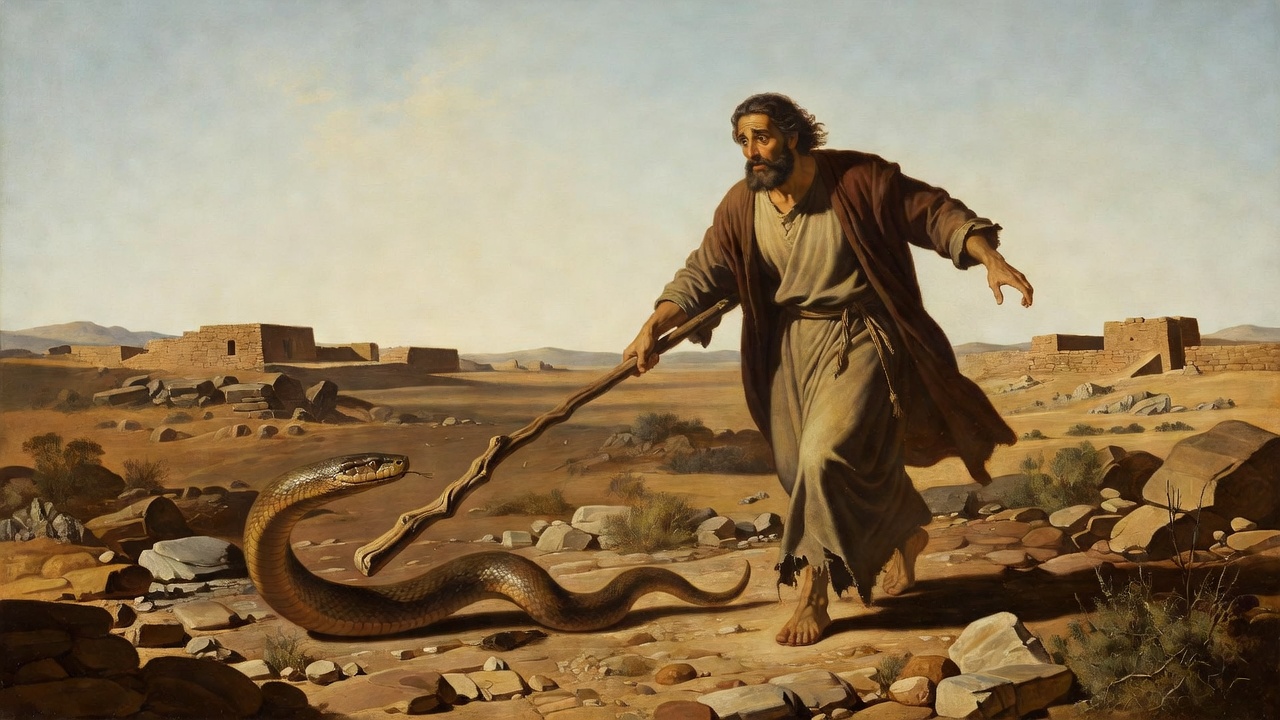
1ΑΠΕΚΡΙΘΗ δὲ Μωυσῆς καὶ εἶπεν· ἐὰν μὴ πιστεύσωσί μοι, μηδὲ εἰσακούσωσι τῆς φωνῆς μου, ἐροῦσι γάρ, ὅτι οὐκ ὦπταί σοι ὁ Θεός, τί ἐρῶ πρὸς αὐτούς; 2εἶπε δὲ αὐτῷ Κύριος· τί τοῦτό ἐστι τὸ ἐν τῇ χειρί σου; ὁ δὲ εἶπε· ράβδος. 3καὶ εἶπε· ρίψον αὐτὴν ἐπὶ τὴν γῆν. καὶ ἔρριψεν αὐτὴν ἐπὶ τὴν γῆν, καὶ ἐγένετο ὄφις· καὶ ἔφυγε Μωυσῆς ἀπ᾿ αὐτοῦ. 4καὶ εἶπε Κύριος πρὸς Μωυσῆν· ἔκτεινον τὴν χεῖρα καὶ ἐπιλαβοῦ τῆς κέρκου· ἐκτείνας οὖν τὴν χεῖρα ἐπελάβετο τῆς κέρκου, καὶ ἐγένετο ράβδος ἐν τῇ χειρὶ αὐτοῦ· 5ἵνα πιστεύσωσί σοι ὅτι ὦπταί σοι ὁ Θεὸς τῶν πατέρων αὐτῶν, Θεὸς Ἁβραὰμ καὶ Θεὸς Ἰσαὰκ καὶ Θεὸς Ἰακώβ. 6εἶπε δὲ αὐτῷ Κύριος πάλιν· εἰσένεγκον τὴν χεῖρά σου εἰς τὸν κόλπον σου. καὶ εἰσήνεγκε τὴν χεῖρα αὐτοῦ εἰς τὸν κόλπον αὐτοῦ· καὶ ἐξήνεγκε τὴν χεῖρα αὐτοῦ ἐκ τοῦ κόλπου αὐτοῦ, καὶ ἐγενήθη ἡ χεὶρ αὐτοῦ ὡσεὶ χιών. 7καὶ εἶπε πάλιν· εἰσένεγκον τὴν χεῖρά σου εἰς τὸν κόλπον σου. καὶ εἰσήνεγκε τὴν χεῖρα εἰς τὸν κόλπον αὐτοῦ· καὶ ἐξήνεγκεν αὐτὴν ἐκ τοῦ κόλπου αὐτοῦ, καὶ πάλιν ἀποκατέστη εἰς τὴν χρόαν τῆς σαρκὸς αὐτῆς. 8ἐὰν δὲ μὴ πιστεύσωσί σοι, μηδὲ εἰσακούσωσι τῆς φωνῆς τοῦ σημείου τοῦ πρώτου, πιστεύσουσί σοι τῆς φωνῆς τοῦ σημείου τοῦ δευτέρου. 9καὶ ἔσται ἐὰν μὴ πιστεύσωσί σοι τοῖς δυσὶ σημείοις τούτοις, μηδὲ εἰσακούσωσι τῆς φωνῆς σου, λήψῃ ἀπὸ τοῦ ὕδατος τοῦ ποταμοῦ καὶ ἐκχεεῖς ἐπὶ τὸ ξηρόν, καὶ ἔσται τὸ ὕδωρ, ὃ ἐὰν λάβῃς ἀπὸ τοῦ ποταμοῦ, αἷμα ἐπὶ τοῦ ξηροῦ. 10εἶπε δὲ Μωυσῆς πρὸς Κύριον· δέομαι, Κύριε, οὐχ ἱκανός εἰμι πρὸ τῆς χθές, οὐδὲ πρὸ τῆς τρίτης ἡμέρας, οὐδὲ ἀφ᾿ οὗ ἤρξω λαλεῖν τῷ θεράποντί σου· ἰσχνόφωνος καὶ βραδύγλωσσος ἐγώ εἰμι. 11εἶπε δὲ Κύριος πρὸς Μωυσῆν· τίς ἔδωκε στόμα ἀνθρώπῳ, καὶ τίς ἐποίησε δύσκωφον καὶ κωφόν, βλέποντα καὶ τυφλόν; οὐκ ἐγὼ ὁ Θεός; 12καὶ νῦν πορεύου, καὶ ἐγὼ ἀνοίξω τὸ στόμα σου, καὶ συμβιβάσω σε, ὃ μέλλεις λαλῆσαι. 13καὶ εἶπε Μωυσῆς· δέομαι, Κύριε, προχείρισαι δυνάμενον ἄλλον, ὃν ἀποστελεῖς. 14καὶ θυμωθεὶς ὀργῇ Κύριος ἐπὶ Μωυσῆν εἶπεν· οὐκ ἰδοὺ Ἀαρὼν ὁ ἀδελφός σου ὁ Λευΐτης; ἐπίσταμαι ὅτι λαλῶν λαλήσει αὐτός σοι· καὶ ἰδοὺ αὐτὸς ἐξελεύσεται εἰς συνάντησίν σοι καὶ ἰδών σε χαρήσεται ἐν ἑαυτῷ. 15καὶ ἐρεῖς πρὸς αὐτὸν καὶ δώσεις τὰ ρήματά μου εἰς τὸ στόμα αὐτοῦ· καὶ ἐγὼ ἀνοίξω τὸ στόμα σου καὶ τὸ στόμα αὐτοῦ καὶ συμβιβάσω ὑμᾶς ἃ ποιήσετε. 16καὶ αὐτός σοι λαλήσει πρὸς τὸν λαόν, καὶ αὐτὸς ἔσται σου στόμα, σὺ δὲ αὐτῷ ἔσῃ τὰ πρὸς τὸν Θεόν. 17καὶ τὴν ράβδον ταύτην τὴν στραφεῖσαν εἰς ὄφιν λήψῃ ἐν τῇ χειρί σου, ἐν ᾗ ποιήσεις ἐν αὐτῇ τὰ σημεῖα.
18Ἐπορεύθη δὲ Μωυσῆς καὶ ἀπέστρεψε πρὸς Ἰοθὸρ τὸν γαμβρὸν αὐτοῦ καὶ λέγει· πορεύσομαι καὶ ἀποστρέψω πρὸς τοὺς ἀδελφούς μου τοὺς ἐν Αἰγύπτῳ καὶ ὄψομαι, εἰ ἔτι ζῶσι. καὶ εἶπεν Ἰοθὸρ Μωυσῇ· βάδιζε ὑγιαίνων. μετὰ δὲ τὰς ἡμέρας τὰς πολλὰς ἐκείνας ἐτελεύτησεν ὁ βασιλεὺς Αἰγύπτου. 19εἶπε δὲ Κύριος πρὸς Μωυσῆν ἐν Μαδιάμ· βάδιζε, ἄπελθε εἰς Αἴγυπτον· τεθνήκασι γὰρ πάντες οἱ ζητοῦντές σου τὴν ψυχήν. 20ἀναλαβὼν δὲ Μωυσῆς τὴν γυναῖκα καὶ τὰ παιδία ἀνεβίβασεν αὐτὰ ἐπὶ τὰ ὑποζύγια καὶ ἐπέστρεψεν εἰς Αἴγυπτον· ἔλαβε δὲ Μωυσῆς τὴν ράβδον τὴν παρὰ τοῦ Θεοῦ ἐν τῇ χειρὶ αὐτοῦ. 21εἶπε δὲ Κύριος πρὸς Μωυσῆν· πορευομένου σου καὶ ἀποστρέφοντος εἰς Αἴγυπτον, ὅρα πάντα τὰ τέρατα, ἃ δέδωκα ἐν ταῖς χερσί σου, ποιήσεις αὐτὰ ἐναντίον Φαραώ· ἐγὼ δὲ σκληρυνῶ τὴν καρδίαν αὐτοῦ, καὶ οὐ μὴ ἐξαποστείλῃ τὸν λαόν. 22σὺ δὲ ἐρεῖς τῷ Φαραώ· τάδε λέγει Κύριος· υἱὸς πρωτότοκός μου Ἰσραήλ· 23εἶπα δέ σοι· ἐξαπόστειλον τὸν λαόν μου, ἵνα μοι λατρεύσῃ· εἰ μὲν οὖν μὴ βούλει ἐξαποστεῖλαι αὐτούς, ὅρα οὖν, ἐγὼ ἀποκτενῶ τὸν υἱόν σου τὸν πρωτότοκον. 24ἐγένετο δὲ ἐν τῇ ὁδῷ ἐν τῷ καταλύματι συνήντησεν αὐτῷ ἄγγελος Κυρίου καὶ ἐζήτει αὐτὸν ἀποκτεῖναι. 25καὶ λαβοῦσα Σεπφώρα ψῆφον περιέτεμε τὴν ἀκροβυστίαν τοῦ υἱοῦ αὐτῆς καὶ προσέπεσε πρὸς τοὺς πόδας αὐτοῦ καὶ εἶπεν· ἔστη τὸ αἷμα τῆς περιτομῆς τοῦ παιδίου μου. 26καὶ ἀπῆλθεν ἀπ᾿ αὐτοῦ, διότι εἶπεν· ἔστη τὸ αἷμα τῆς περιτομῆς τοῦ παιδίου μου.
27Εἶπε δὲ Κύριος πρὸς Ἀαρών· πορεύθητι εἰς συνάντησιν Μωυσῆ εἰς τὴν ἔρημον· καὶ ἐπορεύθη καὶ συνήντησεν αὐτῷ ἐν τῷ ὄρει τοῦ Θεοῦ, καὶ κατεφίλησαν ἀλλήλους. 28καὶ ἀνήγγειλε Μωυσῆς τῷ Ἀαρὼν πάντας τοὺς λόγους Κυρίου, οὓς ἀπέστειλε, καὶ πάντα τὰ σημεῖα, ἃ ἐνετείλατο αὐτῷ. 29ἐπορεύθη δὲ Μωυσῆς καὶ Ἀαρὼν καὶ συνήγαγον τὴν γερουσίαν τῶν υἱῶν Ἰσραήλ. 30καὶ ἐλάλησεν Ἀαρὼν πάντα τὰ ρήματα ταῦτα, ἃ ἐλάλησεν ὁ Θεὸς πρὸς Μωυσῆν, καὶ ἐποίησε τὰ σημεῖα ἐναντίον τοῦ λαοῦ. 31καὶ ἐπίστευσεν ὁ λαὸς καὶ ἐχάρη, ὅτι ἐπεσκέψατο ὁ Θεὸς τοὺς υἱοὺς Ἰσραὴλ καὶ ὅτι εἶδεν αὐτῶν τὴν θλίψιν· κύψας δὲ ὁ λαὸς προσεκύνησε.
Did you know?
Moses’ Signs and Return to Egypt
- Aaron was born in Egypt three years before his younger brother Moses. God sent him to meet Moses in the wilderness at the mountain of God; because Aaron could speak well, he was to be the spokesman who relayed the LORD’s words to the people.Sources: Aaron · the Bible text itself
- Moses was told that, if the first two signs were not believed, he should take water from the Nile and pour it on the dry ground, where it would become blood. In the Old Testament that river is frequently called Sihor, “the black stream,” or simply “the river.”Sources: Nile · the Bible text itself
- The command to return reached Moses in Midian, the territory of a nomadic Arabian tribe in the desert north of the Arabian peninsula, where the Sinai peninsula served as pasture for their flocks. Jethro, the priest of Midian and Moses’ father-in-law, told him to go in peace, so Moses set out with his wife and sons, carrying the staff of God.Sources: Midian · Jethro · the Bible text itself
Notes written with AI assistance from open sources (Theographic Bible Metadata, CC BY-SA 4.0; Easton’s Bible Dictionary, public domain) and reviewed before publishing.
Places in this chapter
- Nile · Today: Nile River · 31.465, 30.367 · verse 9
- Egypt · 30.129, 31.308 · verses 18, 19, 20, 21, 24, 29
- Midian · 28.495, 35.012 · verse 19
Only places identified with high confidence are shown (90% or more according to the scholarly sources compiled by OpenBible). Period map: DARE (Digital Atlas of the Roman Empire), CC BY 4.0; modern map: © OpenStreetMap contributors; places: OpenBible.info (CC BY 4.0).
Credits and license for this translation
Η Παλαιά Διαθήκη κατά τη μετάφραση των εβδομήκοντα (Ο') | SEPTUAGINTA
The Old Testament in Ancient Greek, Septuagint translation
Public Domain
℗ Orthodox Media Network
Language: Ελληνικά (Greek, Ancient)
Dialect: Koine
ORTHODOX MEDIA NETWORK-ΟΡΘΟΔΟΞΟ ΔΙΚΤΥΟ ΕΝΗΜΕΡΩΣΗΣ
A Voice from the Heart of Mount Athos to the World
Orthodox Media Network ( https://vivlos.link/DEqNY ) was founded on Mount Athos – the only monastic republic in the world – with main mission to promote the Holy Scriptures and preserve the spiritual and cultural heritage of Orthodox monasticism, using mainly the internet.
Since 2010, its founder and General Secretary, Apostolos Vavylis, has become the first person internationally to record the entire Bible in both the original ancient Greek text and its modern Greek translation. This work – unprecedented in Orthodox tradition – has reached and inspired millions:
* Over 15 million people (estimated) have listened to at least one chapter of the recorded Bible.
* Hundreds of independent accounts across nearly every digital platform, share these recordings in countless forms.
We have never claimed copyright or demanded takedowns of these reproductions — because our goal is not profit, but the free and faithful dissemination of the Word of God and the blessing it brings to the world.
We welcome anyone that would like to publicly share our work with the only condition to publish the present text as a minimum respect to our mission.
* Our vision:
To place a Bible in every Greek-speaking home, wherever it may be on earth.
There are an estimated 17 million Greeks living in nearly 100 countries.
* If you wish to support or partner with us, please contact:
* [email protected]
The Old Testament (Septuaginta)
We are a voice of Orthodoxy, a witness of the Word, and a blessing to the Nations.
2026-02-13
Source: http://ebible.org/grclxx/ · eBible.org