Zephaniah 2
Kitaaba Woyyuu · Tap a verse to see its cross-references.
Cubbuu Irraa Deebi'uu
1Isin gosa qaanii hin qanne, wolitti qabama'aa, wolitti dacha'a'a! 2Akka huura qilleensaan haxowamuu adoo hin haxowamin, mufiin Mootii Waan Maraa ta akka ibiddaa bobeettu adoo isinitti hin dhufin, guyyaan mufii Mootii Waan Maraa jabaan adoo isinitti hin dhufin wolitti qabama'a! 3Isin worri gad ifi qabee lafa irra le'u, ka ajaja isaatiif ajajantanu, hujii balchittii huja'a; Mootii Waan Maraa duratti ifi gad qaba'a! Guyyaa mufii isaa san isin hin milixxan fa te'a.
Muraa Gosa Biyya Adda Addaa Ta Adaala Yerusaalemiititti Murantu
4Qachaan Gaaza'aatii fi Ashiqalonii duwwaa hin te'an; kolbaan Ashidoodii orra'aan oofamanee hin bayan, kolbaan Eqroonille qachaa ifii keessaa hin oofaman. 5Ee, worra abbaayaa qarqaraa gosa Keretii isiniif aanne'e! Ee, Kana'aanii lafa Filisxeemotaa, «Ani isin hin balleessa; nami tokkolle hin hafu» ka jedhu, jechi Mootii Waan Maraa isin irratti dubbatameera. 6Latti teessan ta abbaayaa qarqaraa addee horiin dheeedu, kaloo tissitootaatii fi gooree hooloti itti galanu hin teeti. 7Sanyiin Yihuda'aa baraareen hatte lafa abbaayaa qarqaraa teeti san hin qabatan. Horiin isaanii achi hin dheedan; tissitooti halkan mana worra Ashiqalonii keessa hin bulan. Mootiin Waan Maraa Waaqi isaanii isaaniif hin yaadata; worra isaan duraa booji'amelle isaaniif hin deebisa.
8Mootiin Waan Maraa Ka Waan Mara dade, «Ani murgoo worra Mo'aabii, arraba worra Amooniille ka isaan kolbaa tiyya arrassanee, lafa isaanii qabatiisaaf itti kooranelle dhage'eera. 9Tanaaf, ani dhugumaan jiraata'a; worri Mo'aabii akka worra Sodoomii worri Amooniille akka worra Gomora'aa addee midhaan ijjumaa itti hin lannee fi addee boolla sooddaa, addee haga bara baraa diigante hin te'an; kolbaan tiyya worri lubbu'uun hafe karra isaanii hin saaman; lafa isaanille hin dhaalan» jedha.
10Kolbaan Mo'aabiitii fi Amoonii kolbaa Mootii Waan Maraa Ka Waan Mara dadee irratti murganee waan kooraneef gatii koora ifii hin dhaggatan. 11Mootiin Waan Maraa waaqota dharaa ka lafa isaanii mara yennaa balleessu, isaan biratti ka sodaatame hin te'a; gosi biyya adda addaa ta cinaa abbaaya'aatii fi oddoolotaa marti tokko tokkoonuu addee jiranutti isaaf hin sagadan.
12Isinille, ee worra Itoophiya'aa! Shallaagaa kiyyaan hin ijjeefantan.
13Inni hunna ifiitiin worra kaabaa Asoor hin balleessa; Nanawweelle onsee akka goomole'ee hin gossa. 14Hori'ii fi bineensoti adda addaa achi hin ciisan; urungu'uu fi harraaqessi utubaa isi'ii irra hin bulan; qoonqoon isaaniille karaa foddaa manaatiin hin dhage'ama; karaa balbalaatiin kosiin hin tuulama. Utubaan dareeraa ka hindheensaa duwwaa hin hafa. 15Qachaan kun ka nageyaa fi gammadaan le'u; ka ifiin, «Ana malee nami dhibiin hin jiru» jedhee yaade, amma ammoo attamiin addee ona bineensi keessa le'u te'e? Worri karaa san dabaru martinuu, harka ifii ol qabee itti hin murga.
Did you know?
Judgments on the Surrounding Nations
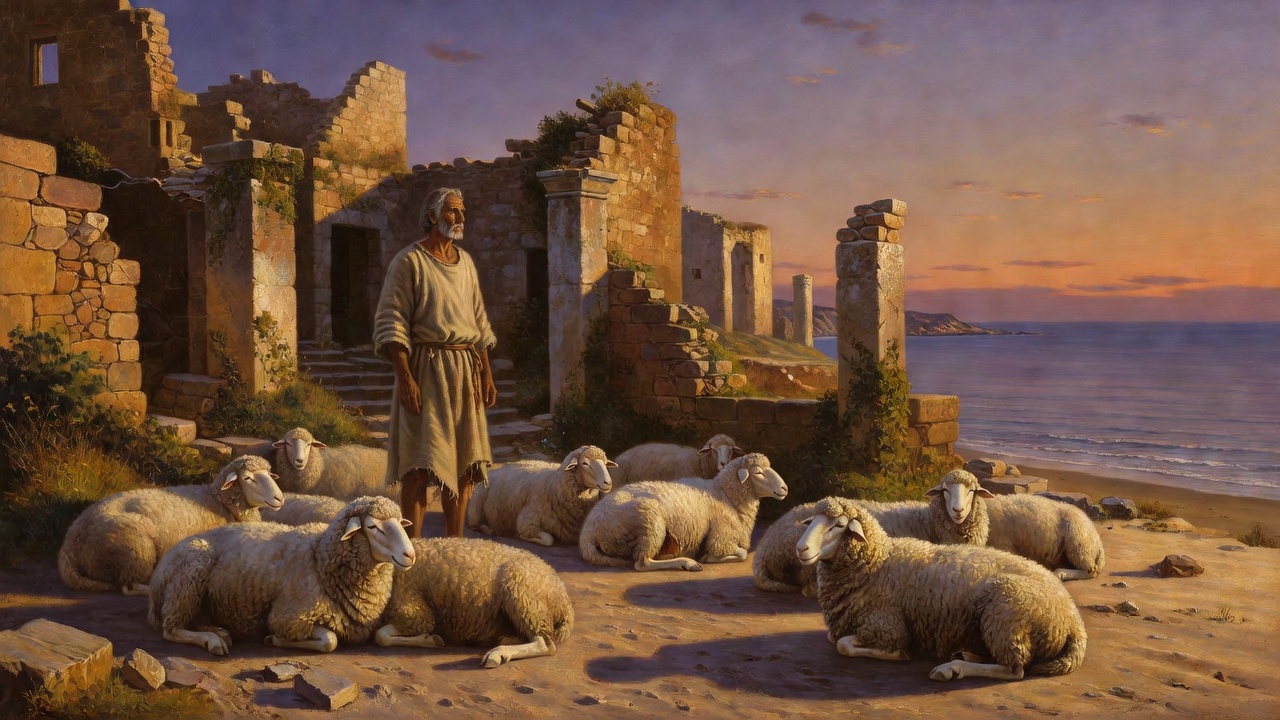
- Zephaniah lists four of the five major Philistine cities—Gaza, Ashkelon, Ashdod, and Ekron—situated along the Mediterranean coast. He prophesies that their bustling maritime settlements will become quiet pastures and sheepfolds for the surviving remnant of Judah.Sources: the Bible text itself · Gaza · Ashkelon · Ekron
- The chapter pronounces judgment in every direction around Judah: the Philistines to the west, Moab and Ammon to the east of the Jordan, Cush to the south, and Assyria to the north. Moab, located east of the Dead Sea, is warned that its pride and taunts will turn its territory into a wasteland of salt pits and weeds.Sources: the Bible text itself · Moab
- Zephaniah portrays the proud Assyrian capital of Nineveh as a future ruin where wild creatures roam and owls roost atop the pillars of its exposed cedar buildings.Sources: the Bible text itself
Notes written with AI assistance from open sources (Theographic Bible Metadata, CC BY-SA 4.0; Easton’s Bible Dictionary, public domain) and reviewed before publishing.
Places in this chapter
- Ashdod · Today: Tel Ashdod · 31.757, 34.658 · verse 4
- Ashkelon · Today: Tel Ashkelon · 31.664, 34.546 · verses 4, 7
- Ekron · Today: Tel Miqne · 31.777, 34.852 · verse 4
- Gaza · Today: Tell Harube · 31.504, 34.464 · verse 4
- Canaan · 32.767, 35.333 · verse 5
- Crete · 35.310, 24.893 · verse 5
- Ammon · 31.955, 35.934 · verses 8, 9
- Moab · Today: Moab 1 · 31.181, 35.701 · verses 8, 9
- Assyria · 36.359, 43.153 · verse 13
- Nineveh · 36.359, 43.153 · verse 13
Only places identified with high confidence are shown (90% or more according to the scholarly sources compiled by OpenBible). Period map: DARE (Digital Atlas of the Roman Empire), CC BY 4.0; modern map: © OpenStreetMap contributors; places: OpenBible.info (CC BY 4.0).
Credits and license for this translation
Kitaaba Woyyuu
Oromo, Borana-Arsi-Guji: Kitaaba Woyyuu (Bible)
copyright © 2025 The Word for the World International
Language: gujii
Contributor: Bible Society of Ethiopia
This translation is made available to you under the terms of the
Creative Commons Attribution Share-Alike license 4.0.
You have permission to share and redistribute this Bible translation in any format and to make reasonable revisions and adaptations of this translation, provided that:
You include the above copyright and source information.
If you make any changes to the text, you must indicate that you did so in a way that makes it clear that the original licensor is not necessarily endorsing your changes.
If you redistribute this text, you must distribute your contributions under the same license as the original.
Pictures included with Scriptures and other documents on this site are licensed just for use with those Scriptures and documents.
For other uses, please contact the respective copyright owners.
Note that in addition to the rules above, revising and adapting God's Word involves a great responsibility to be true to God's Word. See Revelation 22:18-19.
2025-05-02
Source: http://ebible.org/gax/ · eBible.org