Zephaniah 1
Kitaaba Woyyuu · Tap a verse to see its cross-references.
About this book
About Zephaniah
- Easton's Bible Dictionary (1897) presents Zephaniah, whose name it explains as "Jehovah has concealed" or "Jehovah of darkness," as the son of Cushi and great-grandson of Hezekiah, and as the ninth of the minor prophets. It dates his prophecy to the reign of Josiah, king of Judah (641–610 B.C.), and says he was contemporary with Jeremiah, with whom he had much in common.Sources: Easton: Zephaniah · Zephaniah · Cushi
- Amon, Josiah's father, restored idolatry in Judah, and Easton reads Zephaniah 1:4 and 3:4, 11 as referring to that reign. The same dictionary links Zephaniah 1:4–6 with the worship of Baal and Zephaniah 1:5 with Malcham, described as the national idol of the Ammonites. Josiah, who came to the throne at eight, is presented as later acting against the idolatry that prevailed.Sources: Amon · Josiah · Baal · Malcham
- Easton's Bible Dictionary outlines the book as an introduction announcing judgment on the world and on Israel because of their transgressions (1:1–6), a description of the judgment (1:7–18), an exhortation to seek God while there is still time (2:1–3), judgment on other peoples (2:4–15), what it calls the hopeless misery of Jerusalem (3:1–7), and a promise of salvation (3:8–20).Sources: Easton: Zephaniah
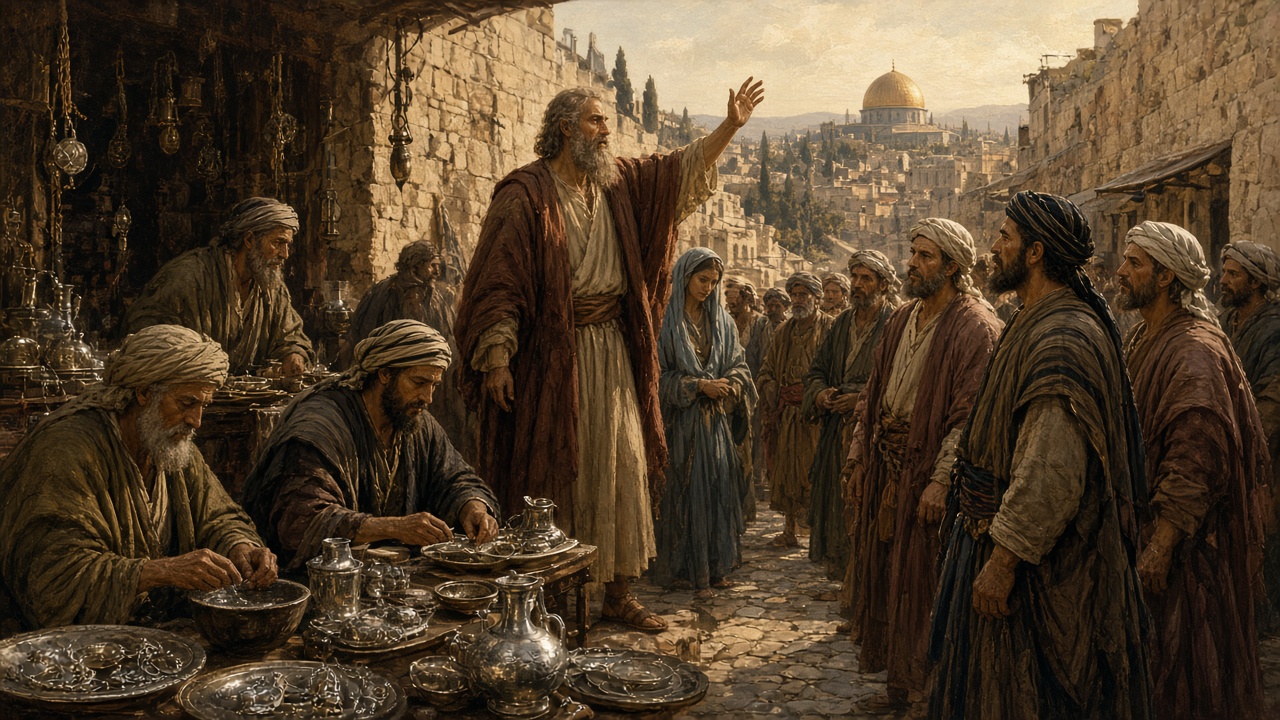
- Zephaniah 1:11 names the Mortar, a place in or near Jerusalem inhabited by silver merchants. It has been conjectured that this was the Phoenician quarter of the city, where traders of that nation lived.Sources: Mortar
Notes written with AI assistance from open sources (Theographic Bible Metadata, CC BY-SA 4.0; Easton’s Bible Dictionary, public domain) and reviewed before publishing.
Yihudaa Irratti Guyyaa Muraa Mootii Waan Maraa
1Kun jecha Mootii Waan Maraa ka bara Yosiyaasiin ilmi Amoonii mootii Yihuda'aa te'eeruun gara Sefaaniyaa ilma Kuushii, akaakoo Gedaaliya'aa, abuuboo Amaariya'aa, abutturroo Hisqiyaasii dhufe.
2Mootiin Waan Maraa, «Ani waan mara lafa irraa haxowee hin balleessa; 3namaa fi horii, allaatotaa fi qurxummiille haxowee hin balleessa; worra hamoolee garagaggalchee, sanyii namaa lafa irraa hin balleessa.
4«Ani kolbaa Yerusaalemiitii fi Yihuda'aa mara hin adaba. Baraaree worra Ba'aal waaqonfatuutii fi maqaa hayyoota isa tajaajiltuu achii hin balleessa. 5Worra heellichoo manaa gubbaa bayee aduu, ji'aa fi urji'iif sagadu hin balleessa. Worra na waaqonfataa maqaa kiyyaan kakataa, achiin duuba ammoo maqaa waaqa dharaa Miilkomiitiin kakatulle hin balleessa. 6Worra ana Waaqa hordofuu didee duubatti deebi'e, worra na hin barbaadanne yookiin akka isaan sooressu worra na hin gaafanne hin balleessa» jedhe.
7Guyyaan Goottaa Mootii Waan Maraa waan dhikaateef, Mootii Waan Maraa duratti cadhisa'a! Mootiin Waan Maraa kolbaa ifii akka horii ciinca'aaf qalamuu dabarsee kenniisaaf qopheesseera; inni diina kolbaa Yihuda'aa saamu adda baasee qopheesseera. 8Mootiin Waan Maraa, «Guyyaa ciinca'aa sanitti ani Mootiin Waan Maraa qondaaltotaa fi ilmaan mootichaatii fi worra waaqota orma waaqonfatu maraayyuu hin adaba. 9Guyyaa san worra gulantaa balbalaa irra utaalu mara, mana goottolee ifii meyaan guutiisaaf, worra wo hatuu fi nama ijjeesu mara, guyyaa sanitti ani hin adaba» jedha.
10Mootiin Waan Maraa, «Guyyaa sanitti, karra karra qurxummi'ii jedhantu duraa, iyyi, kutaa qacha'aa haareya keessaa, wiiccifati, kooba irraa qoonqoo waan caccabuu guddoo hin dhageettan. 11Isin worri addee dikko'oo keessa leetanu, daldaltooti teessan martinuu waan badaneef, worri meetii daldalanu martinuu waan du'aneef wiiccifadha'a!
12«Guyyaa sanitti ani issa'aan Yerusaalem hin barbaada; namoota isi'ii worra akka daadhii woyni'ii ta cumaa irratti hattee te'ane, worra, ‹Waaqi waan dansaa yookiin hantuulle hin huju› jedhee yaadu hin adaba. 13Karri isaanii hin saamama; manni isaanii hin diigama; mana hin ijaarratan; ammoo keessa hin le'anu; muka woyni'ii hin dhaabbatan; ammoo daadhii muka woynii sanii hin unanu» jedha.
14Guyyaan Mootii Waan Maraa guddaan dhikaateera; ariifatee dhufaara; guyyaan sun guddoo ka sodaachisu; guyyaa Mootii Waan Maraa sanitti loltooti jajjabootinuu sodaatanee, iyya jadduu iyyan. 15Guyyaan sun guyyaa mufi'ii, guyyaa gargalaatii fi farriisaa, guyyaa diigamaatii fi badi'ii, guyyaa dimimmisaatii fi dukkanaa, guyyaa duumensaatii fi dukkana dimmaa ti; 16guyyaa san qachoota kushee dhaka'aa qabanuu fi xelleephoo dhaka'aa dhedheertuu irratti qoonqoon tultulla'aatii fi iyya lolaa hin dhage'ama.
17Mootiin Waan Maraa, «Ani namoota irratti gaargala hin fida, isaan ana Mootii Waan Maraa waan yakkaneef, akka namoota balla'aa hin deeman; dhiigi isaanii akka buku'uu hin lola'a; reeffi isaanii akka kosi'ii hin gatama» jedha.
18Guyyaa mufii Mootii Waan Maraa sanitti meetiin isaanii yookiin worqiin isaanii isaan fayyisuu hin dande'anu; biyyi lafaa duudiin ibidda aarii isaatiin hin baddi; inni worra lafa irra le'anu mara dedhuma hin fixa.
Did you know?
The Day of the LORD and Judgment on Idolatry
- Zephaniah traces his lineage back four generations to Hezekiah, dating his prophetic ministry to the reign of King Josiah of Judah. Josiah came to power after his father, King Amon, had restored idolatry across Judah before being assassinated by his own servants.Sources: the Bible text itself · Josiah · Amon · Hizkiah
- The chapter denounces religious syncretism in Jerusalem, where people bowed on rooftops to the host of heaven and combined their devotion to the LORD with oaths to Baal and Malcham, the national idol of the Ammonites.Sources: the Bible text itself · Baal · Malcham
- The prophecy specifies landmarks in Jerusalem that would experience turmoil, including the Fish Gate and the Mortar (or Hollow), a district inhabited by merchants who weighed out silver.Sources: the Bible text itself · Fish Gate · Mortar
Notes written with AI assistance from open sources (Theographic Bible Metadata, CC BY-SA 4.0; Easton’s Bible Dictionary, public domain) and reviewed before publishing.
Places in this chapter
- Jerusalem · 31.777, 35.234 · verses 4, 12
- Fish Gate · Today: in Jerusalem · 31.777, 35.234 · verse 10
- Second Quarter · Today: in Jerusalem · 31.777, 35.234 · verse 10
- Canaan · 32.767, 35.333 · verse 11
- Mortar · Today: in Jerusalem · 31.777, 35.234 · verse 11
Only places identified with high confidence are shown (90% or more according to the scholarly sources compiled by OpenBible). Period map: DARE (Digital Atlas of the Roman Empire), CC BY 4.0; modern map: © OpenStreetMap contributors; places: OpenBible.info (CC BY 4.0).
Credits and license for this translation
Kitaaba Woyyuu
Oromo, Borana-Arsi-Guji: Kitaaba Woyyuu (Bible)
copyright © 2025 The Word for the World International
Language: gujii
Contributor: Bible Society of Ethiopia
This translation is made available to you under the terms of the
Creative Commons Attribution Share-Alike license 4.0.
You have permission to share and redistribute this Bible translation in any format and to make reasonable revisions and adaptations of this translation, provided that:
You include the above copyright and source information.
If you make any changes to the text, you must indicate that you did so in a way that makes it clear that the original licensor is not necessarily endorsing your changes.
If you redistribute this text, you must distribute your contributions under the same license as the original.
Pictures included with Scriptures and other documents on this site are licensed just for use with those Scriptures and documents.
For other uses, please contact the respective copyright owners.
Note that in addition to the rules above, revising and adapting God's Word involves a great responsibility to be true to God's Word. See Revelation 22:18-19.
2025-05-02
Source: http://ebible.org/gax/ · eBible.org