Habakkuk 3
Kitaaba Woyyuu · Tap a verse to see its cross-references.
Daadimata Anbaaqoomii
1Daadimati Anbaaqoomii raagichaa ka faaru'uun dhikaate asii gad jira.
2Ee Mootii Waan Maraa kiyya,
hujii maade'ee ta ati hujje mara dhage'ee guddoo sodaadhe;
ammalle bara keennatti hujii teeti ta durii ede'ii huji;
bara kennalle'etti akka beekkantu godhi;
yennaa aartulle nu mararfadhu.
3Waaqi woyyichi biyya Temaanii,
gaara Phaaraan irraa hin dhufa;
Ulfinni isaa ol-gubbaa golleera;
leellisi isaalle lafa guuteera.
4Ifi ulfinna isaa akka ifa adu'uu ti;
harka isaa ka hunni isaa keessa dhokatteertu keessaa
balaqqeessi hin baya.
5Balaan isa dura deema;
dhukkubi nama fixu isa duubaan deema.
6Yennaa inni dhaabbatu latti hin tachooti;
yennaa inni isaan ilaalu
gosi biyya adda addaa hin hollatti.
Gaaroti durii durii hin sigigan;
kooboti durii durii ta inni irra deemaa turelle
gad hin lixan.
Karaan inni irra deemu ammoo
bara baraan jiraata.
7Worri Itoophiya'aa rakkatuun,
worri Miidiyaaniille hollatuun dhagge.
8Ee Mootii Waan Maraa, ati lagatti hin aartee?
Yennaa fardoolee teeti yaabbattee,
garreettaa fardaa ka injifachaa keetii irra teette,
abbaaya'atti guddoo aarteetii?
9Ati guubee teeti qopheeffattee
daaya keeti buqqifattee,
lagaan lafa gargar tarsaatte.
10Gaaroti si dhagganee hollatane;
lolaan roobaa lafa haxowaa tare.
Bisaan abbaaya'aa shookkisee,
danbaliin isi'iille ol kaate.
11Yennaa daaya keeti isaanitti calalaqee,
eboon teeti isaanitti itte
adu'uu fi jiin adduma jiranutti dhaabbatane.
12Ati aari'iin lafa irra ideenta;
aariille'een gosa biyya adda addaa hin dhidhiitta.
13Ati kolbaa teeti fayyisiisaaf,
ka muudame sanille fayyisiisaaf baate.
Sooressa worra hamoole'ee butuchitee,
hordofattoota isaalle balleessitee,
mata'aa haga miilaatitti qullaa isa hamburte.
14Akka hobonbolatti'ii nu bittinneessiisaaf ka dhufe,
Yennaa loltooti isaa akka hobonbolatti'ii
nu bittinneessiisaaf,
hiyyeeyyii dhokataneeranu fixanee
itti gammadiisaaf dhufane;
ati woraanuma isaatiin sooressa isaanii woraante.
15Yennaa ati fardoo teetiin abbaayaa dhidhiitte,
abbaayaan raafante.
16Ani waan kana duudii dhage'ee, roromme;
qoonqoo tana irraa ta kaate hidhiin tiyya hollatte.
Lafeen tiyya shante;
miilli kiyyalle lelleqe.
Te'uu malee yennaan worri nu miidhu
adabamu haga dhuttu ossaan hin eegadha'a.
17Muki harru'uu midhaan buusuu dhabulle,
muki woyni'ii midhaan buusuu dhabulle,
muki ejersaalle midhaan kennuu dhabulle,
fichaan midhaan baasuu dhabulle,
hooleen gooree keessaa dhabantulle duwwaa hattulle
loon moonaa keessaa dhabamanulle,
18tun marti teetulle
ani Mootii Waan Maraatitti hin gammada;
Waaqa fayyisaa kiyyatti gammadee firinxiixa.
19Mootiin Waan Maraa Waaqi hunna tiyya.
Inni miila kiyya akka miila gadansaa hin jabeessa;
gaara irralle akka deemu na hin godha.
Sooressitoota faarsitootaatiif: Meya ribu'uutiin ta faarfatantu.
Did you know?
Habakkuk's Prayer and Song of Faith
- The poem depicts God appearing from the southern wilderness, mentioning Teman in southern Idumea and Mount Paran on the desert boundary of the Promised Land. These geographic references echo ancient poetic descriptions of the Lord marching in majesty from the south.Sources: Teman · Mount Paran · the Bible text itself
- Cushan and Midian are portrayed trembling before the divine advance. The Midianites were nomadic Arabian tribes dwelling in tents across the desert regions and pasturelands of Sinai and northern Arabia.Sources: Cushan · Midian · the Bible text itself
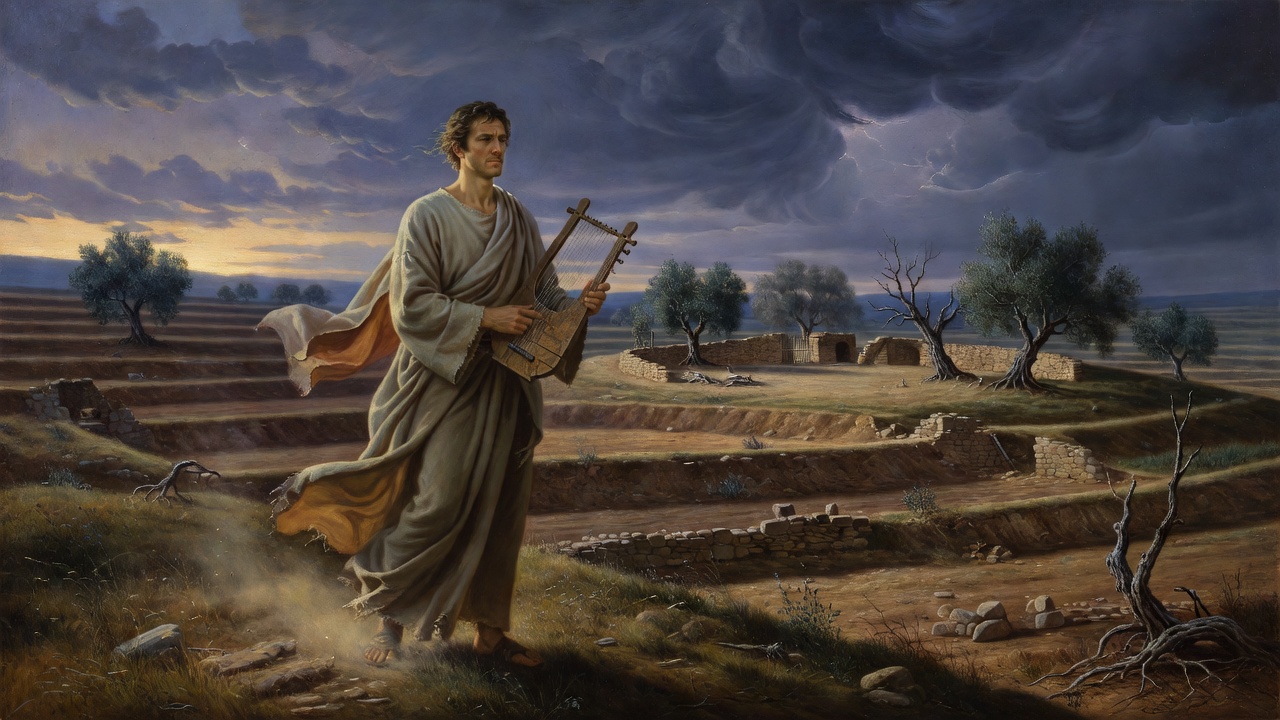
- The chapter is structured as a liturgical psalm, complete with musical terms such as 'Shigionoth', 'Selah', and a closing dedication to the choirmaster for performance with stringed instruments.Sources: the Bible text itself
Notes written with AI assistance from open sources (Theographic Bible Metadata, CC BY-SA 4.0; Easton’s Bible Dictionary, public domain) and reviewed before publishing.
Places in this chapter
- Midian · 28.495, 35.012 · verse 7
Only places identified with high confidence are shown (90% or more according to the scholarly sources compiled by OpenBible). Period map: DARE (Digital Atlas of the Roman Empire), CC BY 4.0; modern map: © OpenStreetMap contributors; places: OpenBible.info (CC BY 4.0).
Credits and license for this translation
Kitaaba Woyyuu
Oromo, Borana-Arsi-Guji: Kitaaba Woyyuu (Bible)
copyright © 2025 The Word for the World International
Language: gujii
Contributor: Bible Society of Ethiopia
This translation is made available to you under the terms of the
Creative Commons Attribution Share-Alike license 4.0.
You have permission to share and redistribute this Bible translation in any format and to make reasonable revisions and adaptations of this translation, provided that:
You include the above copyright and source information.
If you make any changes to the text, you must indicate that you did so in a way that makes it clear that the original licensor is not necessarily endorsing your changes.
If you redistribute this text, you must distribute your contributions under the same license as the original.
Pictures included with Scriptures and other documents on this site are licensed just for use with those Scriptures and documents.
For other uses, please contact the respective copyright owners.
Note that in addition to the rules above, revising and adapting God's Word involves a great responsibility to be true to God's Word. See Revelation 22:18-19.
2025-05-02
Source: http://ebible.org/gax/ · eBible.org