Proverbs 26
The Orthodox Jewish Bible · Tap a verse to see its cross-references.
Similitudes and Instructions
1As sheleg (snow) in kayitz (summer), and as matar (rain) at katzir (harvest),
so kavod is not fitting for a kesil (fool).
2As the tzippor in its fluttering, as the swallow in its flying,
so the kelelah (curse) without cause shall not alight.
3A shot (whip) for the sus, a bridle for the chamor,
and a shevet for the back of kesilim.
4Answer not a kesil (fool) according to his folly,
lest thou also be like unto him.
5Answer a kesil (fool) according to his folly,
lest he be chacham in his own eyes.
6He that sendeth a message by the yad of a kesil (fool)
cutteth off the raglayim, and drinketh chamas.
7The legs of the pisei'ach (lame man) hang limp;
so is a mashal in the peh (mouth) of kesilim.
8As he that bindeth an even (stone) in a sling,
so is he that giveth kavod to a kesil (fool).
9As a thornbush goeth up into the yad of a shikkor,
so is a mashal in the peh (mouth) of kesilim.
10Like an archer wounding all,
so is he that hireth the kesil (fool), or hireth the passerby.
11As a kelev returneth to his vomit,
so a kesil (fool) returneth to his folly.
12Seest thou an ish chacham in his own eyes?
There is more tikvah (hope) for a kesil (fool) than for him.
13The atzel (sluggard, lazy one) saith, There is a lion in the derech;
an ari is in the rechovot.
14As the delet (door) turneth upon its hinges,
so doth the atzel (sluggard, lazy one) upon his mittah (bed).
15The atzel (sluggard, lazy one) hideth his yad in his dish;
itʼs too tiring to bring it back to his peh (mouth) again.
16The atzel (sluggard, lazy one) is chacham in his own eyes,
more than seven that give an excellent answer.
17He that passeth by, and meddleth in a quarrel that doth not belong to him,
is like one that taketh a kelev by the oznayim.
18As a mad man who shooteth
firebrands, khitzim (arrows), and mavet,
19So is the ish that deceiveth his re'a,
and saith, Am I not just having a laugh?
20Where no wood is, there the eish goeth out;
so where there is no nirgan (gossip, slanderer, talebearer), the strife dieth down.
21As charcoal is to burning coals, and wood to eish;
so is a contentious ish to kindle strife.
22The devarim of a nirgan (gossip, slanderer, talebearer) are like tasty morsels,
and they go down into the innermost chambers of the beten.
23Fervent sfatayim (lips) and a lev rah
are like earthenware covered with silver dross.
24He that hateth disguises it with his sfatayim (lips),
and within harboreth mirmah (deceit);
25When he speaketh fair, believe him not;
for there are sheva to'avot in his lev.
26Whose hatred is covered by guile,
yet his wickedness shall be exposed before the whole kahal.
27He who diggeth a shachat (pit) shall fall therein,
and he that rolleth an even (stone),
it will roll back upon him.
28A lashon sheker hateth those that are crushed by it;
and a flattering peh (mouth) worketh ruin.
Did you know?
Fools, Sluggards, and Strife
- Verses 4 and 5 offer seemingly contradictory instructions on whether to answer a fool. Taken together, these paired sayings demonstrate that practical wisdom involves discerning the context: engaging foolish arguments risks descending to the fool's level, while confronting folly can prevent self-delusion.Sources: the Bible text itself
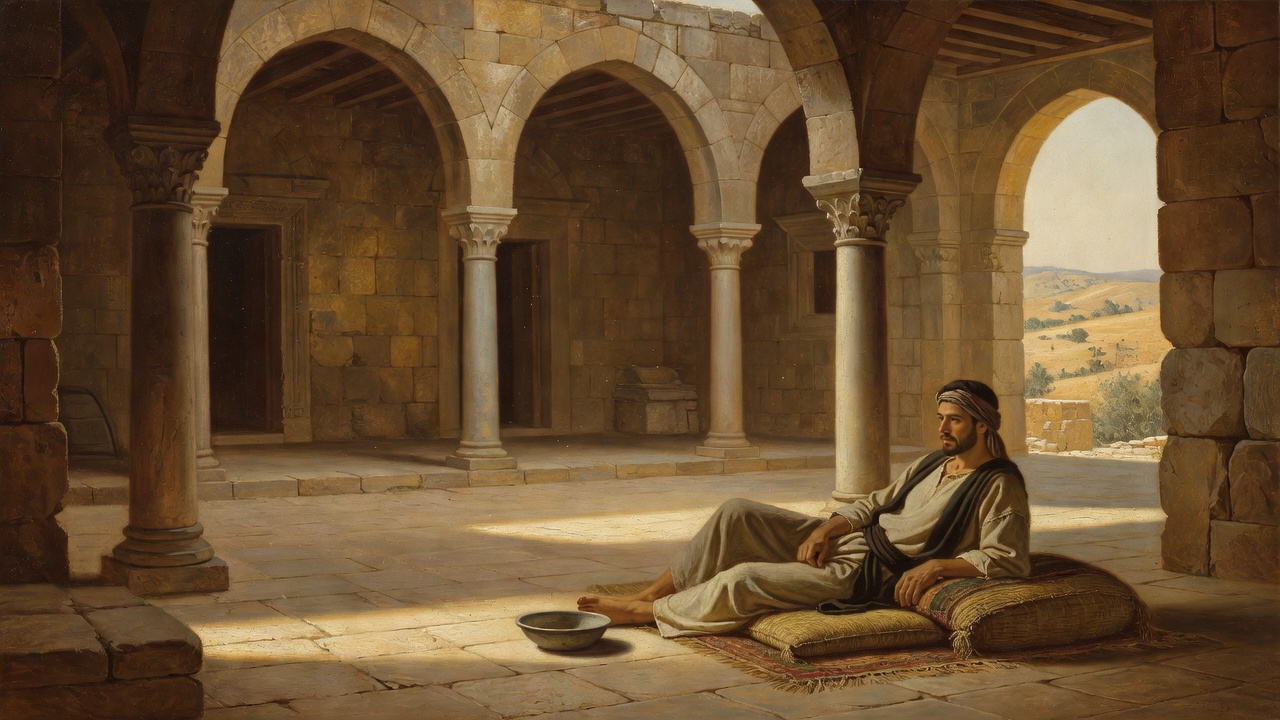
- The chapter uses vivid, humorous imagery to portray the sluggard. The lazy person invents wild excuses such as a lion roaming the streets, turns endlessly in bed like a door on its hinges, and finds it too exhausting even to lift a hand from a dish back to the mouth.Sources: the Bible text itself
- Proverbs 26 compares interpersonal conflict to a fire that depends entirely on fuel to keep burning. When gossip and talebearing are removed, strife naturally ceases, just as a fire dies out when it lacks wood or charcoal.Sources: the Bible text itself
Notes written with AI assistance from open sources (Theographic Bible Metadata, CC BY-SA 4.0; Easton’s Bible Dictionary, public domain) and reviewed before publishing.
Credits and license for this translation
The Orthodox Jewish Bible
The Orthodox Jewish Bible - Tanakh and Orthodox Jewish Brit Chadasha - The Holy Bible
copyright © 2002-2011, 2021, 2024 Artists for Israel International
Language: English
Contributor: Artists for Israel International
THE ORTHODOX JEWISH TANAKH
Artists For Israel Intl Inc.
This version also appears with the Orthodox Yiddish Triglot which presents the Hebrew Yiddish script in Latin script and an English word for word translation, available at afii.org/Torah
To donate PayPal.Me
This translation is made available to you under the terms of the
Creative Commons Attribution license 4.0.
You may share and redistribute this Bible translation or extracts from it in any format, provided that:
You include the above copyright and source information.
If you make any changes to the text, you must indicate that you did so in a way that makes it clear that the original licensor is not necessarily endorsing your changes.
Pictures included with Scriptures and other documents on this site are licensed just for use with those Scriptures and documents.
For other uses, please contact the respective copyright owners.
Note that in addition to the rules above, revising and adapting God's Word involves a great responsibility to be true to God's Word. See Revelation 22:18-19.
2026-01-06
Section headings adapted from the Berean Standard Bible (public domain); they are not part of this translation’s text.
Source: http://ebible.org/engojb/ · eBible.org