Proverbios 26
The Orthodox Jewish Bible · Toca un versículo para ver sus referencias cruzadas.
Similitudes and Instructions
1As sheleg (snow) in kayitz (summer), and as matar (rain) at katzir (harvest),
so kavod is not fitting for a kesil (fool).
2As the tzippor in its fluttering, as the swallow in its flying,
so the kelelah (curse) without cause shall not alight.
3A shot (whip) for the sus, a bridle for the chamor,
and a shevet for the back of kesilim.
4Answer not a kesil (fool) according to his folly,
lest thou also be like unto him.
5Answer a kesil (fool) according to his folly,
lest he be chacham in his own eyes.
6He that sendeth a message by the yad of a kesil (fool)
cutteth off the raglayim, and drinketh chamas.
7The legs of the pisei'ach (lame man) hang limp;
so is a mashal in the peh (mouth) of kesilim.
8As he that bindeth an even (stone) in a sling,
so is he that giveth kavod to a kesil (fool).
9As a thornbush goeth up into the yad of a shikkor,
so is a mashal in the peh (mouth) of kesilim.
10Like an archer wounding all,
so is he that hireth the kesil (fool), or hireth the passerby.
11As a kelev returneth to his vomit,
so a kesil (fool) returneth to his folly.
12Seest thou an ish chacham in his own eyes?
There is more tikvah (hope) for a kesil (fool) than for him.
13The atzel (sluggard, lazy one) saith, There is a lion in the derech;
an ari is in the rechovot.
14As the delet (door) turneth upon its hinges,
so doth the atzel (sluggard, lazy one) upon his mittah (bed).
15The atzel (sluggard, lazy one) hideth his yad in his dish;
itʼs too tiring to bring it back to his peh (mouth) again.
16The atzel (sluggard, lazy one) is chacham in his own eyes,
more than seven that give an excellent answer.
17He that passeth by, and meddleth in a quarrel that doth not belong to him,
is like one that taketh a kelev by the oznayim.
18As a mad man who shooteth
firebrands, khitzim (arrows), and mavet,
19So is the ish that deceiveth his re'a,
and saith, Am I not just having a laugh?
20Where no wood is, there the eish goeth out;
so where there is no nirgan (gossip, slanderer, talebearer), the strife dieth down.
21As charcoal is to burning coals, and wood to eish;
so is a contentious ish to kindle strife.
22The devarim of a nirgan (gossip, slanderer, talebearer) are like tasty morsels,
and they go down into the innermost chambers of the beten.
23Fervent sfatayim (lips) and a lev rah
are like earthenware covered with silver dross.
24He that hateth disguises it with his sfatayim (lips),
and within harboreth mirmah (deceit);
25When he speaketh fair, believe him not;
for there are sheva to'avot in his lev.
26Whose hatred is covered by guile,
yet his wickedness shall be exposed before the whole kahal.
27He who diggeth a shachat (pit) shall fall therein,
and he that rolleth an even (stone),
it will roll back upon him.
28A lashon sheker hateth those that are crushed by it;
and a flattering peh (mouth) worketh ruin.
¿Sabías que…?
Necios, Perezosos y Contiendas
- Los versículos 4 y 5 ofrecen instrucciones aparentemente contradictorias sobre cómo responder al necio. En conjunto, estos proverbios muestran que la sabiduría práctica requiere discernir la ocasión: contestar a la necedad puede rebajar a una persona, mientras que confrontarla evita que el necio se crea sabio.Fuentes: el propio texto bíblico
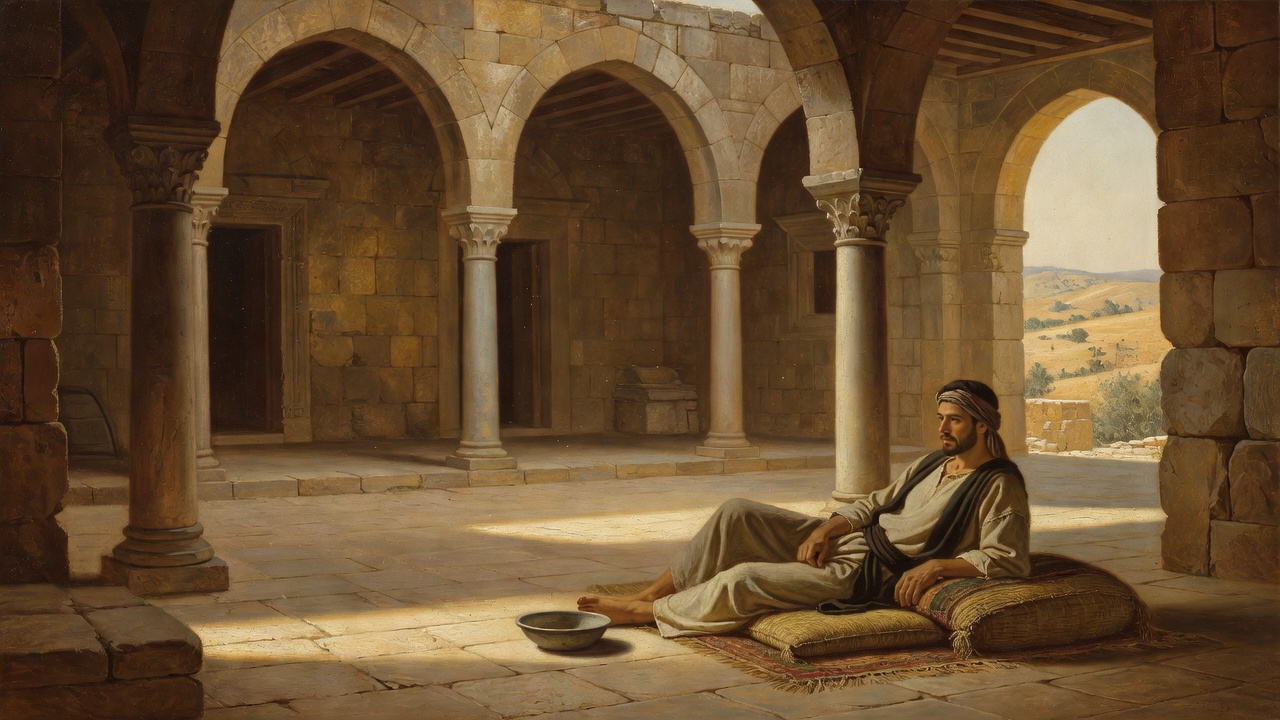
- El capítulo emplea imágenes vívidas y humorísticas para retratar al perezoso. Este inventa excusas extremas, como un león en la calle, da vueltas en su cama como una puerta sobre sus bisagras y encuentra agotador incluso llevar la mano del plato a la boca.Fuentes: el propio texto bíblico
- Proverbios 26 compara las disputas con un fuego que necesita combustible continuo. Cuando cesan los chismes y las murmuraciones, la contienda se apaga por sí sola, tal como el fuego se extingue cuando se acaba la leña o el carbón.Fuentes: el propio texto bíblico
Notas escritas con ayuda de IA a partir de fuentes abiertas (Theographic Bible Metadata, CC BY-SA 4.0; Easton’s Bible Dictionary, dominio público) y revisadas antes de publicarse.
Créditos y licencia de esta traducción
The Orthodox Jewish Bible
The Orthodox Jewish Bible - Tanakh and Orthodox Jewish Brit Chadasha - The Holy Bible
copyright © 2002-2011, 2021, 2024 Artists for Israel International
Language: English
Contributor: Artists for Israel International
THE ORTHODOX JEWISH TANAKH
Artists For Israel Intl Inc.
This version also appears with the Orthodox Yiddish Triglot which presents the Hebrew Yiddish script in Latin script and an English word for word translation, available at afii.org/Torah
To donate PayPal.Me
This translation is made available to you under the terms of the
Creative Commons Attribution license 4.0.
You may share and redistribute this Bible translation or extracts from it in any format, provided that:
You include the above copyright and source information.
If you make any changes to the text, you must indicate that you did so in a way that makes it clear that the original licensor is not necessarily endorsing your changes.
Pictures included with Scriptures and other documents on this site are licensed just for use with those Scriptures and documents.
For other uses, please contact the respective copyright owners.
Note that in addition to the rules above, revising and adapting God's Word involves a great responsibility to be true to God's Word. See Revelation 22:18-19.
2026-01-06
Títulos de sección adaptados de la Berean Standard Bible (dominio público); no forman parte del texto bíblico de esta traducción.
Fuente: http://ebible.org/engojb/ · eBible.org