Jeremiah 17
Nyangumarta English Bible · Tap a verse to see its cross-references.
About this book
About Jeremiah
- Easton's Bible Dictionary (1897) presents Jeremiah, son of Hilkiah, a priest of Anathoth, as one of the greater prophets, called to that office while still young, in the thirteenth year of Josiah (628 B.C.). It says his prophecies cover about thirty years and are not recorded in chronological order, and that no one knows when or how the book took its present form. The same entry supposes that, after an interval in Egypt, Jeremiah added three further sections.Sources: Easton: Jeremiah, Book of · Jeremiah
- Easton's Bible Dictionary (1897) says Jeremiah left his native Anathoth for Jerusalem, where he assisted Josiah's reformation, and that he mourned Josiah's death as a national calamity. It dates Jehoiakim's eleven-year reign to 610–599 B.C.: Pharaoh Necho had deposed Jehoahaz and set Eliakim on the throne under the name Jehoiakim, and at the beginning of that reign the people's enmity against Jeremiah broke out in bitter persecution. After the Chaldeans defeated Egypt at Carchemish, the king of Egypt took no further part in Jewish politics.Sources: Jeremiah · Jehoiakim
- Zedekiah, the third son of Josiah, was the last king of Judah. Nebuchadnezzar placed him on the throne as successor to Jehoiachin and changed his name from Mattaniah to Zedekiah; the kingdom was then tributary to Nebuchadnezzar, and Jeremiah was his counsellor. After Jerusalem was destroyed, Nebuchadnezzar left Gedaliah to govern the country as his tributary at Mizpah, some four miles northwest of the city, where about three months later Ishmael killed Gedaliah and the Jews who were with him.Sources: Zedekiah · Gedaliah · Mizpah
- Easton's Bible Dictionary (1897) describes the book as twenty-three separate sections arranged in five books: an introduction, reproofs of the sins of the Jews, a review of the nations, sections picturing hopes of better times, and a conclusion, with historical appendices. It notes the frequent repetition of the same words, phrases, and images. It also records that the Septuagint differs sharply in arrangement and in other details, and omits about 2,700 words.Sources: Easton: Jeremiah, Book of
- Baruch, of the tribe of Judah, was Jeremiah's secretary. Jeremiah dictated to him prophecies about the Babylonian invasion and the captivity; in the fourth year of Jehoiakim, Baruch read them to the people from a window in the temple, then to the king's counsellors and to the king himself. After hearing part of the roll, Jehoiakim cut it with a penknife and threw it into the fire of the winter parlour where he was sitting.Sources: Baruch
Notes written with AI assistance from open sources (Theographic Bible Metadata, CC BY-SA 4.0; Easton’s Bible Dictionary, public domain) and reviewed before publishing.
9Our self-centred spirit is really deceitful. It is a really hard problem to make it good.
Did you know?
Trust, the Heart, and the Sabbath
- The iron stylus and diamond point were ancient tools used to carve deep, permanent inscriptions into hard stone or metal surfaces. Jeremiah invokes this image to emphasize that the idolatry of Judah was not a superficial slip, but deeply etched into their hearts and upon the horns of their altars.Sources: the Bible text itself
- Jeremiah contrasts a solitary shrub in the parched, salty desert with a flourishing tree planted by a stream. A tree with roots reaching into water stays green and continues bearing fruit even in years of drought, serving as an image of enduring life for those who trust in God rather than human strength.Sources: the Bible text itself
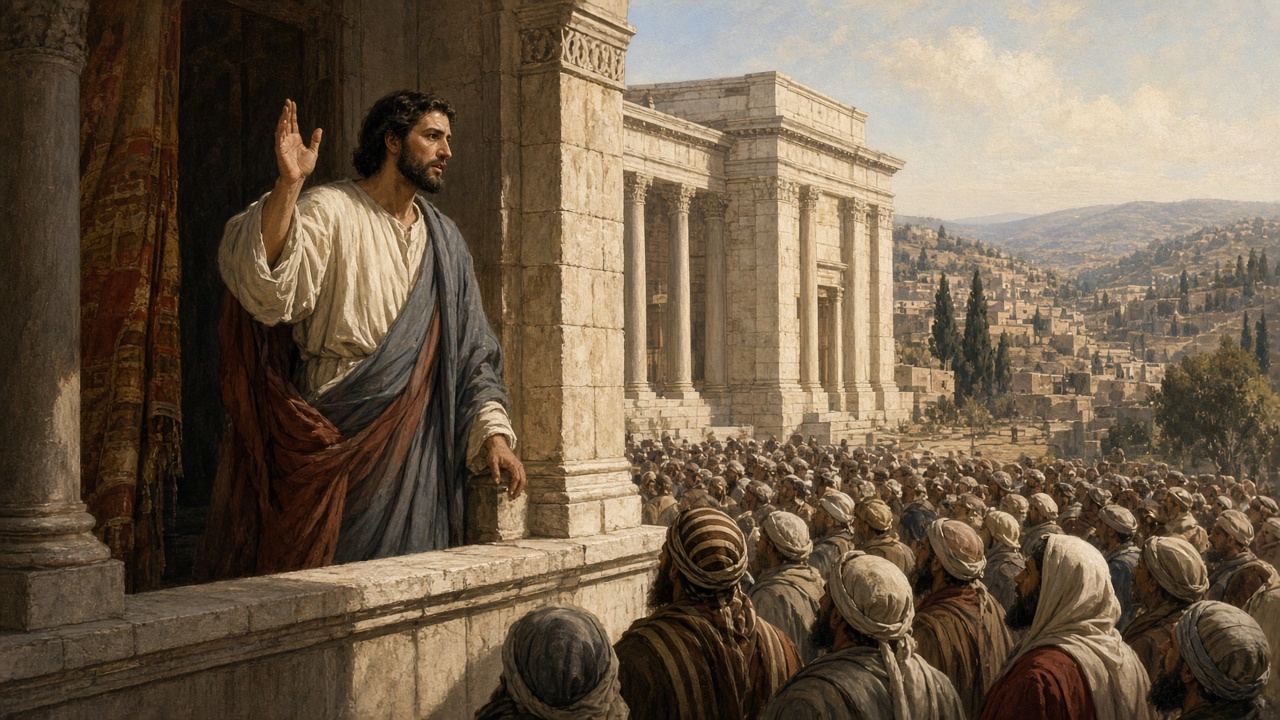
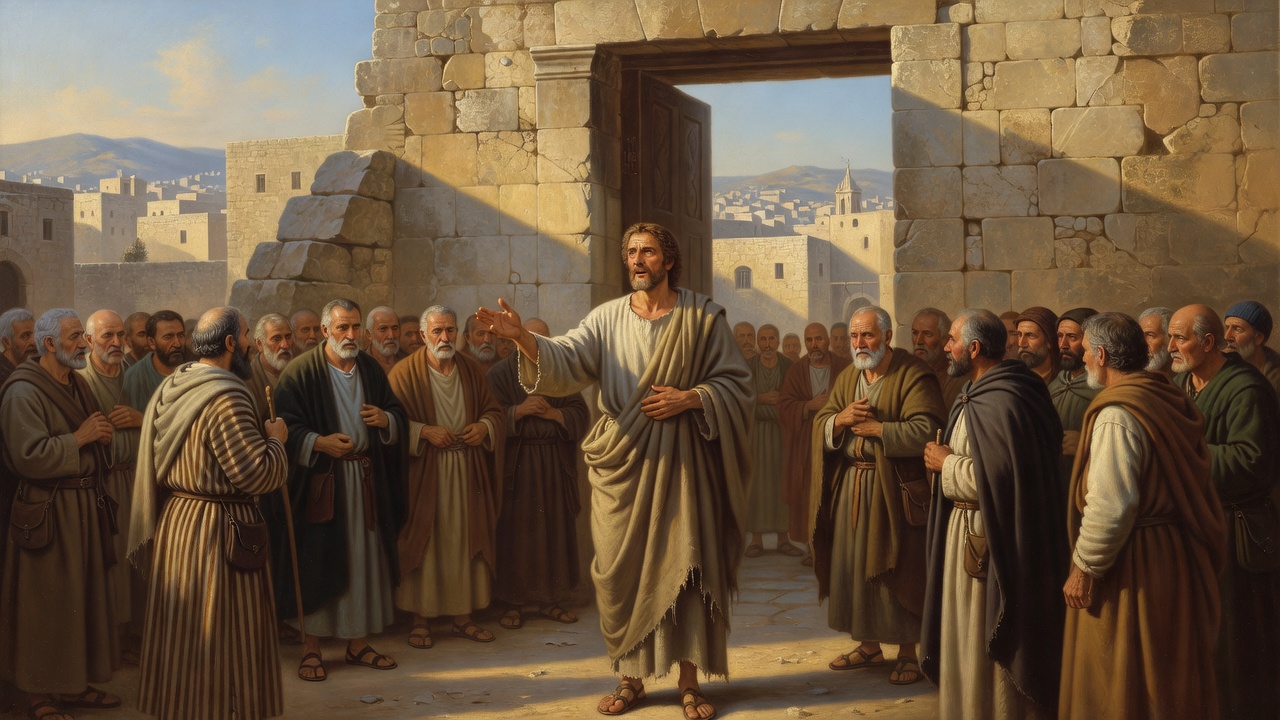
- Jeremiah was instructed to proclaim God's word at the gates of Jerusalem, specifically forbidding the carrying of commercial loads on the Sabbath. Keeping the Sabbath holy promised the continuation of kings on the throne of David and the arrival of worshippers from the territory of Benjamin, Judah, and the arid Negev.Sources: the Bible text itself · David · Benjamin (patriarch) · Jerusalem
Notes written with AI assistance from open sources (Theographic Bible Metadata, CC BY-SA 4.0; Easton’s Bible Dictionary, public domain) and reviewed before publishing.
Places in this chapter
- Arabah · 30.417, 35.151 · verse 6
- Jerusalem · 31.777, 35.234 · verses 19, 20, 21, 25, 26, 27
- People’s Gate · Today: in Jerusalem · 31.777, 35.234 · verse 19
- Negeb · 31.245, 34.841 · verse 26
- Shephelah · 31.692, 34.875 · verse 26
Only places identified with high confidence are shown (90% or more according to the scholarly sources compiled by OpenBible). Period map: DARE (Digital Atlas of the Roman Empire), CC BY 4.0; modern map: © OpenStreetMap contributors; places: OpenBible.info (CC BY 4.0).
Credits and license for this translation
Nyangumarta English Bible
Portions of the Holy Bible in English, translated to be a companion to the Nyangumarta Bible
copyright © 1980-2010 Wycliffe Bible Translators, Inc.
Language: English
Bible translation copyright © 1980-2010 Wycliffe Bible Translators, Inc.
Reader Series (book XXC) copyright © 1996 Bible Society Australia. Bible overview (XXA) copyright © 1996 Mission Publications of Australia (PO Box 21, Lawson NSW 2783)
This translation is made available to you under the terms of the
Creative Commons Attribution-Noncommercial-No Derivatives license 4.0.
You may share and redistribute this Bible translation or extracts from it in any format, provided that:
You include the above copyright and source information.
You do not sell this work for a profit.
You do not change any of the words or punctuation of the Scriptures.
Pictures included with Scriptures and other documents on this site are licensed just for use with those Scriptures and documents.
For other uses, please contact the respective copyright owners.
2026-01-06
Section headings adapted from the Berean Standard Bible (public domain); they are not part of this translation’s text.
Source: http://ebible.org/engnna/ · eBible.org