Genesis 43
Ãcõrẽ Bed̶ea · Tap a verse to see its cross-references.
Jose djabarãba Benjamiʌ̃ Egiptod̶aa edeped̶ad̶a
1Mãwã panʌne Canaaʌ̃ druad̶e jarrabara wetara zesia. 2Maʌ̃ne ãdjia trigo Egipto druad̶e nẽdoped̶ad̶ara jũma cosid̶aa. Maʌ̃ bẽrã ãdji zeza Jacoboba jarasia:
–Wayacusa Egiptod̶aa trigo nẽdod̶e wãnadua.–
3Baribʌrʌ Judaba panusia:
–Jãʌ̃ ẽberãba daia ebud̶a jarasia: “Bãrãra mʌ̃maa zecara panʌa, bãrã djaba tẽãbemada enenaẽ́bʌrʌ.” 4Maʌ̃ba, zeza, dai djaba tẽãbemara bʌa dai ume diabueibʌrʌ, daira trigo nẽdod̶e wãnia. 5Baribʌrʌ dai ume diabueẽ́bʌrʌ, poya wãnaẽ́a jãʌ̃ ẽberãba jarad̶a bẽrã: “Bãrãra mʌ̃maa zecara panʌa, bãrã djabada enenaẽ́bʌrʌ.”–
6Maʌ̃ne Jacobo Israel abadaba iwid̶isia:
–Bãrãba ¿cãrẽ cãrẽã maʌ̃ ẽberãa jarasid̶a dewara djabada eropanʌda? Maʌ̃ jaraped̶ad̶aba mʌ̃ra biẽ́ osid̶aa.–
7Ãdjirãba panusid̶aa:
–Jãʌ̃ ẽberãba daia bio iwid̶isia daid̶ebemada, dai ẽberãrãnebema sid̶a. Nãwã iwid̶isia: “Bãrã zezara ¿wad̶i b̶ʌca? Bãrãba ¿dewara djabada eropanʌca?” Maʌ̃ bẽrã daiba idjía wãrãda jarasid̶aa. Daiba adua panasid̶aa idjia jaraida dai djaba eded̶amãrẽã.–
8Maʌ̃ne Judaba idji zeza Israelea jarasia:
–Bʌa Benjamiʌ̃da mʌ̃ ume diabueibʌrʌ, daira ara nawena trigo nẽdod̶e wãbʌrʌd̶ia. Wãnaẽ́bʌrʌ bʌda, daida, dai warrarã sid̶a jũma quininia. 9Mʌ̃abʌrʌ Benjamiʌ̃ra wagaya. Mʌ̃a idjira eneped̶a wayacusa bʌ quĩrãpita b̶ʌẽ́bʌrʌ, mʌ̃da bed̶ead̶e b̶eya ab̶a mʌ̃ beubʌrʌd̶aa. 10Daida nama jãcua dãrãnaẽ́ pananabara, Egiptod̶aa b̶arima umé wãnoacasid̶aa.–
11Maʌ̃ne dji zeza Israelba panusia:
–Wãrãda Benjamiʌ̃da eded̶ida panʌbʌrʌ, nãwã od̶adua. Dadjirã ẽjũãnebema ne biara b̶eada bãrã sacod̶e b̶ʌd̶aped̶a maʌ̃ ẽberãa diad̶e wãnadua. Balsamo nẽãrãda, urrajõda, mirra querada, dewara quera tũãpa b̶eada, pistacho bacuru tada, almendra sid̶a maãrĩ diad̶adua. 12Parata sid̶a waib̶ʌara eded̶adua dji parata bãrã sacod̶e zed̶ara jẽda diad̶i carea. Ãĩbẽrã quĩrãdoa ed̶a b̶ʌsid̶aa. 13Bãrã djaba tẽãbema sid̶a maʌ̃ ẽberãmaa isabe eded̶adua. 14Mʌ̃a quĩrĩã b̶ʌa Ãcõrẽ ne jũma poya obariba bãrãra quĩrã djuburiaida maʌ̃ ẽberãba bãrã djaba jãma preso b̶ʌra, Benjamiʌ̃ sid̶a idu jẽda zebimãrẽã. Baribʌrʌ idu zebiẽ́bʌrʌ mʌ̃ra warra neẽ́ b̶eya. Mãwã warra neẽ́ b̶eibʌrʌ, mãwã b̶aya.–
15Ara maʌ̃da ãdjirãba nebiada ped̶aped̶a Egiptod̶aa wãbʌrʌsid̶aa. Ãdjia parata naẽna edeped̶ad̶a cãyãbara waib̶ʌara edesid̶aa. Benjamiʌ̃ sid̶a edesid̶aa. Jũẽnaped̶a Josemaa wãsid̶aa.
16Joseba Benjamiʌ̃ ãdji ume unusid̶e idji nezocarã boroa jarasia:
–Naʌ̃ ẽberãrãra mʌ̃ diguid̶aa ededua. Maʌ̃be pacada beaped̶a ne djudua ãdjirãra nane umatipa mʌ̃ ume ne cod̶i bẽrã.–
17Ara maʌ̃da dji nezocarã boroba Joseba jarad̶a quĩrãca osia. Dji djabarãra Jose ded̶aa edesia. 18Wãbʌdad̶e Jose djabarãra daupera panʌ bẽrã nãwã jara panasid̶aa:
–Naãrã zesid̶ad̶e parata dadji sacod̶e b̶ʌped̶ad̶a carea jãwã idji diguid̶aa edebibʌrʌa. Idjia jaraya dadjia maʌ̃ paratara drʌasid̶ada. Maʌ̃ carea dadjira jidabiya idji nezocarãda b̶ead̶amãrẽã. Dadjirã burro sid̶a jãrĩya.–
19Jose ded̶e ed̶a wãbadad̶e dji nezocarã boro caita wãnaped̶a idji ume bed̶easid̶aa. 20Ãdjia nãwã jarasid̶aa:
–Dai boro, dairã naãrã ze panasid̶ad̶e wãrã arada trigo nẽdod̶e ze panasid̶aa. 21Dai jẽda wãsid̶ad̶e ota cãĩnima jũẽsid̶aa. Mama dai saco ewabʌdad̶e trigo nẽdoped̶ad̶a paratada jũma daucha dairã sacoza ed̶a b̶ʌda unusid̶aa. Dairãba adua panʌa caiba maʌ̃ paratara ed̶a b̶ʌsida. Jũma maʌ̃ paratara daiba jẽda enesid̶aa diad̶i carea. Maʌ̃ awara daiba paratara enesid̶aa wayacusa trigo nẽdod̶i carea.–
23Dji nezocarã boroba panusia:
–Jũmawãyã crĩcharãnadua. Dauperarãnadua. Bãrãba parata diaped̶ad̶ara mʌ̃a edaped̶a mʌ̃ boroa diasia. Bãrãba, bãrã zezaba ĩjã b̶ʌ Ãcõrẽba maʌ̃ paratara bãrã sacod̶e b̶ʌsia.–
Maʌ̃be idjia Simeoʌ̃ preso b̶ad̶ada ãdjimaa enesia. 24Eneped̶a ãdjirãra Jose ded̶e ed̶a edesia. Idjia baidoda diasia ãdji jĩrũ sʌgʌd̶amãrẽã. Ãdji burro sid̶a ne cobigasia. 25Mãwã panʌne cawasid̶aa ãdjira Jose ded̶e ne cod̶ida. Jose umatipa zeida jʌ̃ã panʌmisa ãdjia nebia eneped̶ad̶ara edasid̶aa Josea diad̶i carea.
26Jose diguid̶a jũẽnacarea ãdjirãba nebia eneped̶ad̶ara idjía diasid̶aa. Maʌ̃ne wayaad̶eba idji quĩrãpita egode b̶arru copanesid̶aa. 27Joseba ãdjía iwid̶isia sãwã panʌ cawaya. Maʌ̃ awara iwid̶isia:
–Bãrã zezara ¿bia b̶ʌca? ¿Drõãra wad̶i b̶ʌca?–
28Ãdjirãba panusid̶aa:
–Dairã zeza bʌ nezocara bia b̶ʌa. Idjira wad̶i b̶ʌa.–
Maʌ̃ne wayaad̶eba ãdjira b̶arru copanesid̶aa.
29Joseba acʌbʌrʌd̶e idji djaba ara Benjamiʌ̃da unuped̶a nãwã jarasia:
–Bãrã djaba tẽãbema mʌ̃́a jaraped̶ad̶ara ¿naʌ̃gʌca?–
Maʌ̃be Benjamiʌ̃a jarasia:
–Mʌ̃ warra, Ãcõrẽba bʌra carebaya.–
30Idji djaba arada ununa bẽrã Josera b̶ʌsrid̶aba so borequeasia. Ara maʌ̃da dji ed̶aara b̶ʌ dejãne idub̶a jĩãne wãsia. 31Jĩã b̶aped̶a so zaread̶acarea quĩrã sʌgʌped̶a waya ãdjimaa zesia. Maʌ̃be jarasia:
–Daiba cod̶ira enenadua.–
32Ara maʌ̃da dji nezocarãba enesid̶aa. Joseba coira awara b̶ʌsid̶aa, dji djabarãba cod̶i sid̶a awara b̶ʌsid̶aa, idjab̶a Josema ne cobada egiptorãba cod̶i sid̶a awara b̶ʌsid̶aa. Mãwã osid̶aa egiptorãra hebreorã ume ãbaa ne cocara panʌ bẽrã. Egiptorãmaarã maʌ̃ra cadjiruaa. 33Maʌ̃ne Joseba idji djabarãra chũmebisia dji nabemaneba ab̶a dji tẽãbemanaa. Maʌ̃ carea idji djabarãba cawa crĩchad̶aẽ́ panʌba ab̶arica dji quĩrã acʌ duanesid̶aa. 34Maʌ̃ne Jose itea diaped̶ad̶a djicod̶ebemada ãdjiza jed̶ecabisia, baribʌrʌ Benjamiʌ̃a waib̶ʌara diabisia. Mãwã jed̶ecad̶aped̶a ãdjira Jose ume b̶ʌsrid̶a ne codruasid̶aa.
Did you know?
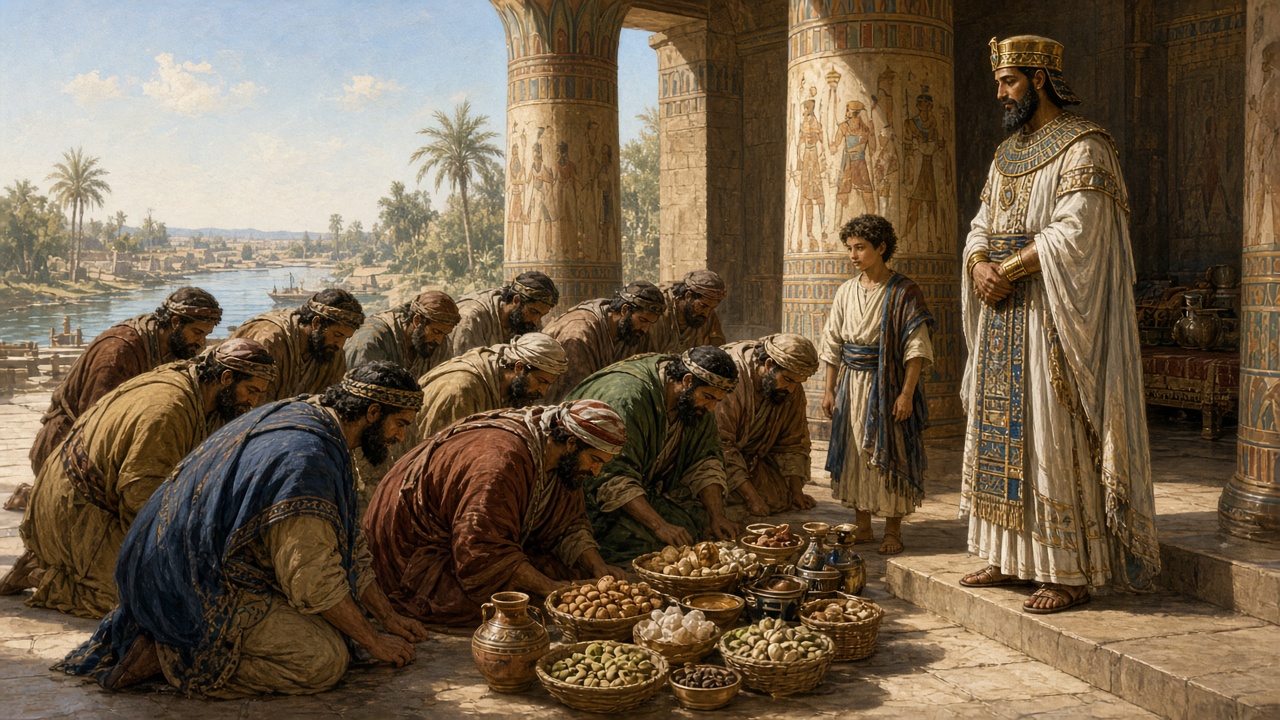
The Brothers Return with Benjamin
- When the grain brought from Egypt ran out, Judah, Jacob’s fourth son by Leah, spoke for the brothers and pledged to bear the guilt all his life if Benjamin did not return. He had earlier interposed so that Joseph’s life would be spared, and he took the lead in the family’s affairs.Sources: Judah (patriarch) · the Bible text itself
- Benjamin was Rachel’s younger son, born at Ephrath on the road between Bethel and Bethlehem; his mother died giving him birth. With her last breath she named him Ben-oni, “son of my pain,” a name his father changed to Benjamin. He and Joseph were Rachel’s two sons, and when Joseph saw “his own mother’s son,” he went to a private room to weep.Sources: Benjamin (patriarch) · Joseph (son of Jacob) · the Bible text itself
- At the meal they served Joseph, his brothers, and the Egyptians separately, because the Egyptians would not eat with the Hebrews; the narrative says that was detestable to them. The steward of the house also brought out Simeon, whom Joseph had detained in Egypt as a hostage.Sources: the Bible text itself · Simeon
Notes written with AI assistance from open sources (Theographic Bible Metadata, CC BY-SA 4.0; Easton’s Bible Dictionary, public domain) and reviewed before publishing.
Places in this chapter
Only places identified with high confidence are shown (90% or more according to the scholarly sources compiled by OpenBible). Period map: DARE (Digital Atlas of the Roman Empire), CC BY 4.0; modern map: © OpenStreetMap contributors; places: OpenBible.info (CC BY 4.0).
Credits and license for this translation
Ãcõrẽ Bed̶ea
New Testament in Emberá, Northern (PM:emp:Emberá, Northern)
copyright © 2011 Wycliffe Bible Translators, Inc.
Language: Emberá, Northern
Translation by: Wycliffe Bible Translators, Inc.
Copyright Information
© 2011, Wycliffe Bible Translators, Inc. All rights reserved.
This translation text is made available to you under the
terms of the Creative Commons License: Attribution-Noncommercial-No Derivative Works.
( http://creativecommons.org/licenses/by-nc-nd/3.0/ )
In addition, you have permission to port the text to different file formats, as long as you
do not change any of the text or punctuation of the Bible.
You may share, copy, distribute, transmit, and extract portions
or quotations from this work, provided that you include the above copyright
information:
You must give Attribution to the work.
You do not sell this work for a profit.
You do not make any derivative works that change any of the actual words or punctuation of the Scriptures.
Permissions beyond the scope of this license may be
available if you contact
us with your request.
The New Testament
in Emberá, Northern
© 2011, Wycliffe Bible Translators, Inc. All rights reserved.
This translation is made available to you under the terms of the
Creative Commons Attribution-Noncommercial-No Derivatives license 4.0.
You may share and redistribute this Bible translation or extracts from it in any format, provided that:
You include the above copyright and source information.
You do not sell this work for a profit.
You do not change any of the words or punctuation of the Scriptures.
Pictures included with Scriptures and other documents on this site are licensed just for use with those Scriptures and documents.
For other uses, please contact the respective copyright owners.
2014-04-24
Source: http://ebible.org/empNTpo/ · eBible.org