Genesis 44
Ãcõrẽ Bed̶ea · Tap a verse to see its cross-references.
Jose taza
1Mãwãnacarea Joseba idji nezocarã boroa jarasia:
–Naʌ̃ ẽberãrã sacora trigoba biracuadua. Ãdji parata sid̶a ãdji sacoza ed̶a b̶ʌcuadua. 2Maʌ̃be mʌ̃ taza parata od̶ada dji tẽãbema sacod̶e trigo nẽdod̶a parata ume b̶ʌdua.–
Ara maʌ̃da dji nezocarã boroba Joseba jarad̶a quĩrãca osia. 3Nurẽma ãsabod̶od̶e Jose djabarãra ãdji burrod̶e idu wãbisid̶aa. 4Ãdjira purud̶eba wad̶i tʌmʌ wãẽ́ panʌne Joseba idji nezocarã boroa jarasia:
–Jãʌ̃ ẽberãrã caid̶u wãdua. Jidad̶e wãsira nãwã jaradua: “¿Cãrẽneba mʌ̃ boroba bãrãra biẽ́ od̶a bẽrã bãrãba jãwã idjira biẽ́ osid̶a? ¿Cãrẽ cãrẽã bãrãba idji taza parata od̶ara drʌasid̶a? 5Jãʌ̃ tazad̶e mʌ̃ borora ne dobaria. Idjab̶a ab̶ari tazad̶eba ne cawaiẽ́ b̶eara cawabaria. Bãrãba oped̶ad̶ara biẽ́ b̶ʌa.”–
6Ara maʌ̃da caid̶u wãsia. Jidad̶e wãped̶a Joseba jarabid̶ara jarasia. 7Maʌ̃ne dji djabarãba jarasid̶aa:
–¿Cãrẽ cãrẽã dadji boroba mãwã jara b̶ʌ? Dairãra ne drʌad̶acaa. 8Acʌdua, parata dai sacod̶e b̶ad̶ada daiba ununaped̶a Canaaʌ̃ druad̶eba jẽda enesid̶aa. Mãwã daiba jipa osid̶abʌrʌ ¿cãrẽ cãrẽã bʌ boro paratara wa oro sid̶a drʌad̶i? 9Bʌa maʌ̃ tazada dairã sacod̶e unuibʌrʌ dji erob̶ʌra beuida b̶ʌa. Maʌ̃ awara dairãra bʌ boro nezocarãda b̶ead̶ia.–
10Maʌ̃ne Jose nezocarã boroba jarasia:
–Bia b̶ʌa, mãẽteara bãrãba jara panʌ quĩrãca oya. Dji ne drʌad̶ara mʌ̃ nezoca baya, baribʌrʌ waabemara bed̶ea neẽ́ b̶ead̶ia.–
11Ara maʌ̃da ãdji sacora burrod̶e jʌ̃ b̶eada ẽrãnaped̶a egode b̶ʌsid̶aa. Maʌ̃be ãdjiza ewacuasid̶aa. 12Ewacuaped̶ad̶acarea Jose nezocarã boroba jʌrʌ wãsia dji nabema djaba sacod̶eba ab̶a dji tẽãbema sacod̶aa. Maʌ̃ne tazara dji tẽãbema Benjamiʌ̃ sacod̶e unusia. 13Ara maʌ̃da sopuad̶eba dji djabarãba cacuad̶e jʌ̃ panʌra cũẽtacuasid̶aa. Maʌ̃be ãdji sacora wayacusa ãdji burrod̶e b̶ʌcuad̶aped̶a jẽda purud̶aa wãsid̶aa.
14Jose wad̶i diguid̶a b̶ʌd̶e Judara dji djabarã sid̶a idjima jũẽsid̶aa. Ãdjirãra ne wayaad̶eba idji quĩrãpita egode b̶arru copanesid̶aa. 15Maʌ̃be Joseba ãdjirãa jarasia:
–Bãrãba ¿cãrẽ cãrẽã mʌ̃ tazara jãwã drʌasid̶a? ¿Bãrãba adua panʌca ne cawaiẽ́ b̶eada mʌ̃a cawabarida?–
16Judaba panusia:
–Dai boro, ¿cãrẽda jarad̶i? ¿Sãwã jarad̶i daira bed̶ead̶e panʌẽ́da? Jũma daiba biẽ́ oped̶ad̶a carea Ãcõrẽba cawa obʌrʌa. Dairãra bʌ jʌwaed̶a panʌa. Bʌ nezocarã bad̶ia, idjab̶a bʌ taza drʌa erob̶ad̶a sid̶a bʌ nezoca baya.–
17Maʌ̃ne Joseba jarasia:
–Mʌ̃a mãwã oẽ́a. Dji taza drʌa erob̶ad̶adrʌ mʌ̃ nezoca baya. Waabemara necai wãnadua bãrã zezamaa.–
18Maʌ̃be Judara Jose caita wãped̶a jarasia:
–Mʌ̃ boro, mʌ̃ ume quĩrũrãdua. Bʌra Egiptod̶ebema boro quĩrãca b̶ʌmĩna mʌ̃ quĩrã djuburia bʌ ume idu bed̶eabidua. 19Dai naãrã zesid̶ad̶e bʌa iwid̶isia daira zeza bara panʌ cawaya idjab̶a djaba bara panʌ cawaya. 20Maʌ̃ne daiba panusid̶aa zeza drõã quiruda eropanʌda idjab̶a djaba cũdra b̶ʌda ab̶a eropanʌda. Maʌ̃ warrara dai zezaba drõã b̶ʌd̶e unusia. Idji djaba arada beusia. Ãdji papad̶ebemara ab̶abe idjidrʌ b̶ʌa. Idjira dai zezaba bio quĩrĩã b̶ʌa.
21Idjab̶a bʌa daia jarasia, “Maʌ̃ warrara enenadua mʌ̃a unui carea.” 22Baribʌrʌ daiba bʌ́a jarasid̶aa maʌ̃ warrara dji zeza b̶ʌmaʌba ãyã wãcara b̶ʌda. Ãyã wãibʌrʌ dji zezara sopuaba beuyad̶a asid̶aa. 23Maʌ̃ne bʌa daia jarasia: “Bãrã djaba tẽãbemada bãrã ume zeẽ́bʌrʌ, bãrãra mʌ̃maa wayacusa zecara panʌda.”
24Maʌ̃be dairãra dai zezama jũẽnaped̶a bʌa jarad̶ara jũma nẽbʌrʌsid̶aa. 25Dãrãbʌrʌd̶e dai zezaba jarasia: “Waya trigo nẽdod̶e wãnadua.” 26Maʌ̃ne dairãba idjía jarasid̶aa: “Dairãra poya wãnaẽ́a. Ab̶abe dai djaba tẽãbemada dai ume wãibʌrʌ wãnia. Idjida dai ume wãẽ́bʌrʌ, jãʌ̃ ẽberãmaa wãcara panʌa.”
27Maʌ̃ne mʌ̃ zeza bʌ nezocaba daia jarasia: “Bãrãba cawa panʌa mʌ̃ wẽrãba warra umébe mʌ̃́a to diasida. 28Ab̶ara nẽbasia. Maʌ̃ ewarid̶eba ʌ̃taa waa unuẽ́ b̶ʌ bẽrã mʌ̃maarã animarãba beaped̶a cobuesia. 29Maʌ̃ bẽrã idji djaba arada eded̶aped̶a beuibʌrʌ, bãrãba mʌ̃ra sopuaba bead̶ia.”
30Dairã boro, dji cũdra carea dai zezara wad̶i b̶ʌa. Maʌ̃ bẽrã mʌ̃ra dji cũdra neẽ́ mʌ̃ zezamaa wãsira maʌ̃ne idji warrada unuẽ́bʌrʌ mʌ̃ zezara beuya. Mãwã dai bʌ nezocarãba dai zeza drõã b̶ʌra sopuaba bead̶ia. 32Mʌ̃ bʌ nezocaba mʌ̃ zezaa wãrãneba jarasia dji cũdrara waya eneida. Mʌ̃a jarasia: “Zeza, mʌ̃a waya bʌmaa eneẽ́bʌrʌ, bʌ quĩrãpita mʌ̃ra bed̶ead̶e b̶aya ab̶a mʌ̃ beubʌrʌd̶aa.” 33Maʌ̃ bẽrã mʌ̃a bʌ́a bed̶ea djuburiaya dji cũdrabari mʌ̃drʌ nama erob̶emãrẽã bʌ nezoca bai carea. Maʌ̃ne dji cũdrara idji djabarã ume idu wãbidua. 34¿Sãwã mʌ̃da dji cũdra neẽ́ mʌ̃ zezamaa wãi? Mʌ̃ zeza sopuaba biẽ́ b̶ʌda unu quĩrĩãẽ́ b̶ʌa.–
Did you know?
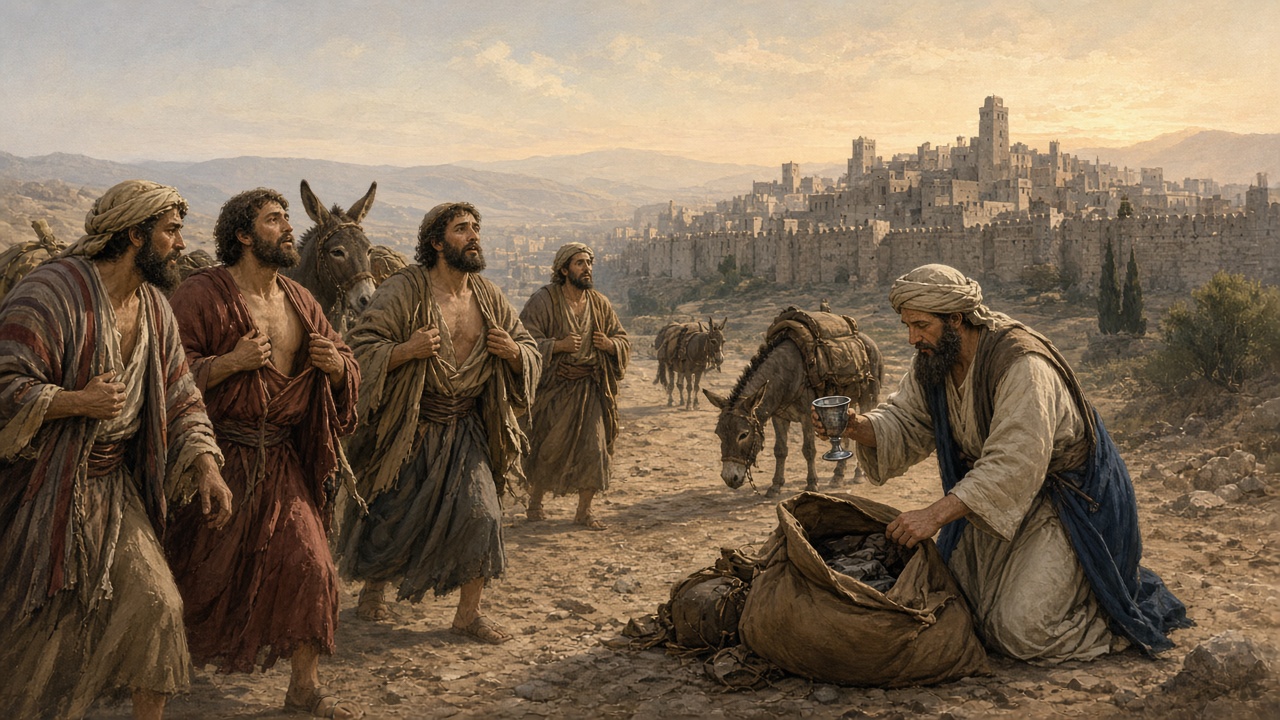
The Hidden Cup and Judah's Plea
- Judah, Jacob's fourth son by Leah, speaks for the brothers and offers to remain as a slave in the boy's place so that Benjamin may return with his brothers. Easton's Bible Dictionary (1897) notes that Judah had earlier intervened to spare Joseph's life, and that he took the lead in the family's affairs, including in the appeal recorded in this chapter.Sources: Judah (patriarch) · the Bible text itself
- Benjamin was the younger of Jacob's two sons by Rachel; she died giving birth to him and called him Ben-oni, "son of my pain," before his father named him Benjamin. The brothers tell Joseph that the boy is the only son of his mother still living, and that their father believes the other was torn to pieces. They say this to Joseph himself—Rachel's elder son, loved by Jacob as the child of his old age—while still speaking to him as a lord equal to Pharaoh.Sources: Benjamin (patriarch) · Joseph (son of Jacob) · the Bible text itself
- On Joseph's orders, the steward hid Joseph's silver cup—the cup he drank from and used for divination—in Benjamin's sack, along with the silver paid for the grain. When it was found, the brothers tore their clothes and returned to the city. Joseph then asked whether they did not know that a man like him could divine the truth, although the narrative shows that he had arranged for the cup to be found.Sources: the Bible text itself
Notes written with AI assistance from open sources (Theographic Bible Metadata, CC BY-SA 4.0; Easton’s Bible Dictionary, public domain) and reviewed before publishing.
Places in this chapter
- Canaan · 32.767, 35.333 · verse 8
Only places identified with high confidence are shown (90% or more according to the scholarly sources compiled by OpenBible). Period map: DARE (Digital Atlas of the Roman Empire), CC BY 4.0; modern map: © OpenStreetMap contributors; places: OpenBible.info (CC BY 4.0).
Credits and license for this translation
Ãcõrẽ Bed̶ea
New Testament in Emberá, Northern (PM:emp:Emberá, Northern)
copyright © 2011 Wycliffe Bible Translators, Inc.
Language: Emberá, Northern
Translation by: Wycliffe Bible Translators, Inc.
Copyright Information
© 2011, Wycliffe Bible Translators, Inc. All rights reserved.
This translation text is made available to you under the
terms of the Creative Commons License: Attribution-Noncommercial-No Derivative Works.
( http://creativecommons.org/licenses/by-nc-nd/3.0/ )
In addition, you have permission to port the text to different file formats, as long as you
do not change any of the text or punctuation of the Bible.
You may share, copy, distribute, transmit, and extract portions
or quotations from this work, provided that you include the above copyright
information:
You must give Attribution to the work.
You do not sell this work for a profit.
You do not make any derivative works that change any of the actual words or punctuation of the Scriptures.
Permissions beyond the scope of this license may be
available if you contact
us with your request.
The New Testament
in Emberá, Northern
© 2011, Wycliffe Bible Translators, Inc. All rights reserved.
This translation is made available to you under the terms of the
Creative Commons Attribution-Noncommercial-No Derivatives license 4.0.
You may share and redistribute this Bible translation or extracts from it in any format, provided that:
You include the above copyright and source information.
You do not sell this work for a profit.
You do not change any of the words or punctuation of the Scriptures.
Pictures included with Scriptures and other documents on this site are licensed just for use with those Scriptures and documents.
For other uses, please contact the respective copyright owners.
2014-04-24
Source: http://ebible.org/empNTpo/ · eBible.org