Exodus 4
Ãcõrẽ Bed̶ea · Tap a verse to see its cross-references.
1Baribʌrʌ Moiseba jarasia:
–Israelerãba mʌ̃a jarabʌrʌra ĩjãnaẽ́a idjab̶a ũrĩ quĩrĩãnaẽ́a. Ãdjirãba jarad̶ia: “Ãcõrẽba ara idjida bʌ́a unubiẽ́ b̶ʌa.”–
2Maʌ̃ne Ãcõrẽba iwid̶isia:
–¿Bʌa cãrẽda jʌwad̶e erob̶ʌ?–
Moiseba panusia:
–Bacuruda erob̶ʌa.–
3Ãcõrẽba jarasia:
–Egode b̶aebidua.–
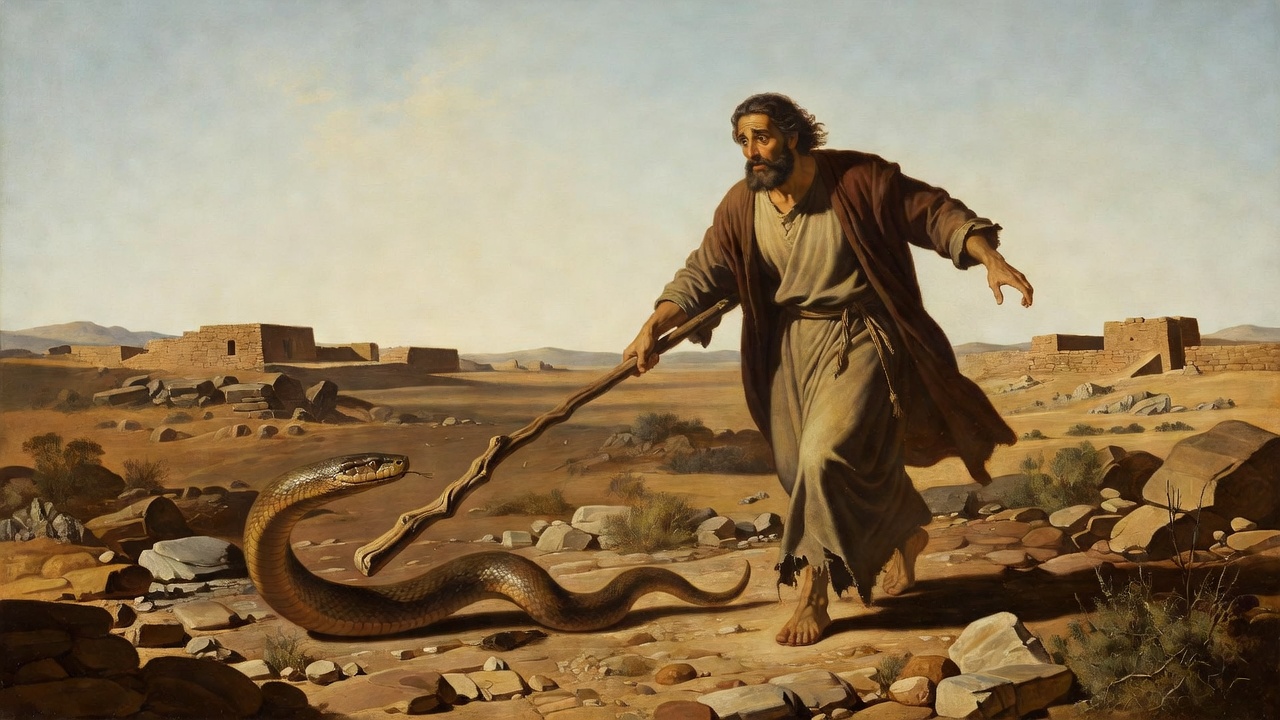
B̸aebibʌrʌd̶e bacurura dama ba dogosia. Maʌ̃ unusid̶e Moisera ãyã jʌ̃drʌsia. 4Baribʌrʌ Ãcõrẽba jarasia:
–Dji drud̶e jidadua.–
Ara maʌ̃da Moiseba dji drud̶e jidabʌrʌd̶e waya bacuru basía.
5Maʌ̃be Ãcõrẽba Moisea jarasia:
–Bʌa maʌ̃da osira israelerãba ĩjãnia mʌ̃a ara mʌ̃djida bʌ́a unubisida. Cawad̶ia mʌ̃ra ãdji drõã naẽnabemarã Abrahaʌ̃ba, Isaba, idjab̶a Jacobo bid̶a ĩjã panana Ãcõrẽda.–
6Maʌ̃ awara Ãcõrẽba jarasia:
–Bʌ jʌwara bʌa jʌ̃ b̶ʌ edre berajudua.–
Ara maʌ̃da Moiseba berajuped̶a ẽũta edabʌrʌd̶e ab̶ed̶a idji jʌwara aid̶aba bira b̶asia. 7Ãcõrẽba jarasia:
–Wayacusa bʌ jʌwara bʌa jʌ̃ b̶ʌ edre berajudua.–
Ara maʌ̃da Moiseba waya berajuped̶a ẽũta edabʌrʌd̶e idji jʌwara ab̶ed̶a bia b̶asia. 8Maʌ̃be Ãcõrẽba jarasia:
–Dji nabema ne ununaca obʌrʌd̶e israelerãba bʌa jara b̶ʌda ĩjãnaẽ́bʌrʌ, dji umébema ne ununaca obʌrʌd̶e ĩjãnia. 9Baribʌrʌ maʌ̃ ne ununaca umé obʌrʌd̶e ãdjirãba wad̶ibid̶a bʌa jara b̶ʌda ĩjãnaẽ́bʌrʌ, naʌ̃ quĩrãca odua. Nilo dod̶e baidoda jue edaped̶a drua weatadua. Maʌ̃ne maʌ̃ baidora oa baya.–
10Ãcõrẽba mãwã jarad̶amĩna Moiseba idjía jarasia:
–¡Ay, mʌ̃ Boro! Mʌ̃ra ẽberãrã quĩrãpita warrá bed̶eacaa. Maʌ̃ra id̶ibemaẽ́a. Bʌra mʌ̃ ume bed̶ea b̶ʌmĩna mʌ̃ra ara mãwã warrá bed̶eacaa. Mʌ̃ra ẽberãrã quĩrãpita cawa bed̶eacaa.–
11Baribʌrʌ Ãcõrẽba jarasia:
–¿Caiba ẽberãrã itera osi? ¿Mʌ̃abʌrʌ oẽ́ basica ẽberãrã quĩrãme cara b̶eada, cʌwʌrʌ qui b̶eada, dau bia b̶eada, idjab̶a daub̶errea b̶ea sid̶a? Mʌ̃ra Ãcõrẽ bẽrã mãwã oida b̶ʌa. 12Bʌ bed̶eabʌrʌd̶e mʌ̃a carebaya. Mʌ̃a cawabiya bʌa cãrẽda jaraida b̶ʌda. Jãʌ̃be Egiptod̶aa wãdua.–
13Baribʌrʌ Moiseba panusia:
–¡Ay, mʌ̃ Boro! Mʌ̃ quĩrã djuburia dewara ẽberãda diabuedua.–
14Maʌ̃ carea Ãcõrẽra Moise ume quĩrũsia. Nãwã jarasia:
–¿Bʌ djaba Aaroʌ̃ Levid̶eba yõnada b̶ʌẽ́ca? Mʌ̃a cawa b̶ʌa idjira bia bed̶eabarida. Idjira bʌ acʌd̶e zebʌrʌa. Bʌ unubʌrʌd̶e idjira b̶ʌsrid̶aya. 15Idjira Egiptod̶e bʌ cacuabari bed̶eaya. Mʌ̃a jarabi b̶ʌda bʌa idjía jaraya. Maʌ̃gʌra idjia purua jaraya. Mʌ̃a bãrãra carebaya bia bed̶ead̶amãrẽã idjab̶a cawabiya sãwãbʌrʌ od̶ida panʌda. Bʌa ãcõrẽ quĩrãca Aaroʌ̃a bed̶ea b̶aya idjab̶a idjira bʌd̶eba bed̶ea b̶aya. 17Bʌ jʌwad̶e erob̶ʌ bacurura ededua maʌ̃gʌd̶eba ne ununacada oi bẽrã.–
Moise jẽda Egiptod̶aa wãna
18Maʌ̃be Moisera idji zãwãrẽ Jetro abadamaa wãped̶a jarasia:
–Mʌ̃ra Egiptod̶aa wãya mʌ̃ ẽberãrã acʌd̶e wad̶i zocai panʌ cawaya.–
Jetroba jarasia:
–Bia b̶ʌa. Necai wãdua.–
19Moise wad̶i Madiaʌ̃ druad̶e b̶asid̶e Ãcõrẽba idjía jarasia:
–Egiptod̶aa wãdua. Bʌ bea quĩrĩã pananara jũma beusid̶aa.–
20Maʌ̃be Moiseba dji quimada, dji warrarã sid̶a burro ʌ̃rʌ̃ b̶ʌped̶a Egiptod̶aa wãsid̶aa. Idji jʌwad̶e edesia Ãcõrẽba ne ununaca obi b̶ad̶a bacuruda.
21Moise wãbʌrʌd̶e Ãcõrẽba idjía jarasia:
–Egiptod̶e jũẽped̶a jũma ne ununaca mʌ̃a obi b̶ʌda Egiptod̶ebema boro quĩrãpita odua. Baribʌrʌ mʌ̃a idjira so zarea b̶ʌya israelerã ẽdrʌ b̶ʌrãmãrẽã. 22Mãwãnacarea Egiptod̶ebema boroa jaradua: “Ãcõrẽba nãwã jara b̶ʌa: mʌ̃a Israel purura mʌ̃ umaquĩrã warra dji nabemaana abaria. 23Maʌ̃ carea mʌ̃a jara b̶ʌa: mʌ̃ warrara ẽdrʌ b̶ʌdua mʌ̃́a animarãda babue diad̶e wãmãrẽã. Baribʌrʌ bʌa jarasia ẽdrʌ b̶ʌẽ́da. Maʌ̃ carea bʌ umaquĩrã warra dji nabemada beuya.”–
24Moise idji warrarã bara Egiptod̶aa wãbʌdad̶e ota cãĩsid̶aa. Mama Ãcõrẽra ãdjimaa zesia. Maʌ̃ne idjia Moisera beai basía. 25Baribʌrʌ Moise quima Seporába ãdji warra zaque cacuara neco mõgara od̶aba wẽãgosia. Maʌ̃ e wẽãgod̶ara Moise jĩrũ caita cob̶ʌsia. Maʌ̃ bẽrã Ãcõrẽba Moisera beaẽ́ basía. Maʌ̃ carea Seporába Moisea jarasia:
–Wãrãda bʌra mʌ̃ quima arada b̶esia warra zaque cacua wẽãgod̶a oad̶eba zocai b̶ed̶a bẽrã.–
27Maʌ̃ naẽna Ãcõrẽba Aaroʌ̃a jarasia:
–Ẽjũã põãsa ewaraga b̶ʌd̶e Moise acʌd̶e wãdua.–
Ara maʌ̃da Aaroʌ̃ra wãped̶a Moisera unusia Ãcõrẽ eya abadama. Unuped̶a b̶ʌsrid̶aba idji uridarrad̶e isõsia. 28Maʌ̃be Moiseba Aaroʌ̃a jũma nẽbʌrʌsia Ãcõrẽba Egiptod̶e jarabi b̶ʌda idjab̶a ne ununaca obi b̶ʌ sid̶a.
29Egiptod̶e jũẽnaped̶a Moisera Aaroʌ̃ sid̶a israelerã bororã ume ãbaa dji jʌresid̶aa. 30Maʌ̃ne Aaroʌ̃ba ãdjirãa nẽbʌrʌsia jũma Ãcõrẽba Moisea jarad̶ada. Idjab̶a ne ununaca Ãcõrẽba obicuad̶ara ãdjirã quĩrãpita osia. 31Maʌ̃ bẽrã Aaroʌ̃ba jarad̶ara ĩjãsid̶aa. Ãcõrẽba ãdji bia mĩga panʌda unuped̶a ãdjirã carebai carea b̶ʌda ĩjãsid̶aa. Maʌ̃ bẽrã chĩrãborod̶e b̶arru copanenaped̶a Ãcõrẽa bia bed̶easid̶aa.
Did you know?
Moses’ Signs and Return to Egypt
- Aaron was born in Egypt three years before his younger brother Moses. God sent him to meet Moses in the wilderness at the mountain of God; because Aaron could speak well, he was to be the spokesman who relayed the LORD’s words to the people.Sources: Aaron · the Bible text itself
- Moses was told that, if the first two signs were not believed, he should take water from the Nile and pour it on the dry ground, where it would become blood. In the Old Testament that river is frequently called Sihor, “the black stream,” or simply “the river.”Sources: Nile · the Bible text itself
- The command to return reached Moses in Midian, the territory of a nomadic Arabian tribe in the desert north of the Arabian peninsula, where the Sinai peninsula served as pasture for their flocks. Jethro, the priest of Midian and Moses’ father-in-law, told him to go in peace, so Moses set out with his wife and sons, carrying the staff of God.Sources: Midian · Jethro · the Bible text itself
Notes written with AI assistance from open sources (Theographic Bible Metadata, CC BY-SA 4.0; Easton’s Bible Dictionary, public domain) and reviewed before publishing.
Places in this chapter
- Nile · Today: Nile River · 31.465, 30.367 · verse 9
- Egypt · 30.129, 31.308 · verses 18, 19, 20, 21, 24, 29
- Midian · 28.495, 35.012 · verse 19
Only places identified with high confidence are shown (90% or more according to the scholarly sources compiled by OpenBible). Period map: DARE (Digital Atlas of the Roman Empire), CC BY 4.0; modern map: © OpenStreetMap contributors; places: OpenBible.info (CC BY 4.0).
Credits and license for this translation
Ãcõrẽ Bed̶ea
New Testament in Emberá, Northern (PM:emp:Emberá, Northern)
copyright © 2011 Wycliffe Bible Translators, Inc.
Language: Emberá, Northern
Translation by: Wycliffe Bible Translators, Inc.
Copyright Information
© 2011, Wycliffe Bible Translators, Inc. All rights reserved.
This translation text is made available to you under the
terms of the Creative Commons License: Attribution-Noncommercial-No Derivative Works.
( http://creativecommons.org/licenses/by-nc-nd/3.0/ )
In addition, you have permission to port the text to different file formats, as long as you
do not change any of the text or punctuation of the Bible.
You may share, copy, distribute, transmit, and extract portions
or quotations from this work, provided that you include the above copyright
information:
You must give Attribution to the work.
You do not sell this work for a profit.
You do not make any derivative works that change any of the actual words or punctuation of the Scriptures.
Permissions beyond the scope of this license may be
available if you contact
us with your request.
The New Testament
in Emberá, Northern
© 2011, Wycliffe Bible Translators, Inc. All rights reserved.
This translation is made available to you under the terms of the
Creative Commons Attribution-Noncommercial-No Derivatives license 4.0.
You may share and redistribute this Bible translation or extracts from it in any format, provided that:
You include the above copyright and source information.
You do not sell this work for a profit.
You do not change any of the words or punctuation of the Scriptures.
Pictures included with Scriptures and other documents on this site are licensed just for use with those Scriptures and documents.
For other uses, please contact the respective copyright owners.
2014-04-24
Source: http://ebible.org/empNTpo/ · eBible.org