Exodus 5
Ãcõrẽ Bed̶ea · Tap a verse to see its cross-references.
Moise Aaroʌ̃ sid̶a Egiptod̶ebema boro ume bed̶eaped̶ad̶a
1Mãwãnacarea Moisera, Aaroʌ̃ sid̶a Egiptod̶ebema boromaa wãnaped̶a jarasid̶aa:
–Israelerã Ãcõrẽba nãwã jara b̶ʌa: “Mʌ̃ purura ẽjũã põãsa ewaraga b̶ʌd̶e idu wãbidua mʌ̃́a animarãda babue diad̶amãrẽã.”–
2Maʌ̃ne Egiptod̶ebema boroba panusia:
–¿Cai maʌ̃ Ãcõrẽ mãwã idjia israelerã idu wãbiduad̶a ad̶ara mʌ̃a ĩjãi carea? Mʌ̃a idjira adua b̶ʌa. Maʌ̃ bẽrã mʌ̃a bãrã israelerãra idu wãbiẽ́a.–
3Moiseba Aaroʌ̃ bid̶a jarasid̶aa:
–Dai hebreorã Ãcõrẽda daima odjaped̶a jarasia idji itea animarãda babue diad̶e wãnamãrẽã. Maʌ̃ bẽrã dairãra ẽjũã põãsa ewaraga b̶ʌd̶e ewari ũbea idu wãbidua mãwã od̶i carea. Mãwã od̶aẽ́bʌrʌ, Ãcõrẽba dairãra cacua biẽ́ b̶ʌped̶a quinibiya wa necoba quenabiya.
4Baribʌrʌ Egiptod̶ebema boroba jarasia:
–¡Moise, Aaroʌ̃! Israelerãra zocãrã panʌa. ¿Cãrẽ cãrẽã bãrãba ãdjirã trajura obi ama panʌ? Bãrã israelerãra jũma trajad̶e wãbʌrʌd̶adua.–
6Ara maʌ̃ ewarid̶e Egiptod̶ebema boroba dji traju obibada bororãa, dji traja panʌ bororã israelerãa bid̶a jarasia:
7–Id̶iba ʌ̃taa israelerãa chiruada waa diarãnadua. Ãdjirãbʌrʌ chiruara jʌrʌ ped̶e wãnaped̶a de obada mõgarara od̶ida panʌa. 8Baribʌrʌ wad̶ibid̶a ãdjia o panana quĩrãca obid̶adua. Ni ab̶a bid̶a ed̶aara od̶iẽ́ panʌa. Ãdjirãra coaid̶a tab̶ea bẽrã nãwã jara panʌa: “Dairãra idu wãbidua dai Ãcõrẽa animarãda babue diacuad̶i carea.” 9Israelerãra wetara trajabid̶adua bari b̶earãnamãrẽã. Mãwã ãdjirãba Moise sewara ĩjãnaẽ́a.–
10Ara maʌ̃da dji traju obibada bororãra, dji traja panʌ bororã israelerã sid̶a Egiptod̶ebema boromaʌba ẽdrʌd̶aped̶a israelerãa nãwã jarad̶e wãsid̶aa:
–Egiptod̶ebema boroba nãwã jara b̶ʌa: “Mʌ̃a waa chiruara diabiẽ́a de obada mõgara od̶amãrẽã. 11Bãdjiabʌrʌ chiruara jʌrʌ ped̶e wãnida panʌa bãdjia jʌrʌbʌdamaa. Baribʌrʌ naãrã o panana quĩrãca od̶ida panʌa. Ni ab̶a bid̶a ed̶aara od̶iẽ́ panʌa.”–
12Maʌ̃ bẽrã israelerãba jũma Egipto druad̶e chiruara jʌrʌ ped̶e wãsid̶aa. 13Mãwã dji traju obibada bororãba israelerãra wetara trajabisid̶aa. Nãwã jarasid̶aa:
–Ewariza daucha od̶adua naẽna chirua diabadjid̶ad̶e o panana quĩrãca.–
14Idjab̶a dji traju obibada bororãba dji traja panʌ bororã israelerãda ubadjid̶aa ãdjia b̶ʌped̶ad̶amĩna. Dji traju obibada bororãba ãdjirãa iwid̶ibadjid̶aa:
–¿Sãwãẽrã nuena, id̶i bid̶a bãrãba de obada mõgarara daucha od̶aẽ́ panʌ? Naẽna bãrãba ewariza daucha obadjid̶aa.–
15Maʌ̃ bẽrã dji traja panʌ bororã israelerãra Egiptod̶ebema boromaa wãnaped̶a nãwã jarasid̶aa:
–Dairã bʌ nezocarãra bʌa jãwã oiẽ́ b̶ʌa. 16Id̶ira chiruada diad̶aẽ́ panʌa, baribʌrʌ wad̶ibid̶a dji traju obibada bororãba de obada mõgarara ab̶arica daucha obi panʌa. Mãwã poya od̶aẽ́ panʌ carea ãdjirãba dairãra ubadaa. Baribʌrʌ dairãra bed̶ead̶e panʌẽ́a, ãtebʌrʌ bʌa b̶ʌcuad̶a traju obibada bororãda bed̶ead̶e panʌa.–
17Maʌ̃ne Egiptod̶ebema boroba panusia:
–Bãrãra coaid̶a tab̶eaa. Maʌ̃ bẽrã nãwã jara panʌa: “Dairãra wãnia Ãcõrẽa animarãda babue diacuad̶i carea.” 18Wãnadua bãdji trajud̶aa. Daiba chiruara bãrãa waa diad̶aẽ́a. Baribʌrʌ bãrãba de obada mõgarara naãrã o panana quĩrãca od̶ida panʌa.–
19Maʌ̃ ũrĩsid̶ad̶e dji traja panʌ bororãba cawasid̶aa nẽbʌrad̶e panʌda. 20Ãdjirã Egiptod̶ebema boromaʌba ẽdrʌbʌdad̶e unusid̶aa Moiseba Aaroʌ̃ bid̶a dajadaare ãdji jʌ̃ã panʌda. 21Dji traja panʌ bororãba ãdjía jarasid̶aa:
–Ãcõrẽba bãrãra cawa oya. Bãrãdrʌ bed̶ead̶e panʌa dairãra Egiptod̶ebema boro quĩrãpita, dji dromarã quĩrãpita bid̶a biẽ́ panebʌda carea. Id̶ibʌrʌ bãrãba dairãra quenabid̶ia.–
Moiseba Ãcõrẽa iwid̶id̶a
22Maʌ̃be Moiseba Ãcõrẽa iwid̶isia:
–¡Mʌ̃ Boro! ¿Cãrẽ cãrẽã bʌ purura biẽ́ o b̶ʌ? ¿Cãrẽ cãrẽã mʌ̃ra diabuesi? 23Mʌ̃a Egiptod̶ebema boro ume bʌ trʌ̃neba bed̶ead̶amĩna, maʌ̃ ewarid̶eba idjia Israel purura wetara biẽ́ o b̶ʌa. Maʌ̃ awara bʌa ẽdrʌ b̶ʌyad̶a ad̶ara wad̶ibid̶a oẽ́ b̶ʌa.–
Did you know?
Harder Work After Pharaoh's Refusal
- Easton's Bible Dictionary (1897) says the Pharaoh of the Exodus was probably Menephtah I, the fourteenth and eldest surviving son of Rameses II, but it treats the identification as still an open question: some scholars, it notes, favor Seti II, whose reign it describes as beginning peacefully and ending in sudden disaster. The entry says he resided at Zoan, where he received Moses and Aaron in the interviews recorded in Exodus.Sources: Pharaoh (of the Exodus) · the Bible text itself
- Easton's Bible Dictionary (1897) places Jacob's arrival in Egypt probably about 350 years before Moses was born. It says a Hyksos king, from a pastoral Semitic people of Asia and called a shepherd king, received the family favorably and assigned them Goshen, the best of the land; in this chapter Pharaoh treats the people of Israel, now numerous, as laborers he will not let go.Sources: Moses · the Bible text itself
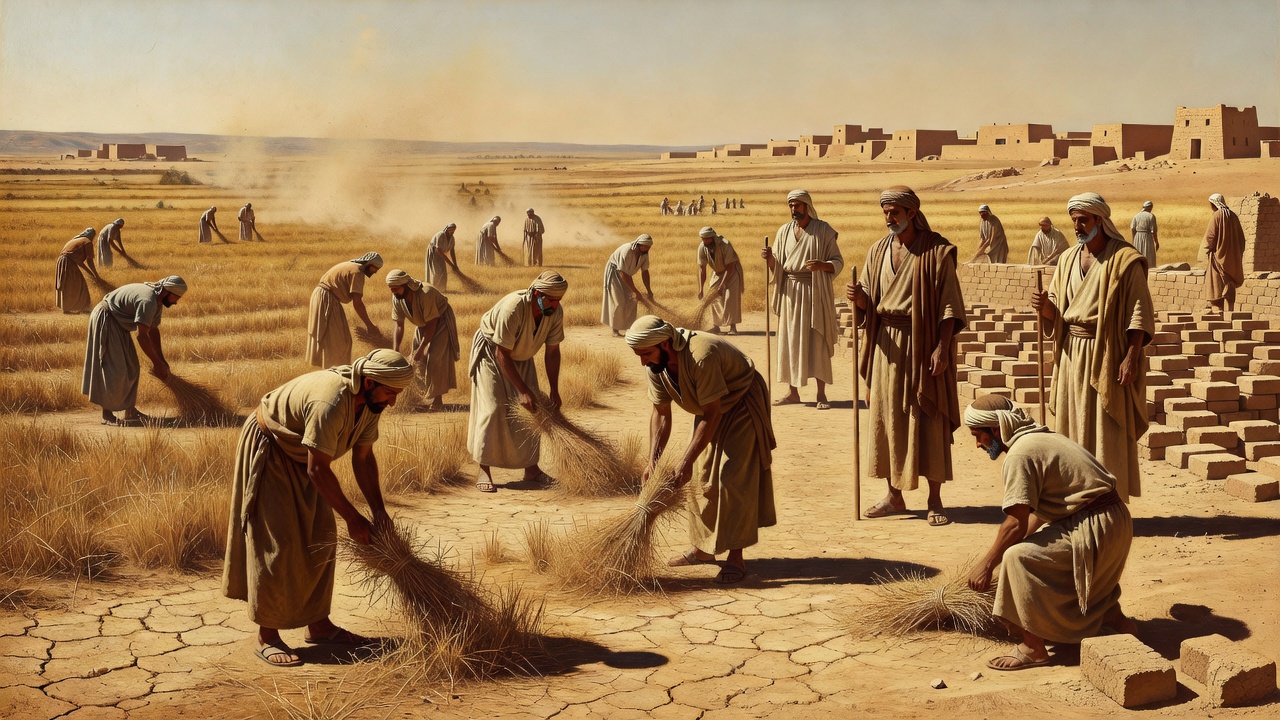
- Pharaoh answers the request to hold a feast in the wilderness by no longer supplying straw for the bricks, while still requiring the same daily quota. The people scatter through the land of Egypt to gather stubble, and the Israelite foremen whom Pharaoh's taskmasters had set over them are beaten when that quota is not met.Sources: the Bible text itself
Notes written with AI assistance from open sources (Theographic Bible Metadata, CC BY-SA 4.0; Easton’s Bible Dictionary, public domain) and reviewed before publishing.
Places in this chapter
Only places identified with high confidence are shown (90% or more according to the scholarly sources compiled by OpenBible). Period map: DARE (Digital Atlas of the Roman Empire), CC BY 4.0; modern map: © OpenStreetMap contributors; places: OpenBible.info (CC BY 4.0).
Credits and license for this translation
Ãcõrẽ Bed̶ea
New Testament in Emberá, Northern (PM:emp:Emberá, Northern)
copyright © 2011 Wycliffe Bible Translators, Inc.
Language: Emberá, Northern
Translation by: Wycliffe Bible Translators, Inc.
Copyright Information
© 2011, Wycliffe Bible Translators, Inc. All rights reserved.
This translation text is made available to you under the
terms of the Creative Commons License: Attribution-Noncommercial-No Derivative Works.
( http://creativecommons.org/licenses/by-nc-nd/3.0/ )
In addition, you have permission to port the text to different file formats, as long as you
do not change any of the text or punctuation of the Bible.
You may share, copy, distribute, transmit, and extract portions
or quotations from this work, provided that you include the above copyright
information:
You must give Attribution to the work.
You do not sell this work for a profit.
You do not make any derivative works that change any of the actual words or punctuation of the Scriptures.
Permissions beyond the scope of this license may be
available if you contact
us with your request.
The New Testament
in Emberá, Northern
© 2011, Wycliffe Bible Translators, Inc. All rights reserved.
This translation is made available to you under the terms of the
Creative Commons Attribution-Noncommercial-No Derivatives license 4.0.
You may share and redistribute this Bible translation or extracts from it in any format, provided that:
You include the above copyright and source information.
You do not sell this work for a profit.
You do not change any of the words or punctuation of the Scriptures.
Pictures included with Scriptures and other documents on this site are licensed just for use with those Scriptures and documents.
For other uses, please contact the respective copyright owners.
2014-04-24
Source: http://ebible.org/empNTpo/ · eBible.org