Genesis 39
Nǫ̀htsı̨̨ Nı̨̨htł'è · Tap a verse to see its cross-references.
Joseph eyıts'ǫ Potıfar wets'èkeè gıgodıì
1Ishmael got'ı̨į̀ Joseph Egypt nèk'e ts'ǫ̀ geèhchì ekò Egypt got'ı̨į̀ ı̨łè Potıfar wìyeh Joseph goghǫ nàyeèhdì. Eyı dǫ Potıfar k'àowocho Faraoh gha eghǫǫ-dǫǫ̀ gha k'àowo elı̨.
2Nǫ̀htsı̨ Joseph k'èdì t'à Joseph wexè nezı̨į̀ hòɂǫǫ̀ agòjà, wets'ǫ k'àowo Potıfar wekǫ̀ nàdè. 3Potıfar Nǫ̀htsı̨ Joseph ts'àdı t'à, t'asìı hazǫǫ̀ t'à wets'ǫ̀ nezı̨į̀ k'ehokw'o yek'èhoèhzà, 4eyıt'à Joseph ts'ǫ̀ wınì nezı̨, eyıts'ǫ edecheekeèdeè elı̨į̀ ayį̀į̀là. Edekǫ̀ ts'ǫ̀ k'àowo yèhtsı̨, dǫ yegha eghàlaedaa sìı ts'ǫ̀ k'àowo ayį̀į̀là, eyıts'ǫ t'asìı hazǫǫ̀ wets'ǫ sìı wetł'aà whelaà ayį̀į̀là. 5Wekǫ̀ eyıts'ǫ t'asìı hazǫǫ̀ wets'ǫ sìı Joseph wetł'aà whelaà ayį̀į̀làa ekò gots'ǫ sìı Nǫ̀htsı̨ Potıfar wekǫ̀ xè sìghà hòɂǫǫ̀ ayį̀į̀là. Joseph wets'ıhɂǫ̀ Nǫ̀htsı̨ Potıfar wekǫ̀ goyìı, wedèè k'e eyıts'ǫ t'asìı hazǫǫ̀ wets'ǫ sìı xè sìghà hòɂǫǫ̀ ayį̀į̀là. 6Eyıt'à t'asìı hazǫǫ̀ wets'ǫ sìı Joseph wetł'aà whelaà ayį̀į̀là. Joseph t'asìı hazǫǫ̀ xoehdı t'à Potıfar t'asìı wı̨ı̨zìı ghǫ nànıwo-le, ayìı ghǫ shètı̨ı̨ sìı eyı zǫ danıwo.
Joseph nàtso xè dǫ wèdaat'ı̨ı̨ elı̨. 7Eyı gots'ǫ whaà-le, wets'ǫ k'àowo wets'èkeè yets'ǫ̀ k'eet'į̀ ajà, hayèhdı, “Segà nı̨ı̨tè!” yèhdı.
8Hanìkò yek'èhoeɂà-le, hayèhdı, “Sets'ǫ̀ k'àowo t'asìı hazǫǫ̀ wegha xoehdı t'à t'asìı wı̨ı̨zìı ghǫ nànıwo nıìle. T'asìı hazǫǫ̀ wets'ǫ sìı setł'aà whelaà ayį̀į̀là hǫt'e. 9Jǫ kǫ̀ goyìı sets'ǫ̀ k'àowo wecheekeè gıta dǫ wı̨ı̨zìı senahk'e elı̨ gǫ̀hłı̨ nıìle. Sets'ǫ̀ k'àowo t'asìı wı̨ı̨zìı sech'à yek'èdì nıìle, hotıì nı̨ zǫ, wets'èkeè anet'e t'à. Eyıt'à hanì hołı̨ı̨-deè hohtsı̨ xè Nǫ̀htsı̨ wek'èch'a hołı̨ı̨ hohtsı̨ ha dìì,” Joseph yèhdı. 10Dzę taàt'eè eyı gha Joseph k'adaawo, hanìkò yet'àetè ha nıwǫ-le, eyıts'ǫ yegà nıwà-le ade ha nıwǫ-le.
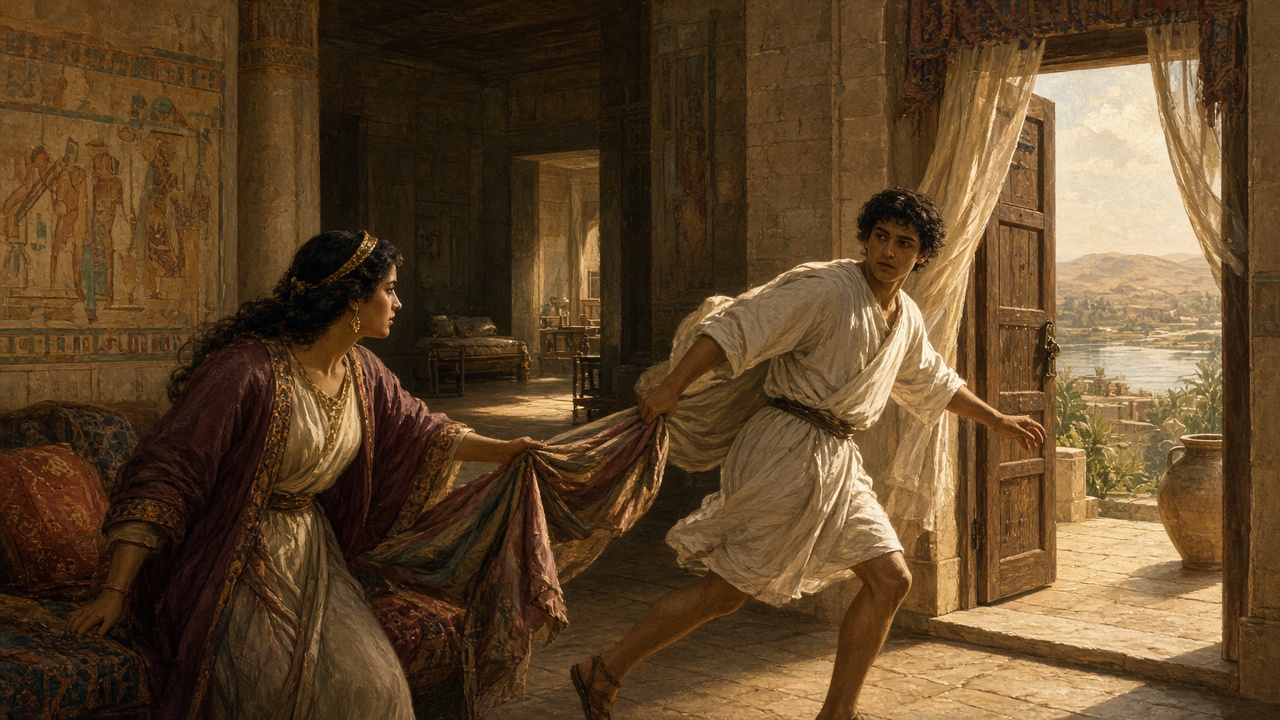
11Įłàà edılaà ghàlaeda ha goyaèhtła, dǫ goyìı eghàlagıìdèe sìı ı̨łè kò goyìı wheda-le ı̨lè. 12Potıfar wets'èkeè yeɂeè t'à dayaachì, hayèhdı, “Segà nı̨ı̨tè!” yèhdı. Hanìkò Joseph yetł'aetła gà xàtı̨mǫèhzah, ts'èko yeɂeè t'à dayaachìı sìı wetł'aà aèhchì ayį̀į̀là.
13Edeɂeè ts'ǫǫ̀ xàtı̨mǫèhzah xè yetł'aà aèhchì ayį̀į̀làa, ts'èko yek'èhoèhzà ts'ǫ̀et'ıì 14dǫ goyìı eghàlagıìdèe sìı goka whezeh, hadı, “Eyı Hebrew got'ı̨į̀ goghàedlò gha gots'ǫ̀ awììdlà! Set'àetè ha segà goyaèhtła ı̨lè, hanìkò hòtł'ò whıhzeh. 15Dǫ gıka whıhzeh sıìkw'o ts'ǫ̀et'ıì edeɂeè segà aèhchì ayį̀į̀là gà xàtı̨mǫèhzah,” ts'èko hadı.
16Potıfar edekǫ̀ nǫ̀ǫtła gots'ǫ̀ wets'èkeè Joseph weɂeè xàyeèhchì. 17Eyı godı t'à Potıfar ts'ǫ̀ dıı hadı, “Eyı Hebrew got'ı̨į̀ jǫ nìneehtı̨ı̨ sìı seghàedlò ha k'ehoɂa. 18Hanìkò whıhzeh ts'ǫ̀et'ıì edeɂeè segà aèhchì ayį̀į̀là xè xàtı̨mǫèhzah,” ts'èko ededǫǫ̀ èhdı.
19Joseph wets'ǫ̀ k'àowo wets'èkeè dıı hadıì yexè goado, “Eyı dǫ nàneehdìı sìı hanì sets'ǫ̀ k'ehoɂa,” yèhdı ghǫ ıìkw'o ts'ǫ̀et'ıì sıì ìch'è. 20Eyıt'à k'àowo Joseph dǫ-danìı̨laa-kǫ̀ ts'ǫ̀ ayį̀į̀là. Eyı dǫ-danìı̨laa-kǫ̀ dǫ k'àowocho k'èch'a hogèhtsı̨ı̨ sìı ekǫ gıdanìı̨la hǫt'e.
Joseph ekǫ wedaàtǫǫ ekò, 21Nǫ̀htsı̨ yek'èdì. Joseph ts'ǫ̀ wedzeè eteèɂı̨ t'à dǫ-danìı̨laa-kǫ̀ ts'ǫ̀ k'àowo Joseph ts'ǫ̀ sǫnıwǫǫ̀ ayį̀į̀là. 22Eyıt'à dǫ-danìı̨laa-kǫ̀ ts'ǫ̀ k'àowo sìı Joseph dǫ gıdanìı̨laa hazǫǫ̀ gots'ǫ̀ k'àowo elı̨į̀ ayį̀į̀là, eyıts'ǫ ekǫ ayìı ghàlageedaa sìı hazǫǫ̀ Joseph wetł'aà whelaà ayį̀į̀là. 23Nǫ̀htsı̨ Joseph k'èdì t'à, t'asìı hazǫǫ̀ hohtsı̨ı̨ sìı t'à wets'ǫ̀ hoedıì ayį̀į̀là. Eyıt'à dǫ-danìı̨laa-kǫ̀ ts'ǫ̀ k'àowo sìı Joseph t'asìı wetł'aà whela ghǫ nànıwo-le.
Did you know?
Joseph in Potiphar's House
- Potiphar, the Egyptian who bought Joseph from the Ishmaelites, has a name explained as “dedicated to Ra,” the sun-god. He was an officer of Pharaoh and captain of the guard—probably chief of the state police, who formed part of the army but were also largely employed in civil duties. A marginal note on Genesis 37:36 calls that same office “chief of the executioners.”Sources: Potiphar · the Bible text itself
- Believing his wife’s accusation, Potiphar had Joseph thrown into the prison where the king’s prisoners were confined. One reference says he remained there for some years, and a chronology dates the start of that imprisonment to 1717 BC, with a duration of three years.Sources: Potiphar · Joseph imprisoned · the Bible text itself
- The Pharaoh whom Potiphar served is not named in this chapter. One reference holds that the Pharaoh of Joseph’s days was probably Apopi, or Apopis, the last of the Hyksos kings, while some argue that Joseph came to Egypt in the reign of Thothmes III, long after the Hyksos had been expelled.Sources: Pharaoh (of Joseph) · the Bible text itself
Notes written with AI assistance from open sources (Theographic Bible Metadata, CC BY-SA 4.0; Easton’s Bible Dictionary, public domain) and reviewed before publishing.
Places in this chapter
- Egypt · 30.129, 31.308 · verse 1
Only places identified with high confidence are shown (90% or more according to the scholarly sources compiled by OpenBible). Period map: DARE (Digital Atlas of the Roman Empire), CC BY 4.0; modern map: © OpenStreetMap contributors; places: OpenBible.info (CC BY 4.0).
Credits and license for this translation
Nǫ̀htsı̨̨ Nı̨̨htł'è
Dogrib: Dogrib Genesis & New Testament New Testament & Portions of Old Testament
copyright © 2009 Canadian Bible Society
Language: Dogrib
Translation by: Canadian Bible Society
Tłı̨chǫ Genesis and New Testament
About Tłı̨chǫ
Tłı̨chǫ (Dogrib) is a Na-Dene (Athabaskan) language. It is spoken by the First Nations Tłı̨chǫ people in the Northwest Territories in Canada. It has the largest number of speakers of any of the Aboriginal language communities in the NWT, and is one of the official languages of the Northwest Territories.
About This Translation
This translation includes the book of Genesis and the New Testament in Tłı̨chǫ. The first edition of the Tłı̨chǫ New Testament was published in 2003. It was a historic event, as it was the first time in more than a hundred years that a complete New Testament was published for one of the Dene First Nations in the Territories. The first edition was well received and quickly sold out. In the meantime the book of Genesis had been completed. Consequently, the 2008 reprint of the Tłı̨chǫ New Testament included Genesis.
Though this translation of the New Testament and Genesis took a total of ten years, the people who worked on it built on years of labor invested by the Tłı̨chǫ people, elders, priests and missionaries, translators, educators, and linguists. The material contained in this book was checked and approved by consultants from Wycliffe Bible Translators and the Canadian Bible Society.
If you are interested in obtaining a printed copy of this Bible, please contact the Canadian Bible Society at http://www.biblescanada.com .
Copyright Information
Dogrib Genesis and New Testament © 2003, 2008 Canadian Bible Society
The text of the Bible in Tłı̨chǫ that appears in this electronic format or website is for personal use only.
Up to five hundred (500) verses of the Bible text in any form (written, visual, electronic or audio) may be quoted without permission. The quoted verses may not be more than 50% of a complete book of the Bible, or more than 25% of the total text of the work in which they are quoted. Prior written permission must be obtained for any other use of the text. Copyright acknowledgement must in all cases appear on the title or copyright page.
For more information on copyright conditions or to apply, visit http://www.biblesociety.ca/copyright .
This translation is made available to you under the terms of the
Creative Commons Attribution-Noncommercial-No Derivatives license 4.0.
You may share and redistribute this Bible translation or extracts from it in any format, provided that:
You include the above copyright and source information.
You do not sell this work for a profit.
You do not change any of the words or punctuation of the Scriptures.
Pictures included with Scriptures and other documents on this site are licensed just for use with those Scriptures and documents.
For other uses, please contact the respective copyright owners.
2014-04-22
Source: http://ebible.org/dgrDOGNT/ · eBible.org