Genesis 40
Nǫ̀htsı̨̨ Nı̨̨htł'è · Tap a verse to see its cross-references.
K'àowocho wecheekeèdeè nàke gıgodıì
1Łatsaa hoòwo tł'axǫǫ̀, Egypt nèk'e gha k'àowocho wecheekeèdeè nàke gık'èch'a hòèhtsı̨. Eyı wecheekeèdeè ı̨łè k'àowocho ayìı edǫǫ sìı xoehdıı elı̨, eyıts'ǫ wecheekeèdeè ı̨łè k'àowocho gha bò xàeht'èe elı̨. 2K'àowocho Faraoh eyı wecheekeèdeè nàke sıì gots'ǫ̀ wınì-le t'à 3gıdaàtǫǫ̀ agǫ̀ǫ̀là. Eghǫǫ-dǫǫ̀ gha k'àowo wekǫ̀ gocho gık'èhodì agǫ̀ǫ̀là. Joseph edı̨į̀ wedaàtǫǫ sìı ekǫ gıdaàtǫ. 4Eghǫǫ-dǫǫ̀ gha k'àowo eyı dǫ nàke Joseph wetł'aà nègòı̨wa, eyıt'à gok'èdì.
Whaà hoògǫ gıdaànìı̨la tł'axǫǫ̀ 5eyı k'àowocho wecheekeèdeè nàke į̀łak'aà ı̨łè to k'e nàgete. Dànì nàgetee sìı t'asìı ghǫ nàgeteè aget'ı̨ ı̨lè.
6K'omǫǫ̀dǫǫ̀ Joseph gots'ǫ̀ nììtła ekò ts'ǫǫ̀gı̨ı̨wǫǫ k'ę̀ę̀ gìgoèht'į̀. 7Eyıt'à k'àowocho wecheekeèdeè nàke ekǫ wexè gıdaàtǫǫ sìı dagoehke, “Dànì ghǫ dıı dzęę̀ k'e ts'ǫǫ̀dahwhǫ k'ę̀ę̀ naxègaat'ı̨?” gòhdı.
8“Įxę̀ę to į̀łak'aà nàwìte hanìkò dǫ gots'ǫ̀ yek'ayawhehtı whìle,” gedı.
Joseph gots'ǫ̀ hadı, “Nàts'etee wek'ayats'ehtıı sìı Nǫ̀htsı̨ wets'ǫ̀ hoèlı̨ hǫt'e. Dànì nàwhahtee sìı sets'ǫ̀ haahdı,” gòhdı.
9Eyıt'à k'àowocho ayìı edǫǫ xoehdıı elı̨ı̨ sìı dànì nàwhetı̨ ghǫ Joseph ts'ǫ̀ hadı, “Nàhte ekò jìechochı̨į̀ senadąą̀ wègoèht'į̀. 10Eyı jìechochı̨į̀ wekw'ıhchı̨į̀ taı gǫ̀hłı̨. Wek'e ı̨t'ǫ̀ą xàłaı̨kı̨ ts'ǫ̀et'ıì wets'ǫ ı̨t'ǫ̀chàa xàı̨shǫ, eyı tł'axǫǫ̀ wejìì wek'e dèhshǫǫ sìı jìecho dıìdì whelı̨. 11K'àowocho Faraoh welıbò daehtı̨ nǫǫ̀. Eyı jìecho dawhelaa sìı wetì lıbò yìı det'eè ahłà gà lıbò k'àowocho ghàehgè,” hadı.
12Joseph yets'ǫ̀ hadı, “Dıı hanì nàwheętı̨ hǫt'e: Eyı kw'ıhchı̨į̀ taı sìı taı dzęę̀ hǫt'e. 13Taı dzęę̀ k'ehǫǫwo nı̨dè k'àowocho Faraoh netł'axǫǫ̀ ts'ǫ̀ ananele ha t'à nınà anele ha. T'akwe dàneet'į̀ lanì ayìı edǫǫ sìı k'achı̨ wegha wehonehdı ha. 14Nexè nezı̨į̀ hòɂǫǫ̀ agòjà nı̨dè senawı̨ı̨dì nǫǫ̀, eyıts'ǫ nedzeè t'à etesį̀ı̨ɂı̨ welè. Segha k'àowocho Faraoh ts'ǫ̀ goı̨de nǫǫ̀. Jǫ dǫ-danìı̨laa-kǫ̀ gots'ǫǫ̀ xàehtła gha sets'ànedı. 15Sınì k'ę̀ę̀-le Hebrew nèk'e gots'ǫ nèsegììchì, eyıts'ǫ jǫ Egypt nèk'e ekǫ-le hòwhıhtsı̨-le kò dǫ-danìı̨laa-kǫ̀ nèsegį̀ı̨htı̨,” Joseph yèhdı.
16K'àowocho gha bò xàeht'èe elı̨ı̨ sìı Joseph, dǫ nàwhetı̨ı̨ yegha nezı̨į̀ yek'ayawhehtı nıwǫ t'à ededı̨ sı dànì nàwhetı̨ı̨ sìı Joseph ts'ǫ̀ hadı, “Sı̨ sı nàwhıhtı̨. Tł'ohtǫ taı weyìı łèt'è whelaa sekwı ka dawhela nǫǫ̀. 17Tł'ohtǫ daka dawhehtǫǫ sìı k'àowocho wegha łèt'è łekǫą whet'ee hazǫǫ̀ xàɂaa weyìı whela. Hanìkò tł'ohtǫ sekwì k'e dawhelaa weyìı chı̨ą łèt'è gedè nǫǫ̀,” hadı.
18Joseph yets'ǫ̀ hadı, “Dıı hanì nawheętı̨ hǫt'e: Tł'ohtǫ taı sìı taı dzęę̀ hǫt'e. 19Taı dzęę̀ k'ehǫǫwo nı̨dè k'àowocho Faraoh nekwì k'ııhkà ha, eyıts'ǫ nezhį̀į̀ ts'ı k'e daedlì ayele ha, eyıts'ǫ chı̨ą nekwǫ̀ gedè ha,” yèhdı.
20Taı dzęę̀ k'e nèhòı̨wo ekò k'àowocho Faraoh wedzęę̀ hǫt'e nǫǫ̀. Eyıt'à wecheekeèdeè hazǫǫ̀ gogha nàsı̨ whehtsı̨. K'àowocho ayìı edǫǫ dǫ yegha yexoehdıı elı̨ı̨ sìı eyıts'ǫ dǫ yegha bò xàeht'èe elı̨ı̨ sìı į̀łah edecheekeèdeè gonadąą̀ gokayaı̨htı. 21K'àowocho ayìı edǫǫ dǫ yegha yexoehdıı sìı wetł'axǫǫ̀ ts'ǫ̀ nayį̀ı̨htı̨, eyıt'à k'achı̨ k'àowocho Faraoh ts'ǫ̀ lıbò daekaà anajà. 22Ekò dǫ yegha bò xàeht'èe elı̨ı̨ ı̨lèe sìı dahdlì ayį̀į̀là. Joseph dànì nàgete yek'ayawhehtıı sìı k'ę̀ę̀ agòjà.
23Hanìkò dǫ k'àowocho gha ayìı edǫǫ xoehdıı elı̨ı̨ sìı Joseph nadì-le t'à yegha k'àowocho ts'ǫ̀ goı̨de-le.
Did you know?
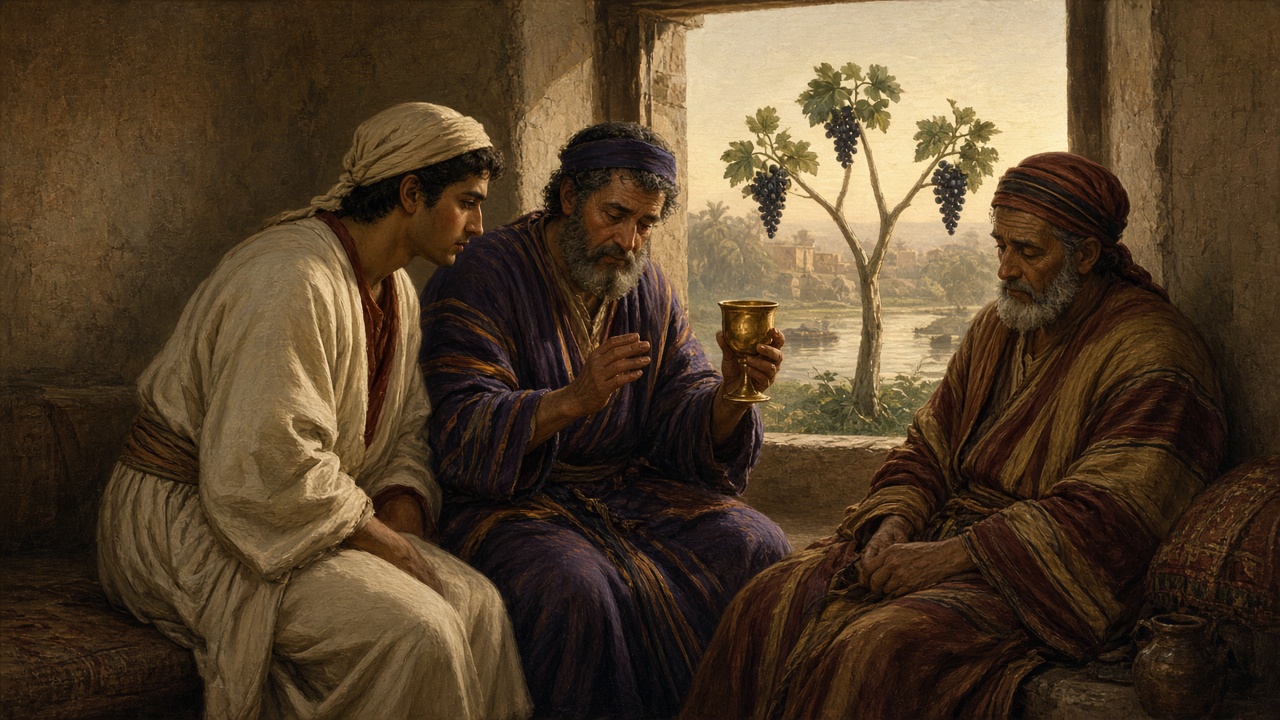
Dreams in Pharaoh's Prison
- Pharaoh was angry with two officers, the chief cupbearer and the chief baker, and put them in the house of the captain of the guard, the same prison where Joseph was confined. The captain assigned them to Joseph, who became their personal attendant.Sources: the Bible text itself
- On the same night the cupbearer and the baker each dreamed, and Joseph said that interpretations belong to God. He took the three branches and the three baskets to mean three days: Pharaoh would lift up the cupbearer's head and restore him, but lift off the baker's head and hang him on a tree. On the third day, Pharaoh's birthday, the king held a feast for his officials, restored the cupbearer, and hanged the baker.Sources: the Bible text itself
- Joseph asked the cupbearer to remember him and mention him to Pharaoh after his restoration. He said he had been kidnapped from the land of the Hebrews and had done nothing for which he should have been put in the dungeon. Easton's Bible Dictionary (1897) identifies the Pharaoh of Joseph's days as probably Apopi, or Apopis, the last of the Hyksos kings; some argue instead that Joseph came to Egypt later, under Thothmes III.Sources: the Bible text itself · Pharaoh (of Joseph)
Notes written with AI assistance from open sources (Theographic Bible Metadata, CC BY-SA 4.0; Easton’s Bible Dictionary, public domain) and reviewed before publishing.
Places in this chapter
Only places identified with high confidence are shown (90% or more according to the scholarly sources compiled by OpenBible). Period map: DARE (Digital Atlas of the Roman Empire), CC BY 4.0; modern map: © OpenStreetMap contributors; places: OpenBible.info (CC BY 4.0).
Credits and license for this translation
Nǫ̀htsı̨̨ Nı̨̨htł'è
Dogrib: Dogrib Genesis & New Testament New Testament & Portions of Old Testament
copyright © 2009 Canadian Bible Society
Language: Dogrib
Translation by: Canadian Bible Society
Tłı̨chǫ Genesis and New Testament
About Tłı̨chǫ
Tłı̨chǫ (Dogrib) is a Na-Dene (Athabaskan) language. It is spoken by the First Nations Tłı̨chǫ people in the Northwest Territories in Canada. It has the largest number of speakers of any of the Aboriginal language communities in the NWT, and is one of the official languages of the Northwest Territories.
About This Translation
This translation includes the book of Genesis and the New Testament in Tłı̨chǫ. The first edition of the Tłı̨chǫ New Testament was published in 2003. It was a historic event, as it was the first time in more than a hundred years that a complete New Testament was published for one of the Dene First Nations in the Territories. The first edition was well received and quickly sold out. In the meantime the book of Genesis had been completed. Consequently, the 2008 reprint of the Tłı̨chǫ New Testament included Genesis.
Though this translation of the New Testament and Genesis took a total of ten years, the people who worked on it built on years of labor invested by the Tłı̨chǫ people, elders, priests and missionaries, translators, educators, and linguists. The material contained in this book was checked and approved by consultants from Wycliffe Bible Translators and the Canadian Bible Society.
If you are interested in obtaining a printed copy of this Bible, please contact the Canadian Bible Society at http://www.biblescanada.com .
Copyright Information
Dogrib Genesis and New Testament © 2003, 2008 Canadian Bible Society
The text of the Bible in Tłı̨chǫ that appears in this electronic format or website is for personal use only.
Up to five hundred (500) verses of the Bible text in any form (written, visual, electronic or audio) may be quoted without permission. The quoted verses may not be more than 50% of a complete book of the Bible, or more than 25% of the total text of the work in which they are quoted. Prior written permission must be obtained for any other use of the text. Copyright acknowledgement must in all cases appear on the title or copyright page.
For more information on copyright conditions or to apply, visit http://www.biblesociety.ca/copyright .
This translation is made available to you under the terms of the
Creative Commons Attribution-Noncommercial-No Derivatives license 4.0.
You may share and redistribute this Bible translation or extracts from it in any format, provided that:
You include the above copyright and source information.
You do not sell this work for a profit.
You do not change any of the words or punctuation of the Scriptures.
Pictures included with Scriptures and other documents on this site are licensed just for use with those Scriptures and documents.
For other uses, please contact the respective copyright owners.
2014-04-22
Source: http://ebible.org/dgrDOGNT/ · eBible.org