Genesis 38
Nǫ̀htsı̨̨ Nı̨̨htł'è · Tap a verse to see its cross-references.
Judah eyıts'ǫ Tamar gıgodıì
1Ekìıyeè k'e Judah edechı gots'ǫǫ̀ ajà. Kǫ̀ta Adulam gòyeh ekǫ dǫ Hıra wìyeh xè nàdè. 2Ekǫ Kanan got'ı̨į̀ Shuya wìyeh wetì xè at'ı̨. Yexè honìdza gà yet'àı̨tè. 3Eyı ts'èko hotıeda-le ajà t'à dǫzhìa nìı̨htı̨ı̨ sìı Er wìyeh agį̀į̀là. 4Eyı tł'axǫǫ̀ k'achı̨ hotıeda-le ajà t'à dǫzhìa nìı̨htı̨, Onan wìyeh ayį̀į̀là. 5K'achı̨ ı̨łàà dǫzhìa nìı̨htı̨. Eyı Shelah wìyeh ayį̀į̀là. Kǫ̀ta Kezıb ekǫ weza wegǫ̀hłı̨.
6Judah weza t'akwełǫ̀ǫ̀ Er wìyeh sìı yegha ts'èko į̀hchì, eyı ts'èko Tamar wìyeh. 7Hanìkò Judah weza t'akwełǫ̀ǫ̀ sìı Nǫ̀htsı̨ gha dǫ wejıı elı̨ t'à gots'ǫ̀ K'àowo ełaı̨woò ayį̀į̀là.
8Eyıt'à Judah edeza Onan ts'ǫ̀ hadı, “Nı̨ı̨de wets'èkeè xè wheętı̨, gonàowoò k'ę̀ę̀ wets'ǫ̀ ehkw'ı eghàlaı̨da, hanì-ı̨dè nı̨ı̨de wets'ıhɂǫ̀ǫ-dǫǫ̀ gǫ̀hłı̨į̀ anele ha,” yèhdı. 9Hanìkò Onan eyı chekoa nììle ha sìı ededı̨ wets'ǫ gı̨ı̨lı̨ ha-le yek'èezǫ, eyıt'à edı̨ı̨de ts'èkeè t'àetè nı̨dè weza gǫ̀hłı̨ ha-le gha tı wet'à chekoa gòhłèe sìı dèe k'e ts'ǫ̀ łaetł'ì ayehɂı̨, edı̨ı̨de gha chekoa nììle ha-le t'à. 10Nǫ̀htsı̨ gha wejıı eghàlaı̨dà t'à ededı̨ sı Nǫ̀htsı̨ ełaı̨woò ayį̀į̀là.
11Eyıt'à Judah edeza ts'èkeè Tamar ts'ǫ̀ hadı, “Nedǫzhıì ełaı̨wo t'à seza Shelah ǫhdah ìhłè gots'ǫ̀ netà wekǫ̀ nàądè,” yèhdı. Edı̨ı̨de lanì ededı̨ sı ełaàwı ha sǫnı, Judah hanıwǫ t'à hayèhdı. Eyıt'à Tamar edetà kǫ̀ ts'ǫ̀ anajà.
12Whaà hoòwo tł'axǫǫ̀ Judah wets'èkeè Shuya wetì ełaı̨wo. Judah yeghǫ ts'ǫǫ̀nıwǫ tehòwo tł'axǫǫ̀ kǫ̀ta Tımat gòyeh ts'ǫ̀ èhtła, ekǫ dǫ gıgha sahzǫ̀ąghàà xaget'à ı̨lè. Weàgı̨ą Adulam got'ı̨į̀ Hıra yexè ajà.
13Dǫ Tamar ts'ǫ̀ hagedı, “Neɂeh Tımat ts'ǫ̀ èhtła, sahzǫ̀ąghàà xat'à gha ekǫ ts'ǫ̀ èhtła,” gıìhdı. 14Ts'èko wedǫzhıì ełaı̨wo k'ę̀ę̀ nàèhtł'ı̨ı̨ sìı yeyìı xàetła, edınì nàehɂį̀ ha ehtł'ı̨ edınì k'e whehchì ayį̀į̀là. Tımat ts'ǫ̀ tı̨lı nı̨ı̨ɂàa gà kǫ̀ta Enayım ts'ǫ̀ nıwà-le dèe k'e dèhkwà. Judah weza Shelah hòt'a ǫhdah whelı̨ kò yets'èkeè elı̨ ha ı̨łaà weghàgeèhtè-le t'à hanì k'ehoɂa.
15Wınì k'e ehtł'ı̨ whehchì t'à Judah yaɂı̨ ekò ts'èko edezhį̀į̀ t'à sǫǫ̀mba ehtsı̨ı̨ at'ı̨ yı̨ı̨hwhǫ. 16Weza ts'èkeè at'ı̨ yek'èezǫ-le t'à, ts'èko tı̨lıbàa whedaa ts'ǫ̀ èhtła, yets'ǫ̀ hadı, “Sek'èątła, nexè wehtè,” yèhdı.
“Sexè wheętı̨ k'èxa ayìı seghàı̨ɂà ha?” ts'èko yèhdı.
17“Sets'ǫ ejıetsoazaa ı̨łè nedanìehtè ha,” yèhdı.
Tamar yets'ǫ̀ hadı, “Ejıetsoazaa sedanìı̨htèe gots'ǫ̀ wet'à neyatıì k'ènedì gha dıì nets'ǫ t'asìı sexè whelaà anele,” ts'èko yèhdı.
18Judah hadı, “Ayìı nexè whelaà ahłe ha?” yèhdı.
“Nelamǫ̀ǫ wet'à nı̨htł'è k'e nàı̨kwı̨ı̨, wetł'ıì wexè, eyıts'ǫ eyı geh k'enetı̨ı̨ sexè whelaà anele,” ts'èko yèhdı. Eyıt'à Judah eyı haàtłǫǫ ts'èko ghàı̨wa gà yet'àı̨tè, eyıt'à ts'èko hotıeda-le ajà. 19Eyı tł'axǫǫ̀ ts'èko naèhtła, wınì k'e ehtł'ı̨ ɂǫ̀èɂah gà wedǫǫ̀ ełaı̨wo k'ę̀ę̀ nàhtł'ı̨ ı̨lèe sìı hanì goht'ǫ yìı naetła.
20Ekìıyeè k'e Judah edeàgı̨ą Adulam got'ı̨į̀ xè ejıetsoa ts'èko danìı̨htı̨, hanì-ı̨dè wets'ǫ t'asìı wexè whelaà ayį̀į̀làa sìı nayıìwa ha. Hanìkò weàgı̨ą yegòhɂà ha dìì. 21Dǫzhìı ekǫ nàgedèe sìı dagoehke, “Ts'èko edezhį̀į̀ weghǫ nàedìı Enayım gà tı̨lıbàa whedaa ı̨lèe sìı welaedì?” gòhdı.
“Jǫ ts'èko hanıı gǫ̀hłı̨-le,” gıìhdı.
22Eyıt'à Judah ts'ǫ̀ naèhtła, hayèhdı, “Eyı ts'èko wegòhɂà ha whį̀ahjà. Dǫzhìı ekǫ nàgedèe sìı ts'èko hanıı gǫ̀hłı̨-le, gedı,” yèhdı.
23Eyıt'à Judah hadı, “Dǫ goghageedlò ch'à ayìı wexè whela ahłàa sìı yek'èdì kò. Hòt'a ejıetsoa wedanìıhtı̨ kò wegònehɂǫ nıìle,” yèhdı.
24Taı sa k'ehǫǫwo tł'axǫǫ̀ Judah ts'ǫ̀ hagedı, “Neza wets'èkeè Tamar wezhį̀į̀ weghǫ nàedì ı̨lè nǫǫ̀, eyıt'à dıì hotıeda-le,” gıìhdı.
Judah hadı, “Xàweahchı, wek'eek'ǫ̀ ha!” Judah gòhdı.
25Tamar xàgeèhchì ekò edeɂeh danatıı̨ɂǫ, hadı, “Amìı wets'ǫ hotıehda-le sìı dıı sexè whelaà ayį̀į̀là hǫt'e. Dıı lamǫ̀ǫ, wetł'ıì wexè eyıts'ǫ dıı geh amìı wets'ǫ ne sìı wek'aahta,” hadı.
26Judah ekòet'ıì wets'ǫ hǫt'e nàyèhzhį̀ t'à hadı, “Seza Shelah ghàweehtı̨-le t'à ededı̨ senahk'e ehkw'ı k'ehoɂa hǫt'e,” hadı. Eyı tł'axǫǫ̀ Judah k'achı̨ yexè ı̨tè-le.
27Tamar weza gǫ̀hłı̨ ha nìkw'o ekò ełèchǫekèa dǫzhìı agı̨ı̨t'e nǫǫ̀. 28Weza gòhłè ha nìkw'o ekò weza ı̨łè wegǫ̀ xàeko, ts'èko wetł'aà chekoa gòhłè elı̨ı̨ sìı nahzha dek'oo yelachı̨į̀ k'e ełèwhezhà. “Dııyı̨į̀ t'akwełǫ̀ǫ̀ xàèhtła,” hadı. 29Hanìkò bebìa edılà ı̨dè anayį̀į̀là ekò wechı dǫ-elı̨. Eyı ts'èko dıı hadı, “Hanì t'aa t'akwełǫ̀ǫ̀ xàneetła nǫǫ̀!” yèhdı. Eyıt'à Perez wìyeh agı̨į̀là. 30Eyı tł'axǫǫ̀ wechı nahzha dek'oo welachı̨į̀ k'e ełeèhchıı sìı wegǫ̀hłı̨, eyı Zerah wìyeh agı̨į̀là.
Did you know?
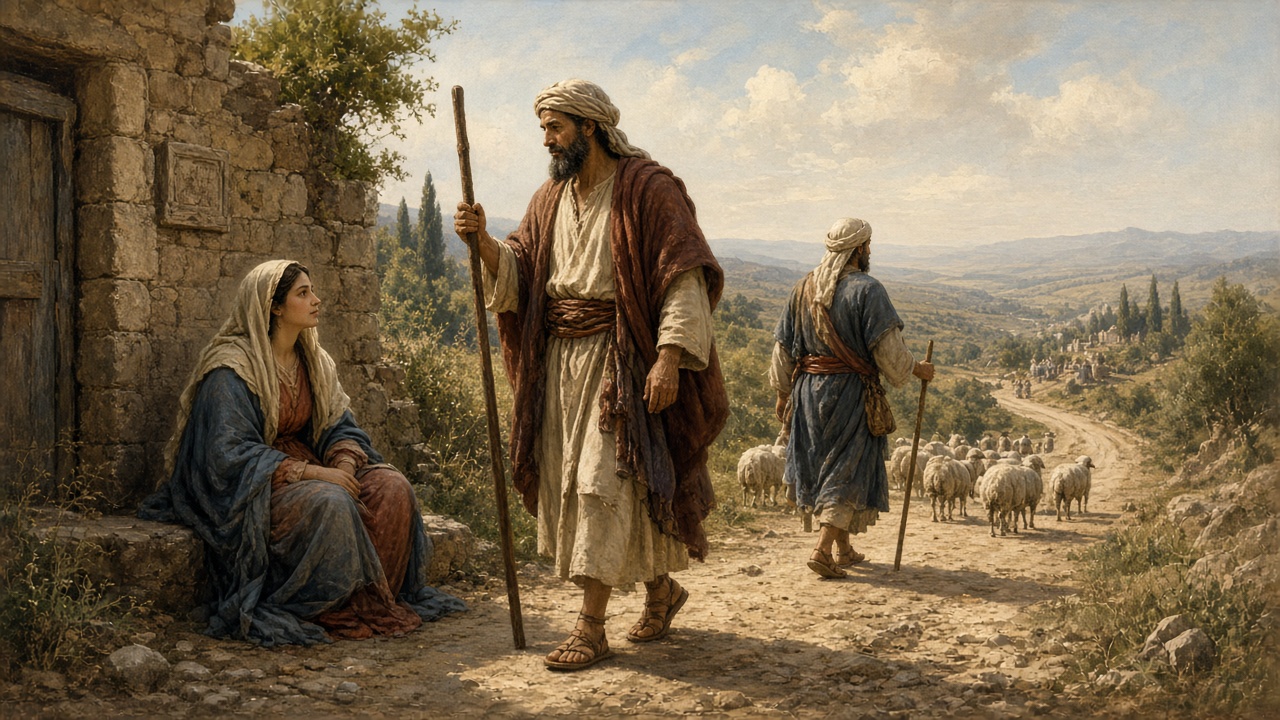
Judah and Tamar
- Soon after Joseph was sold to the Ishmaelites, Judah left his brothers and settled near Hirah, an Adullamite, and married the daughter of Shua, a Canaanite. She bore him Er, Onan, and Shelah; Shelah was born at Chezib, whose name means deceitful and is probably the same place as Achzib.Sources: Judah (patriarch) · Shuah · Chezib · the Bible text itself
- Judah took Tamar as a wife for his firstborn, Er. After Er died, he told Onan to sleep with her, fulfill a brother-in-law's duty, and raise up offspring for Er, but Onan would spill his seed on the ground so the child would not belong to him. Easton's Bible Dictionary (1897) compares that episode with Deuteronomy 25:5 and Matthew 22:24; Onan died before Jacob's family went down to Egypt, and Judah never gave Tamar to Shelah as promised.Sources: Tamar · Onan · the Bible text itself
- After the daughter of Shua died, Judah and his friend Hirah went up to his sheepshearers at Timnah, which Easton's Bible Dictionary (1897) describes as a town of Judah about twenty miles west of Jerusalem. Tamar veiled her face and waited at Enaim, on the way to Timnah—probably Enam, a city in the lowland or Shephelah—and Judah thought she was a prostitute because her face was covered. She later bore twins, and the child who broke out first was named Perez, a name that means breach.Sources: Timnah · Enaim · Pharez · the Bible text itself
Notes written with AI assistance from open sources (Theographic Bible Metadata, CC BY-SA 4.0; Easton’s Bible Dictionary, public domain) and reviewed before publishing.
Credits and license for this translation
Nǫ̀htsı̨̨ Nı̨̨htł'è
Dogrib: Dogrib Genesis & New Testament New Testament & Portions of Old Testament
copyright © 2009 Canadian Bible Society
Language: Dogrib
Translation by: Canadian Bible Society
Tłı̨chǫ Genesis and New Testament
About Tłı̨chǫ
Tłı̨chǫ (Dogrib) is a Na-Dene (Athabaskan) language. It is spoken by the First Nations Tłı̨chǫ people in the Northwest Territories in Canada. It has the largest number of speakers of any of the Aboriginal language communities in the NWT, and is one of the official languages of the Northwest Territories.
About This Translation
This translation includes the book of Genesis and the New Testament in Tłı̨chǫ. The first edition of the Tłı̨chǫ New Testament was published in 2003. It was a historic event, as it was the first time in more than a hundred years that a complete New Testament was published for one of the Dene First Nations in the Territories. The first edition was well received and quickly sold out. In the meantime the book of Genesis had been completed. Consequently, the 2008 reprint of the Tłı̨chǫ New Testament included Genesis.
Though this translation of the New Testament and Genesis took a total of ten years, the people who worked on it built on years of labor invested by the Tłı̨chǫ people, elders, priests and missionaries, translators, educators, and linguists. The material contained in this book was checked and approved by consultants from Wycliffe Bible Translators and the Canadian Bible Society.
If you are interested in obtaining a printed copy of this Bible, please contact the Canadian Bible Society at http://www.biblescanada.com .
Copyright Information
Dogrib Genesis and New Testament © 2003, 2008 Canadian Bible Society
The text of the Bible in Tłı̨chǫ that appears in this electronic format or website is for personal use only.
Up to five hundred (500) verses of the Bible text in any form (written, visual, electronic or audio) may be quoted without permission. The quoted verses may not be more than 50% of a complete book of the Bible, or more than 25% of the total text of the work in which they are quoted. Prior written permission must be obtained for any other use of the text. Copyright acknowledgement must in all cases appear on the title or copyright page.
For more information on copyright conditions or to apply, visit http://www.biblesociety.ca/copyright .
This translation is made available to you under the terms of the
Creative Commons Attribution-Noncommercial-No Derivatives license 4.0.
You may share and redistribute this Bible translation or extracts from it in any format, provided that:
You include the above copyright and source information.
You do not sell this work for a profit.
You do not change any of the words or punctuation of the Scriptures.
Pictures included with Scriptures and other documents on this site are licensed just for use with those Scriptures and documents.
For other uses, please contact the respective copyright owners.
2014-04-22
Source: http://ebible.org/dgrDOGNT/ · eBible.org