Génesis 38
Nǫ̀htsı̨̨ Nı̨̨htł'è · Toca un versículo para ver sus referencias cruzadas.
Judah eyıts'ǫ Tamar gıgodıì
1Ekìıyeè k'e Judah edechı gots'ǫǫ̀ ajà. Kǫ̀ta Adulam gòyeh ekǫ dǫ Hıra wìyeh xè nàdè. 2Ekǫ Kanan got'ı̨į̀ Shuya wìyeh wetì xè at'ı̨. Yexè honìdza gà yet'àı̨tè. 3Eyı ts'èko hotıeda-le ajà t'à dǫzhìa nìı̨htı̨ı̨ sìı Er wìyeh agį̀į̀là. 4Eyı tł'axǫǫ̀ k'achı̨ hotıeda-le ajà t'à dǫzhìa nìı̨htı̨, Onan wìyeh ayį̀į̀là. 5K'achı̨ ı̨łàà dǫzhìa nìı̨htı̨. Eyı Shelah wìyeh ayį̀į̀là. Kǫ̀ta Kezıb ekǫ weza wegǫ̀hłı̨.
6Judah weza t'akwełǫ̀ǫ̀ Er wìyeh sìı yegha ts'èko į̀hchì, eyı ts'èko Tamar wìyeh. 7Hanìkò Judah weza t'akwełǫ̀ǫ̀ sìı Nǫ̀htsı̨ gha dǫ wejıı elı̨ t'à gots'ǫ̀ K'àowo ełaı̨woò ayį̀į̀là.
8Eyıt'à Judah edeza Onan ts'ǫ̀ hadı, “Nı̨ı̨de wets'èkeè xè wheętı̨, gonàowoò k'ę̀ę̀ wets'ǫ̀ ehkw'ı eghàlaı̨da, hanì-ı̨dè nı̨ı̨de wets'ıhɂǫ̀ǫ-dǫǫ̀ gǫ̀hłı̨į̀ anele ha,” yèhdı. 9Hanìkò Onan eyı chekoa nììle ha sìı ededı̨ wets'ǫ gı̨ı̨lı̨ ha-le yek'èezǫ, eyıt'à edı̨ı̨de ts'èkeè t'àetè nı̨dè weza gǫ̀hłı̨ ha-le gha tı wet'à chekoa gòhłèe sìı dèe k'e ts'ǫ̀ łaetł'ì ayehɂı̨, edı̨ı̨de gha chekoa nììle ha-le t'à. 10Nǫ̀htsı̨ gha wejıı eghàlaı̨dà t'à ededı̨ sı Nǫ̀htsı̨ ełaı̨woò ayį̀į̀là.
11Eyıt'à Judah edeza ts'èkeè Tamar ts'ǫ̀ hadı, “Nedǫzhıì ełaı̨wo t'à seza Shelah ǫhdah ìhłè gots'ǫ̀ netà wekǫ̀ nàądè,” yèhdı. Edı̨ı̨de lanì ededı̨ sı ełaàwı ha sǫnı, Judah hanıwǫ t'à hayèhdı. Eyıt'à Tamar edetà kǫ̀ ts'ǫ̀ anajà.
12Whaà hoòwo tł'axǫǫ̀ Judah wets'èkeè Shuya wetì ełaı̨wo. Judah yeghǫ ts'ǫǫ̀nıwǫ tehòwo tł'axǫǫ̀ kǫ̀ta Tımat gòyeh ts'ǫ̀ èhtła, ekǫ dǫ gıgha sahzǫ̀ąghàà xaget'à ı̨lè. Weàgı̨ą Adulam got'ı̨į̀ Hıra yexè ajà.
13Dǫ Tamar ts'ǫ̀ hagedı, “Neɂeh Tımat ts'ǫ̀ èhtła, sahzǫ̀ąghàà xat'à gha ekǫ ts'ǫ̀ èhtła,” gıìhdı. 14Ts'èko wedǫzhıì ełaı̨wo k'ę̀ę̀ nàèhtł'ı̨ı̨ sìı yeyìı xàetła, edınì nàehɂį̀ ha ehtł'ı̨ edınì k'e whehchì ayį̀į̀là. Tımat ts'ǫ̀ tı̨lı nı̨ı̨ɂàa gà kǫ̀ta Enayım ts'ǫ̀ nıwà-le dèe k'e dèhkwà. Judah weza Shelah hòt'a ǫhdah whelı̨ kò yets'èkeè elı̨ ha ı̨łaà weghàgeèhtè-le t'à hanì k'ehoɂa.
15Wınì k'e ehtł'ı̨ whehchì t'à Judah yaɂı̨ ekò ts'èko edezhį̀į̀ t'à sǫǫ̀mba ehtsı̨ı̨ at'ı̨ yı̨ı̨hwhǫ. 16Weza ts'èkeè at'ı̨ yek'èezǫ-le t'à, ts'èko tı̨lıbàa whedaa ts'ǫ̀ èhtła, yets'ǫ̀ hadı, “Sek'èątła, nexè wehtè,” yèhdı.
“Sexè wheętı̨ k'èxa ayìı seghàı̨ɂà ha?” ts'èko yèhdı.
17“Sets'ǫ ejıetsoazaa ı̨łè nedanìehtè ha,” yèhdı.
Tamar yets'ǫ̀ hadı, “Ejıetsoazaa sedanìı̨htèe gots'ǫ̀ wet'à neyatıì k'ènedì gha dıì nets'ǫ t'asìı sexè whelaà anele,” ts'èko yèhdı.
18Judah hadı, “Ayìı nexè whelaà ahłe ha?” yèhdı.
“Nelamǫ̀ǫ wet'à nı̨htł'è k'e nàı̨kwı̨ı̨, wetł'ıì wexè, eyıts'ǫ eyı geh k'enetı̨ı̨ sexè whelaà anele,” ts'èko yèhdı. Eyıt'à Judah eyı haàtłǫǫ ts'èko ghàı̨wa gà yet'àı̨tè, eyıt'à ts'èko hotıeda-le ajà. 19Eyı tł'axǫǫ̀ ts'èko naèhtła, wınì k'e ehtł'ı̨ ɂǫ̀èɂah gà wedǫǫ̀ ełaı̨wo k'ę̀ę̀ nàhtł'ı̨ ı̨lèe sìı hanì goht'ǫ yìı naetła.
20Ekìıyeè k'e Judah edeàgı̨ą Adulam got'ı̨į̀ xè ejıetsoa ts'èko danìı̨htı̨, hanì-ı̨dè wets'ǫ t'asìı wexè whelaà ayį̀į̀làa sìı nayıìwa ha. Hanìkò weàgı̨ą yegòhɂà ha dìì. 21Dǫzhìı ekǫ nàgedèe sìı dagoehke, “Ts'èko edezhį̀į̀ weghǫ nàedìı Enayım gà tı̨lıbàa whedaa ı̨lèe sìı welaedì?” gòhdı.
“Jǫ ts'èko hanıı gǫ̀hłı̨-le,” gıìhdı.
22Eyıt'à Judah ts'ǫ̀ naèhtła, hayèhdı, “Eyı ts'èko wegòhɂà ha whį̀ahjà. Dǫzhìı ekǫ nàgedèe sìı ts'èko hanıı gǫ̀hłı̨-le, gedı,” yèhdı.
23Eyıt'à Judah hadı, “Dǫ goghageedlò ch'à ayìı wexè whela ahłàa sìı yek'èdì kò. Hòt'a ejıetsoa wedanìıhtı̨ kò wegònehɂǫ nıìle,” yèhdı.
24Taı sa k'ehǫǫwo tł'axǫǫ̀ Judah ts'ǫ̀ hagedı, “Neza wets'èkeè Tamar wezhį̀į̀ weghǫ nàedì ı̨lè nǫǫ̀, eyıt'à dıì hotıeda-le,” gıìhdı.
Judah hadı, “Xàweahchı, wek'eek'ǫ̀ ha!” Judah gòhdı.
25Tamar xàgeèhchì ekò edeɂeh danatıı̨ɂǫ, hadı, “Amìı wets'ǫ hotıehda-le sìı dıı sexè whelaà ayį̀į̀là hǫt'e. Dıı lamǫ̀ǫ, wetł'ıì wexè eyıts'ǫ dıı geh amìı wets'ǫ ne sìı wek'aahta,” hadı.
26Judah ekòet'ıì wets'ǫ hǫt'e nàyèhzhį̀ t'à hadı, “Seza Shelah ghàweehtı̨-le t'à ededı̨ senahk'e ehkw'ı k'ehoɂa hǫt'e,” hadı. Eyı tł'axǫǫ̀ Judah k'achı̨ yexè ı̨tè-le.
27Tamar weza gǫ̀hłı̨ ha nìkw'o ekò ełèchǫekèa dǫzhìı agı̨ı̨t'e nǫǫ̀. 28Weza gòhłè ha nìkw'o ekò weza ı̨łè wegǫ̀ xàeko, ts'èko wetł'aà chekoa gòhłè elı̨ı̨ sìı nahzha dek'oo yelachı̨į̀ k'e ełèwhezhà. “Dııyı̨į̀ t'akwełǫ̀ǫ̀ xàèhtła,” hadı. 29Hanìkò bebìa edılà ı̨dè anayį̀į̀là ekò wechı dǫ-elı̨. Eyı ts'èko dıı hadı, “Hanì t'aa t'akwełǫ̀ǫ̀ xàneetła nǫǫ̀!” yèhdı. Eyıt'à Perez wìyeh agı̨į̀là. 30Eyı tł'axǫǫ̀ wechı nahzha dek'oo welachı̨į̀ k'e ełeèhchıı sìı wegǫ̀hłı̨, eyı Zerah wìyeh agı̨į̀là.
¿Sabías que…?
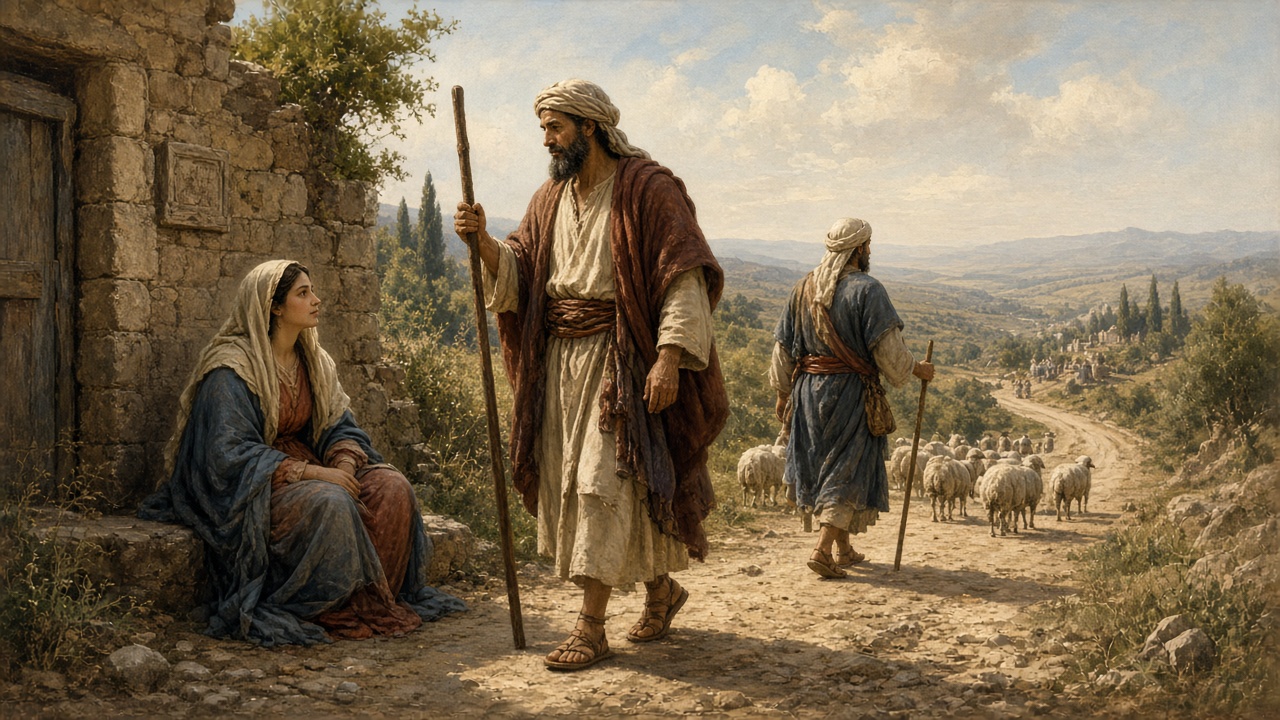
Judá y Tamar
- Poco después de que José fue vendido a los ismaelitas, Judá dejó a sus hermanos y se estableció cerca de Hira, un adulamita, y se casó con la hija de Súa, un cananeo. Ella le dio a Er, Onán y Sela; Sela nació en Quezib, cuyo nombre significa engañoso y probablemente es el mismo lugar que Aczib.Fuentes: Judah (patriarch) · Shuah · Chezib · el propio texto bíblico
- Judá tomó a Tamar como esposa para su primogénito, Er. Después de que Er murió, le dijo a Onán que se acostara con ella, cumpliera el deber de cuñado y levantara descendencia para Er, pero Onán derramaba su semilla en la tierra para que el hijo no le perteneciera. El Diccionario Bíblico de Easton (1897) compara ese episodio con Deuteronomio 25:5 y Mateo 22:24; Onán murió antes de que la familia de Jacob bajara a Egipto, y Judá nunca entregó a Tamar a Sela, como había prometido.Fuentes: Tamar · Onan · el propio texto bíblico
- Después de que murió la hija de Súa, Judá y su amigo Hira subieron adonde sus esquiladores en Timnat, lugar que el Diccionario Bíblico de Easton (1897) describe como una ciudad de Judá a unas veinte millas al oeste de Jerusalén. Tamar se cubrió el rostro con un velo y esperó en Enaim, en el camino a Timnat —probablemente Enam, una ciudad de la llanura o Sefelá—, y Judá pensó que era una prostituta porque tenía el rostro cubierto. Más tarde dio a luz gemelos, y el niño que se abrió paso primero recibió el nombre de Fares, nombre que significa brecha.Fuentes: Timnah · Enaim · Pharez · el propio texto bíblico
Notas escritas con ayuda de IA a partir de fuentes abiertas (Theographic Bible Metadata, CC BY-SA 4.0; Easton’s Bible Dictionary, dominio público) y revisadas antes de publicarse.
Créditos y licencia de esta traducción
Nǫ̀htsı̨̨ Nı̨̨htł'è
Dogrib: Dogrib Genesis & New Testament New Testament & Portions of Old Testament
copyright © 2009 Canadian Bible Society
Language: Dogrib
Translation by: Canadian Bible Society
Tłı̨chǫ Genesis and New Testament
About Tłı̨chǫ
Tłı̨chǫ (Dogrib) is a Na-Dene (Athabaskan) language. It is spoken by the First Nations Tłı̨chǫ people in the Northwest Territories in Canada. It has the largest number of speakers of any of the Aboriginal language communities in the NWT, and is one of the official languages of the Northwest Territories.
About This Translation
This translation includes the book of Genesis and the New Testament in Tłı̨chǫ. The first edition of the Tłı̨chǫ New Testament was published in 2003. It was a historic event, as it was the first time in more than a hundred years that a complete New Testament was published for one of the Dene First Nations in the Territories. The first edition was well received and quickly sold out. In the meantime the book of Genesis had been completed. Consequently, the 2008 reprint of the Tłı̨chǫ New Testament included Genesis.
Though this translation of the New Testament and Genesis took a total of ten years, the people who worked on it built on years of labor invested by the Tłı̨chǫ people, elders, priests and missionaries, translators, educators, and linguists. The material contained in this book was checked and approved by consultants from Wycliffe Bible Translators and the Canadian Bible Society.
If you are interested in obtaining a printed copy of this Bible, please contact the Canadian Bible Society at http://www.biblescanada.com .
Copyright Information
Dogrib Genesis and New Testament © 2003, 2008 Canadian Bible Society
The text of the Bible in Tłı̨chǫ that appears in this electronic format or website is for personal use only.
Up to five hundred (500) verses of the Bible text in any form (written, visual, electronic or audio) may be quoted without permission. The quoted verses may not be more than 50% of a complete book of the Bible, or more than 25% of the total text of the work in which they are quoted. Prior written permission must be obtained for any other use of the text. Copyright acknowledgement must in all cases appear on the title or copyright page.
For more information on copyright conditions or to apply, visit http://www.biblesociety.ca/copyright .
This translation is made available to you under the terms of the
Creative Commons Attribution-Noncommercial-No Derivatives license 4.0.
You may share and redistribute this Bible translation or extracts from it in any format, provided that:
You include the above copyright and source information.
You do not sell this work for a profit.
You do not change any of the words or punctuation of the Scriptures.
Pictures included with Scriptures and other documents on this site are licensed just for use with those Scriptures and documents.
For other uses, please contact the respective copyright owners.
2014-04-22
Fuente: http://ebible.org/dgrDOGNT/ · eBible.org