Exodus 4
Las Escrituras en Ashéninka Ucayali del Sur del Perú · Tap a verse to see its cross-references.
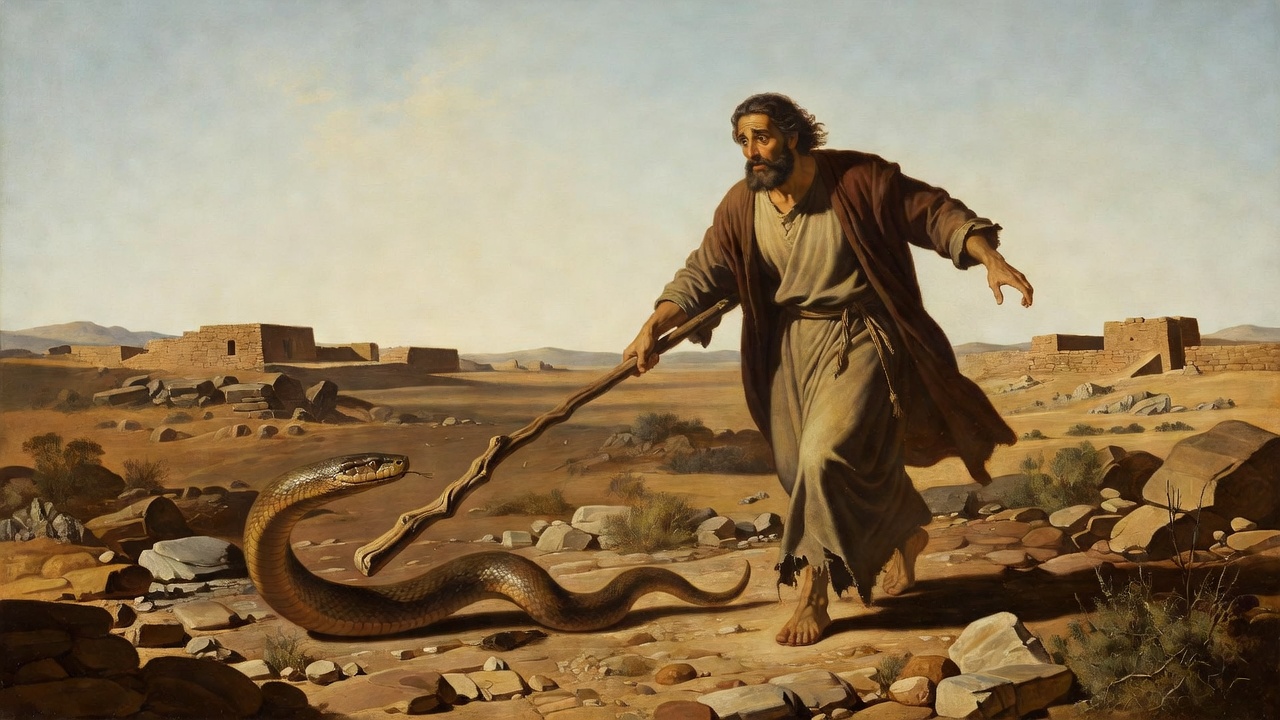
1Ari ikantanaki Moisés: “¡Tajorentsi! Eero imatziro nokantiriri, osheki ipiyatha-tina. Apatziro ikantee-yinani: ‘¡Moisés! Tee roñaayimi Tajorentsi.’” 2Rapiita-nakiri Tajorentsi, ikantziri: “¡Moisés! ¿Iitaka poteeyakiri pakoki?” Ikantzi Moisés: “Nokotzi nateyi.” 3Ikantzi Tajorentsi: “Ajantyaa pookiro jaawiki.” Rookakiro Moisés ikotzi. Ari opeyanakari maanki. Ishiya-pitha-tanakawo ikotzi iñaakiro opeyanakari maanki. 4Ikantzi Tajorentsi: “Poteeyiri ipatzishithaki.” Imatakiri Moisés roteeyakiri, kotzitsi-tanee. 5Ikantzi Tajorentsi: “Piñaakiro. Rootaki riyotan-teetyaari maperori noñaahakimi, tema naaka Itajorentsite piwaejatzite Abraham, Isaac, eejatzi Jacob.”
6Ari ikantanakiri eejatzi Tajorentsi: “¡Moisés! Pojate-wakotyaa pishipaneeki.” Imatakiro Moisés, iñaatziiro rako othonka opathaanaki, kitamaa-wakotanaki, kimiwae-tanaka okitamaatzi jiriniki. 7Ikantzi Tajorentsi: “Papiiteero poja-tewa-koteeyaa.” Rapiitakiro Moisés rojate-wakotaa. Etsiyatanee ipathaawo, kimitanaa ikantaha maawoeni iwathaki. 8Ikantzi Tajorentsi: “Eerorika ikemijan-teetzimi iñaawitee-takyaawo petakyaari poñaahantiri, aritaki ikemijan-teetakimi aririka iñahaetakiro otsipa poñaahantiri. 9Eerorika ikemijan-teetzimi poñaahan-tawitakyaawo iroka apite kaari iñaapiin-teetzi, paaki eepichokiini nijaa, pijakotiro jaawiki. Aritaki oshiyana-kyaawo iraantsi.”
10Ikantzi Moisés: “¡Apaa Nowinkatharite! Osheki opomeentsi-tzimotana noñaawaeti, tema ari nokantzita paerani, eejatzi nimaeka piñaana-tanta-kinari pompera-tina. Tema osheki nokowa-piintawita nokenkitha-waetimi, osheki nokijopaantetaki noñaawaeti-rika.” 11Ari ikantzi Tajorentsi: “¡Moisés! ¿Iitaka pakiriri atziri-paeni iñaani? ¿Kaarima naaka kijopaante-takaeriri, matayempi-tatakaeriri, eejatzi mawityaaki-takaeriri? ¿Kaarima naaka aminakaa-yitziriri eejatzi? 12Otzimatyee piyaati, aritaki niyotaakimi jempe pikanteri, naaka tsipatimini.” 13Eekiro ikantana-kitzii Moisés: “¡Apaa, Nowinkatharite! Potyaanti itsipa atziri.” 14Ari ikijatha-tanakiri Tajorentsi irika Moisés, ikantanakiri: “Aritaki ijeekiri janta pirentzi Aarón, isheninka Leví-paeni. Riyotziro iñaawaetzi kameetha rirori. Pokaki itonkiyo-timi, antawo ikimo-shiretanaki aririka iñaawaemi. 15Tema eeroka kamanterini okaatzi ikenkitha-takaanteri, ari nojeekityaari eejatzi naaka notsipatemi, niyoteemiro okaate panteri. 16Rootaki ikamantiriri Aarón maawoeni atziripaeni okaatzi pikanta-kiriri eeroka. Tema okaatzi pikaman-tiriri Aarón okimiwae-tyaawo naakami Tajorentsi ñaanatirini atziripaeni. 17Iroka pikotzi poteeyeri, rootaki pimatan-tyaawori kaari iñaapiin-teetzi.”
18Ari ipiyaa Moisés ipankoki rikonkiri Jetro, ikantapaeri: “¡Konki! Rooteentsi niyaatee Apitantoniki, jempe ijeeki nosheninka-paeni. Nokoyi naminaatiri eeniro-rika rañaayitzi.” Ikantzi Jetro: “Pimateero ñotzi, okantashitzimaityaa tekatsi awijimo-temini.” 19Tema ikantzi-takari Tajorentsi irika Moisés ijeekantari Kosheka-weniki, ikantakiri: “¡Moisés! Pipiyi Apitantoniki, tema kamae kowawita-chari rowamayimi.” 20Tema raaneero iina Moisés itsipataa-neero itomi-paeni, ikyaako-takaa-naari ipira-paeni, piyaa Apitantoniki. Tema tee rotsiparyaawo ikotzi Tajorentsi.
Did you know?
Moses’ Signs and Return to Egypt
- Aaron was born in Egypt three years before his younger brother Moses. God sent him to meet Moses in the wilderness at the mountain of God; because Aaron could speak well, he was to be the spokesman who relayed the LORD’s words to the people.Sources: Aaron · the Bible text itself
- Moses was told that, if the first two signs were not believed, he should take water from the Nile and pour it on the dry ground, where it would become blood. In the Old Testament that river is frequently called Sihor, “the black stream,” or simply “the river.”Sources: Nile · the Bible text itself
- The command to return reached Moses in Midian, the territory of a nomadic Arabian tribe in the desert north of the Arabian peninsula, where the Sinai peninsula served as pasture for their flocks. Jethro, the priest of Midian and Moses’ father-in-law, told him to go in peace, so Moses set out with his wife and sons, carrying the staff of God.Sources: Midian · Jethro · the Bible text itself
Notes written with AI assistance from open sources (Theographic Bible Metadata, CC BY-SA 4.0; Easton’s Bible Dictionary, public domain) and reviewed before publishing.
Places in this chapter
- Nile · Today: Nile River · 31.465, 30.367 · verse 9
- Egypt · 30.129, 31.308 · verses 18, 19, 20, 21, 24, 29
- Midian · 28.495, 35.012 · verse 19
Only places identified with high confidence are shown (90% or more according to the scholarly sources compiled by OpenBible). Period map: DARE (Digital Atlas of the Roman Empire), CC BY 4.0; modern map: © OpenStreetMap contributors; places: OpenBible.info (CC BY 4.0).
Credits and license for this translation
Las Escrituras en Ashéninka Ucayali del Sur del Perú
The Holy Bible in the South Ucayali Ashéninka language of Peru
Las Escrituras en Ashéninka Ucayali del Sur del Perú
copyright © 2008 Wycliffe Bible Translators, Inc.
Language: Ashéninka Ucayali del Sur (Ashéninka, South Ucayali)
Translation by: Wycliffe Bible Translators
This translation is made available to you under the terms of the
Creative Commons Attribution-Noncommercial-No Derivatives license 4.0.
You may share and redistribute this Bible translation or extracts from it in any format, provided that:
You include the above copyright and source information.
You do not sell this work for a profit.
You do not change any of the words or punctuation of the Scriptures.
Pictures included with Scriptures and other documents on this site are licensed just for use with those Scriptures and documents.
For other uses, please contact the respective copyright owners.
2016-06-08
Source: http://ebible.org/cpy/ · eBible.org