Exodus 3
Las Escrituras en Ashéninka Ucayali del Sur del Perú · Tap a verse to see its cross-references.
1Riitaki Moisés aminakowentziriri ipira-paeni rikonkiri, iiteetziri Jetro. Sheripiyari rirori janta Kosheka-weniki. Ikanta raanakiri Moisés ipira-paeni ochempi-mashiki raminakaeri royaari. Rareetaka iiteetziro Mamerii-toni, rootaki rochempi-mashite Tajorentsi. 2Ari roñaahakari janta Ronampiri Tajorentsi ipaamatzi-motakiri. Ikanta ramina-pero-tanaki Moisés, iñaatziiro kitochee-maeshi paamatatsiri, teemaeta opaaka omoreki. 3Ari ikanta-shire-tanaki Moisés: “Nimaeka naminakitero okaakiini kaari othonkatanta otaaha, tee noñaa-piintziro kimityaawoni iroka.” 4Ikanta iñaakiri Tajorentsi ipokaki Moisés raminiro okaakiini, ñaawaetanaki omorekakira kitochee-maeshi, ikantziri: “¡Moisés!” Ikantzi Moisés: “¿Iitaaka?” 5Ikantzi Tajorentsi: “Eero pontsirokawo okaakiini morekaen-tsiri. Panashi-konta-tashityaa, tema pikatziyan-tatyaawo tajorentsi-pathari.” 6Eekiro ikantana-kitzii Tajorentsi: “Naakataki Itajorentsite piwaejatziite, Itajorentsite Abraham, Isaac, eejatzi Jacob.” Ari rotzimika-wootanaka Moisés, tema ithaawan-tanaki-tyaari Tajorentsi raminawooteri.
7Eekiro iñaanata-nakitziiri Tajorentsi, ikantziri: “¡Moisés! Noñaakiri rashironka-waeta ikaatzi nashitari naaka jeekatsiri Apitantoniki. Nokemakiri ratekakaakiri aminayi-tziriri rantawae-teeyinira. Noñaakiri rashironkaa-waeta. 8Tema rootaki nopokan-takari kepatsiki, nookakaa-wenteeri rashiwi-takari Apitantoni-jatzi. Nomishitowaeri, naaneri otsipaki kepatsi poshini-patha-tatsiri, kimii-patha-tatsiri, jempe oshookapae osheki pankirentsi, eejatzi jempe itzimapae osheki ipireetari. Tema rootaki inampi-witari nimaeka Owinteni-jatzi, Thaawan-taarewoni-jatzi, Ochempi-weni-jatzi, Nampitsi-weni-jatzi, Thaantewenijatzi eejatzi Kaya-weni-jatzi. 9¡Moisés! Nokemakiniri ratekani Israel-paeni, noñaakiri eejatzi Apitantoni-jatzi osheki rowashironkaa-waetakiri. 10Otzimatyee piyaate Apitantoniki jempe ipinkatharitzi Faraón, pomishitowaeri rompera-waeteetari Israel-paeni, nashitari naaka.” 11Ikantanaki Moisés: “Tee noripero-waetzi naaka niyaata-shitan-tyaariri Faraón, nomishito-wanteeyaariri nosheninka-paeni ijeeki Apitantoniki.” 12Ikantzi Tajorentsi: “Aritaki akaate, iroka piyotan-tyaari naakataki otyaantzimiri: Aririka pomishitowa-yiteeri ikaatzi nashitari naaka ijeekira Apitantoniki, aritaki pipinkatha-teenari maawoeni jaka tonkaariki.”
13Ikantanaki Moisés: “¡Tajorentsi! Eenitatsi pomeentsi-tzimotanari aririka niyaawi-takyaa, nokanta-paakiri Israel-paeni: ‘Naaka rotyaantani Itajorentsite awaejatziiteni.’ Aririka rojampi-tanakina, ikantena: ‘¿Jempema iitaka rirori?’ ¿Iitakama nokanteriri naaka?” 14Ari rakanaki Tajorentsi, ikantzi: “NAAKATAKI NAAKATA-PIINTA-TSIRI.” Eekiro ikantana-kitzii Tajorentsi: “Iroka pikanteriri Israel-paeni: ‘Irika iitachari NAAKATAKI, riitaki otyaanta-kinari nopokantari noñeemi eerokapaeni.’” 15Eekiro iñaawae-tanakitzii Tajorentsi ikantziri Moisés: “Pikanteri pisheninka Israel-paeni: ‘Iroka ikantzi Awinkatharite, Itajorentsite awaejatziite Abraham, Isaac, Jacob, riitaki otyaantanari noñeemi eerokapaeni.’ Tema ashi owaatyeero nowaero. Ari iiteenari pisheninkapaeni eejatzi ikaate ichariniyiteeyaari paata rirori. 16Piyaate, pipiyoteri antaripero-paeni Israel-paeni, pikanteri: ‘¡Nosheninka! Roñaahaana Awinkatharite, Itajorentsite awaejatziite, Itajorentsite Abraham, Isaac, Jacob, ikamanta-kinawo jempe pikanta iñaakimi rowashironkaa-waetee-tzimi Apitantoniki. 17Iroka otsipa ikantakinari: “Aritaki nookakaa-wenteemi owashironkae-tzimi Apitantoniki, noejeekaemi inampiiteki iwaejatziite Owinteni-jatzi, Thaawantaarinijatzi, Ochempi-weni-jatzi, Nampitsi-weni-jatzi, Thaantewenijatzi, eejatzi Kayaawenijatzi, jempe oshookapae osheki pankirentsi, eejatzi jempe itzimapae osheki ipireetari.” ’ 18Aririka poemintha-takaa-kyaari antaripero-paeni, riitaki pitsipa-tanakyaari piyaata-shiteri pinkathari Apitantoniki, pikanta-paakiri: ‘¡Pinkathari! Roñaahaakina Tajorentsi, Itajorentsite nosheninka Heber-paeni. Otzimatyee nanashi-teeyeni okaate mawa kiteejeri, niyaate ochempi-mashiki notayiniri nopira Nowinkatharite Tajorentsi.’ 19Niyotzimaetaka naaka, eero ishinetzimi piyaate pinkathari-tatsiri Apitantoniki. Otzimatyee noshintsiteri naaka. 20Roo kanteencha, aritaki noñaaha-kimiro noshintsinka, nowamayi osheki Apitantoni-jatzi. Aririka iñaakiro okaate nanteri inampiiteki, aripaete ishineteemi pinkathari Faraón piyaatee. 21Naaka kantakae-yaarini Apitantoni-jatzi ipashitan-tawae-yaariri oetarika-paeni pisheninka-paeni aririka riyaatee-yeeni, tema eero riyaa-wako-wae-tashi-tanaa. 22Tema othonka okowako-taneero tsinani ojeeka-nampi-tziri, okowako-taneero otsipata-piintari, opayita-waero ooro, koriki, eejatzi kithaarentsi-paeni. Rootaki pikithaa-teriri pitomi-paeni, tema paapitha-tanee-ri maawoeni rashaahawo Apitantoni-jatzi.”
Did you know?
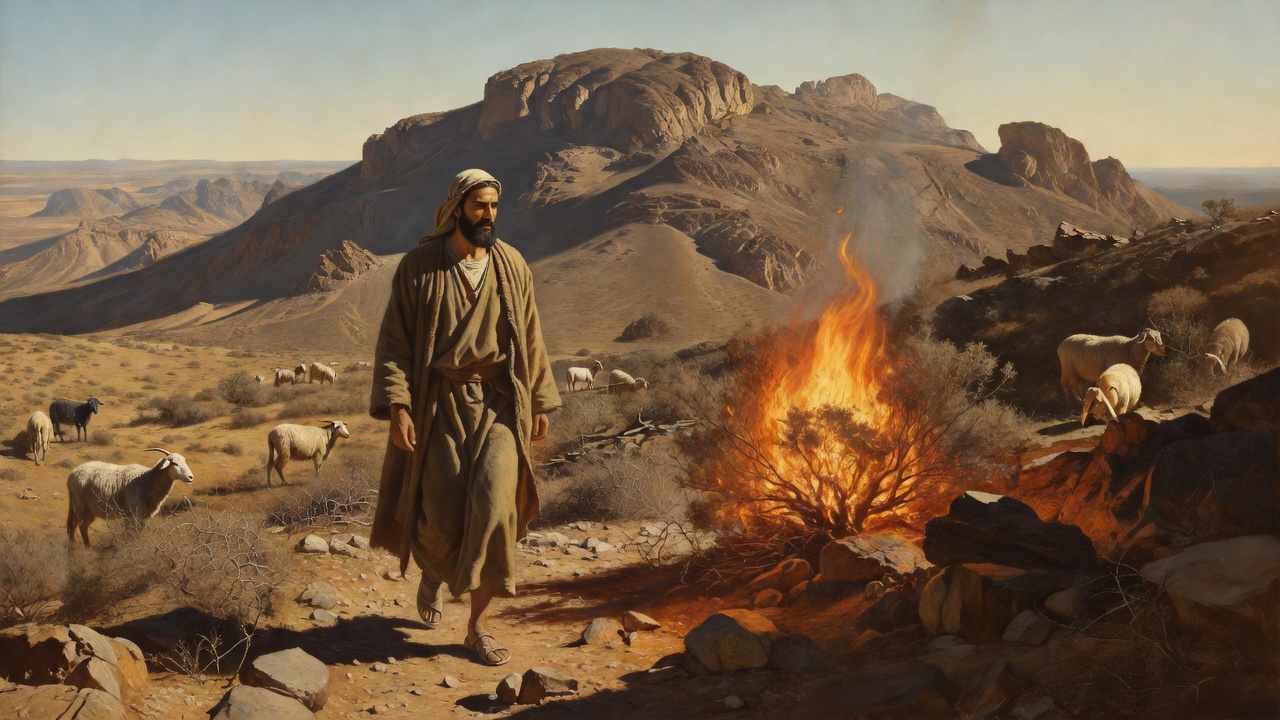
The Call of Moses at the Burning Bush
- Moses is shepherding in Midian when this chapter begins. The Midianites were a nomadic Arabian tribe descended from Midian, Abraham's fourth son by Keturah, whose name is explained as strife. They lived chiefly in the desert north of Arabia, and the Sinai peninsula was grazing land for their flocks; it was there, after fleeing Egypt, that Moses became a servant and then the priest's son-in-law.Sources: the Bible text itself · Midian · Midian
- His father-in-law is Jethro, called the priest of Midian. Easton's Bible Dictionary (1897) equates that priest with Raguel and says that, if the two names belong to one man, Raguel may be regarded as his personal name and Jethro, meaning excellency, as an official title.Sources: the Bible text itself · Jethro
- Moses leads the flock to Horeb, the mountain of God. The name is explained as desert, or mountain, of the dried-up ground, a general term for the whole range of which Sinai was one summit; Easton's Bible Dictionary (1897) gives the modern name of the range as Jebel Musa and describes a huge block about two miles long and about one mile wide, with a very spacious plain called Er Rahah at its north-east end, where the Israelites later camped for nearly a year.Sources: the Bible text itself · Horeb
Notes written with AI assistance from open sources (Theographic Bible Metadata, CC BY-SA 4.0; Easton’s Bible Dictionary, public domain) and reviewed before publishing.
Places in this chapter
- Midian · 28.495, 35.012 · verse 1
- Mount Horeb · Today: Jebel Musa · 28.540, 33.973 · verse 1
- Egypt · 30.129, 31.308 · verses 7, 8, 10, 11, 12, 16, 17, 18, 19, 20, 22
Only places identified with high confidence are shown (90% or more according to the scholarly sources compiled by OpenBible). Period map: DARE (Digital Atlas of the Roman Empire), CC BY 4.0; modern map: © OpenStreetMap contributors; places: OpenBible.info (CC BY 4.0).
Credits and license for this translation
Las Escrituras en Ashéninka Ucayali del Sur del Perú
The Holy Bible in the South Ucayali Ashéninka language of Peru
Las Escrituras en Ashéninka Ucayali del Sur del Perú
copyright © 2008 Wycliffe Bible Translators, Inc.
Language: Ashéninka Ucayali del Sur (Ashéninka, South Ucayali)
Translation by: Wycliffe Bible Translators
This translation is made available to you under the terms of the
Creative Commons Attribution-Noncommercial-No Derivatives license 4.0.
You may share and redistribute this Bible translation or extracts from it in any format, provided that:
You include the above copyright and source information.
You do not sell this work for a profit.
You do not change any of the words or punctuation of the Scriptures.
Pictures included with Scriptures and other documents on this site are licensed just for use with those Scriptures and documents.
For other uses, please contact the respective copyright owners.
2016-06-08
Source: http://ebible.org/cpy/ · eBible.org