Exodus 5
Las Escrituras en Ashéninka Ucayali del Sur del Perú · Tap a verse to see its cross-references.
1Ikanta Moisés itsipatari Aarón jataki ikenkitha-waetakaeri Faraón, ikantapaakiri: “¡Pinkathari! Pikemiro iñaani Tajorentsi, Itajorentsite Israel, ikantzimi: ‘Pishineteri atziri nashitari naaka riyaatee ochempi-mashiki roemoshirenkaena.’” 2Ari rakanaki Faraón, ikantanaki: “¿Itzimika Tajorentsi nokemijantiri, rootakima noshine-tantyaariri pisheninka-paeni riyaatee? Tee niyotziri jempe itzimi Tajorentsi-tatsiri, eero noshine-tziri riyaatee pisheninka-paeni.” 3Ari ikanteeyini rirori: “¡Pinkathari! Roñaahaana Itajorentsite nosheninka Heber-paeni. Otzimatyee niyaateeyeni, okaate mawa kiteejeri nareetan-tyaari ochempi-mashiki. Ari notayi-niri natsipe-takaani Notajorentsite, eero aantana mantsiyarentsi, eero rompojanteetana.” 4Ari rakanaki iwinkatharite Apitantoni-jatzi, ikantziri: “¡Moisés! ¡Aarón! ¿Iitaka pookakaan-tyaariri rantawaero pisheninka-paeni? Ikantawa-kaata, otzimatyee rantawaeti.” 5Eekiro ikantana-kitzii Faraón: “Osheki pisheninka Israel-paeni jaka nampitsiki. ¿Kameetha-tatsima pookakaeri rantawaero?” 6Tema tee ishenkaanaka Faraón, riyotaakiri ikaatzi aminiriri Israel-paeni, jewayitzirori antawaerentsi, ikantziri: 7“Aritapaaki pipakiri katawoshi wetsika-yitzirori kijonakiri kepatsi, riyaati rirori rayi katawoshi. 8Pishintsiwentzi-maetyaari pikantiri: ‘Tee nokoyi powetsiki eepichokiini, tema nokowatzii powetsiki jempe okaatzi powetsika-piintziri.’ Tema iperatee-yatyaani, rootaki ikaeman-teeyarini, ikantzi: ‘¡Aatiwé. Atayiniri atsipeta-kaani Atajorentsite!’ 9Pipa-pero-tiri osheki rantawaero, eero pishine-tziri ijeekashiwaityaa irikapaeni. Eero ikemijanta-waetziro theeyaantsi-paeni ñaantsi.”
10Jataki aminiriri Israel-paeni, jewatakaan-tzirori antawaerontsi, ikantapaakiri: “Pikemi ikantakinari Faraón: ‘Tema eero nopayiteemi katawoshi. 11Eeroka jatatsini payi. Roo kanteencha otzimatyee kijonakiri kepatsi powetsiki okaatzi powetsika-piintziri.’” 12Ithonka ikinayi-tanaki Israel-paeni jempe-rika-paeni janta Apitantoniki, ithotyaakoyitzi katawoshi. 13Ari ikantapiin-tanakityaa rowayitakiri Faraón ishintsiwen-tantzi rowetsikaeti kijonakiri kepatsi okaatzi rowetsika-piintziri Israel-paeni. 14Tema osheki ipajawae-teetakiri Israel-paeni rowakiri Faraón reewatiri isheninka-paeni, ikantziri: “¿Iita kaari pimonkaa-tantawo okaatzi powetsika-piintziri? Tee pimatziro chapinki, eejatzi nimaeka.”
15Jateeyakini jewatziriri Israel-paeni, ikantapaakiri Faraón: “¡Pinkathari! ¿Iita powashironkaan-tariri patzirite? 16Tema tee ipaeteena katawoshi, eekiro ishintsiwen-teetatyaana, ikanteetana: ‘Powetsiki osheki kijonakiri kepatsi.’ Ipajatzima-teetana. Riitaki kantakaan-tzirori pinampina-paeni.” 17Ikantanaki Faraón: “Tema piperatee-yatyaani eeroka. Rootaki pikantantari: ‘¡Aatiwé. Atayiniri atsipeta-kaani Atajorentsite!’ 18Pipiyanaki, pantawae-teeyini. Okantawityaa eero ipaetzimi katawoshi, otzimatyee powetsiki kijonakiri kepatsi okaatzi powetsika-piintziri.” 19Osheki opomeentsi-tzimota-nakari Israel-paeni jewatziriri isheninka-paeni rantawaeti, ishintsiwen-teetziri rirori rowetsiki kijonakiri kepatsi okaatzi rowetsika-piintziri kiteejeriki. 20Roo ishitowa-nakitzii ikenkitha-waetakaeri Faraón, iñaapaakiri Moisés eejatzi Aarón royaawen-takari. 21Ikantapaakiri: “Riitaki Atajorentsite owajankitaa-wenti-mironi okaatzi pantakiri. Eeroka kantakaan-takiro ikijashiri-tanteeri Faraón eejatzi inampina. Okemiwae-takawo eeroka pakirinimi iyotsiro-shitha-kiti rowamaanteeri.”
22Ari ramananaka Moisés, ikantzi: “¡Ashitanari! ¿Iita powajankitaan-tariri pashitari eeroka? ¿Iitaka potyaan-tanta-kinari nopokan-takari noñiiri? 23Tema rowajankitaa-waetanakiri Faraón nosheninka-paeni nokenkitha-takota-paakiniri piwaero, tekatsi-maeta panti pookakaa-wentantee-yaariri pashitari eeroka.”
Did you know?
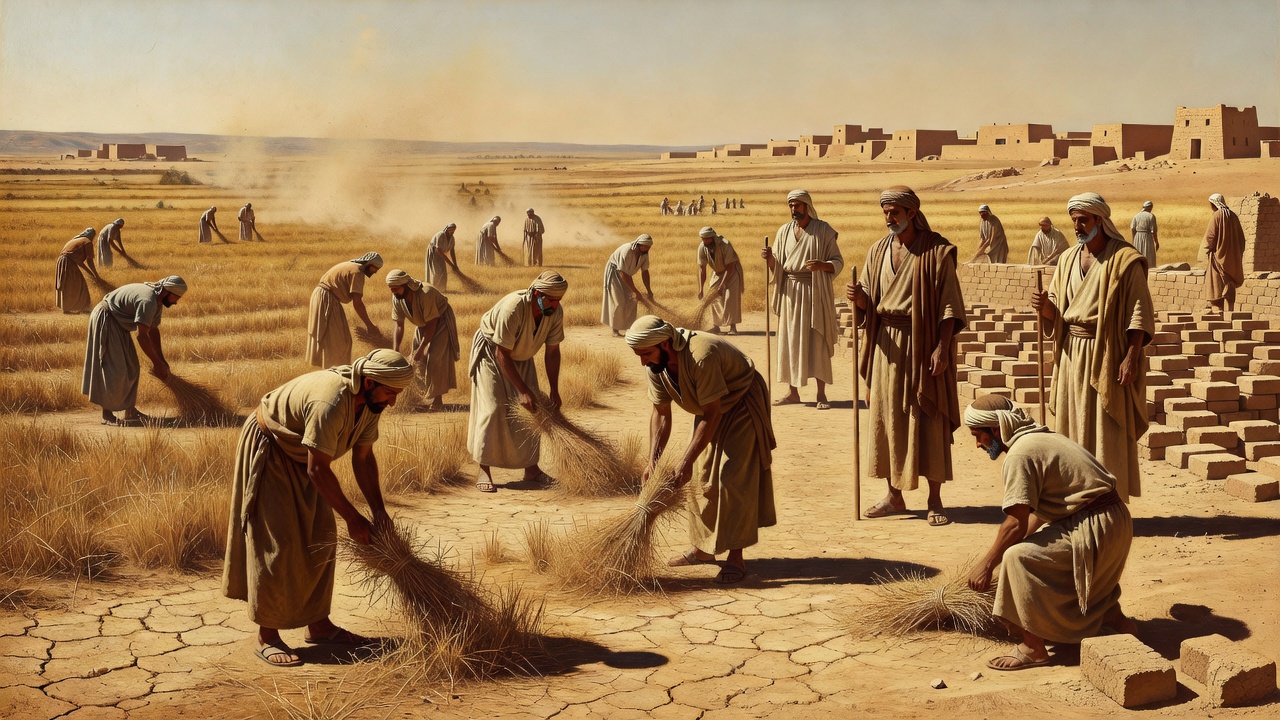
Harder Work After Pharaoh's Refusal
- Easton's Bible Dictionary (1897) says the Pharaoh of the Exodus was probably Menephtah I, the fourteenth and eldest surviving son of Rameses II, but it treats the identification as still an open question: some scholars, it notes, favor Seti II, whose reign it describes as beginning peacefully and ending in sudden disaster. The entry says he resided at Zoan, where he received Moses and Aaron in the interviews recorded in Exodus.Sources: Pharaoh (of the Exodus) · the Bible text itself
- Easton's Bible Dictionary (1897) places Jacob's arrival in Egypt probably about 350 years before Moses was born. It says a Hyksos king, from a pastoral Semitic people of Asia and called a shepherd king, received the family favorably and assigned them Goshen, the best of the land; in this chapter Pharaoh treats the people of Israel, now numerous, as laborers he will not let go.Sources: Moses · the Bible text itself
- Pharaoh answers the request to hold a feast in the wilderness by no longer supplying straw for the bricks, while still requiring the same daily quota. The people scatter through the land of Egypt to gather stubble, and the Israelite foremen whom Pharaoh's taskmasters had set over them are beaten when that quota is not met.Sources: the Bible text itself
Notes written with AI assistance from open sources (Theographic Bible Metadata, CC BY-SA 4.0; Easton’s Bible Dictionary, public domain) and reviewed before publishing.
Places in this chapter
Only places identified with high confidence are shown (90% or more according to the scholarly sources compiled by OpenBible). Period map: DARE (Digital Atlas of the Roman Empire), CC BY 4.0; modern map: © OpenStreetMap contributors; places: OpenBible.info (CC BY 4.0).
Credits and license for this translation
Las Escrituras en Ashéninka Ucayali del Sur del Perú
The Holy Bible in the South Ucayali Ashéninka language of Peru
Las Escrituras en Ashéninka Ucayali del Sur del Perú
copyright © 2008 Wycliffe Bible Translators, Inc.
Language: Ashéninka Ucayali del Sur (Ashéninka, South Ucayali)
Translation by: Wycliffe Bible Translators
This translation is made available to you under the terms of the
Creative Commons Attribution-Noncommercial-No Derivatives license 4.0.
You may share and redistribute this Bible translation or extracts from it in any format, provided that:
You include the above copyright and source information.
You do not sell this work for a profit.
You do not change any of the words or punctuation of the Scriptures.
Pictures included with Scriptures and other documents on this site are licensed just for use with those Scriptures and documents.
For other uses, please contact the respective copyright owners.
2016-06-08
Source: http://ebible.org/cpy/ · eBible.org