Exodus 2
Las Escrituras en Ashéninka Ucayali del Sur del Perú · Tap a verse to see its cross-references.
Itziman-takari Moisés
1Ikanta apaani isheninka Leví-paeni raaki iina. Tema iroka iina roojatzi isheninka Leví-paeni. 2Ari itzimaki otomi. Tema kameethaanikiri rirori eenchaa-niki. Rootaki omananta-kariri riniro. Tema mawa kashiri omanawi-takari. 3Tee omataneeya omaniri eenchaaniki, aaki tsiwoo “owichaanatakiro” otziri-moko-takiro. Otetakiri eenchaaniki, owamaata-kotakiri oshimpena-thapyaataki nijaa. 4Ari otyaantakiro ritsiro eenchaa-niki, okatziyaka inteeneeni aminako-wentziri oetarika awijimo-terini eenchaa-niki.
5Ari iyaataki nijaaki rishinto Faraón okaawoshitya. Anashiwae-tapaaka onampiri-paeni nijaathapyaaki. Oñaatziiro rishinto Faraón janta tsiwoo oshimpena-thapyaatakira nijaa, okaemakiro onampiri, okantziro: “Pipoki, paakitero tsiwoo.” 6Okanta ashitaryaa-wakiro tsiwoo, oñaatziiri rotetaka eenchaa-niki, ayimatakiri ishenka. Osheki etako-shire-tanakari roori, okantanaki: “Reentsite Heber-paeni irika.” 7Ari okantanaki ritsiro eenchaa-niki, okantziro rishinto Faraón: “¿Tee pikoyi nokaemimi nosheninka thoteemirini eenchaa-niki?” 8Okantzi rishinto Faraón: “Jeen, nokoyi. Piyaate pikaemakitero.” Jatanaki ewankawo, okaemapaen-tziro riniro eenchaa-niki. 9Okantawakiro: “¡Tsinani! Paanakiri irika eenchaa-niki poemotan-tenari, aritaki nopinatakimi.” Aaneeri riniro eenchaa-niki, oemotan-teeri. 10Ikanta ikimotataki eenchaa-niki, opaero rishinto Faraón. Oshiyakaantakiri riirikami otomi roori, rootaki oetantakariri “Ahaa-nyaari” tema okantakitzii roori: “Nijaaki naakiri”. Tema iroka waerontsi Ahaa-nyaari, rootaki ikantziri iñaaniki riroripaeni “Moisés”.
11Ikanta rantari-pero-tanaki Moisés, jataki rareetari isheninka-paeni, iñaapaa-tziiri osheki rantawae-takae-tziri. Iñaakowentapaakiri isheninka Moisés ipajawae-tziri Apitantoni-jatzi. 12Ithonka raminanaki tekatsi-rika ñeerini, rowamaakiri Apitantoni-jatzi, ikitata-nakiri impanekiiteki. 13Okanta okiteeje-tamanee rapiitakiro riyaatee, iñaapaa-tziiri ranta-wakahaeyani isheninka rirori. Ikantziri antanta-tsiri: “¡Nosheninká! ¿Iita pikoshekantariri akaateeyinira?” 14Ari rakanaki, ikantzi: “¿Iitaka owakimiri eeroka pompera-tantenari? ¿Pikowatziima powamayina, pikimitaakiri chapinki Apitantoni-jatzi?” Ikanta ikemawaki Moisés, antawo ithaawanaki, roshiya-kaantzi riyotakoe-takiri rowamaakiri chapinki Apitantoni-jatzi. 15Ari ikemaki rirori Faraón, ikowaki rowamayiri Moisés. Rootaki ishiyan-takari Moisés ikinanakiro Kosheka-weniki. Ari ikoyi inampityaawo janta. Kotyaatapaaka ikaapiin-teetzi nijaa.
16Tema janta Kosheka-weniki ari inampitawori sheripiyari iita Reuel, tzimatsi 7 rishinto rirori. Ari iyaatee-yakini roori ayi nijaa imiriteri ipira opaapate. 17Ari ipokaeya-paakini ikaatzi aminako-wentziriri ipira-paeni janta, ithañaa-pitha-takawo ayimi nijaa. Rootaki riyaatan-tanakari Moisés ikijako-wentawo, raapaaki rirori nijaa ipakiri imiri opira-paeni. 18Okanta opiyeeyaani ewankawo-paeni opankoki, rojampi-tawaero opaapate, ikantziro: “¿Intsipaetima pipiyapaaka?” 19Okanteeyini roori: “¡Pawa! Noñaaki Apitantoni-jatzi janta, riitaki kijako-wentakinari ithañaa-pitha-tanawo nijaa aminako-wentziriri ipira-paeni janta. Riitaki kitaataki-nawori nijaa, ipakiri apira-paeni.” 20Ari ikantanaki Reuel: “¿Jempe nimaeka rirori? ¿Pikaemiri ipoki royaa. Iitaka pookanta-nakariri?” 21Ari okanta ijeekan-tapaakari Moisés ipankoki Reuel. Okanta paata irika Reuel, ipakiri Moisés rishinto, oeta Séfora, iinantakawo. 22Ari otzimakiri itomi, ikantanaki Moisés: “Itsipa-jatzi naaka jaka, kaari nonampi.” Rootaki iitantakariri itomi “Itsipa-jatzi”, tema iroka waerontsi Itsipa-jatzi, rootaki ikantee-tziri iñaaniki rirori-paeni “Gersón”.
23Okanta paata kamae pinkathari-witachari Apitantoniki. Eekiro ratekae-yatziini Israel-paeni tema osheki ishintsi-teetziri rantawae-takae-tziri. Rootaki ikemanta-kariri Tajorentsi jenoki rowashire-tawae-teeyakani. 24Tema ikemirira ratekaeyini, roojatzi roshiretakotakawo Tajorentsi ikashiya-kaakiriri paerani Abraham, Isaac, eejatzi Jacob. 25Tema iñiiri Tajorentsi maawoeni Israel-paeni riyotakotziri okaatzi awijimo-yitziriri.
Did you know?
The birth and flight of Moses
- Pharaoh’s daughter named the child Moses, explaining that she had drawn him out of the water. Easton's Bible Dictionary (1897) links his name with “drawn,” or with the Egyptian word mesu, “son”—the element from which the dictionary also explains Rameses as “royal son.”Sources: the Bible text itself · Moses
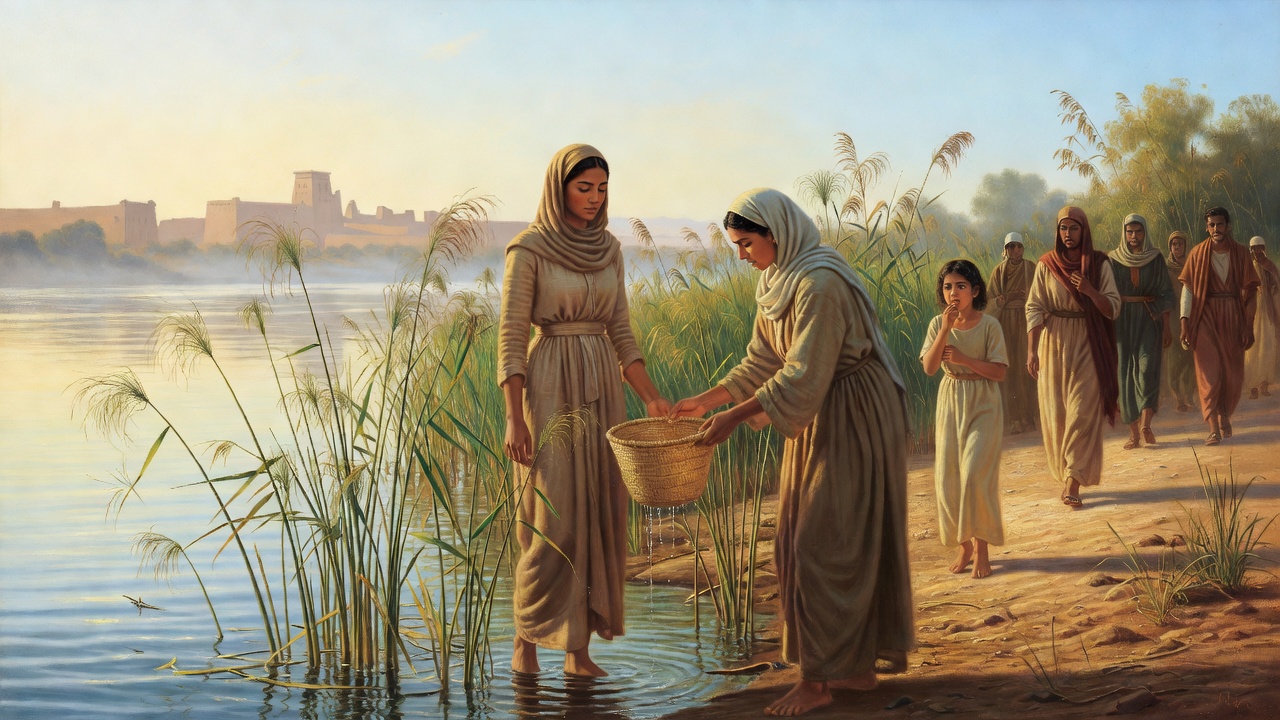
- In Exodus 2 a daughter of Levi hides her son for three months, and Pharaoh’s daughter, finding him among the Nile reeds, recognizes a Hebrew child. Easton's Bible Dictionary (1897) links the Israelites’ affliction to “the new king who knew not Joseph,” long supposed to be Aahmes I, called Amosis by Josephus, though the dictionary, citing discoveries then recent, names Seti instead. Their hardship, it says, began after the Hyksos, masters of Egypt for some five centuries, were driven out and the old dynasty restored.Sources: the Bible text itself · Pharaoh
- After Pharaoh sought to kill him, Moses fled to Midian and sat down beside a well; he later married Zipporah, one of the seven daughters of the priest of Midian. The Midianites were nomadic Arabians descended from Midian, Abraham’s fourth son by Keturah, and they pastured their flocks in the Sinai peninsula and in the desert north of the Arabian peninsula. This chapter calls the priest Reuel, whom Easton's Bible Dictionary (1897) names Raguel, regarding that form as his personal name and Jethro—“excellency”—as an official title if the two are identified.Sources: the Bible text itself · Midian · Midian · Jethro
Notes written with AI assistance from open sources (Theographic Bible Metadata, CC BY-SA 4.0; Easton’s Bible Dictionary, public domain) and reviewed before publishing.
Places in this chapter
- Nile · Today: Nile River · 31.465, 30.367 · verses 3, 5
- Midian · 28.495, 35.012 · verses 15, 16
- Egypt · 30.129, 31.308 · verse 23
Only places identified with high confidence are shown (90% or more according to the scholarly sources compiled by OpenBible). Period map: DARE (Digital Atlas of the Roman Empire), CC BY 4.0; modern map: © OpenStreetMap contributors; places: OpenBible.info (CC BY 4.0).
Credits and license for this translation
Las Escrituras en Ashéninka Ucayali del Sur del Perú
The Holy Bible in the South Ucayali Ashéninka language of Peru
Las Escrituras en Ashéninka Ucayali del Sur del Perú
copyright © 2008 Wycliffe Bible Translators, Inc.
Language: Ashéninka Ucayali del Sur (Ashéninka, South Ucayali)
Translation by: Wycliffe Bible Translators
This translation is made available to you under the terms of the
Creative Commons Attribution-Noncommercial-No Derivatives license 4.0.
You may share and redistribute this Bible translation or extracts from it in any format, provided that:
You include the above copyright and source information.
You do not sell this work for a profit.
You do not change any of the words or punctuation of the Scriptures.
Pictures included with Scriptures and other documents on this site are licensed just for use with those Scriptures and documents.
For other uses, please contact the respective copyright owners.
2016-06-08
Source: http://ebible.org/cpy/ · eBible.org