Job 29
Paipel · Tap a verse to see its cross-references.
Hiop a kapas usun an pwapwa me lom
1Iwe, Hiop a sopwela an pworaus o apasa,
2“Amwo manauei iei epwe usun chök manauei me lom,
usun chök lon ekewe rän, lupwen Kot a tümwünüei,
3lupwen a nom rei fansoun meinisin,
nge üa fetal lon rochopwak fän an saram.
4Amwo manauei epwe usun chök lon fansoun ai pöchökül,
lupwen än Kot chiechi ngeniei a tümwünü chon leimwei,
5lupwen Ewe mi Unusen Manaman a chüen rom rei,
lupwen nei kewe ra nom ünüki,
6lupwen a wor chomong ünümei milik,
pun nei pwin kow me kuuch a fokun lölö oupwur,
pwal ai irä olif mi mär lein föüföü ra fokun uamong.
7Lupwen üa feila ren asamalapen ewe telinimw
o mot won ai lenien mot lon ewe lenieichu,
8ekewe alüal ra künaei o nimärämärsefäl,
nge ekewe chinlap ra ütä me mwei.
9Ekewe samol ra ükütiu le kapas o pwölü awer ngeni pöür,
10ekewe chon itetekia mwo nge ra osokükünüela mwelier,
chönawer a pachetä fän fongochur.
11Chokewe mi rongorong usi ra apasa pwe üa feiöch,
nge chokewe mi künaei ra kapas mürina usi,
12pun üa angasala ekewe chon wöüngau mi siö,
pwal ekewe mi mäsen esap wor eman a alisiir.
13Chokewe mi arap ngeni ar repwe mäla ra afeiöchüei,
üa pwal apwapwai leluken ekewe fefin mi mä pwülüer.
14Üa aüföüfa ngeniei pwüng,
ai pwüngüöch a usun chök echö owokot me eu akau.
15Ewe chon chun a meseniei,
pwal ewe chon pechemä a pecheniei.
16Üa eman sam ngeni ekewe chon wöüngau,
üa pwal peni ekewe chon ekis lon kapwüng.
17Üa aükätiu pöchökülen ekewe chon pwüngingau
o amanaua ekewe aramas ra ariaföüür.
18Üa ekieki pwe ränin manauei repwe chomongola usun föün pien aroset,
nge üpwe mäla lon püsin imwei.
19Üa wewe ngeni efoch irä mi töla waran lon ekewe koluk,
nge palan kewe ra chöchön ren amurenipwin.
20Aramas meinisin ra mwareitiei fansoun meinisin,
ai pöchökül esap sü seniei.
21Aramas ra aüselingaei,
ra fanafanala o witiwiti ai kewe kapasen öüröür.
22Wesin ai kapas resap chüen fossefäl,
pun ai kewe kapas ra tolong lon selinger.
23Ra witiwitiei usun ar witiwiti püngün üt,
ra etiwa ai kewe kapas usun fanüfan a ünümi ewe ütten leres.
24Üa emelimen ngeniir, lupwen esap wor ar apilükülüköch,
nge ai wopwapwa ngeniir a apöchöküleer.
25Üa üreniir mine repwe föri o mot leir pwe üa ar samol,
üa emweniir usun eman king a emweni nöün mwichen sounfiu.
Üa usun eman mi achipa ekewe chon letipeta.”
Did you know?
Job Recalls His Former Honor
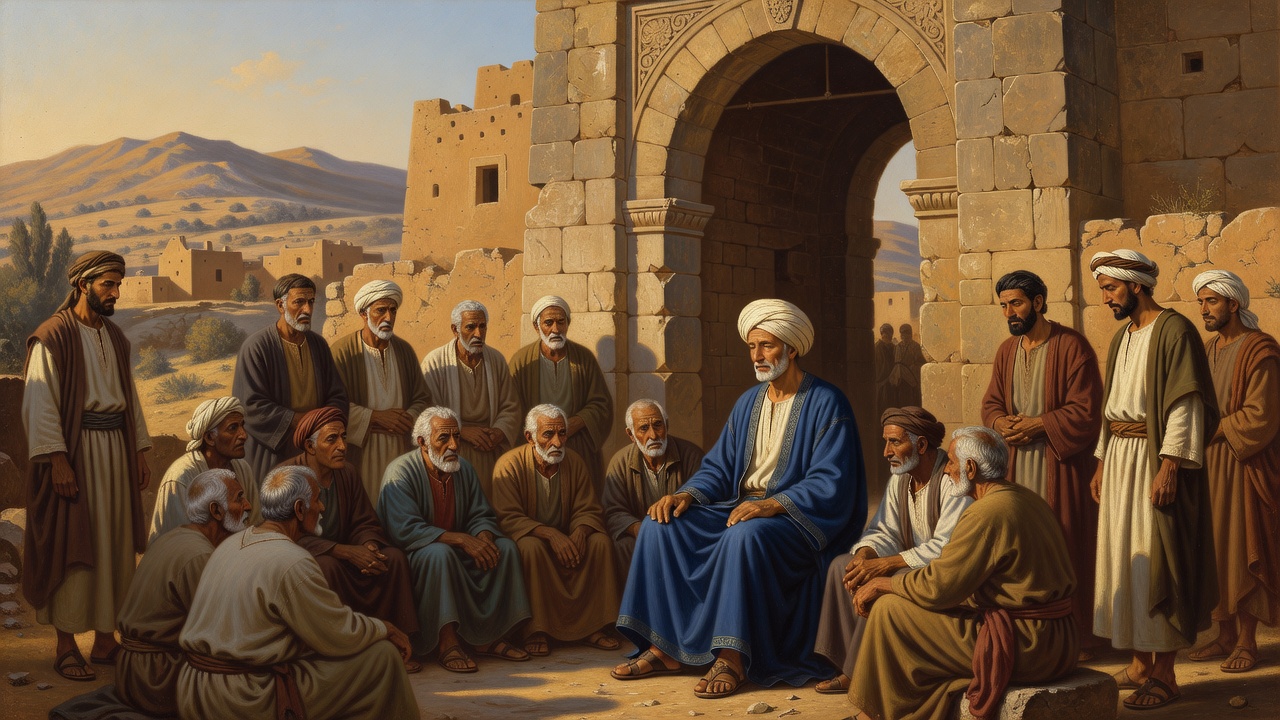
- In ancient times, the city gate and public square served as the center of community leadership, assembly, and judicial decisions. Job recalls sitting there as an honored counselor and chief, where young men stepped aside, elders stood in respect, and nobles fell silent to hear his guidance.Sources: the Bible text itself
- Job describes his former righteousness in terms of social justice and active protection of the vulnerable. He acted as an advocate and helper for the poor, the fatherless, the widow, the blind, the lame, and the stranger, while actively restraining oppressors.Sources: the Bible text itself
- Job is identified as an Arabian patriarch who resided in the land of Uz. In this chapter, he looks back with deep longing on the time before his sudden calamities, when his children were gathered around him and his household enjoyed exceptional prosperity and friendship with God.Sources: Job · the Bible text itself
Notes written with AI assistance from open sources (Theographic Bible Metadata, CC BY-SA 4.0; Easton’s Bible Dictionary, public domain) and reviewed before publishing.
Credits and license for this translation
Paipel
The Holy Bible in the Chuukese language of the Federated States of Micronesia
copyright © 1984, 1989, 1991, 2001 Liebenzel Mission
Language: Chuukese
Translation by: Liebenzell Mission
Old Testament © 1989, 2001 Liebenzel Mission
New Testament © 1984, 1991 Liebenzel Mission
This translation is made available to you under the terms of the
Creative Commons Attribution-No Derivatives license 4.0.
You may share and redistribute this Bible translation or extracts from it in any format, provided that:
You include the above copyright and source information.
You do not make any derivative works that change any of the actual words or punctuation of the Scriptures.
Pictures included with Scriptures and other documents on this site are licensed just for use with those Scriptures and documents.
For other uses, please contact the respective copyright owners.
2024-01-24
Source: http://ebible.org/chk/ · eBible.org