Isaiah 54
Paipel · Tap a verse to see its cross-references.
Än Kot tong esemüch ngeni Israel
1Iei alon ewe Samol mi Lapalap,
“Kopwe köl, Jerusalem en mi wewe ngeni eman fefin mi rit.
Kopwe chietä kölün pwapwa o leüömong le kökkö,
en esap toruk cheuchen fam.
Pun en ewe mi aleman epwe chomong noum
lap seni nöün ewe mi pwüpwülü.
2Kopwe awattelai imwomw imw mangaku,
kopwe pwal ameresala chechen lon rumwom, pwe kopwe awattelai.
Iwe, kopwe alangatama selin imwom o anüküchara chüfölün.
3Pun kopwe awattelai kiännin leniom me lepekin meinisin,
nge mwirimwirum kana repwe fanüeni fanüen chon ekewe mwü,
repwe pwal chonisefäli ekewe telinimw mi pöla.
4Kosap niuokus, pun kosap säw.
Kosap niueiti itengau, pun kosap küna turunufas.
Iwe, kopwe manlükala om säw ka eäni lupwen fansoun om föpwül,
nge kosap chüen chechemeni om itengau lupwen fansoun om lipichsefäl.
5Pun Ewe mi Föruk epwe usun chök pwülüom reöm,
itan Samol mi Unusen Manaman.
Ewe mi Pin lon Israel om Chon Amanau,
i ewe Kot mi nemeni unusen fanüfan.
6Israel, ka wewe ngeni eman föpwül mi riaföü lon letipan,
pun pwülüan a likitala.
Nge ewe Samol mi Lapalap a körisefäliik, a etiwasefäliik o urenuk,
7‘Lon ekis chök fansoun üa lükisökuruk,
nge ren tong mi lapalap üpwe etiwasefäliik.
8Lon watten ai song üa aopa senuk won mesei fansoun mochomoch,
nge ren ümöümöch esemüch üpwe tongeäsinuk.’
Iei alon ewe Samol mi Lapalap om Chon Amanau.
9Ei fansoun a usun chök ewe fansoun Noa me rei:
Usun üa pwon fän akapel ngeni Noa pwe ewe noter esap chüen pwölüela fanüfan,
ina usun üa pwal pwon fän akapel ngonuk pwe üsap chüen songeituk,
üsap pwal chüen apwünguk.
10Pun chukutekia kana repwe märela,
chukutekison kana repwe chechech, nge ai ümöümöch ngonuk esap mär senuk,
ai pwonen kinamwe esap mänükünük.
Iei alon ewe Samol mi Lapalap, ewe a tongeek.”
Ewe Jerusalem mi fö
11Iwe, ewe Samol mi Lapalap a apasa,
“En telinimw mi riaföü, asepwäl mi watte a mölümölituk,
nge esap wor eman a achipok.
Üpwe senuketä ren fau mi molupolup,
üpwe pwal föri longolongum ren ewe fau safaia.
12Üpwe pwal föri ungom kewe seni ewe fau akit ,
asamalapom kewe seni fau mi meriweriw,
nge tittum meinisin seni fau aüchea.
13Iwe, noum kewe mwän meinisin repwe kaiö seniei,
üpwe awöüür o fang ngeniir kinamwe.
14Pwüng epwe anükücharok,
chon ariaföüuk repwe toau senuk pwe kosap chüen niueitiir,
nge niuokus mi afeiengau esap arap ngonuk.
15Are eman epwe fiu ngonuk,
kopwe silei pwe esap pop seniei.
Nge iö a fiu ngonuk, epwe kuf reöm.
16Nengeni, üa förätä ewe chon angang ngeni mächä,
a säipöü ewe ekkei o wusi ewe mächä
pwe epwe föri eu pisekin maun mi afeiengau.
Ngang üa pwal förätä ewe chon kata pwe epwe atai.
17Nge esap wor och pisekin maun epwe tongeni afeiengauok.
Iwe, kopwe tongeni pälüeni chokewe meinisin mi atipisuk lon kapwüng.
Iei feiöchün nei kewe chon angang me rei,
iei usun üa awineer.”
Ewe Samol mi Lapalap a kapas.
Did you know?
The Covenant of Peace and Restoration
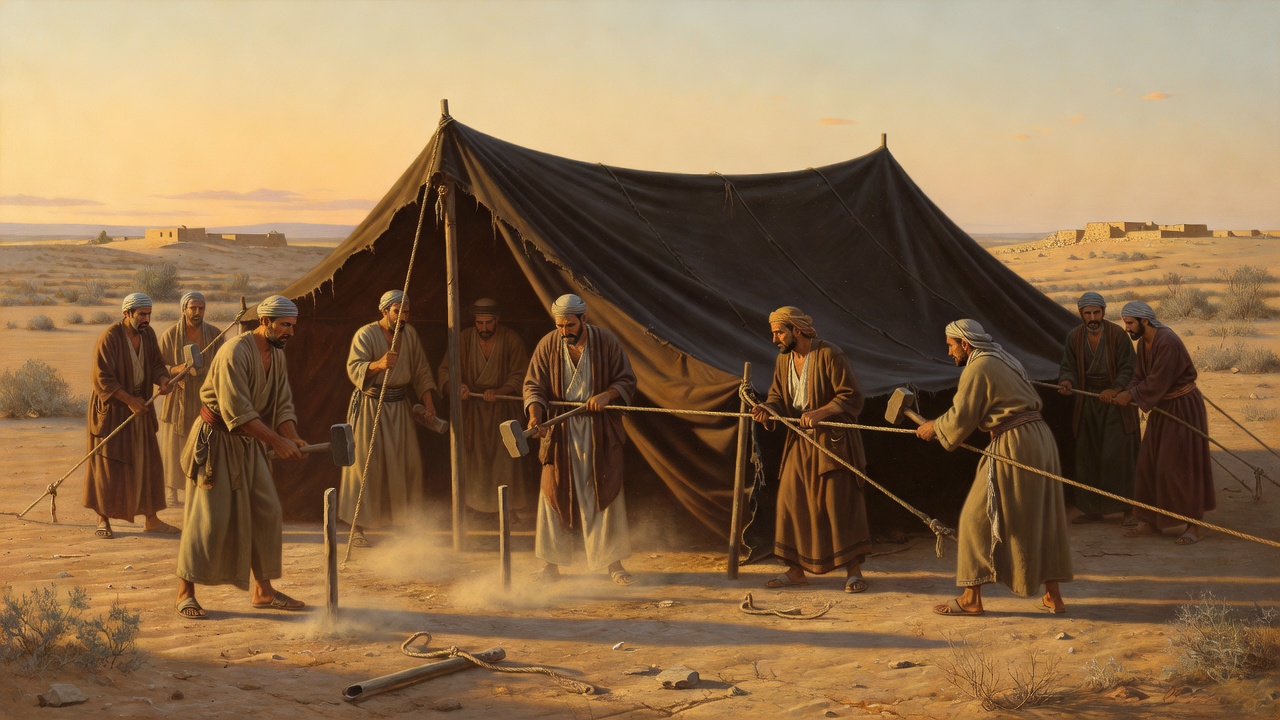
- Isaiah uses the imagery of enlarging a tent—lengthening ropes and driving stakes deep—to portray a barren and desolate woman making room for an unexpected multitude of descendants.Sources: the Bible text itself
- The text links God's enduring kindness to the days of Noah, recalling the oath that floodwaters would never again submerge the earth to assure that this covenant of peace will never be removed.Sources: the Bible text itself · Noah
- The chapter describes an afflicted, storm-tossed city being rebuilt with rare beauty, picturing its stones set in antimony, its foundations laid with sapphires, and its pinnacles made of rubies.Sources: the Bible text itself
Notes written with AI assistance from open sources (Theographic Bible Metadata, CC BY-SA 4.0; Easton’s Bible Dictionary, public domain) and reviewed before publishing.
Places in this chapter
Only places identified with high confidence are shown (90% or more according to the scholarly sources compiled by OpenBible). Period map: DARE (Digital Atlas of the Roman Empire), CC BY 4.0; modern map: © OpenStreetMap contributors; places: OpenBible.info (CC BY 4.0).
Credits and license for this translation
Paipel
The Holy Bible in the Chuukese language of the Federated States of Micronesia
copyright © 1984, 1989, 1991, 2001 Liebenzel Mission
Language: Chuukese
Translation by: Liebenzell Mission
Old Testament © 1989, 2001 Liebenzel Mission
New Testament © 1984, 1991 Liebenzel Mission
This translation is made available to you under the terms of the
Creative Commons Attribution-No Derivatives license 4.0.
You may share and redistribute this Bible translation or extracts from it in any format, provided that:
You include the above copyright and source information.
You do not make any derivative works that change any of the actual words or punctuation of the Scriptures.
Pictures included with Scriptures and other documents on this site are licensed just for use with those Scriptures and documents.
For other uses, please contact the respective copyright owners.
2024-01-24
Source: http://ebible.org/chk/ · eBible.org