Isaiah 55
Paipel · Tap a verse to see its cross-references.
Än Kot ümöümöch ngeni aramas meinisin
1Ewe Samol mi Lapalap a apasa,
“Ou etto, ämi meinisin mi kaka,
oupwe feito o ün seni ewe koluk.
Ämi mi wöüngauen moni,
oupwe feito o angei enemi.
Oupwe feito o angei ünümemi wain me milik,
nge ousap möni.
2Pwota oua mochen püngütiu moni fän iten mettoch ousap tongeni mongö?
Pwota oua angang weires fän iten mine ousap möt ren?
Oupwe fokun aüselingaei o föri mine üa ürenikemi.
Iwe, epwe wor enemi mongö mi annö,
oupwe pwal pwapwaiti uän ewe fanü mi fokun chomong.
3Oupwe aü selingemi o feito rei.
Oupwe rongorong pwe ngünümi epwe manau.
Iwe, ngang üpwe föri eu pwon esemüch ngenikemi
o apwönüetä ai ümöümöch me tong usun üa fen pwon ngeni Tafit.
4Nengeni, üa awisa pwe epwe souemwen me samolun mwü kana,
epwe pwärätä ngeni aramasen fanüfan ai manaman.
5Iwe, kopwe köri chon ekewe mwü kosamwo sileer me mwan,
nge chon ekewe mwü resamwo sileek repwe müttir feito reöm
pokiten ngang ewe Samol mi Lapalap om we Kot,
Ewe mi Pin lon Israel,
pun ngang üa alingok.”
6Oupwe kütta ewe Samol mi Lapalap lupwen fansoun oua tongeni küna,
oupwe köri, lupwen a arap.
7Chon föföringau repwe likitala ar föför,
nge chon pwüngingau kana repwe siwili ar ekiek.
Repwe liwiniti ewe Samol mi Lapalap pwe epwe tongeäsiniir.
Repwe kuliti ach Kot, pun a müttir le amusala tipis.
8Iwe, iei alon ewe Samol mi Lapalap,
“Ai ekiek resap wewe ngeni ämi ekiek kana,
nge ämi al resap wewe ngeni ai al kana.
9Pun usun läng a tekia seni fanüfan,
iei usun ai al ra tekia seni ämi al kana,
nge ai ekiek seni ämi ekiek kana.
10Iwe, usun rän me snow ra püngütiu me läng,
nge resap liwintä, pwe repwe mwo achönü pwül
o aräsi fanü o apwükü irä,
epwe pwal wor fotän chon fofot me enen chon mongö,
11iei usun ai kapas esap liwinto rei fän pön,
pwe epwe afisätä mine üa tipeni
o apwönüetä mine üa akünöü ngeni.
12Iwe, oupwe towu seni Papilon fän pwapwa
o feila fän kinamwe.
Chukutekia me chukutekison repwe chietä köl me mwemi,
nge irän lemäl meinisin repwe alopolop.
13Iwe, irä saipires repwe märitä lon lenien iräfölüföl,
nge mwoosor repwe mär lon lenien lantana.
Ei epwe eu asisil esap mola tori feilfeilachök,
nge ngang ewe Samol mi Lapalap üpwe iteföüla ren.”
Did you know?
A Free Invitation and an Everlasting Covenant
- Isaiah 55 opens with a marketplace metaphor, inviting the thirsty and impoverished to receive water, wine, milk, and bread without money. It contrasts costly labor that fails to nourish with listening to God, which brings true life and delight.Sources: the Bible text itself
- The passage promises an everlasting covenant grounded in the faithful devotion shown to David. According to biblical tradition, David was the youngest son of Jesse from Bethlehem who was appointed as a leader and witness to the nations.Sources: the Bible text itself · David
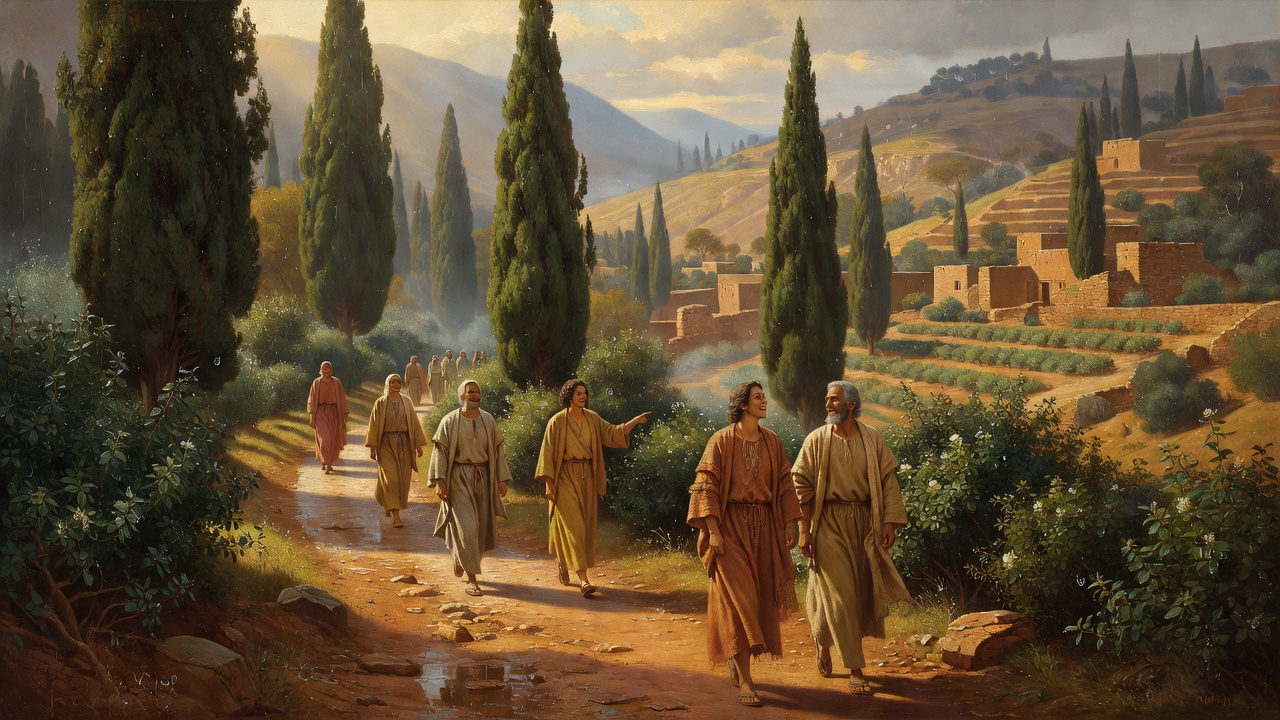
- The prophet compares the effectiveness of the divine word to rain and snow that water the earth, ensuring growth and harvest. This transformation is pictured as lush cypress and myrtle replacing desert thornbushes and briers.Sources: the Bible text itself
Notes written with AI assistance from open sources (Theographic Bible Metadata, CC BY-SA 4.0; Easton’s Bible Dictionary, public domain) and reviewed before publishing.
Credits and license for this translation
Paipel
The Holy Bible in the Chuukese language of the Federated States of Micronesia
copyright © 1984, 1989, 1991, 2001 Liebenzel Mission
Language: Chuukese
Translation by: Liebenzell Mission
Old Testament © 1989, 2001 Liebenzel Mission
New Testament © 1984, 1991 Liebenzel Mission
This translation is made available to you under the terms of the
Creative Commons Attribution-No Derivatives license 4.0.
You may share and redistribute this Bible translation or extracts from it in any format, provided that:
You include the above copyright and source information.
You do not make any derivative works that change any of the actual words or punctuation of the Scriptures.
Pictures included with Scriptures and other documents on this site are licensed just for use with those Scriptures and documents.
For other uses, please contact the respective copyright owners.
2024-01-24
Source: http://ebible.org/chk/ · eBible.org