Amos 6
Paipel · Tap a verse to see its cross-references.
Israel epwe tala
1Feiengauemi ämi mi nonomöch lon Sion, ämi mi mefi kinamwe lon Samaria, pwal ämi mwän mi iteföüla mi nom lon eu mwü mi iteföüla, ämi chokewe chon Israel ra feito remi pwe repwe kütta alilisir senikemi. 2Oupwe feila o katol ewe telinimw Kalne. Seni ikenan oupwe feila Hamat ewe telinimw mi watte, mürin oupwe feitiu Kat ewe telinimwen chon Filistia. Ifa usun, ekei mwü ra öch seni mwün Juta me Israel? Ifa usun, fanüer a watte seni fanüemi? 3Ämi ousap mochen lükü pwe ewe ränin feiengau a arap, nge ren ämi föför oua chök amüttirato ewe rän.
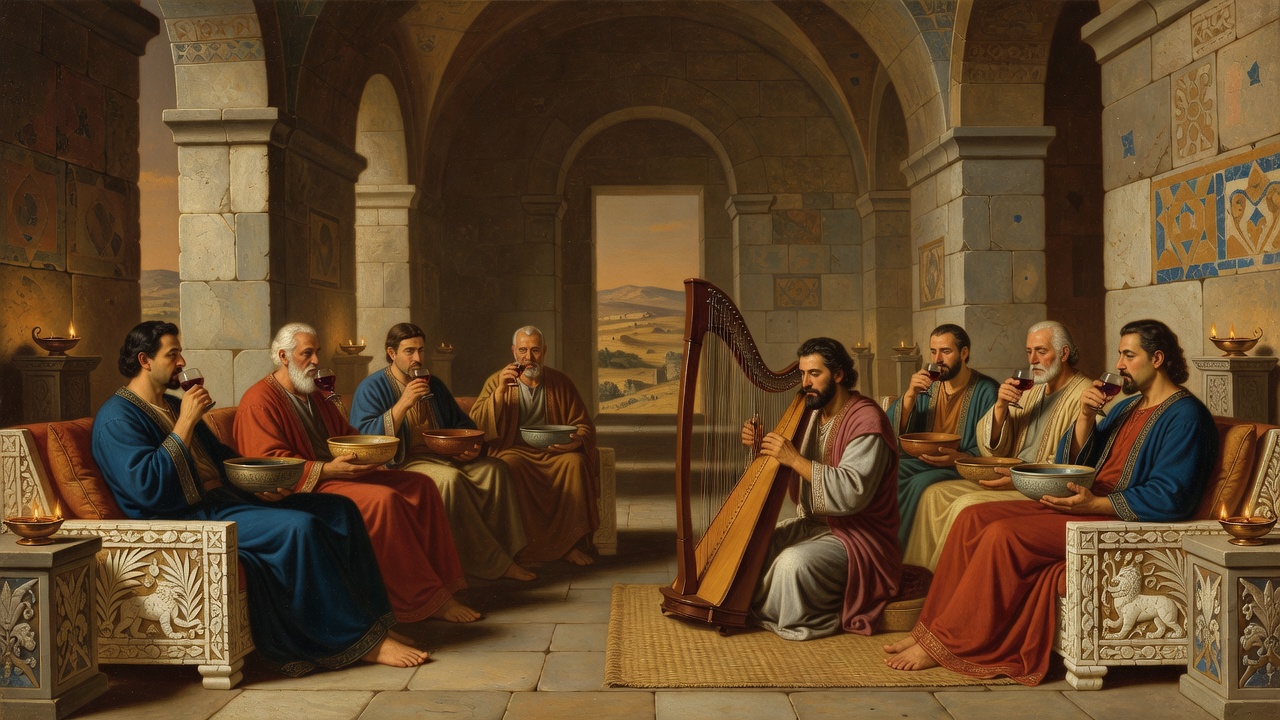
4Feiengauemi ämi mi kon won peet mi fout ngeni ngiin äläfant o asösö won lenien mot mi pwetete, ämi mi ochei fituken nienifön sip me fituken nienifön kow mi kitinup. 5Oua köl fän kitar usun Tafit o föri pisekin likettik. 6Oua ün wain lon sepi o epitikemi lö mi fokun pwokus, nge ousap letipeta pwe Israel a tala. 7Iei mine ämi oupwe akom lein chokewe repwe oola. Ämi kewe kametip me fansoun pwapwa repwe ükütiu.
8Iwe, Kot ewe Samol mi Lapalap a eäni akapel püsin itan, Kot ewe Samol mi Unusen Manaman a apasa, “Üa oput än ekewe chon Israel lamalamtekia o anioputa imwer kewe mi watte o ling. Üpwe asechalong ar we telinimw me meinisin mine a nom lon lepöün chon oputeer.”
9Iwe, are a chüen wor engol aramas lon eu imw, ir meinisin repwe mäla. 10Mürin, märärin ewe aramas mi mäla, ätewe mi wisen föri angangen peias, epwe uwawu ewe somä seni lon ewe imw. Iwe, epwe kökkölong ren ewe mi chüen manau lon ewe imw, “Ifa usun, mi chüen wor eman a nom reöm?” Nge ätewe epwe pälüeni, “Apwi.” Mürin epwe üralong ren, “Kopwe fanafanala. Pun sisap fokun föüni iten ewe Samol mi Lapalap.”
11Iwe, lupwen ewe Samol mi Lapalap epwe atowu an allük, ekewe imw watte me ekewe imw kükün repwe tatakisitiu. 12Ifa usun, oris ra sä won achau? Ifa usun, eman a tuw won achau ren ätemwänin kow? Nge ämi oua sorei pwüngüöch ngeni poison, nge pwüng oua sorei ngeni pwüngingau. 13Oua aingaing pokiten oua liapeni ewe telinimw Lotepar , oua sikesik o apasa, “Aia liapeni Karnaim ren püsin äm pöchökül.” 14Nge iei alon Kot ewe Samol mi Unusen Manaman, “Üpwe awarato chon eu mwü pwe repwe maun ngenikemi, ämi chon Israel. Repwe ariaföüükemi seni ewe al mi ale ngeni Hamat mi nom efeng tori ewe öüwön Arapa mi nom ör.”
Did you know?
Complacency and Impending Exile
- Amos addresses the ruling elite who felt secure in both Zion, the fortified hill of Jerusalem, and Mount Samaria, the capital of the northern kingdom built on an elevated summit by King Omri. Despite the natural defenses and prestige of these cities, their leaders are warned that their ease and overconfidence would end in captivity.Sources: Zion · Samaria · the Bible text itself
- The prophet challenges Israel to look at renowned foreign cities such as Calneh near the Euphrates, Hamath on the Orontes in Upper Syria, and the Philistine stronghold of Gath. These neighboring powers were neither smaller nor less protected, yet they could not escape destruction.Sources: Calneh · Hamath · Gath · the Bible text itself
- Amos criticizes the aristocracy for indulging in extravagant banquets, resting on beds inlaid with ivory, and improvising music on harps like David, all while ignoring the impending ruin of Joseph. The name Joseph here designates the northern tribes of Israel, whose moral decay and social injustice were neglected by their wealthy leaders.Sources: David · Joseph (son of Jacob) · the Bible text itself
Notes written with AI assistance from open sources (Theographic Bible Metadata, CC BY-SA 4.0; Easton’s Bible Dictionary, public domain) and reviewed before publishing.
Places in this chapter
- Samaria · 32.276, 35.195 · verses 1, 8
- Zion · Today: Jerusalem · 31.777, 35.234 · verse 1
- Hamath · Today: Hama · 35.136, 36.750 · verse 2
- Philistia · 31.664, 34.546 · verse 2
Only places identified with high confidence are shown (90% or more according to the scholarly sources compiled by OpenBible). Period map: DARE (Digital Atlas of the Roman Empire), CC BY 4.0; modern map: © OpenStreetMap contributors; places: OpenBible.info (CC BY 4.0).
Credits and license for this translation
Paipel
The Holy Bible in the Chuukese language of the Federated States of Micronesia
copyright © 1984, 1989, 1991, 2001 Liebenzel Mission
Language: Chuukese
Translation by: Liebenzell Mission
Old Testament © 1989, 2001 Liebenzel Mission
New Testament © 1984, 1991 Liebenzel Mission
This translation is made available to you under the terms of the
Creative Commons Attribution-No Derivatives license 4.0.
You may share and redistribute this Bible translation or extracts from it in any format, provided that:
You include the above copyright and source information.
You do not make any derivative works that change any of the actual words or punctuation of the Scriptures.
Pictures included with Scriptures and other documents on this site are licensed just for use with those Scriptures and documents.
For other uses, please contact the respective copyright owners.
2024-01-24
Source: http://ebible.org/chk/ · eBible.org