Amos 5
Paipel · Tap a verse to see its cross-references.
Kot a kapas pwe aramas repwe ekieksefäl
1Ämi chon Israel, oupwe rongorong kapasen ei kölün kechü üpwe eäni fän äsengesimi,
2“Ewe föpwül Israel a turula,
nge esap fokun chüen üsefälitä.
A katurula won püsin fanüan,
nge esap wor eman a aütäi.”
3Iei usun mine Kot ewe Samol mi Lapalap a apasa, “Are engeröü sounfiu repwe towu seni eu telinimw me lon Israel, ipükü chök repwe liwinsefäl. Nge are ipükü sounfiu repwe towu seni pwal eu, engol chök repwe liwinsefäl.”
4Iei usun mine ewe Samol mi Lapalap a üreni chon Israel, “Oupwe küttaei pwe oupwe manau. 5Ousap küttaei lon Petel, ousap feila Kilkal ika Persepa. Pun chon Kilkal repwe oola, nge Petel epwe tala.” 6Oupwe kütta ewe Samol mi Lapalap pwe oupwe manau. Are ousap kütta i, epwe feito won chon Israel usun eu ekkei. Ewe ekkei epwe kenala ekewe aramasen Petel, nge esap wor eman epwe tongeni kunuela. 7Feiengauen chokewe mi sorei mine a pwüngüöch o purätiu mine a pwüng.
8Ewe Samol mi Lapalap a föri ekewe fü iter mweriker me öniön.
A siwili rochokichin rochopwak ngeni saram o awili rän ngeni pwin.
A angei kolukun lematau o ninätiu won fanüfan.
Itan ewe Samol mi Lapalap.
9A awarato feiengau won ekewe mi pwora, pwe ar kewe imwen maun mi pöchökül ra tala.
10Ämi oua oput ätewe mi pälüeni mine a pwüngingau lon kapwüng, oua pwal oput ätewe mi eäni kapas mi let. 11Oua ariaföüü ekewe chon wöüngau o eriani seniir ar kewe wiich. Iei mine, inamwo ika oua aüetä imw seni fau mi fal, nge ousap nonom lor. Inamwo ika oua fotuki tanipin wain mi fokun mürina, nge ousap ün wain seni. 12Pun üa silei pwe ämi kewe föföringau ra chomong, nge ämi kewe tipis ra watte. Ämi oua ariaföüü ekewe chon pwüng o angei lifangen amichimich, oua pwal epeti ekewe chon mwelele pwe resap angei ar pwüng me lon kapwüng. 13Iei mine ekewe mi mirit repwe fanafanala lon ena fansoun, pun ena fansoun a ngau.
14Oupwe föri mine a pwüng nge sap mine a ngau, pwe oupwe manau. Mürin, Kot ewe Samol mi Unusen Manaman epwe etikemi, usun oua apasa. 15Oupwe oput mine a ngau o efich mine a pwüng. Oupwe eäni wenechar me lon kapwüng. Eli Kot ewe Samol mi Unusen Manaman epwe ümöümöch ngeni chokewe mi chüen manau me lein chon Israel.
16Nge pokiten ämi tipis, Kot ewe Samol mi Unusen Manaman a apasa, “Epwe wor ngüngüres lon ekewe lenien chulap me lon ewe telinimw me puchörün riaföü me lon ekewe al meinisin. Repwe köri ekewe chon angang lon tanipi pwe repwe feila o ngüngüres, fiti chokewe mi angei liwinir le eäni ekewe kölün kechü. 17Epwe wor ngüngüres lon ekewe tanipin wain meinisin, pun ngang üpwe feito pwe üpwe apwüngükemi.” Iei usun mine ewe Samol mi Lapalap a apasa.
18Feiengauemi ämi mi ösüküsükü ränin ewe Samol mi Lapalap. Pwota oua mochen pwe epwe war ei rän? Pun ei rän epwe eu ränin rochopwak, nge sap eu ränin saram. 19Epwe usun chök are eman aramas epwe sü seni eman laion, nge a churi eman pear. Ika usun chök are eman epwe sülong lon imwan o itetä won etippan, nge eman serepenit a küw. 20Ränin ewe Samol mi Lapalap epwe eu ränin rochopwak nge sap saram, epwe eu ränin toputop nge sap saramaram.
21Ewe Samol mi Lapalap a üra, “Üa oput ämi kewe chulap mi pin. Üsap fokun pwapwaitiir. 22Inamwo ika oua eäni asoren kek ngeniei me asoren mongö, ngang üsap etiweer. Üsap pwal nenengeni ämi eäni asoren kinamwe nöümi mönün asor mi kitinup. 23Oupwe atoaua seniei akürangen ämi köl, üsap mochen rongorong ngingin nöümi kitar. 24Nge oupwe eänifochei pwüngüöch ngeni ekewe chon wöüngau, usun eu chanpupu a pupufochofoch. Oupwe chök föri mine a pwüng, usun koluk a chök putiu.
25Ämi chon Israel, ifa usun, oua uwato rei asor me lifang lon ekewe faik ier me lon ewe fanüapö? 26Apwi! Nge oua eki ekewe uluulun anümwäl, ewe uluulun Sakut ämi we king me ewe uluulun Kaiwan ämi we koten fü oua püsin föriir. 27Pokiten oua chüen fel ngeni uluulun anümwäl, üpwe tinikemiila pekilan Tamaskus pwe oupwe oola.” Iei alon ewe Samol mi Lapalap, itan ewe Samol mi Unusen Manaman.
Did you know?
A Call to Justice and Lamentation
- Amos urged the northern kingdom of Israel not to seek ancient pilgrimage sites such as Bethel, Gilgal, or Beersheba, warning that these sanctuaries would not save them from destruction. Bethel and Gilgal were prominent historical worship centers, while Beersheba lay far to the south, but the prophet insisted that ritual devotion at these locations was worthless without moral obedience.Sources: the Bible text itself · Bethel (of Palestine) · Gilgal · Beersheba
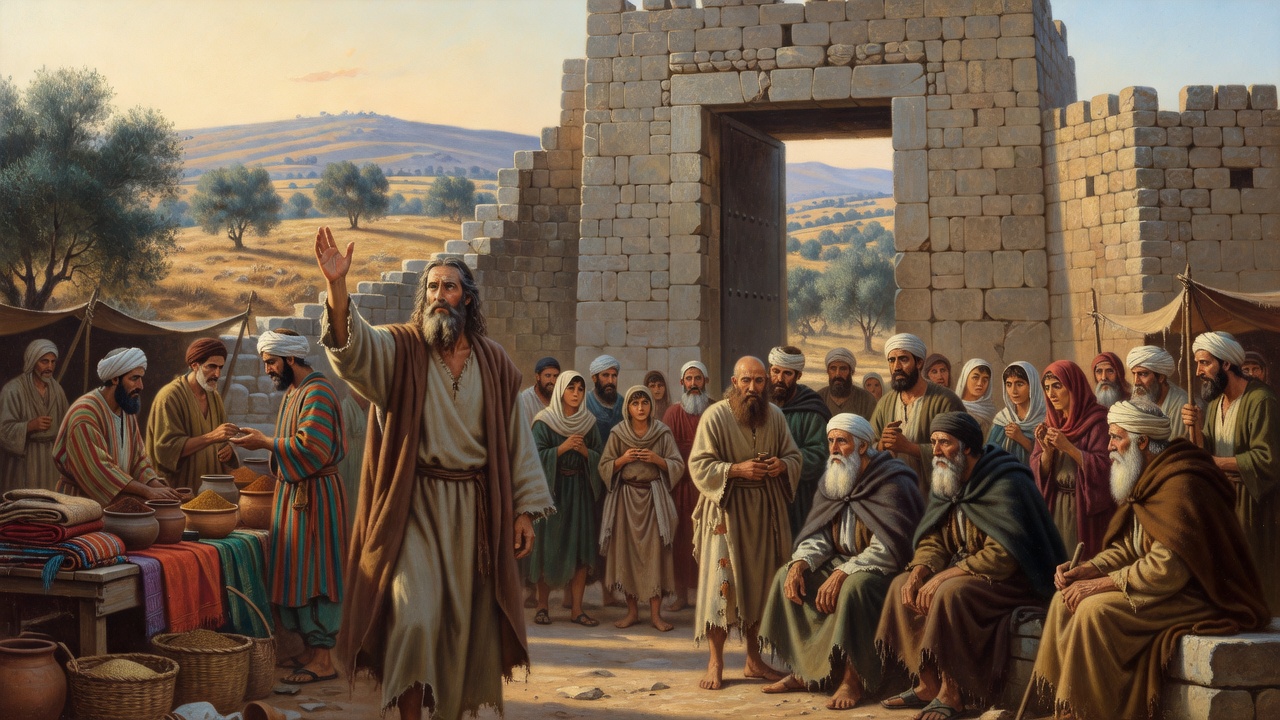
- In ancient Israelite cities, the gate served as the primary civic and judicial center where legal disputes were heard and elders administered justice. Amos condemned the ruling elite for accepting bribes, silencing honest witnesses, and trampling the rights of the poor in these legal assemblies.Sources: the Bible text itself
- The warning that Israel would be exiled beyond Damascus pointed to a coming defeat and deportation far northeast of the ancient Syrian capital. Damascus was a major political and commercial power located north of Jerusalem, marking a key geographical boundary for northern campaigns.Sources: the Bible text itself · Damascus
Notes written with AI assistance from open sources (Theographic Bible Metadata, CC BY-SA 4.0; Easton’s Bible Dictionary, public domain) and reviewed before publishing.
Places in this chapter
- Damascus · 33.511, 36.306 · verse 27
Only places identified with high confidence are shown (90% or more according to the scholarly sources compiled by OpenBible). Period map: DARE (Digital Atlas of the Roman Empire), CC BY 4.0; modern map: © OpenStreetMap contributors; places: OpenBible.info (CC BY 4.0).
Credits and license for this translation
Paipel
The Holy Bible in the Chuukese language of the Federated States of Micronesia
copyright © 1984, 1989, 1991, 2001 Liebenzel Mission
Language: Chuukese
Translation by: Liebenzell Mission
Old Testament © 1989, 2001 Liebenzel Mission
New Testament © 1984, 1991 Liebenzel Mission
This translation is made available to you under the terms of the
Creative Commons Attribution-No Derivatives license 4.0.
You may share and redistribute this Bible translation or extracts from it in any format, provided that:
You include the above copyright and source information.
You do not make any derivative works that change any of the actual words or punctuation of the Scriptures.
Pictures included with Scriptures and other documents on this site are licensed just for use with those Scriptures and documents.
For other uses, please contact the respective copyright owners.
2024-01-24
Source: http://ebible.org/chk/ · eBible.org