Job 5
Candoshi-Shapra · Tap a verse to see its cross-references.
1Ashiriya, Jobaa, nuw shiyaa tina, Kuruzungcha. Kuruzkinaareesha ¿chakaja shiyaa istach? Apanllee wasundurur, yuwaa waritaru anoo, Istanda, tákchush, ¿Apanllsha wasundururi istachincha? 2Kapung mangish mantsakinaareesha, mishat tsiyantakinaareesha, ¿tamari istachinll? Amb ashiru chinakush, nda kasakush uru tsipachsha. 3Nuw tputs nda wanasir chinamaa yasaru anoo parangina. Kurikpaneem kinachima, táyaru, yuwaa kurikee putachu anoo tputssha tuxarakchu pantsakiya. 4¿Chakshtaja wipaatssha istayach? Istamaam ngatkusin kurakatam istamaam ngatku, yutarit tsiyatku, uwaam tapachindampan ndunarichiya. 5Mazarish karut ashchiri puratkachu anushsha tputs mariz kayatkusin, pusayaru katungkatssin, kachingeersin karutanandarisha kasachiya. Maachiritangazsha támaraksin, yat yat ashkatssin kachingeertamsin waanasha watstamari wataruwzuri kasakiya.
6Ashirucha nuw, Jobaa, shiyaa, atina: Yutaritshish nda tsapumand shitungkiya. Mishat, tsutashish nda tsapumand shitungkiya. 7Tputs ichingarusin waanamandari yutaritshishirini kiyung kachiykanaya. Sumasi chaana taturangakchuch kurataru, ashiritam tputssha yutaritshishirinimun kiyung kachiykanaya.
8Ashiri nuwanaari shiy kiyung kachiykish ashtaruri, Apanllee; Shiy, Apaa, nuwaa yasaktishcha. ¿Ashiri nuw mayamanda kiyung kachiykuri taaki? táchtamparina. 9Ashirucha, Apanll yuwaa waana zapan ashku, anoo tputs nda minamtiyam izuuru yasamaam wanindaya.
17Apanll tputsee chinaku waneekiya. Ashiri shiy ¿mayaamaja kiyung kachiymaam ngatchish? Mishat, ¿Mayaamaja tsiyantachish? Mapiyngcha. 18Apanll tputseem tsutashshee zanganeeru, tputs kiyungtaa kachiyku taaku, itaru waantatam yusur yarchiya. Uwpatataati kizpur tpaw sheeru, waantatam izamzamaam waritariya. Apanll minamaricha kchinamshi.
27Apanll uru ashtariya. Ashima an uru yachakuni yasakaniya. Ashiri shiysha, Jobaa, nuwaa kuki mazinakinaareesha, zapshita uru ashima yasachtamsha,
Elifas Jobaa tárangiya.
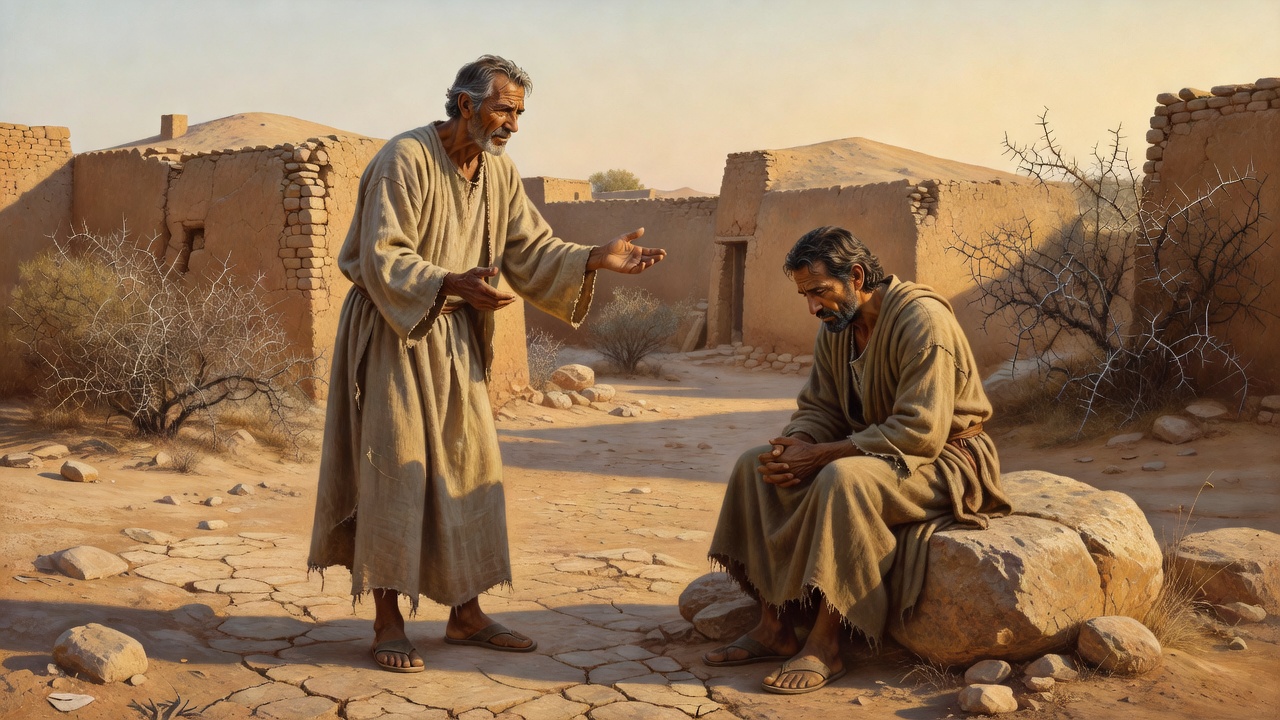
Ashiriya na yuwaa Elifas mangush chinarangu; Job waanamand yutaritshishirini kiyung kachiykiya, mamarpaku tárangu anoo kamaneena.
Did you know?
Eliphaz's Counsel on Suffering and Divine Correction
- Eliphaz portrays suffering as purposeful divine discipline rather than arbitrary misfortune, asserting that trouble does not arise without cause from the soil. He urges Job not to despise the correction of the Almighty, who wounds only to heal and restore.Sources: the Bible text itself
- In promising deliverance from six calamities and even seven, Eliphaz employs a traditional poetic formula known as graded numerical parallelism. This rhetorical pattern, common in ancient Near Eastern wisdom poetry, builds emphasis to express comprehensive and complete protection.Sources: the Bible text itself
- Eliphaz describes ultimate restoration in vivid agricultural and pastoral terms, depicting a life where wild beasts and stony soil cease to be hostile. He envisions a peaceful death occurring in full vigor, likened to a sheaf of grain harvested at the proper season.Sources: the Bible text itself
Notes written with AI assistance from open sources (Theographic Bible Metadata, CC BY-SA 4.0; Easton’s Bible Dictionary, public domain) and reviewed before publishing.
Credits and license for this translation
Candoshi-Shapra
New Testament in Candoshi-Shapra (PE:cbu:Candoshi-Shapra)
copyright © 2010 Wycliffe Bible Translators, Inc.
Language: Candoshi-Shapra
Translation by: Wycliffe Bible Translators, Inc.
Candoshi-Shapra
cbu
Peru
Copyright Information
© 2010, Wycliffe Bible Translators, Inc. All rights reserved.
This translation text is made available to you under the
terms of the Creative Commons License: Attribution-Noncommercial-No Derivative Works.
( http://creativecommons.org/licenses/by-nc-nd/3.0/ )
In addition, you have permission to port the text to different file formats, as long as you
do not change any of the text or punctuation of the Bible.
You may share, copy, distribute, transmit, and extract portions
or quotations from this work, provided that you include the above copyright
information:
You must give Attribution to the work.
You do not sell this work for a profit.
You do not make any derivative works that change any of the actual words or punctuation of the Scriptures.
Permissions beyond the scope of this license may be
available if you contact
us with your request.
The New Testament
in Candoshi-Shapra
© 2010, Wycliffe Bible Translators, Inc. All rights reserved.
This translation is made available to you under the terms of the
Creative Commons Attribution-Noncommercial-No Derivatives license 4.0.
You may share and redistribute this Bible translation or extracts from it in any format, provided that:
You include the above copyright and source information.
You do not sell this work for a profit.
You do not change any of the words or punctuation of the Scriptures.
Pictures included with Scriptures and other documents on this site are licensed just for use with those Scriptures and documents.
For other uses, please contact the respective copyright owners.
2025-04-30
Source: http://ebible.org/cbuNT/ · eBible.org