Jó 5
Candoshi-Shapra · Toque num versículo para ver as referências cruzadas.
1Ashiriya, Jobaa, nuw shiyaa tina, Kuruzungcha. Kuruzkinaareesha ¿chakaja shiyaa istach? Apanllee wasundurur, yuwaa waritaru anoo, Istanda, tákchush, ¿Apanllsha wasundururi istachincha? 2Kapung mangish mantsakinaareesha, mishat tsiyantakinaareesha, ¿tamari istachinll? Amb ashiru chinakush, nda kasakush uru tsipachsha. 3Nuw tputs nda wanasir chinamaa yasaru anoo parangina. Kurikpaneem kinachima, táyaru, yuwaa kurikee putachu anoo tputssha tuxarakchu pantsakiya. 4¿Chakshtaja wipaatssha istayach? Istamaam ngatkusin kurakatam istamaam ngatku, yutarit tsiyatku, uwaam tapachindampan ndunarichiya. 5Mazarish karut ashchiri puratkachu anushsha tputs mariz kayatkusin, pusayaru katungkatssin, kachingeersin karutanandarisha kasachiya. Maachiritangazsha támaraksin, yat yat ashkatssin kachingeertamsin waanasha watstamari wataruwzuri kasakiya.
6Ashirucha nuw, Jobaa, shiyaa, atina: Yutaritshish nda tsapumand shitungkiya. Mishat, tsutashish nda tsapumand shitungkiya. 7Tputs ichingarusin waanamandari yutaritshishirini kiyung kachiykanaya. Sumasi chaana taturangakchuch kurataru, ashiritam tputssha yutaritshishirinimun kiyung kachiykanaya.
8Ashiri nuwanaari shiy kiyung kachiykish ashtaruri, Apanllee; Shiy, Apaa, nuwaa yasaktishcha. ¿Ashiri nuw mayamanda kiyung kachiykuri taaki? táchtamparina. 9Ashirucha, Apanll yuwaa waana zapan ashku, anoo tputs nda minamtiyam izuuru yasamaam wanindaya.
17Apanll tputsee chinaku waneekiya. Ashiri shiy ¿mayaamaja kiyung kachiymaam ngatchish? Mishat, ¿Mayaamaja tsiyantachish? Mapiyngcha. 18Apanll tputseem tsutashshee zanganeeru, tputs kiyungtaa kachiyku taaku, itaru waantatam yusur yarchiya. Uwpatataati kizpur tpaw sheeru, waantatam izamzamaam waritariya. Apanll minamaricha kchinamshi.
27Apanll uru ashtariya. Ashima an uru yachakuni yasakaniya. Ashiri shiysha, Jobaa, nuwaa kuki mazinakinaareesha, zapshita uru ashima yasachtamsha,
Elifas Jobaa tárangiya.
Ashiriya na yuwaa Elifas mangush chinarangu; Job waanamand yutaritshishirini kiyung kachiykiya, mamarpaku tárangu anoo kamaneena.
Você sabia?
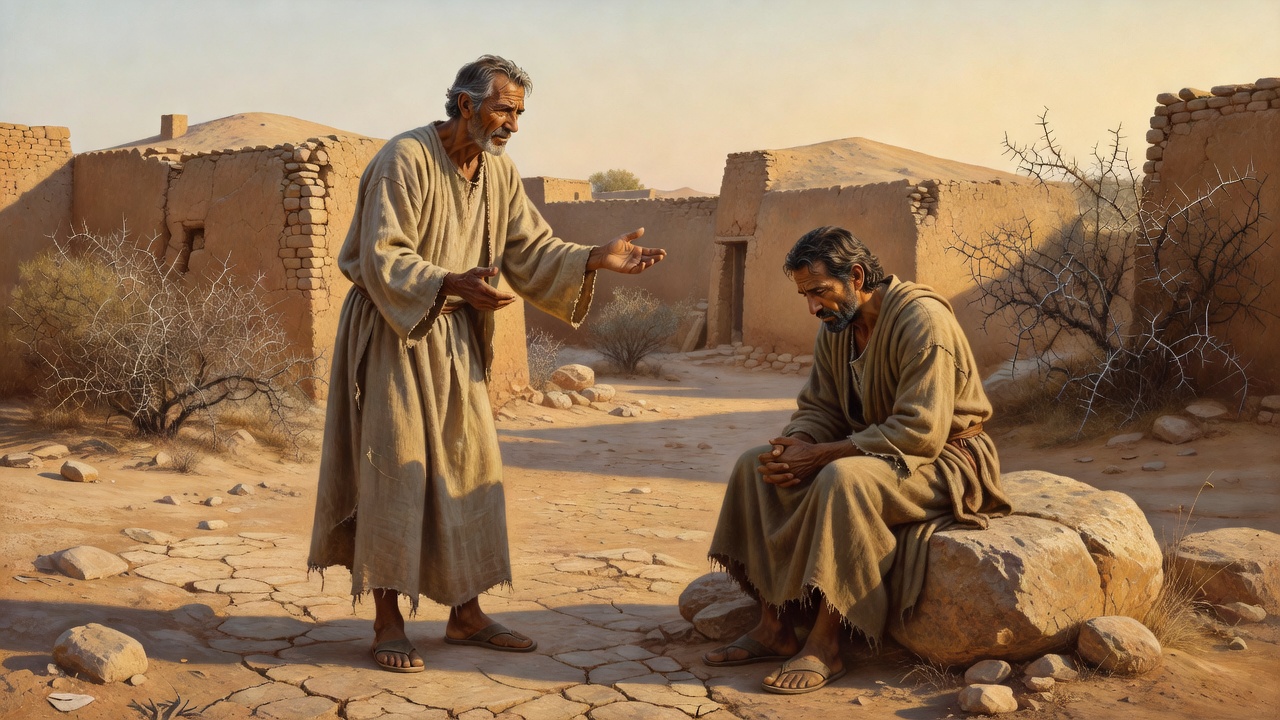
O Conselho de Elifaz sobre o Sofrimento e a Correção Divina
- Elifaz retrata o sofrimento como uma disciplina divina com propósito, e não como mera desgraça casual, afirmando que a aflição não brota do solo sem motivo. Ele exorta Jó a não desprezar a correção do Todo-Poderoso, que fere apenas para depois curar e restaurar.Fontes: o próprio texto bíblico
- Ao prometer livramento de seis calamidades e até mesmo de sete, Elifaz utiliza uma fórmula poética tradicional de paralelismo numérico progressivo. Esse recurso retórico, comum na poesia de sabedoria do Antigo Oriente Próximo, intensifica a ênfase para transmitir a ideia de proteção total e completa.Fontes: o próprio texto bíblico
- Elifaz descreve a restauração final com imagens agrícolas e pastoris, retratando uma vida em que os animais selvagens e o solo pedregoso deixam de ser hostis. Ele projeta uma morte serena na maturidade da vida, comparada a um feixe de cereais colhido no tempo certo.Fontes: o próprio texto bíblico
Notas escritas com auxílio de IA a partir de fontes abertas (Theographic Bible Metadata, CC BY-SA 4.0; Easton’s Bible Dictionary, domínio público) e revisadas antes de publicar.
Créditos e licença desta tradução
Candoshi-Shapra
New Testament in Candoshi-Shapra (PE:cbu:Candoshi-Shapra)
copyright © 2010 Wycliffe Bible Translators, Inc.
Language: Candoshi-Shapra
Translation by: Wycliffe Bible Translators, Inc.
Candoshi-Shapra
cbu
Peru
Copyright Information
© 2010, Wycliffe Bible Translators, Inc. All rights reserved.
This translation text is made available to you under the
terms of the Creative Commons License: Attribution-Noncommercial-No Derivative Works.
( http://creativecommons.org/licenses/by-nc-nd/3.0/ )
In addition, you have permission to port the text to different file formats, as long as you
do not change any of the text or punctuation of the Bible.
You may share, copy, distribute, transmit, and extract portions
or quotations from this work, provided that you include the above copyright
information:
You must give Attribution to the work.
You do not sell this work for a profit.
You do not make any derivative works that change any of the actual words or punctuation of the Scriptures.
Permissions beyond the scope of this license may be
available if you contact
us with your request.
The New Testament
in Candoshi-Shapra
© 2010, Wycliffe Bible Translators, Inc. All rights reserved.
This translation is made available to you under the terms of the
Creative Commons Attribution-Noncommercial-No Derivatives license 4.0.
You may share and redistribute this Bible translation or extracts from it in any format, provided that:
You include the above copyright and source information.
You do not sell this work for a profit.
You do not change any of the words or punctuation of the Scriptures.
Pictures included with Scriptures and other documents on this site are licensed just for use with those Scriptures and documents.
For other uses, please contact the respective copyright owners.
2025-04-30
Fonte: http://ebible.org/cbuNT/ · eBible.org