Job 4
Candoshi-Shapra · Tap a verse to see its cross-references.
Ashiriya, na yuwaa Elifas mangush chinarangu; Job waanamand yutaritshishirini kiyung kachiykiya, ngichku tárangu anoo kamanchintspa
1Elifassha, Tinamshuch tputs, Jobaa kuk mazinarangu, tárangiya.
Ashiriya, na Jobaa shiyaa tsiyatchinllpa. Tsiyatamaam pakich paziktana. Itaru, tsiyantachparee, shiyaa atina. Watam nuw nda tsiyatkuri taamaam pinasakinawa. 3Shiy tputs yuwaa sambaytamaam zandkana, anoo kapungtaa istatarush, Apanllee kuk zapantaa tayaspatatarush, 4yuwaatstam tputs pantsakana anoo izuurasha Apanllish tachitamaam istataritaatish, mishat tputsee yuwaa kasamaam zandkana anoo tputs mangoo p'tsitaritaatish, 5itaru natsha yuwash kiyung kachiykish anush shaanaatsi tayutaritkush, kapung mangish mantsakush, Apanllimun ndusha mangish tatuksha. 6Shiy Apanllee kapungcha mangoonkush, Apanlltishcha tiptsirish; kizpur wanasir taatarsha. ¿Ashiri mayaamsha nda Apanllimunari mangish tatuksha? 7Ashiri shiy yasakeesha kamaningandama. ¿Apanll tputsee wanasirimshi wanitar? Nduni, wanimaam wanindaja. 8Itaru, nuw wachinari yasakina. Tputs yutaritshishingazimari, misha pachamangaztam chinaku, zapish anuritam yutaritshishiritam uwash tushiychiya. 9Apanllsha anumand kizpur tsiyantakchu, waneeshshee zangankachu, urutamari kiyung kachiykusin, taachinllinaya. 10Mishat, tumuz kázamash tsiyantaku, pu átar ashtaru ashirusin, itaru Apanllsha wizpurpa wanasee kurumbtakpaz ashkachu zamachiya. ¿Tamari Apanll xapooch? 11Tumuzee wanas kurumbtayaruch, ndusha zamaam waritaku marizimun tsipakchu, wipsha arap pseertarsin, taachinllinaya. Tputs yutaritshishpan ashikpaz ashirusin, izuuru watstamari tsipachinllinaya.
12Nuw psaan maaramchuri mirinish tputs pakchimari tsiyatstaru mazinarangina. Itaru, nda izuuru mazinarangina. Yuwash tputs ichingaru maarana, anush anoo k'kuz mazinaranlluri, nuw kapung punirangina. 14Kapung puniranlluri, nutsi ashchiri nungtakuri, tatat shitar ashirangina. 15Kachizimazpaz tshimuni tapatkamchu ashiru kizpur punikuri, kachizatkuri nutsi purutsingaranguri, 16anush tputs ashiru parangina. Itaru, nda natstamaam waritarangina. Nda tsiyatku, xixeew ashirangiya. Itaru, anumunsha tsiyatku k'kuzee mazinarangina. 17¿Tputs antaati Apanllpat tatsamooru waninda? Mishat, ¿Apanll tputsee tinarangu, waanpata wanasirimshirini tatsamooreeja taakana? 18Apanll waanamuntaa wasundurur mang' tatumaam pinasakiya. Watam wasundurur yutaritshishee chinaktamsinawa. 19Ashirucha, iynaasha tsapurunasshuchini aranginasha musásiri yutaritshishish pantsat, pantsat ashkiniya. Musásimashpa sharamungazpaz pangum ashiruni yurangayaru, mikeeruni pantsakaniya. 20Tputs watsipunoo nda yasamaam waninda. Puturi wanasiritaa taarangu, itaru pukamachsha tsipayachu, watstamari taárashi kanatsipchiya. 21Tputs taárash wasik itintingam tamapari ashiriya. Anoo tputssha k'chirpa tza ashkachu, watstamari mikeeru pantsata ashtaru ashiriya. Ndaturita Apanllee mangoonaru tsipakanaya, ambi ántaru nuw miranish k'kuzee mazinarangina, Elifas Jobaa tárangiya.
Did you know?
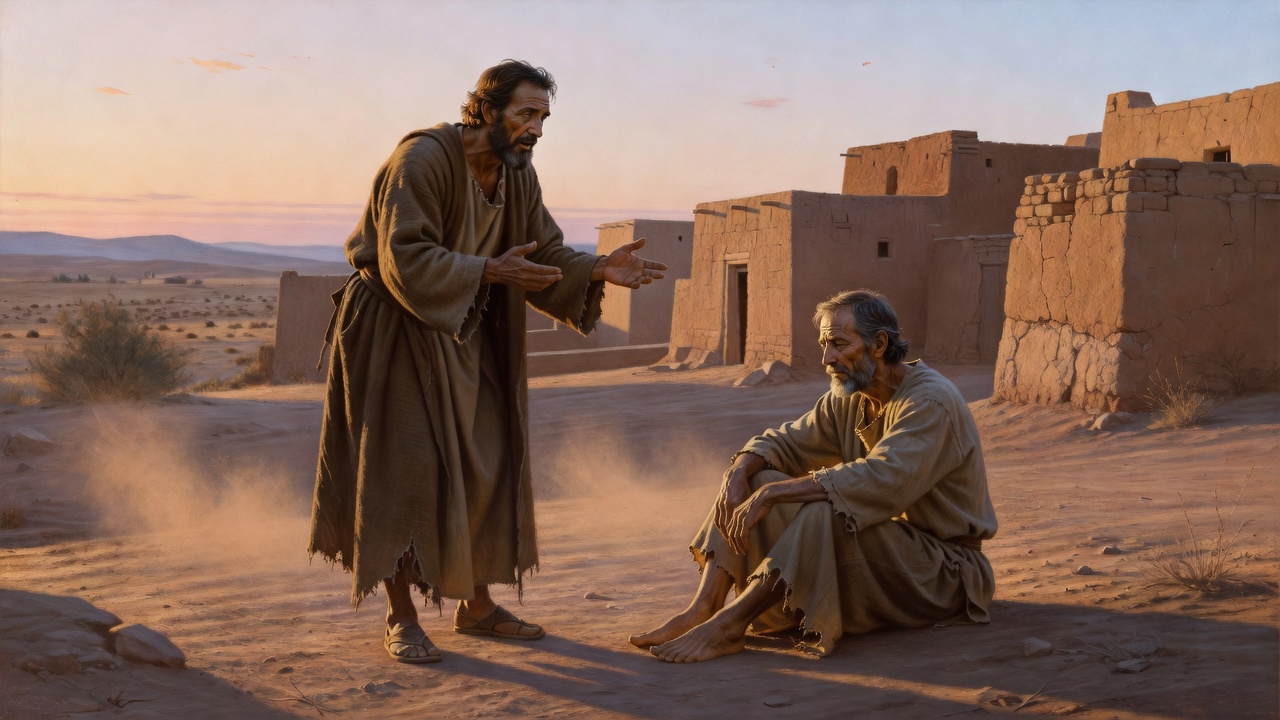
Eliphaz's First Speech
- Eliphaz the Temanite is the first of Job's companions to respond, breaking their week of silence. He acknowledges Job's past reputation for comforting and strengthening the distressed before questioning why Job cannot apply that same endurance to his own suffering.Sources: the Bible text itself · Eliphaz
- Eliphaz introduces the traditional principle of retribution, arguing that the innocent never perish and that individuals reap what they sow in life.Sources: the Bible text itself
- To support his theological claim, Eliphaz describes a chilling night vision where a mysterious spirit stood before him in the dark, declaring that fragile mortals dwelling in houses of clay cannot be more righteous or pure than their Maker.Sources: the Bible text itself
Notes written with AI assistance from open sources (Theographic Bible Metadata, CC BY-SA 4.0; Easton’s Bible Dictionary, public domain) and reviewed before publishing.
Credits and license for this translation
Candoshi-Shapra
New Testament in Candoshi-Shapra (PE:cbu:Candoshi-Shapra)
copyright © 2010 Wycliffe Bible Translators, Inc.
Language: Candoshi-Shapra
Translation by: Wycliffe Bible Translators, Inc.
Candoshi-Shapra
cbu
Peru
Copyright Information
© 2010, Wycliffe Bible Translators, Inc. All rights reserved.
This translation text is made available to you under the
terms of the Creative Commons License: Attribution-Noncommercial-No Derivative Works.
( http://creativecommons.org/licenses/by-nc-nd/3.0/ )
In addition, you have permission to port the text to different file formats, as long as you
do not change any of the text or punctuation of the Bible.
You may share, copy, distribute, transmit, and extract portions
or quotations from this work, provided that you include the above copyright
information:
You must give Attribution to the work.
You do not sell this work for a profit.
You do not make any derivative works that change any of the actual words or punctuation of the Scriptures.
Permissions beyond the scope of this license may be
available if you contact
us with your request.
The New Testament
in Candoshi-Shapra
© 2010, Wycliffe Bible Translators, Inc. All rights reserved.
This translation is made available to you under the terms of the
Creative Commons Attribution-Noncommercial-No Derivatives license 4.0.
You may share and redistribute this Bible translation or extracts from it in any format, provided that:
You include the above copyright and source information.
You do not sell this work for a profit.
You do not change any of the words or punctuation of the Scriptures.
Pictures included with Scriptures and other documents on this site are licensed just for use with those Scriptures and documents.
For other uses, please contact the respective copyright owners.
2025-04-30
Source: http://ebible.org/cbuNT/ · eBible.org