Genesis 3
Yosë nanamën · Tap a verse to see its cross-references.
Co Yosë natëtonaraihuë', oshahuanpiso
1Sinioroso Yosë ni'ton, ya'ipi tananquë ma'sharo'sa ya'huërinsopita acorin. Ya'huanso nipirinhuë', a'napita ma'sharo'sa quëran yonqui yonquínahuan ninin. Sanapi yanonpintaton, paaparin nontacaso marë':
—¿Tëhuënchachin ta'ma Yosë apiratërinquëma ya'ipi isopita nararo'sa nitërinso capamaso to? itërin.
2—Ya'ipi nitërinso', noya capa'huaiso'. A'naíchin huancánachin huanirinso', co Yosë nohuantërinhuë': “Ama ina nitërinso', ca'cosohuë'. Ama së'huacosohuë'. Ca'patama', tëhuënchachin chiminarama',” itërincoi Yosë, itërin.
4—Co napoarinhuë'. Co chiminaramahuë'. Ca'patamaso', ya'ipi noya nininsopita, ya'ipi co noyahuë' nininsopitanta', nitotarama huachi. Inapita nitotatoma', Yosë pochachin nisarama'. Ina nitotaton, Yosë apiratërinquëma', itërin.
6Ina natanaton, sanapiso nara nitërinso ni'sárin: Noyápiachin nicaton ca'chináchin cancantërin.
“Ina ca'pato, ya'ipi nitotarahuë huachi,” tënin. Napoyan quëran, së'pashorahuaton ca'nin. So'ionta quëtohuachina, inanta ca'nin. 7Naporo chachin nisha yonquipi huachi: “I'nanpirashitë canposo pa'sárë',” niitopi. Ninapotatona', iquira huëron pipitopi. Inapoatona', nipa'shianatopi.
8I'huanahuanquë huisontapaso', Yosëri nararoquë huëcapairinso natanpi. Natanahuatona', na'picaiso marë' ta'api. 9Na'pitopirinahuë', inariso përarin:
—Atan. ¿Insëquëta ya'huaran? itërin. 10Natanahuaton, quëmapiso tapon:
—Co'ta o'maranso' natanai. I'nanpirashitëcoi ni'toi, të'huatërainquën. Naporahuaton tapantatëinquën, na'pirai, itërin.
11—¡I'yan! ¿Onporahuatomata nitotapanamaso'? Nara a'naíchin nininso': “Ama isoso nitërinso ca'quësohuë',” itopiranquënhuë': ¡Nani ca'nan! itërin.
12—Iso sanapi quëtërancoso', quëtërinco ni'ton, ca'nahuë, itërin.
13Napotohuachina, sanapi ya'huërë' tahuërëtahuaton, itapon:
—¿Onpoatonta naporanso'? itërin.
—Ya'huan nonpintërinco ni'ton, ca'nahuë, tënin sanapi.
14Naporo' Sinioroso Yosë ni'ton, ya'huan ya'huërë' tahuërëtahuaton, co huachi noya ya'huëcaso marëhuë' sha'huitërin:
—Piyapi nonpintëranso marë' a'napita ma'sharo'sa quëran, pa'pi co noyahuë' ni'nanquën. Napoaton ipora quëran huarë' cancanën quëran no'pa' pa'taran. Inapoaton, chiminaquë huarë' nosorotaran. 15Ca nohuanto sanapi inimicotarinquën. Quëmarinta ina inimicotaran. Quëmá quëran pipipisopitanta', sanapi quëran pipipisopitarë' niinimicotapona'. A'na tahuëri sanapi quëran pipirinsoari minsëmiatarinquën. Napoaponahuë', quëmarinta chiníquën ina aparisitaran, itërin.
16Ina quëran sanapi ya'huërë' itapon:
—Co natërancoso marëhuë', hua'huanpatan pa'pi iquin quëran huaiaran. Napoaponahuë', so'yan ya'cariantaran. Naporahuaton, so'yan camaiinquënso ya'huërin, itërin.
17Ina quëran quëmapinta itapon:
—Sa'an natëton, nara nitërinso co capacasohuë nipirinhuë', ca'nan. Naporanso marë' ya'ipiro'pa' co huachi noyatacaso marëhuë' sha'huitarahuë. Napoaton nitapiarin. Pa'pi chiníquën sacataquë huarë' coshataran. Chiminaquë huarë' inapoaran. 18Naporahuaton, nahuano'sa', shihuarino'sa', inapita na'con na'con papotapon huachi. Nisha nisha canomëro'sa', nararayaro'sa', inapita yoniton, capon. 19Pa'pi chiníquën sacatahuarë' coshataran. Napoin quëran chiminaran huachi. No'pa quëran ninanquën ni'ton, no'pa chachin niantamaso ya'huërin, itërin.
20Atanso', sa'in nininën acotërin, Ipa itërin. Ina quëran ya'ipi piyapi na'acaiso ni'ton, ina pochin nohuitërin. 21Quëmapi sa'inë chachin a'mocaiso marë' ma'sha sha'huëtë quëran Yosëri nitërin. Ina quëtohuachina, a'moanpi huachi. 22Naporo chachin tënin: “Iporaso', piyapi canpoa pochachin nitotërin. Noya nininso nitotahuaton, co noyahuë' nininsonta nitotërin. Ni'quëna nanpirin nara nitërinsonta ca'pachin. Napohuachinso', nanpimiatarin,” tënin.
23Napoaton Sinioroso Yosë ni'ton, noyápiachin nararo quëran quëmapi ocoirin. Ocoirahuaton, niquë acorin. Inaquë sacatacaso marë' acorin. No'paquë chachin sacatapon huachi. 24Piyapi ocoirahuaton, pi'i pipirin parti quëran a'paito anquëniro'sa acorin. Inapitaso', quiropino'sa itopi. Noyápiachin nararo a'paicaiso marë' acorin. Ina ya'carinta', sahuëni orotaton huënin huënintárin acorin. Ama incari tëranta nanpirin nara ya'caricaso marëhuë', a'pairapi.
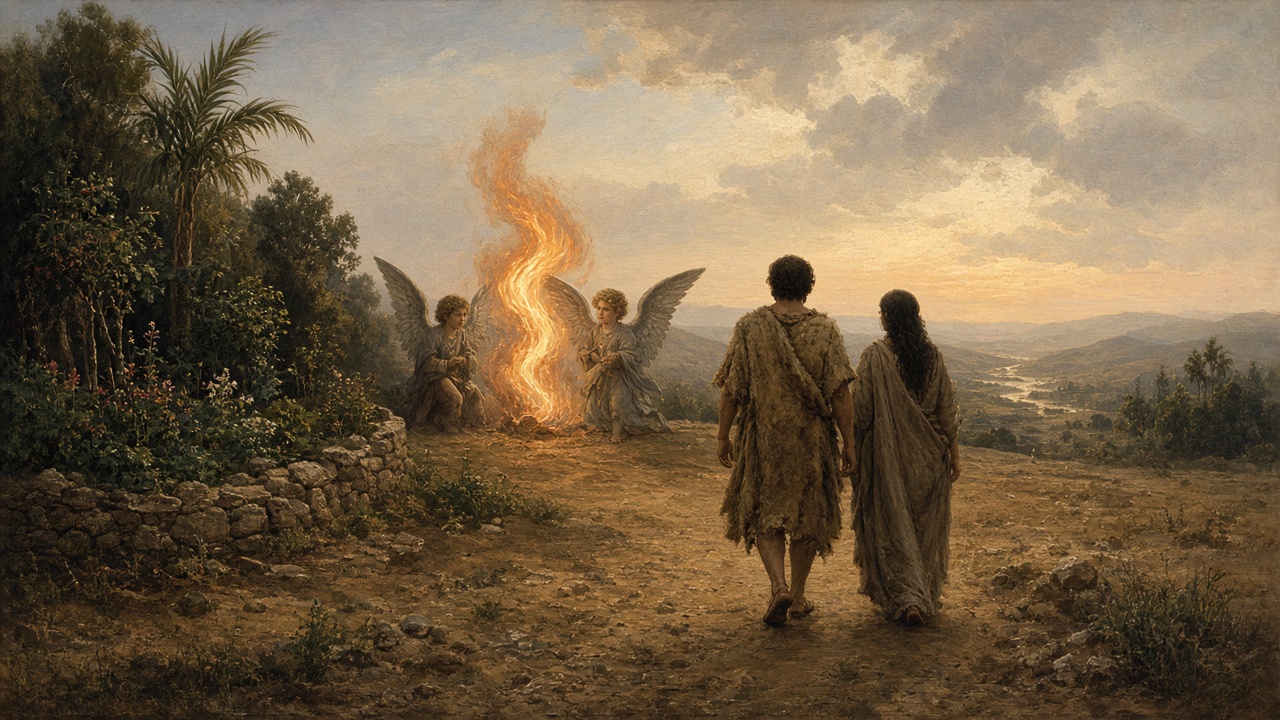
Did you know?
The Fall and Exile from Eden
- A traditional reference explains Adam as “red,” a Babylonian word used as the generic name for man, with the same meaning in Hebrew and Assyrian, and links the name to his being formed from the dust of the earth. In this chapter that origin returns in the judgment: he will toil for his food until he returns to the ground, for he is dust and to dust he will return, and he is sent to work the soil from which he was taken.Sources: Adam · the Bible text itself
- In this chapter Adam gives his wife the name Eve, meaning “life” or “living,” because she would be the mother of all the living.Sources: Eve · the Bible text itself
- The site of the garden of Eden, from which the man is driven in this chapter, has been much discussed and placed in Armenia, west of the Caspian Sea, in Media, near Damascus, in Palestine, in southern Arabia, and in Babylonia. A traditional geographical note looks for it along the Tigris and the Euphrates, in the land of Shinar, or Babylonia.Sources: Eden · the Bible text itself
Notes written with AI assistance from open sources (Theographic Bible Metadata, CC BY-SA 4.0; Easton’s Bible Dictionary, public domain) and reviewed before publishing.
Credits and license for this translation
Yosë nanamën
New Testament in Chayahuita (PE:cbt:Chayahuita)
copyright © 2011 Wycliffe Bible Translators, Inc.
Language: Chayahuita
Translation by: Wycliffe Bible Translators, Inc.
Chayahuita
cbt
Peru
Copyright Information
© 2011, Wycliffe Bible Translators, Inc. All rights reserved.
This translation text is made available to you under the
terms of the Creative Commons License: Attribution-Noncommercial-No Derivative Works.
( http://creativecommons.org/licenses/by-nc-nd/3.0/ )
In addition, you have permission to port the text to different file formats, as long as you
do not change any of the text or punctuation of the Bible.
You may share, copy, distribute, transmit, and extract portions
or quotations from this work, provided that you include the above copyright
information:
You must give Attribution to the work.
You do not sell this work for a profit.
You do not make any derivative works that change any of the actual words or punctuation of the Scriptures.
Permissions beyond the scope of this license may be
available if you contact
us with your request.
The New Testament
in Chayahuita
© 2011, Wycliffe Bible Translators, Inc. All rights reserved.
This translation is made available to you under the terms of the
Creative Commons Attribution-Noncommercial-No Derivatives license 4.0.
You may share and redistribute this Bible translation or extracts from it in any format, provided that:
You include the above copyright and source information.
You do not sell this work for a profit.
You do not change any of the words or punctuation of the Scriptures.
Pictures included with Scriptures and other documents on this site are licensed just for use with those Scriptures and documents.
For other uses, please contact the respective copyright owners.
2014-04-22
Source: http://ebible.org/cbtNTpo/ · eBible.org