Genesis 2
Yosë nanamën · Tap a verse to see its cross-references.
1Inapoaton Yosë: Isoro'pa', pi'iro'të', ya'ipi inaquëpita ya'huërinsopitarë chachin tënirin huachi.
2Ya'ipi acorinsopita tënirahuaton, tahuëririnquë chinotërin. Napoaton, ina tahuëri noya ni'nin. Noya nicaton, chinoto tahuëri acorin. Napoaton piyapi pënënin: “Naporo tahuëri chinotatoma', casáchin yonquico,” itërin.
4Ina pochin Yosë iráca: Isoro'pa', pi'iro'të', inapita acorin. Ya'ipi no'tëquën sha'huitaranquëma'.
Itin nararoquë piyapi acorinso'
Sinioroso Yosë ni'ton, inapita ya'nan acoaponahuë', 5co sharo'sa ya'huëyátërarinhuë'. Co panpatoronta papoyátërarinhuë'. Co o'nan tëranta acoyátërarinhuë'. Naporahuaton co insonta isoro'paquë sha'tacaso marë' ya'huëyátërarinhuë'. 6Napoaponahuë', no'pa quëran chachin i'sha pipiton, së'cotërotárin. 7Naporo' Sinioroso Yosë ni'ton, yaniro'pa' amocan quëran quëmapi ninin. Nani nisahuaton, nanpicaso marë' pihuinitërin. Inapotohuachina, niirahuaton nanpirin huachi.
8Ina piquëran, Sinioroso noyápiachin nararo Itin itopiquë acorin. Inaso no'pa', Cortanii' quëran pi'i pipirinso parti quëparitërin. Inaquë ya'huëcaso marë' quëmapi nininso acorin. 9Naporahuaton, nisha nisha noyápiachin cashino'sa apapotërin. Yashi yashin ca'chináchin nitërinsopita apapotërin. Nararo huancánachin nanpirin nara apapotërin. Inaquë chachin a'nanta', apapotërin. Anitotacaso nara itopiso'. Ina ca'pachina', noya nininsopita nitotaponahuë', co noyahuë' nininsopitanta nitotapi huachi.
10Itinquë a'nara i' pipirin. Ya'ipi nararo asë'cotërotacaso marë' naporin. Ina quëran chachin catapini së'parai' pa'tërin. 11Ya'natiirinsoso', Pisonii' itopi. Inaso', Apira parti conimarin. Inaquë oro ya'huërin. 12Inaquë oro ya'huërinso', noya noya ninin. Pimo yaquinta noya noya nininso ya'huërin. Nisha na'pinta ya'huërin, onisi itopiso'. 13Ina quëran niantarinsonta', Quiconii' itopi. Inaso', ya'ipi Coso parti pa'tërin. 14A'nanta', Tiquirisii' itopi. Inaso', Asiria ninano pi'i ya'coninso parti quëran acorin. Ya'natomarinsoso nipirinhuë', Iopiratisii' itopi.
15Sinioroso Yosë ni'ton, Itin nararoquë quëmapi acorin. Inaquë sacataton a'paicaso marë' acorin. 16Naporo' iso pochin camairin: “Ya'ipi isopita nararo'sa nitërinso', noya ca'quë', iroquë', inapoquë'. 17Anitotacaso nara nitërinsoíchin, co nohuantërahuë capamaso'. Inaso ca'patan, noya nininso nitotaponahuë', co noyahuë' nininsonta nitotaran. Ama ina nitërinso ca'quësohuë'. Ina ca'patan, tëhuënchachin chiminaran,” itërin.
Yosëri sanapi nininso'
18Ina quëran Sinioroso Yosë ni'ton, taantarin: “Quëmapi inaora ya'huëcaso', co noyahuë'. A'na nianta'i nipachin, inari noya catahuacaso marë',” tënin. 19Ina quëran ya'ipi ma'sharo'sa', anpiantëhuano'sa', inapita no'pa quëran ninin huachi. Inapita nisahuaton, quëmapi quëshirin inari nininën acotacaso marë'. Pë'tahuaro'sa', anpiantëhuano'sa', ma'sharo'sa tananquë ya'huërinsopita, inapita nininën acotërin. Ma nininënsona acotohuachina, ina chachin ninihuanpi huachi. Napoaponahuë', co a'na ma'shari tëranta nanitërinhuë', quëmapi noya catahuacaso'.
21Napohuachina, quëmapi noyá ahuë'ëtërin. Huë'ëso', a'nara nininpitën ocoitërin. Ocoitahuaton, anoyataantarin huachi. 22Ina nininpitë quëran chachin sanapi ninin. Capayatohuachina, sanapi nininso a'notërin. 23Quënanahuaton, quëmapi pa'yanin. Pa'yataton, tapon: “¡Isocha tëhuënchinso', ca pochachin Yosëri ninin! Cá quëran ninin ni'ton, sanapi itarahuë,” tënin.
24Napoaton quëmapi sa'apachin, pa'pin, a'shin inapita patahuaton, sa'inë' nichinpitacaso ya'huërin. Catoya'pi nipirinahuë', a'naíchin pochin nipi huachi.
25Quëmapiso sa'inë chachin noya ya'huërapi. Co a'moanaponaraihuë', co manta tapanpihuë'.
Did you know?
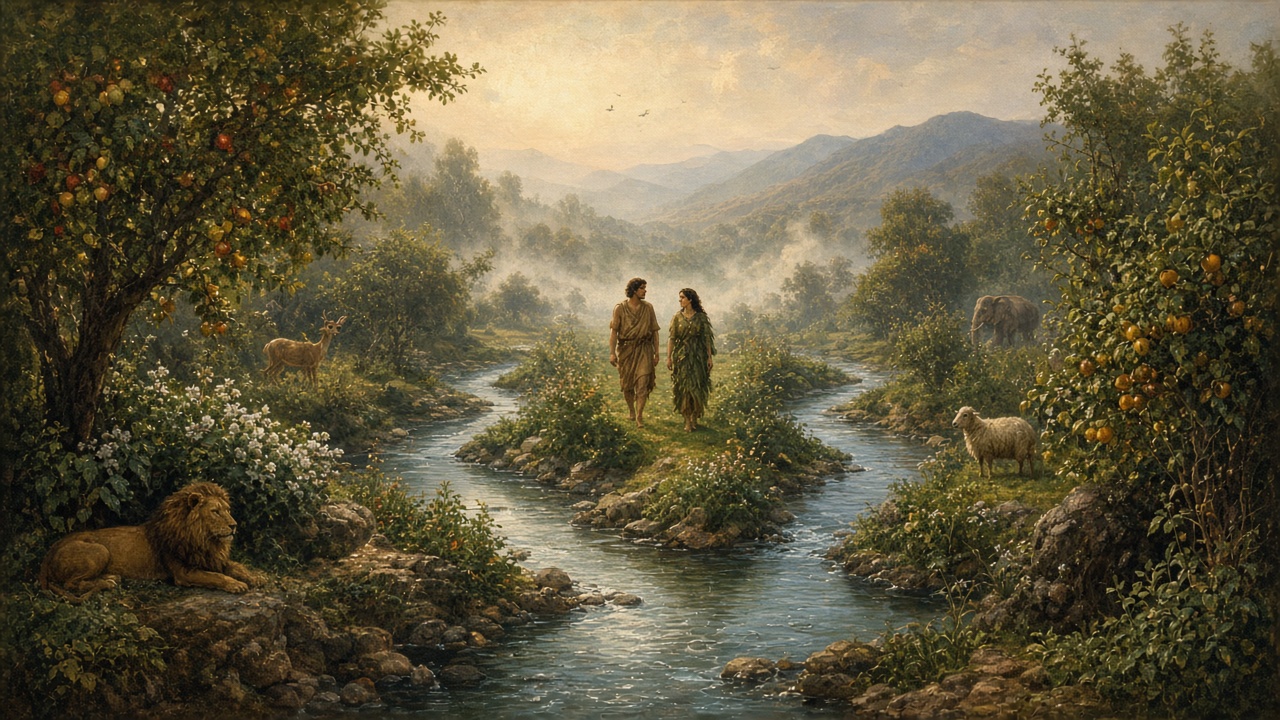
Adam, Eden, and the Four Rivers
- Adam, meaning “red,” is a Babylonian word and the ordinary name for a human being, with the same sense in Hebrew and in Assyrian. It was given to the first man. He was formed from the dust of the ground—hence the name—and God breathed into his nostrils the breath of life.Sources: Adam · the Bible text itself
- A river flowed out of Eden and divided into four headwaters: the Pishon, the Gihon, the Hiddekel, and the Euphrates. Some identify the Pishon with the Phasis or the Halys, others with the Indus, the Ganges, or still other rivers; the Gihon has been identified with the Nile, and others regard it as the Oxus, the Araxes, or the Ganges. The Hiddekel is the Tigris, called by the Accadians the river of Idikla; Gesenius understood the name as “the rapid Tigris.”Sources: the Bible text itself · Pison · Gihon · Hiddekel
- The site of Eden, the garden in which the first parents lived, has been discussed more than almost any other geographical question. It has been placed in Armenia, in the region west of the Caspian Sea, in Media, near Damascus, in Palestine, in southern Arabia, and in Babylonia. Easton's Bible Dictionary (1897) seeks it along the Tigris and the Euphrates of western Asia, in the land of Shinar, or Babylonia.Sources: Eden
Notes written with AI assistance from open sources (Theographic Bible Metadata, CC BY-SA 4.0; Easton’s Bible Dictionary, public domain) and reviewed before publishing.
Places in this chapter
- Assyria · 36.359, 43.153 · verse 14
- Euphrates · Today: Euphrates River · 31.004, 47.442 · verse 14
- Tigris · Today: Tigris River · 31.004, 47.442 · verse 14
Only places identified with high confidence are shown (90% or more according to the scholarly sources compiled by OpenBible). Period map: DARE (Digital Atlas of the Roman Empire), CC BY 4.0; modern map: © OpenStreetMap contributors; places: OpenBible.info (CC BY 4.0).
Credits and license for this translation
Yosë nanamën
New Testament in Chayahuita (PE:cbt:Chayahuita)
copyright © 2011 Wycliffe Bible Translators, Inc.
Language: Chayahuita
Translation by: Wycliffe Bible Translators, Inc.
Chayahuita
cbt
Peru
Copyright Information
© 2011, Wycliffe Bible Translators, Inc. All rights reserved.
This translation text is made available to you under the
terms of the Creative Commons License: Attribution-Noncommercial-No Derivative Works.
( http://creativecommons.org/licenses/by-nc-nd/3.0/ )
In addition, you have permission to port the text to different file formats, as long as you
do not change any of the text or punctuation of the Bible.
You may share, copy, distribute, transmit, and extract portions
or quotations from this work, provided that you include the above copyright
information:
You must give Attribution to the work.
You do not sell this work for a profit.
You do not make any derivative works that change any of the actual words or punctuation of the Scriptures.
Permissions beyond the scope of this license may be
available if you contact
us with your request.
The New Testament
in Chayahuita
© 2011, Wycliffe Bible Translators, Inc. All rights reserved.
This translation is made available to you under the terms of the
Creative Commons Attribution-Noncommercial-No Derivatives license 4.0.
You may share and redistribute this Bible translation or extracts from it in any format, provided that:
You include the above copyright and source information.
You do not sell this work for a profit.
You do not change any of the words or punctuation of the Scriptures.
Pictures included with Scriptures and other documents on this site are licensed just for use with those Scriptures and documents.
For other uses, please contact the respective copyright owners.
2014-04-22
Source: http://ebible.org/cbtNTpo/ · eBible.org