Genesis 41
Uyojroner e Dios xeꞌ Tzꞌijbꞌabꞌir Tama e Onian Tiempo · Tap a verse to see its cross-references.
Conda e José uchecsu tut e rey tuaꞌ e Egipto lo que che uwayac
1Pues entonces conda numuy chateꞌ año e rey waycꞌa que war awawan tama utiꞌ inteꞌ xucur xeꞌ ucꞌabꞌa Nilo, 2y uwira tama uwayac que tamar e xucur locꞌoyobꞌ siete wacax xeꞌ galan utobꞌ y xeꞌ anojranobꞌ meyra, y war ucꞌuxiobꞌ e cꞌopot tujam e pojp. 3Y de allí locꞌoyobꞌ otro siete wacax tama e xucur xeꞌ calapir utobꞌ y xeꞌ cꞌoxobꞌ xeꞌ ixiobꞌ wawanobꞌ tuyejtzꞌer e inmojr wacaxobꞌ era. 4Y de allí e siete wacax xeꞌ calapir utobꞌ y xeꞌ cꞌoxobꞌ cꞌapa ucꞌuxiobꞌ e siete wacax xeꞌ galanic y xeꞌ anojranobꞌ meyra.
Y de allí bꞌixcꞌa e rey. 5Entonces e rey sutpa wayan otronyajr y sutpa uwira otronteꞌ uwayac, y waycꞌa uwira cocha era: Ayan siete uchujchur e trigo xeꞌ bꞌutꞌur ut tamar y xeꞌ galan uwirnarobꞌ y que war aꞌchꞌiobꞌ tama inteꞌ taca ucujquir. 6Y de allí chujchuri otronteꞌ siete uchujchur xeꞌ taquin y xeꞌ purem ut umen e icꞌar xeꞌ apurutsan meyra. 7Y e siete uchujchur era xeꞌ taquin ut ixin ucꞌuxi e siete uchujchur xeꞌ galanic y xeꞌ bꞌutꞌur ut.
Y de allí bꞌixcꞌa e rey otronyajr, y cꞌotoy ubꞌijnu que jax taca inteꞌ wayac. 8Pero conda sacojpa tama inteꞌ día cay ubꞌijnu meyra tamar uwayac lo que uwira, y tamar era uyare tuaꞌ apejcna watobꞌ tin tin xeꞌ unata uchecsu lo que war che inteꞌ wayac. Entonces conda yopobꞌ, e rey cay uchecsu tin e unatobꞌ aqꞌuiniobꞌ, pero mamajchi tujamobꞌ ubꞌna uyare lo que che uwayac era. 9Entonces e man xeꞌ aquetpa tujor e inmojr manobꞌ xeꞌ uyajcꞌu e vino e rey cay uyare e rey y che:
—Pues este era cꞌajpa nimener tama e mabꞌambꞌanir lo que cay inche. 10Pues ayan inyajr conda net cay qꞌuijnet meyra taca chateꞌ aman, y tamar era awebꞌta ixion chatertion taca e ajcheyaj pan tama e cárcel lo que ayan tama uyotot e capitán tuaꞌ e policia. 11Y conda turon yajaꞌ tama e cárcel ayan inteꞌ acbꞌar conda chatertion cay cawira inteꞌ cawayac, y inteꞌ inteꞌ wayac ayan lo que che. 12Y tama e cárcel era turu inteꞌ chꞌom sitz tacaron xeꞌ tuaꞌ uchꞌajnarir e Héber xeꞌ jax inteꞌ man tuaꞌ e capitán tuaꞌ e policia. Y cachecsu cawayac tacar y jaxir cay uchecsu lo que war che tunor era. 13Y numuy tunor bꞌan taca cocha jaxir cay uyareon. Pues net sutpet awajqꞌuen nipatnar otronyajr, y e incojt aware tuaꞌ ajijtꞌa unuc y tuaꞌ achꞌubꞌna tama inteꞌ teꞌ este que chamay, bꞌan taca cocha e chꞌom sitz uyareon, che e man era.
14Entonces e rey uyare tuaꞌ apejcna watar e José. Entonces e José loqꞌuesna tama e cárcel wacchetaca, y de allí ususi utzucti, y ulapi e bꞌujc xeꞌ más galan, y de allí ixin tuaꞌ awawan tut e rey. 15Entonces e rey uyare e José y che:
—Pues nen ayan chateꞌ wayac lo que inwira, y mamajchi ubꞌna uchecsu lo que war che. Pero nen cꞌotoy innata que net uyubꞌiet achecsu lo que war che inteꞌ wayac conda iyarobꞌna tamar, che e rey.
16Entonces ojron e José y che:
—Pues majax nen xeꞌ uyubꞌien innata lo que war che inteꞌ wayac cocha era, jax taca e Dios xeꞌ uyubꞌi uchecsu lo que war che awayac tuaꞌ uyubꞌiet ijiri tama awalma, che e José uyare e rey.
17Entonces e rey uyare e José y che:
—Pues tama niwayac inwira que waren tama utiꞌ e xucur Nilo, 18y que tama e xucur era locꞌoyobꞌ siete wacax xeꞌ anojranobꞌ meyra y que galan uwirnarobꞌ, y war ucꞌuxiobꞌ e cꞌopot tujam e pojp. 19Pero tama upatobꞌ jaxirobꞌ locꞌoyobꞌ otro siete wacax xeꞌ calapir uwirnarobꞌ y xeꞌ cꞌoxobꞌ. Pues nen ma tiaꞌ acay inwira cora wacax xeꞌ más calapir uwirnarobꞌ tama tunor or e lugar Egipto. 20Pues e wacax era xeꞌ cꞌoxobꞌ y xeꞌ calapir uwirnarobꞌ cꞌapa ucꞌuxiobꞌ e bꞌajxan siete wacax xeꞌ anojranobꞌ meyra. 21Y motor que cꞌapa ucꞌuxiobꞌ e siete wacax xeꞌ anojranobꞌ meyra, pero ma chequer tama uwirnarobꞌ, cocha quetpobꞌto cꞌoxobꞌ y calapir uwirnarobꞌ bꞌan taca cocha turobꞌ bꞌajxan.
“Y de allí nen bꞌixqꞌuen. 22Pues nacpat era inwira otronteꞌ wayac tiaꞌ ayan siete uchujchur e trigo xeꞌ bꞌutꞌur ut y que galan uwirnar xeꞌ war aꞌchꞌiobꞌ tama intera taca ucujquir. 23Y de allí chꞌiobꞌ otro siete uchujchur e trigo xeꞌ taquin y xeꞌ chilin chilin ut y xeꞌ purem ut umen e icꞌar xeꞌ apurutsan meyra. 24Pues e siete uchujchur e trigo era xeꞌ taquin cꞌapa ucꞌuxiobꞌ e siete uchujchur e trigo xeꞌ galanic uwirnar. Pues cay inchecsu tunor era tut tin e war unatobꞌ aqꞌuiniobꞌ, pero nien incojt tujamobꞌ machi uyubꞌi uyarenobꞌ tucꞌa war che e wayac era”, che e rey.
25Entonces e José uyare e rey y che:
—Pues intera taca lo que war che e chateꞌ wayac lo que awira. Pues tamar awayac era e Dios war uchecsu toit lo que cꞌani uche watar e día. 26Porque e siete wacax xeꞌ galanic uwirnarobꞌ aquetpobꞌ bꞌan cocha siete año, y bꞌan ubꞌan e siete uchujchur e trigo xeꞌ galanic uwirnarobꞌ. 27Pues e siete wacax xeꞌ cꞌoxobꞌ y xeꞌ calapir uwirnarobꞌ xeꞌ locꞌoyobꞌ tupatobꞌ e siete wacax xeꞌ anojranobꞌ aquetpobꞌ bꞌan cocha siete año ubꞌan, y bꞌan ubꞌan e siete uchujchur e trigo xeꞌ taquin y xeꞌ purem ut umen e icꞌar xeꞌ apurutsan. Pues jax era aquetpobꞌ bꞌan cocha e siete año tama e winar. 28Pues lo que war inwaret era jax lo que e Dios war uchecsu toit tamar lo que cꞌani uche watar e día. 29Porque cꞌani watar siete año conda axin alocꞌoy meyra cosecha tama tunor or e lugar Egipto. 30Pero nacpat era axin watar siete año conda machi cꞌani alocꞌoy nien imbꞌijc e cosecha. Y mamajchi axin ucꞌajpes tunor e sian cosecha lo que cay locꞌoy tama e lugar Egipto, porque e sian winar xeꞌ watar axin ucꞌajpes tunor e cosecha lo que ayan ani tama e lugar Egipto. 31Pues imbꞌacꞌajr uwirnar e nuxi winar lo que axin watar, cocha machi ixto axin aquetpa chequer nien imbꞌijc e cosecha lo que locꞌoy bꞌajxan. 32Pues aquetpa inteꞌ taca bꞌijnusiaj tamar e chateꞌ wayac lo que awira, y bꞌan uche e Dios tuaꞌ uwirset que cꞌani ixto uche tunor era, y que machi tuaꞌ anumuy meyra tiempo bꞌajxan que cꞌani uche.
33“Pues tamar era quisinic que asicbꞌa inteꞌ winic xeꞌ ayan meyra unatanyaj e Dios tamar, y conda aturbꞌana que jaxir aquetpa tuaꞌ acꞌotori tujor tunor lo que ucꞌani tuaꞌ achempa tama e día xeꞌ watar tama e lugar Egipto. 34Y tamar era quisinic que ache cocha era: Que aturbꞌa cora ajcꞌamparobꞌ tuaꞌ axiobꞌ tama tunor or e lugar Egipto tuaꞌ umorojsiobꞌ chateꞌ pana tama e diez pana lo que axin alocꞌoy tama e cosecha tama tunor e siete año era, 35y que umorojsicobꞌ e trigo cora cora cocha era tama e siete año conda war alocꞌoy meyra e sian cosecha y que utꞌabꞌsicobꞌ tama inteꞌ lugar tama inteꞌ inteꞌ chinam y que aquetpa tunor era yebꞌar acꞌotorer tuaꞌ uyubꞌiet iꞌxin awese e gente otronyajr conda matucꞌa e cosecha. 36Y tamar era atzꞌacta e trigo lo que axin aquetpa tꞌabꞌesbꞌir tama inteꞌ inteꞌ chinam tuaꞌ machi axin achamayobꞌ e gente umen e winar tama e siete año xeꞌ watar conda matucꞌa e cosecha tama e lugar Egipto”, che e José.
Conda e José quetpa ajcꞌotorer tama e lugar Egipto
37Pues quetpa imbꞌutz tunor e bꞌijnusiaj era tut e rey y tut uyajcꞌamparobꞌ, 38y tamar era e rey ojron y che:
—Ma cocha erer catajwi otronteꞌ winic cocha era xeꞌ ayan unatanyaj e Dios tamar, che e rey.
39Entonces uyare e José y che:
—Mamajchi otronteꞌ xeꞌ ayan meyra unatanyaj e Dios tamar bꞌan cocha ayan tamaret y xeꞌ war unata tucꞌa tuaꞌ uche bꞌan cocha net. Pues chequer que jax e Dios xeꞌ war ubꞌijreset tuaꞌ anata ache tunor era. 40Pues jax net xeꞌ tuaꞌ iquetpa ajcꞌotorer tama tunor or e lugar Egipto, y tunor e gente axin aquetpa tuaꞌ oꞌbꞌianobꞌ tut tunor lo que net aware. Y jax taca nen xeꞌ tuaꞌ inquetpa más nojta que net, cocha nen jax e reyen, che e rey.
41Entonces sutpa ojron e rey otronyajr taca e José y che:
—Ubꞌin ninuc, nen cꞌani inturbꞌet tuaꞌ iquetpa ajcꞌotorer tama tunor or e lugar Egipto, che e rey. 42Y de allí e rey ulocse e anillo xeꞌ ayan usello tamar xeꞌ jurur tor ucꞌabꞌ, y ujuriꞌ tor ucꞌabꞌ e José, y uyare tuaꞌ abꞌujcsena taca e bꞌujc xeꞌ más atujri, y que tuaꞌ achꞌubꞌna inteꞌ yujy tama unuc xeꞌ chembꞌir taca e oro. 43Y nacpat era uyare tuaꞌ atꞌabꞌay tama e carruaje lo que aquetpa tuaꞌ tin e acꞌotori yebꞌar e rey. Y uyare tin e war axanobꞌ tuyejtzꞌerobꞌ tuaꞌ aꞌruobꞌ tut jaxir y che: “Jabꞌic e bꞌir”. Y bꞌan cocha era uche e rey tuaꞌ uche aquetpa ajcꞌotorer e José tama tunor or e lugar Egipto.
44Entonces e rey uyare e José y che:
—Pues nen jax e reyen, pero matucꞌa tuaꞌ uche e gente tama tunor or e lugar Egipto jay majax net aware, che e rey.
45Entonces e rey uturbꞌa ucꞌabꞌa e José Safenat-panéah xeꞌ jax xeꞌ tuaꞌ acꞌampesna tama e lugar Egipto, y uche tuaꞌ anujbꞌi taca e Asenat xeꞌ jax uwijchꞌoc e Potifera xeꞌ jax inteꞌ sacerdote tama e chinam On. Y bꞌan cocha era e José cꞌotoy quetpa ajcꞌotorer tama e lugar Egipto. 46Pues war ucojco treinta año e José conda cay cꞌotori yebꞌar ucꞌotorer e rey tama e lugar Egipto.
Entonces e José locꞌoy tut e rey y cay xana cora cora tama tunor or e lugar Egipto. 47Pues tama e siete año yajaꞌ locꞌoy meyra sian cosecha. 48Y e José uyare tuaꞌ amorojsena tunor e sian trigo lo que locꞌoy tama e siete año era, y utꞌabꞌsiobꞌ e trigo tama inteꞌ lugar tama inteꞌ inteꞌ chinam. 49Pues morojsena meyra sian trigo bꞌan cocha e sian jiꞌ lo que ayan tutiꞌ e nuxi jaꞌ. Y morojsena meyra sian trigo este que uyacta tuaꞌ ubꞌisiobꞌ, cocha machi uyubꞌi tuaꞌ atzijca tuaꞌ eꞌrna jayteꞌ trigo ayan, cocha ayan meyra sian cosecha.
50Entonces conda merato acay e año conda aquetpa tuaꞌ achecta e nuxi winar, e José qꞌuechuan chateꞌ umaxtac tacar uwixcar xeꞌ jax e Asenat xeꞌ jax uwijchꞌoc e Potifera xeꞌ jax inteꞌ sacerdote tama e chinam On. 51Y e bꞌajxan unembꞌir uturbꞌa ucꞌabꞌa Manasés xeꞌ war che: “E Dios uche tuaꞌ innajpes tunor lo que cay innumse nibꞌa y uche tuaꞌ innajpes tunor nifamilia”. 52Y tama e ijtzꞌimbꞌir uturbꞌa ucꞌabꞌa Efraín xeꞌ war che: “E Dios uche tuaꞌ inchꞌijrse nimaxtac tama e lugar tiaꞌ cay innumse nibꞌa meyra”, che e José.
53Pues entonces numuy e siete año conda ayan meyra sian cosecha tama e lugar Egipto, 54y de allí cay e siete año conda ayan meyra winar, bꞌan taca cocha e ojroner xeꞌ ajcꞌuna umen e José. Y checta meyra winar tama tunor e sian chinamobꞌ xeꞌ aquetpobꞌ tuyejtzꞌer, pero tama e lugar Egipto matucꞌa e winar, cocha yajaꞌ ayan e trigo tuaꞌ acꞌujxa. 55Y conda e gente tama e lugar Egipto cay jaytzꞌobꞌ, cay ixiobꞌ tuaꞌ ucꞌajtiobꞌ e trigo taca e rey. Pero e rey uyare tunor e gente y che: “Quiquic iranic e José, y chenic lo que uyareox”, che e rey.
56Pues conda e winar wechcꞌa ixin tama tunor e sian chinamobꞌ, e José uyare tuaꞌ apajsa tunor e sian granero tiaꞌ ayan e trigo tuaꞌ uchoni taca tunor e gente tama e lugar Egipto cocha war abꞌoro e winar iraj iraj. 57Y tunor e gente xeꞌ turobꞌ tama otro inmojr chinamobꞌ war acꞌotoyobꞌ tama e lugar Egipto tuaꞌ umaniobꞌ e trigo taca e José, cocha matucꞌa ayan tuaꞌ ucꞌuxiobꞌ tama tunor e sian chinam.
Did you know?
Pharaoh's Dreams and Joseph's Rise
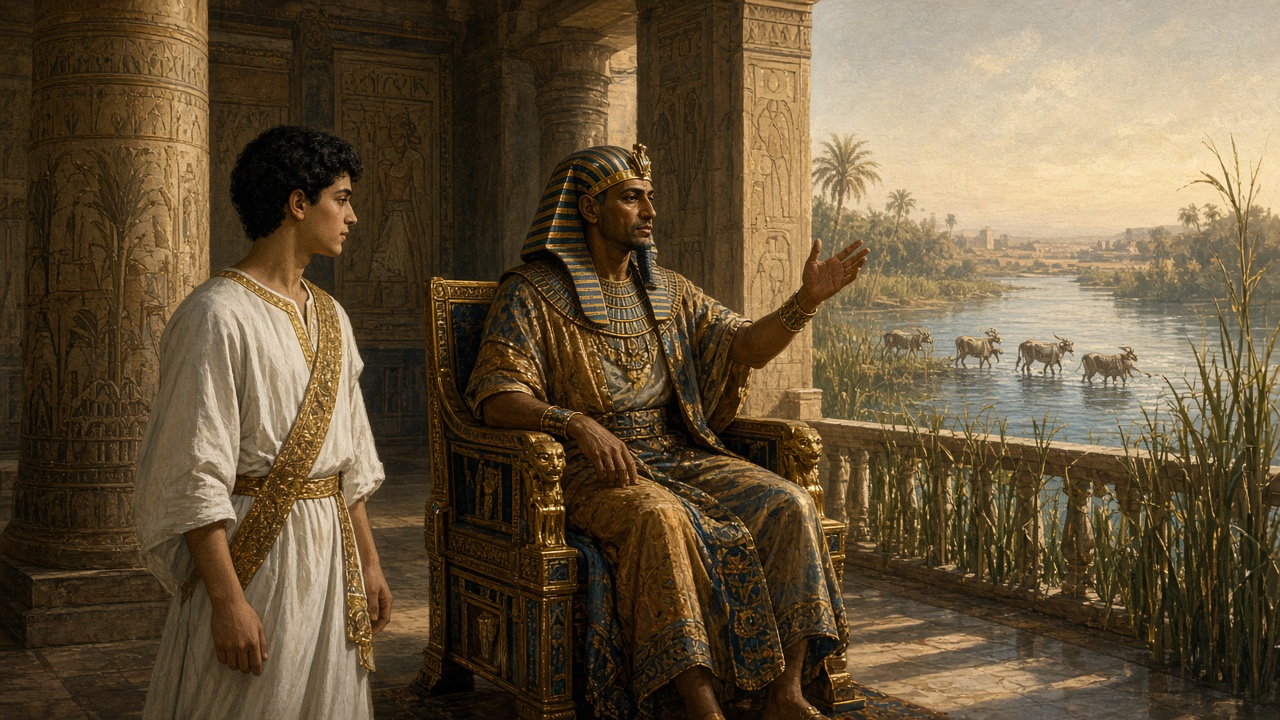
- The river beside which Pharaoh stands is the Nile. That name does not appear in Scripture; the Old Testament calls it Sihor, 'the black stream,' or simply 'the river,' as in this chapter.Sources: Nile · the Bible text itself
- Pharaoh gave Joseph Asenath, daughter of Potiphera, priest of On, as his wife. Easton's Bible Dictionary (1897) explains Asenath as an Egyptian name meaning 'gift of the sun-god.' On stood on the east bank of the Nile, a few miles north of Memphis and near Cairo, and was a great center of sun worship; the Septuagint and the Vulgate call it Heliopolis, 'city of the sun.'Sources: Asenath · On · the Bible text itself
- One chronology dates Joseph's promotion in Egypt to 1714 BC, the seven years of plenty from that same year, and the seven years of famine from 1707 BC.Sources: Joseph Promoted in Egypt · 7 years of plenty · 7 years of famine
Notes written with AI assistance from open sources (Theographic Bible Metadata, CC BY-SA 4.0; Easton’s Bible Dictionary, public domain) and reviewed before publishing.
Places in this chapter
- Nile · Today: Nile River · 31.465, 30.367 · verses 1, 2, 3, 17, 18, 19
- Egypt · 30.129, 31.308 · verses 8, 19, 29, 30, 33, 34, 36, 41, 43, 44, 45, 46, 48, 53, 54, 55, 56, 57
- Heliopolis · Today: Ain Shams · 30.129, 31.308 · verses 45, 50
Only places identified with high confidence are shown (90% or more according to the scholarly sources compiled by OpenBible). Period map: DARE (Digital Atlas of the Roman Empire), CC BY 4.0; modern map: © OpenStreetMap contributors; places: OpenBible.info (CC BY 4.0).
Credits and license for this translation
Uyojroner e Dios xeꞌ Tzꞌijbꞌabꞌir Tama e Onian Tiempo
The New Testament and Genesis, Ruth, Esther, and Jonah in the Chorti language of Guatemala
El Nuevo Testamento, Génesis, Rut, Ester y Jonás en Chortí, Guatemala
copyright © 1996, 2012, 2013, 2023 Wycliffe Bible Translators, Inc. and Evangel Bible Translators, International
Language: Chortí (Chorti)
Translation by: Evangel Bible Translators, International and Wycliffe Bible Translators
New Testament © 1996, 2012 Wycliffe Bible Translators, Inc.;
Old Testament © 2012, 2013, 2023 Evangel Bible Translators, International
This translation is made available to you under the terms of the
Creative Commons Attribution-Noncommercial-No Derivatives license 4.0.
You may share and redistribute this Bible translation or extracts from it in any format, provided that:
You include the above copyright and source information.
You do not sell this work for a profit.
You do not change any of the words or punctuation of the Scriptures.
Pictures included with Scriptures and other documents on this site are licensed just for use with those Scriptures and documents.
For other uses, please contact the respective copyright owners.
2023-08-23
Source: http://ebible.org/caa/ · eBible.org