Genesis 40
Uyojroner e Dios xeꞌ Tzꞌijbꞌabꞌir Tama e Onian Tiempo · Tap a verse to see its cross-references.
Conda e José uchecsu lo que war che e chateꞌ wayac
1Pues entonces conda numuy cora tiempo, ayan lo que cay unumse ubꞌa e rey tama e lugar Egipto umen que chateꞌ manobꞌ tuaꞌ cay uchiobꞌ lo que mabꞌambꞌan tut, inteꞌ era jax xeꞌ aquetpa tuaꞌ uyajcꞌu e vino tama uchꞌeu e rey, y inteꞌ jax xeꞌ aquetpa tuaꞌ uche e pan lo que ucꞌuxi e rey. 2Pues e rey qꞌuijna meyra taca e chateꞌ manobꞌ era. 3Y tamar era uyebꞌta ixiobꞌ esto tama e cárcel lo que ayan tama uyotot e capitán tuaꞌ e policia xeꞌ jax e lugar tiaꞌ macar e José ubꞌan. 4Entonces e capitán tuaꞌ e policia xeꞌ aquetpobꞌ tuaꞌ ucojcobꞌ e rey uyare e José tuaꞌ ucojco e chateꞌ manobꞌ era. Y bꞌan taca quetpobꞌ tama e cárcel meyra tiempo.
5Pues tama inteꞌ acbꞌar e chateꞌ manobꞌ cay waycꞌobꞌ inteꞌ intiobꞌ, inteꞌ man jax xeꞌ aquetpa ani tujor e manobꞌ xeꞌ uyajcꞌu e vino e rey, y inteꞌ jax xeꞌ aquetpa ani tujor e manobꞌ xeꞌ uyajcꞌu e pan e rey. Y chatertiobꞌ waycꞌobꞌ y inteꞌ inteꞌ wayac ayan lo que war che. 6Y conda sacojpa tama inteꞌ día tari e José tuaꞌ uwira e manobꞌ era, y uwira que war amerecnobꞌ meyra. 7Y tamar era e José uyubꞌi tuobꞌ y che:
—¿Tucꞌa tuaꞌ que war ixmerecna meyra sacojpox sajmi? che e José. 8Y ojron inteꞌ tujamobꞌ y che:
—Pues nen y nipiar era waycꞌon acbꞌar y mamajchi uyubꞌi uyareon tucꞌa war che cawayac era, chenobꞌ tin e macarobꞌ turobꞌ tama e cárcel. Entonces sutpa ojron e José y che:
—Pues jax taca e Dios xeꞌ unata uchecsu lo que war che inteꞌ wayac. che e José. Entonces e José uyubꞌi tuobꞌ tuaꞌ unata tucꞌa e wayac lo que uwirobꞌ.
9Entonces inteꞌ man era xeꞌ aquetpa ani tama ujor e manobꞌ xeꞌ uyajcꞌu e vino e rey, cay uchecsu tut e José lo que uwira tama uwayac y che:
—Pues tama niwayac inwira unojwir inteꞌ chꞌan 10xeꞌ ayan uxteꞌ ucꞌabꞌ. Y unojwir e chꞌan era war achujchuri y war anichiri, y unichirobꞌ sutpa quetpa bꞌan cocha urasimuir e uva conda war atacꞌa. 11Y nen qꞌuecher nimener uchꞌeu e rey tama nicꞌabꞌ, y war inyatzꞌi uyarar e uva tama e chꞌeu. Y nacpat era inturbꞌa e chꞌeu tama ucꞌabꞌ e rey, che e man era.
12Entonces ojron e José y che:
—Pues Niwinquirar Dios uwirsen lo que war che awayac. Y che cocha era: E uxteꞌ ucꞌabꞌ unojwir e chꞌan era war che que ayan uxteꞌ día. 13Entonces tama e uxteꞌ día era e rey cꞌani uturbꞌet tuaꞌ ipatna tacar otronyajr, y net tuaꞌ isutpa awajcꞌu uchꞌeu e rey xeꞌ ayan e vino tamar, bꞌan taca cocha cay ache. 14Pero conda awira que acꞌapa alocꞌoy imbꞌutz tunor era toit, acꞌajpesiquen tamar lo que inwaret y turbꞌan abꞌa tuaꞌ aquetpa incꞌun awirnar taniut, y aren e rey que turen tara y aren tuaꞌ ulocsen tama e cárcel. 15Pues nen xujchnen tama e lugar tuaꞌ tin e tuobꞌ uchꞌajnarir e Héber y taresnen esto tara tama e lugar Egipto, y motor conda yopen tara matucꞌa inche xeꞌ mabꞌambꞌan tuaꞌ ani inturbꞌana tama e cárcel era, che e José.
16Pues conda e man xeꞌ uturbꞌa ani e pan tama ucꞌabꞌ e rey cꞌapa uyubꞌi tunor lo que che e José tamar uwayac inteꞌ man era, cay uchecsu tut e José e wayac lo que uwira jaxir y che:
—Pues nen wayqꞌuen inwira que qꞌuecher nimener uxteꞌ bꞌiqꞌuit chiquiꞌ xeꞌ bꞌutꞌur taca e pan tama nijor. 17Y e chiquiꞌ xeꞌ cꞌatar tichan tama nijor bꞌutꞌur taca meyra sian pan xeꞌ aquetpa tuaꞌ inwajcꞌu e rey, pero cꞌotoy cora mut xeꞌ cay ucꞌuxiobꞌ tunor e pan lo que ayan tama e chiquiꞌ, che e man era.
18Entonces ojron e José y che:
—Pues awayac lo que cay awira war che cocha era: E uxteꞌ bꞌiqꞌuit chiquiꞌ lo que awira tama awayac war uchecsu que ayan uxteꞌ día. 19Entonces tama e uxteꞌ día era e rey cꞌani uyare cora ajcꞌamparobꞌ tuaꞌ ujuxiobꞌ ajor y tuaꞌ uchꞌubꞌetobꞌ tama inteꞌ teꞌ, y de allí axin watarobꞌ cora usij tuaꞌ ucꞌuxiobꞌ awerir, che e José uyare e man era.
20Pues e rey quetpa tuaꞌ utzꞌacse año tama e uxteꞌ día y tamar era cay nojqꞌuiniobꞌ taca tunor uyajcꞌamparobꞌ. Y achpa e rey tut tunor tin e turobꞌ tama e nojqꞌuin, y uyare tuaꞌ aloqꞌuesna tama e cárcel uman xeꞌ quetpa ani tujor tin e uyajcꞌu uchꞌeu e rey, y uyare tuaꞌ aloqꞌuesna uman xeꞌ quetpa ani tujor tin e uyajcꞌu e pan e rey ubꞌan. 21Pues e man xeꞌ quetpa ani tujor tin e uyajcꞌu e vino e rey uturbꞌa tuaꞌ apatna tacar otronyajr, y tamar era sutpa uyajcꞌu e vino e rey otronyajr, bꞌan cocha war ani uche. 22Pero e man xeꞌ quetpa ani tujor tin e uche e pan uyare tuaꞌ ajijtꞌa unuc y tuaꞌ achꞌubꞌna tama inteꞌ teꞌ, bꞌan taca cocha arobꞌna umen e José. 23Pero e man xeꞌ aquetpa tuaꞌ uyajcꞌu e vino e rey unajpes e José y matucꞌa uchecsu tut e rey.
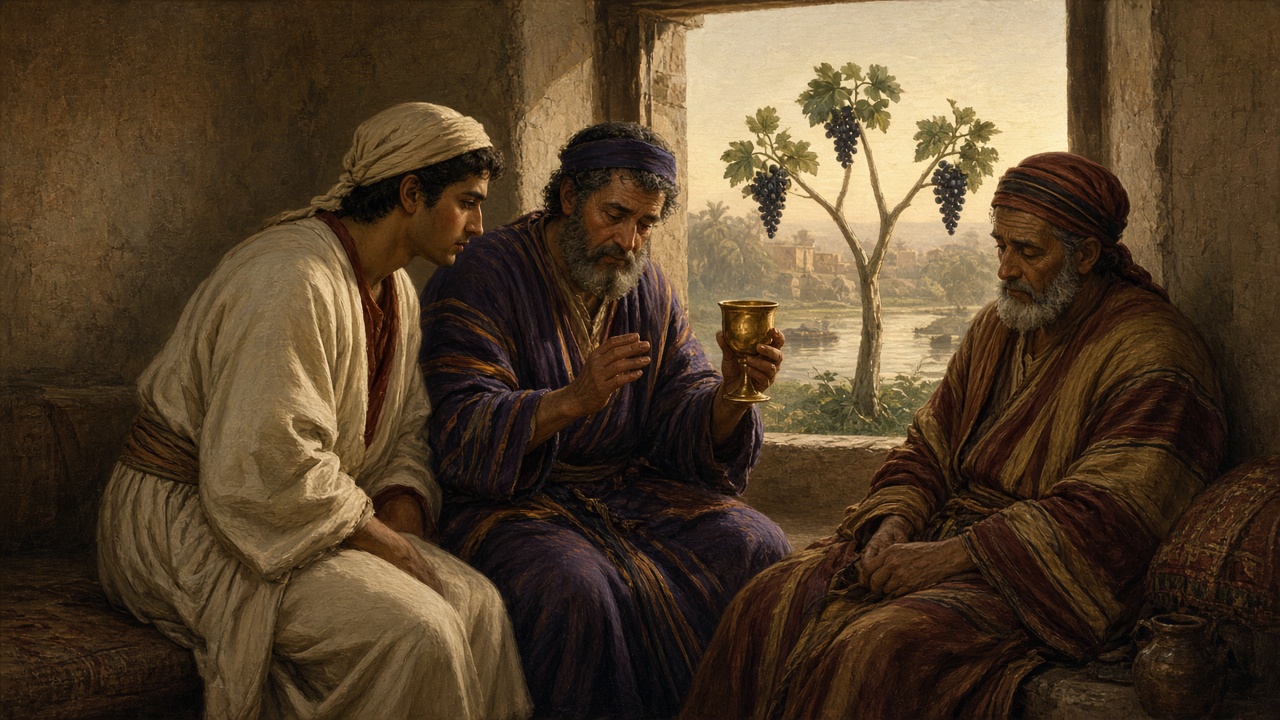
Did you know?
Dreams in Pharaoh's Prison
- Pharaoh was angry with two officers, the chief cupbearer and the chief baker, and put them in the house of the captain of the guard, the same prison where Joseph was confined. The captain assigned them to Joseph, who became their personal attendant.Sources: the Bible text itself
- On the same night the cupbearer and the baker each dreamed, and Joseph said that interpretations belong to God. He took the three branches and the three baskets to mean three days: Pharaoh would lift up the cupbearer's head and restore him, but lift off the baker's head and hang him on a tree. On the third day, Pharaoh's birthday, the king held a feast for his officials, restored the cupbearer, and hanged the baker.Sources: the Bible text itself
- Joseph asked the cupbearer to remember him and mention him to Pharaoh after his restoration. He said he had been kidnapped from the land of the Hebrews and had done nothing for which he should have been put in the dungeon. Easton's Bible Dictionary (1897) identifies the Pharaoh of Joseph's days as probably Apopi, or Apopis, the last of the Hyksos kings; some argue instead that Joseph came to Egypt later, under Thothmes III.Sources: the Bible text itself · Pharaoh (of Joseph)
Notes written with AI assistance from open sources (Theographic Bible Metadata, CC BY-SA 4.0; Easton’s Bible Dictionary, public domain) and reviewed before publishing.
Places in this chapter
Only places identified with high confidence are shown (90% or more according to the scholarly sources compiled by OpenBible). Period map: DARE (Digital Atlas of the Roman Empire), CC BY 4.0; modern map: © OpenStreetMap contributors; places: OpenBible.info (CC BY 4.0).
Credits and license for this translation
Uyojroner e Dios xeꞌ Tzꞌijbꞌabꞌir Tama e Onian Tiempo
The New Testament and Genesis, Ruth, Esther, and Jonah in the Chorti language of Guatemala
El Nuevo Testamento, Génesis, Rut, Ester y Jonás en Chortí, Guatemala
copyright © 1996, 2012, 2013, 2023 Wycliffe Bible Translators, Inc. and Evangel Bible Translators, International
Language: Chortí (Chorti)
Translation by: Evangel Bible Translators, International and Wycliffe Bible Translators
New Testament © 1996, 2012 Wycliffe Bible Translators, Inc.;
Old Testament © 2012, 2013, 2023 Evangel Bible Translators, International
This translation is made available to you under the terms of the
Creative Commons Attribution-Noncommercial-No Derivatives license 4.0.
You may share and redistribute this Bible translation or extracts from it in any format, provided that:
You include the above copyright and source information.
You do not sell this work for a profit.
You do not change any of the words or punctuation of the Scriptures.
Pictures included with Scriptures and other documents on this site are licensed just for use with those Scriptures and documents.
For other uses, please contact the respective copyright owners.
2023-08-23
Source: http://ebible.org/caa/ · eBible.org