Genesis 47
Yipma Genesis and New Testament · Tap a verse to see its cross-references.
Jaikopɨnɨdaka Peroyarɨ angyɨrɨꞌmaata yaaꞌ.
1Jozepɨyai gyaꞌmweraavɨ miꞌna wɨdaka Peroyaryawɨnna kaanna wɨna yaka wɨdaꞌ “Nɨmaamaangelyɨ nyaꞌmwerajɨ sara Kwaaka Gozanɨ mwaaihaꞌ.” Jozepɨyai Peroyarɨ wɨdakegaaꞌ gyaꞌmwera aꞌmwe daraai daraai dalyara Peroyare angevɨ mwaaleꞌ. Kamwaaleꞌ Peroyai wɨdɨna “Bewawɨnya yadɨvɨtaihɨlaka?” Sara kudaꞌ kumɨ wɨdeꞌ “Nenɨmaangei jɨlɨkyaawarya kyɨꞌdɨvalaꞌ nabaai nemɨ sara yɨꞌdɨvaidaanyainera. Kwaaka Kainanɨ nemɨre jɨlɨkyaawaryaraavɨne wapaaya mwarika. ‘Kwaaka Gozanɨ saba dɨmwaalyɨla!’ kanedaꞌgɨzɨ saba mwalaadennera.” Miꞌna kudeꞌ Peroyai Jozepɨyarɨ wɨdaꞌ “Gɨmaamaangelyɨ jaꞌmwerajɨ saraavɨ dutha! ‘Kwaaka Gozanɨ tewaanyaba dɨmwaalyɨla!’ ‘Wawɨnaangera pwara damwaaihava!’ daꞌgɨzɨ ‘Peroyare jɨlɨkyaawarya jɨꞌdɨvalyɨla!’ duthana!”
7Miꞌna dɨnagɨlyagaaꞌ Jozepɨyai ganɨmaangerɨ wɨjɨmaaꞌnyɨna yaka kaanna bɨna. Kaanna bɨna kyagi Peroyai Jaikopɨmɨ wanganaka wɨdaꞌ “Kwarame gara gara gwavɨlavaka?” Sara kudaꞌ Jaikopɨ wɨdaꞌ “Aꞌmwe neinyɨ kwarame naanga naanga (130) nyavɨlavaꞌ.” Wiꞌna wɨdaka “Kwarame kwalaalya gɨmɨ tewaanna mwaaihɨna gyathe Gotɨyai.” Sara wɨdaka sabadaasɨ kaanna wɨna yaꞌ. Nabaai Jozepɨyai kaanna wɨna yaka kwaaka tewaanyaba ganɨmaangelyɨ gyaꞌmwerajɨ saraavɨne wɨjaavɨna yaka wapaaya kumɨnyɨne wɨjaavɨna yaꞌ.
Aꞌmwe yuyarajɨ samɨlɨka Jozepɨyarɨ wapaaya mubyaaꞌ.
13Sagaaꞌ Kwaaka Kainanɨ Kwaaka Yɨzɨpɨ sabanyaai wapaaya kunegaakɨra. Aꞌmwemɨlɨka Jozepɨyarɨ wapaaya kamubeꞌ Jozepɨyai nɨgwia maaraka Peroyarɨna wɨjaavaꞌ. Sana sana yɨna yɨna yakegaaꞌ aꞌmwemɨlɨka Jozepɨyarɨ wɨdeꞌ “Nemɨ dahaaꞌ nɨgwia mwarika. Kunemɨlɨkanera. Mɨjɨka naanga balaꞌdaanyamɨlɨkanera. Wapaaya nejaama!” Tɨviꞌna kudeꞌ Jozepɨyai wɨdaꞌ “Sarɨmɨre jɨlɨkyaawarya kanyɨjaavapɨjɨ wapaaya yɨhɨzaavɨdeihɨlyɨra.” Sara kudaꞌ aꞌmwemɨlɨka jɨlɨkyaawarya maareva wɨjaavɨna kyeꞌ Jozepɨyai wapaaya wɨjaavɨna yaꞌ. Wapaaya wɨjaavɨna kyaꞌ kwarame pɨrɨꞌ kwavɨlavaꞌ aꞌmwemɨlɨka Jozepɨyaryabanna kaanna bɨna yeva wɨdeꞌ “Nɨgwiajɨ jɨlɨkyaawaryajɨ yuya mwariꞌ. Dahaaꞌ kunegaaꞌ mɨjɨka naangegaaꞌ nemɨre kwaakejɨ nemɨjɨ warɨꞌ. Wapaaya nyaꞌne witɨzɨla wiaꞌne kanejaavaꞌgɨzɨ yuya gɨzavaadera.” Aꞌmwemɨlɨka sara kudeꞌ Jozepɨyai Yɨzɨpɨ mwaalyaraavɨ wɨdɨna “Sarɨmɨre kwaakejɨ sarɨmɨjɨ sangihɨrɨ Peroyarɨne yɨhɨmubɨvanɨge nayaa jawɨrila! Wiaꞌne yɨhɨzaavanɨge dɨvurɨjɨla! Yawaka kyojɨ sarɨmɨ mɨlɨna yapɨjɨ gɨlya atina mihapɨjɨ gɨlya gave pɨrɨꞌ Peroyarɨne wɨmaarina jidesɨra. Sana sana witɨzɨla yuya jidengɨra. Gɨlya dawaai dawaalyangɨdaasɨ witɨzɨla nyaꞌne witɨzɨla wiaꞌne dɨmaaryidengyɨhɨlyɨra. Sarɨmɨresɨra.” Sara wɨdɨna kyaꞌ aꞌmwemɨlɨka yɨlaaya yɨna yeva wɨdaꞌ “Dahaaꞌ nemɨ mwalaadeinera. Peroyare wɨdayadaanyaina yɨlaaya mwalaadera.”
Jaikopɨ gannya gɨlaaya wakadevanna wɨjaaꞌ.
27Jaikopɨnɨdaka kwala naanga yɨmaꞌnyɨna kyeꞌ Gozanɨ mwaalakei Jaikopɨ gɨlyɨvɨta naangejɨyai mwaalaꞌ. Jaikopɨ kwarame 147 kwavɨlavaꞌ dara wanganakeꞌ “Ai, nɨmɨ aꞌmwe neinyɨ yarai balɨdeinyɨ daaka!” Daka Jozepɨyarɨ “Yarai dɨvama!” jaka wɨdɨna yaka wɨdaꞌ “Nɨmɨ kabalaꞌmujɨ Yɨzɨpɨ dava nanyakɨpɨka! Nɨmaamaangei warɨkeba dɨnyakideinyɨra.” Sara kudaꞌ Jozepɨyai “Naangeꞌ gɨthɨwana ‘Gɨnnya dadɨnyaba gwakɨdeꞌnanyɨra,’ ” wɨdaꞌ.
Did you know?
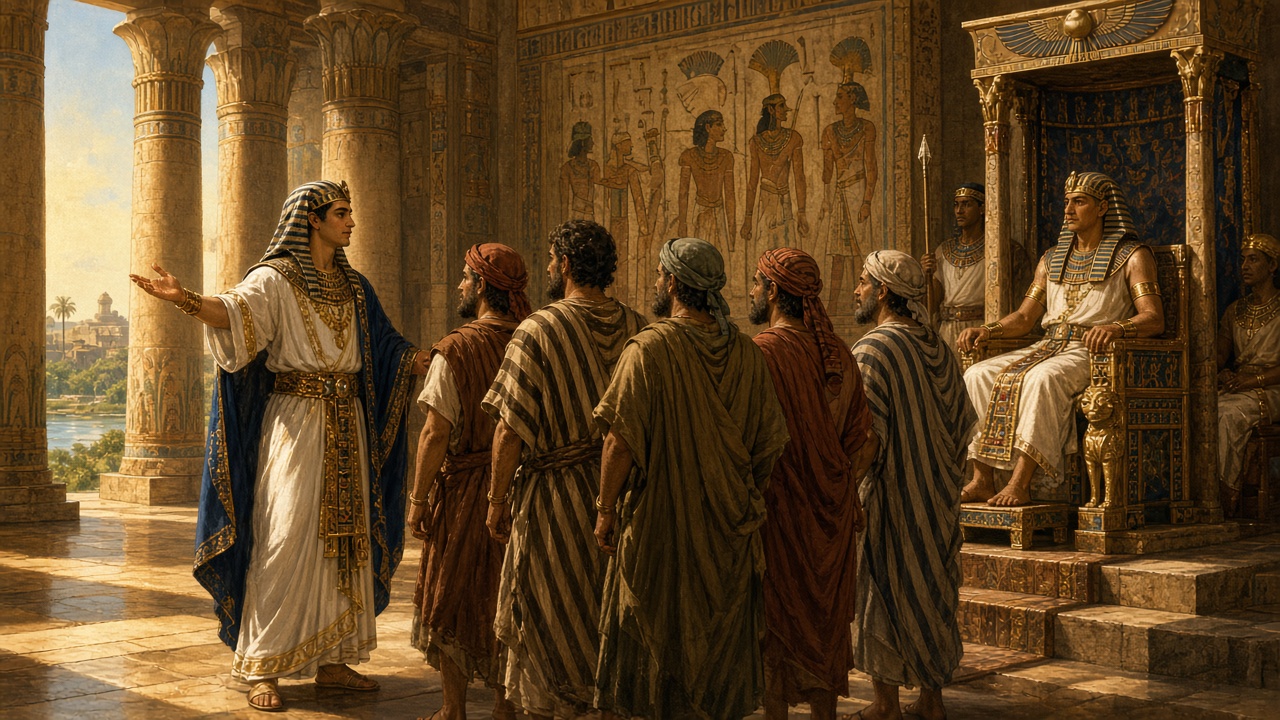
A Home in Goshen
- Joseph settled his father and brothers in Goshen, the region Pharaoh called the best part of the land. The same district is also called the land of Rameses; it lay east of the Nile, apparently not far from the royal residence, though the region is now desert.Sources: the Bible text itself · Goshen · Rameses
- When Pharaoh asked their occupation, Joseph’s brothers answered that they were shepherds, as their fathers had been, and they asked to stay in Goshen because the famine in Canaan had left no pasture for their flocks. Easton’s Bible Dictionary (1897) identifies the Pharaoh of Joseph’s day as probably Apopi, the last Hyksos king, and notes that shepherds were an abomination to the native Egyptians, while these Asiatic shepherds were welcomed by the Hyksos; some instead place Joseph in the reign of Thothmes III, long after the Hyksos.Sources: the Bible text itself · Pharaoh (of Joseph)
- As the famine exhausted Egypt and Canaan, Joseph took payment first in money, then in livestock, and finally in land, so that the fields became Pharaoh’s and the people were reduced to servitude. He did not take the priests’ land, since Pharaoh already supplied their rations, and he established that a fifth of the produce belonged to Pharaoh.Sources: the Bible text itself
Notes written with AI assistance from open sources (Theographic Bible Metadata, CC BY-SA 4.0; Easton’s Bible Dictionary, public domain) and reviewed before publishing.
Places in this chapter
- Canaan · 32.767, 35.333 · verses 1, 4, 13, 14, 15
- Goshen · Today: Goshen 1 · 30.799, 31.834 · verses 1, 4, 6, 27
- Egypt · 30.129, 31.308 · verses 4, 6, 11, 13, 14, 15, 20, 21, 26, 27, 28, 29, 30
Only places identified with high confidence are shown (90% or more according to the scholarly sources compiled by OpenBible). Period map: DARE (Digital Atlas of the Roman Empire), CC BY 4.0; modern map: © OpenStreetMap contributors; places: OpenBible.info (CC BY 4.0).
Credits and license for this translation
Yipma Genesis and New Testament
Genesis and The New Testament in the Yipma/Baruya language
Buk Stat na Nupela Testamen long tokples Yipma long Niugini
copyright © 1993, 1994 Wycliffe Bible Translators, Inc.
Language: Yipma (Baruya)
Translation by: Wycliffe Bible Translators
Video recording © The Jesus Film, a project of Cru.
This translation is made available to you under the terms of the
Creative Commons Attribution-Noncommercial-No Derivatives license 4.0.
You may share and redistribute this Bible translation or extracts from it in any format, provided that:
You include the above copyright and source information.
You do not sell this work for a profit.
You do not change any of the words or punctuation of the Scriptures.
Pictures included with Scriptures and other documents on this site are licensed just for use with those Scriptures and documents.
For other uses, please contact the respective copyright owners.
2013-02-07
Source: http://png.bible/byr/ · eBible.org