Genesis 48
Yipma Genesis and New Testament · Tap a verse to see its cross-references.
Jaikopɨ Yɨpɨremɨna Manaazarɨna saraarɨ tewaanna wɨjaaꞌ.
1Pɨgaaꞌ sagaaꞌ aꞌmwemɨlɨꞌ Jozepɨyarɨ wɨdaꞌ “Gɨmaamaangei nabalɨnakei mwaalɨꞌ.” Sara wɨꞌnaka Jozepɨyalyɨ gawaalɨvaangeraalyɨ “Nemɨ Jaikopɨmɨ wanganaana!” deva kaanna wɨna yeꞌ. Jozepɨyarɨ gawaalɨꞌ pwai Manaazai pwai Yɨpɨremɨ mwaalagi. Jaikopɨmɨ angyɨrɨꞌmaata kyeꞌ Jaikopɨ Jozepɨyarɨ wɨdaꞌ “Anga Betelɨ Kwaaka Kainanɨ mannɨkeba Gotɨyai nɨmɨnyaba wɨlaabaka nyɨdaꞌ ‘Gɨmɨre kaimɨraaya kwala naanga gɨzaavɨdeinyɨra. Nabaai kumɨnyɨne gazagaasagaaꞌ Kwaaka Kainanɨ wɨjaavɨdeinyɨ,’ sara nyɨdaꞌ. Jozepɨyaigɨ gɨmɨre kaimɨraayaraai Yɨzɨpɨ saba yawakɨnagɨnyaraai nɨmɨnneraalyɨra. Yɨpɨremɨjɨ Manaazalyɨ saraarɨ nyɨmakama! Kɨrɨmɨnyɨ tewaanna wɨdɨdeinyɨ.”
10Yɨzɨrelɨ aꞌmwe nei tɨnna jɨhɨnna wiadaaꞌnyɨ mwaalɨna yaꞌ. Yɨzɨrelɨ sara kudaꞌ Jozepɨyai Yɨpɨremɨjɨ Manaazalyɨ saraarɨ yosɨgalamakuna kyaꞌ Yɨzɨrelɨ galamujɨꞌna, yɨlaaya marina yaka Jozepɨyarɨ wɨdaꞌ “ ‘Jozepɨyai pɨgaaꞌ magwanganyadɨnyainyɨra,’ dena saꞌ Gotɨyai sara kyaꞌ gɨmɨjɨ kaimɨraayaraalyɨ saihɨrɨ sara yɨhwangamanɨge.” Miꞌna kudaꞌ Jozepɨyai gamɨre sɨraanga Manaazarɨ Yɨzɨrelɨmɨre angasɨrɨ wɨmwaaihɨna, Yɨpɨremɨmɨ kwanaamimagɨ wɨmwaaihɨna yaꞌ. Wɨmwaaihɨna kyaꞌ Yɨzɨrelɨ asɨraai wovihɨralɨmwagaꞌnyɨna yaꞌ kaimaleraarɨ. Sara kyaꞌ Jozepɨ dara wanganakeꞌ “Ai, nɨmware angasi dɨviyarɨ dathathɨwagalɨmwagarɨka!” Dɨna yaka gamɨre angasi lɨmwanna yaka wɨdaꞌ “Manaazai sɨraangelyɨra. Gamɨnyɨ angasɨlyɨ dɨlɨmwagaka!” Kudaꞌ Yɨzɨrelɨ wɨdaꞌ “Aawana, kunya yawɨꞌmanɨgeinyɨra. Manaazare kaimɨraaya kwala naanga yɨrɨvadengɨra. Saꞌ Yɨpɨremɨre kwala naanga naanga yɨrɨvadengɨra.” Nabaai Yɨzɨrelɨ wɨdaꞌ “ ‘Gotɨyai Evɨraamɨjɨ Aazakɨjɨ nɨmɨjɨ sainaavɨ tewaanna sara neyakabaaibɨꞌ kaimɨraayaraarɨ tewaanna sara wiadelyɨra,’ yɨhɨthɨvanɨge. Jozepɨyaigɨ nɨmɨ dɨvi maalɨkegaaꞌ balɨdera. Sarɨmɨnɨdakaavihɨlyɨ Gotɨyalyɨ saihi dɨmwaalyideihɨlyɨra. Gotɨyai sarɨmɨ Kwaaka Kainanɨna ayɨna makuna yɨhyadelyɨra. Kwaaka pɨba Amoyaraavɨreba kuka maarena kwaaka saba gɨzaawa. Gɨmɨresɨra. Jaꞌmweraavɨreꞌ mɨka.”
Did you know?
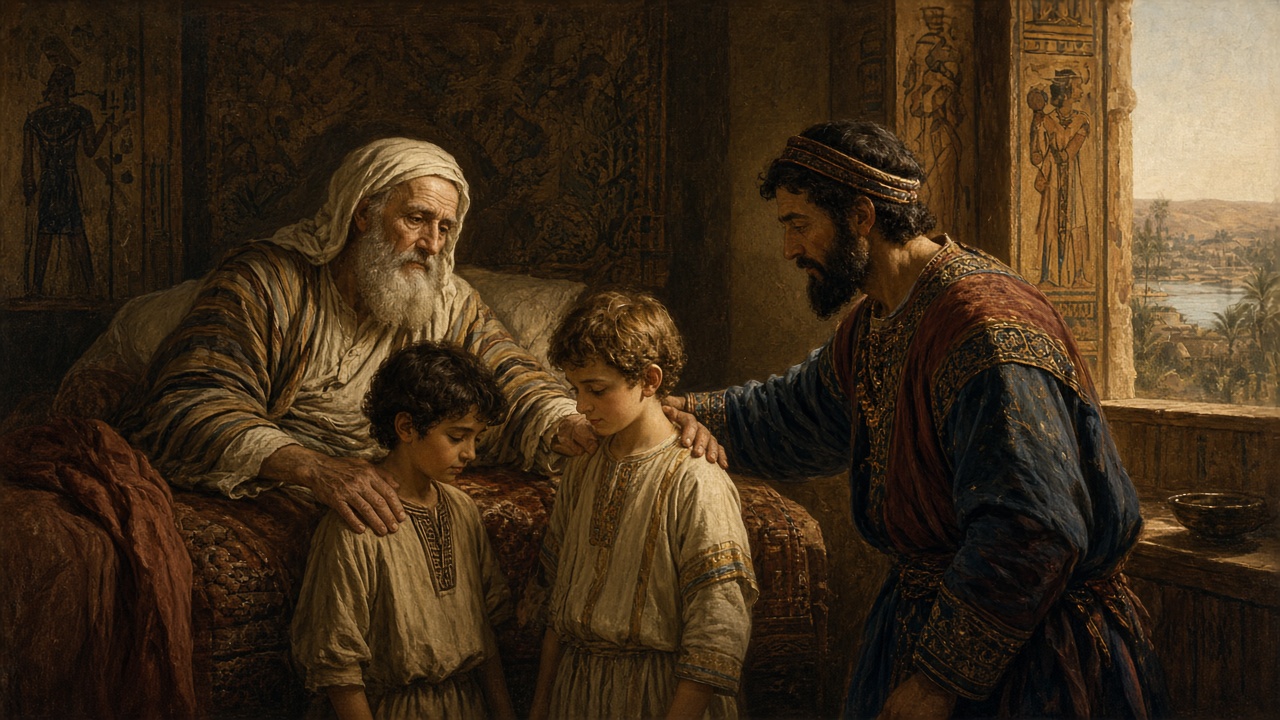
Adoption and Blessing of Ephraim and Manasseh
- Jacob reckons Joseph’s two sons, born to him in Egypt, as his own, on a level with Reuben and Simeon, Leah’s sons. Children born to Joseph after them were to remain Joseph’s, and were to be called by their brothers’ names in the territory they inherited.Sources: the Bible text itself · Manasseh (son of Joseph) · Reuben · Simeon
- Manasseh was the elder son and Ephraim the younger, born in Egypt. The name Ephraim means double fruitfulness, because God had made him fruitful in the land of his affliction. Though Israel could hardly see for age, he crossed his hands, laid his right hand on Ephraim, and insisted that the younger brother would be greater.Sources: the Bible text itself · Ephraim · Manasseh (son of Joseph)
- Jacob recalls that God Almighty appeared to him at Luz in the land of Canaan and blessed him there. Luz was the ancient name of a royal Canaanite city near Bethel, where Jacob halted and received a prophetic vision. He also remembers Rachel, Joseph’s mother, who died to his sorrow on the way back from Paddan—a name found only in this verse, for Padan-aram—and whom he buried beside the road to Ephrath, that is, Bethlehem.Sources: the Bible text itself · Luz · Paddan · Rachel
Notes written with AI assistance from open sources (Theographic Bible Metadata, CC BY-SA 4.0; Easton’s Bible Dictionary, public domain) and reviewed before publishing.
Places in this chapter
- Canaan · 32.767, 35.333 · verses 3, 4, 7, 21
- Luz · Today: Beitin · 31.923, 35.241 · verse 3
- Egypt · 30.129, 31.308 · verses 5, 9
- Bethlehem · 31.704, 35.208 · verse 7
- Ephrath · Today: Bethlehem · 31.704, 35.208 · verse 7
Only places identified with high confidence are shown (90% or more according to the scholarly sources compiled by OpenBible). Period map: DARE (Digital Atlas of the Roman Empire), CC BY 4.0; modern map: © OpenStreetMap contributors; places: OpenBible.info (CC BY 4.0).
Credits and license for this translation
Yipma Genesis and New Testament
Genesis and The New Testament in the Yipma/Baruya language
Buk Stat na Nupela Testamen long tokples Yipma long Niugini
copyright © 1993, 1994 Wycliffe Bible Translators, Inc.
Language: Yipma (Baruya)
Translation by: Wycliffe Bible Translators
Video recording © The Jesus Film, a project of Cru.
This translation is made available to you under the terms of the
Creative Commons Attribution-Noncommercial-No Derivatives license 4.0.
You may share and redistribute this Bible translation or extracts from it in any format, provided that:
You include the above copyright and source information.
You do not sell this work for a profit.
You do not change any of the words or punctuation of the Scriptures.
Pictures included with Scriptures and other documents on this site are licensed just for use with those Scriptures and documents.
For other uses, please contact the respective copyright owners.
2013-02-07
Source: http://png.bible/byr/ · eBible.org