Micah 5
Buka Tabuna Tefadi · Tap a verse to see its cross-references.

About this book
About Micah
- According to the superscription, as Easton's Bible Dictionary (1897) records it, Micah exercised his office in the reigns of Jotham, Ahaz, and Hezekiah. Easton offers two ways of reckoning that ministry: from the beginning of Jotham's reign to the end of Hezekiah's (B.C. 759-698), about fifty-nine years, or from Jotham's death to Hezekiah's accession (B.C. 743-726), only sixteen years.Sources: Easton: Micah, Book of
- Easton's entry on Micah calls him the Morasthite, to distinguish him from Micaiah the son of Imlah. It describes him as a prophet of Judah, a contemporary of Isaiah, and a native of Moresheth of Gath, and notes that very little is known of the circumstances of his life.Sources: Micah
- The kings named in the superscription ruled Judah in succession. Easton says that Jotham, son of Uzziah, reigned in the fear of God and prospered; that Ahaz turned to idolatry and appealed to Tiglath-pileser of Assyria against Rezin of Damascus and Pekah of Israel; and that Hezekiah, Ahaz's son, carried out a reformation to abolish idolatry in Judah, including worship of the bronze serpent.Sources: Jotham · Ahaz · Hezekiah
- Easton's Bible Dictionary (1897) places the book sixth among the so-called minor prophets and describes three sections, each opening with a rebuke, "Hear ye," and closing with a promise: chapters 1-2; chapters 3-5, addressed especially to the princes and heads of the people; and chapters 6-7, in which Jehovah is represented as holding a controversy with his people. The whole concludes with a song of triumph over the great deliverance the Lord will achieve for his people.Sources: Easton: Micah, Book of
- Easton notes that the book opens with words also spoken by Micaiah the son of Imlah: "Hearken, O people, every one of you." He records that the prediction in Micah 5:2 about the place where Christ should be born is quoted in Matthew 2:6, and lists further links: Micah 5:2 with John 7:42, Micah 7:6 with Matthew 10:21, 35-36, and the closing verse, Micah 7:20, with the song of Zacharias in Luke 1:72-73.Sources: Easton: Micah, Book of
Notes written with AI assistance from open sources (Theographic Bible Metadata, CC BY-SA 4.0; Easton’s Bible Dictionary, public domain) and reviewed before publishing.
Ai Betelehem haba Tau Famwahuli ya Tubu
1Yelusalem dodogamiu! Emi hiyala tataudi au yoga gogondima.
Nuꞌu haisa edi hiyala tataudi sa gana panpanda!
Isalaela edi baꞌisa haba sa duhu mahanoi!
2Yaubada iyebom,
Betelehem Efalata,
Diuda nuꞌuna ganahewana yai mate
um taon kiukiu,
na ai ganahewam
haba Isalaela edi baꞌisa ya tubu,
wahawahana yo ena sulu mate
beyabeyana haꞌa amaiteꞌi
sa miyamiya ya laoma bee–, aho te.
3Yaubada haba ena dodoga Isalaela
ya sana mulimuliyedi ya lau ee–, ana lahai ya mahano,
mate waihin hesa, natuna taumoho haba ya yosi.
Ai mulina, gwama te, ana boga
nuꞌu hudoꞌi - hudoꞌi yai haba sa fuyoma,
ma afa efadi sa faꞌoigogo esega,
edi ai tanohi.
4Yena ya laoma, Guyau Yaubada
ena adidili yo ena faꞌatiti haba ya felen.
Be ena dodoga haba ya tanuwagaidi.
Dodoga haba sa miya gwaugwau,
paꞌana tanoꞌubu dodogadi haba sa faꞌatitiyen.
Did you know?
The Ruler from Bethlehem
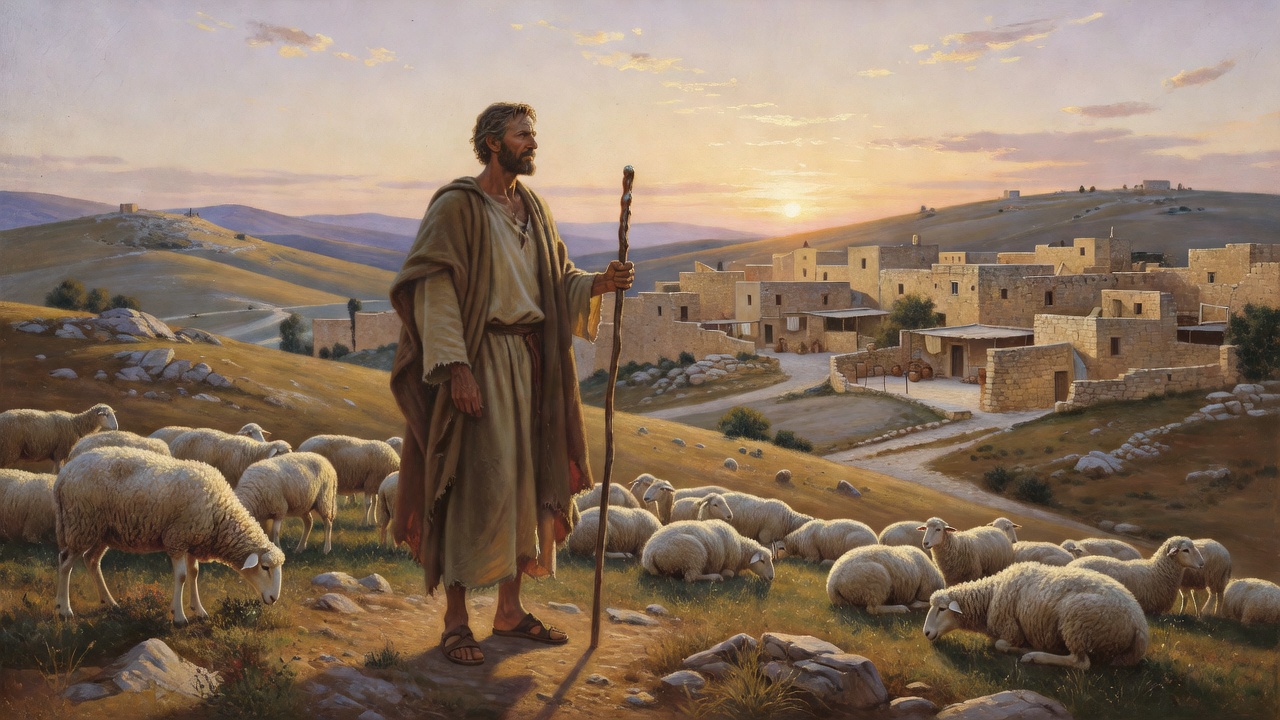
- Bethlehem Ephrathah was the ancient name for Bethlehem in Judah, where David spent his youth. Although it was considered small among the clans of Judah, the text identifies it as the origin of a future ruler who will shepherd his flock in the strength of the Lord.Sources: Bethlehem Ephrathah · the Bible text itself
- The chapter parallels Assyria with the land of Nimrod. In biblical tradition, Nimrod was a descendant of Cush who founded his kingdom at Babel, and the land of Nimrod served as an ancient designation for Assyria or Shinar.Sources: Nimrod · Nimrod · the Bible text itself
Notes written with AI assistance from open sources (Theographic Bible Metadata, CC BY-SA 4.0; Easton’s Bible Dictionary, public domain) and reviewed before publishing.
Places in this chapter
- Jerusalem · 31.777, 35.234 · verse 1
- Bethlehem · 31.704, 35.208 · verse 2
- Assyria · 36.359, 43.153 · verses 5, 6
- Nimrod · Today: Assyria · 36.359, 43.153 · verse 6
Only places identified with high confidence are shown (90% or more according to the scholarly sources compiled by OpenBible). Period map: DARE (Digital Atlas of the Roman Empire), CC BY 4.0; modern map: © OpenStreetMap contributors; places: OpenBible.info (CC BY 4.0).
Credits and license for this translation
Buka Tabuna Tefadi
Mark, Acts, and selected excerpts of the Old Testament in the Buhutu language of Papua New Guinea
Buk Baibel long tokples Buhutu long Niugini
copyright © 2015 Wycliffe Bible Translators, Inc.
Language: Buhutu
Translation by: Wycliffe Bible Translators
This translation is made available to you under the terms of the
Creative Commons Attribution-Noncommercial-No Derivatives license 4.0.
You may share and redistribute this Bible translation or extracts from it in any format, provided that:
You include the above copyright and source information.
You do not sell this work for a profit.
You do not change any of the words or punctuation of the Scriptures.
Pictures included with Scriptures and other documents on this site are licensed just for use with those Scriptures and documents.
For other uses, please contact the respective copyright owners.
2015-10-06
Source: http://png.bible/bxh/ · eBible.org