Jonah 4
Buka Tabuna Tefadi · Tap a verse to see its cross-references.
Diyona ya Manabala, na Yaubada ya Nuwatohatoha
1Nuwatuhuna ni Diyona hige i fanuha, be ya famala ena manabala.
2Yo fede, ya lauꞌuꞌula, iyen,
Guyau, doha haꞌa E falibam, fuyana hola hige egu nuꞌu ya lau afulen mate, bena doha ite wa ginauli?
Logena be E gela E lau Sipani!
E siba mate, um tauꞌulu yo nuwatohatoha Yaubadana. Fuya ouꞌouli wa nuwa talu, wa tauꞌulu, ma nuwa ofi fahim, yo fuya ouꞌouli hinaga nuwam wa bui, be ibege heyaheyaya u ginaulidi.
3Guyau, aho te, E falibam ibe wa lau funuhigu mate, ya loholoho!
4Yaubada wa, Diyona alinana ya bui, iyen,
Em dudulai somo be wa manabala?
5Diyona ya finahe hasa duhu balabalamumuna ganamulina yai ya taꞌai.
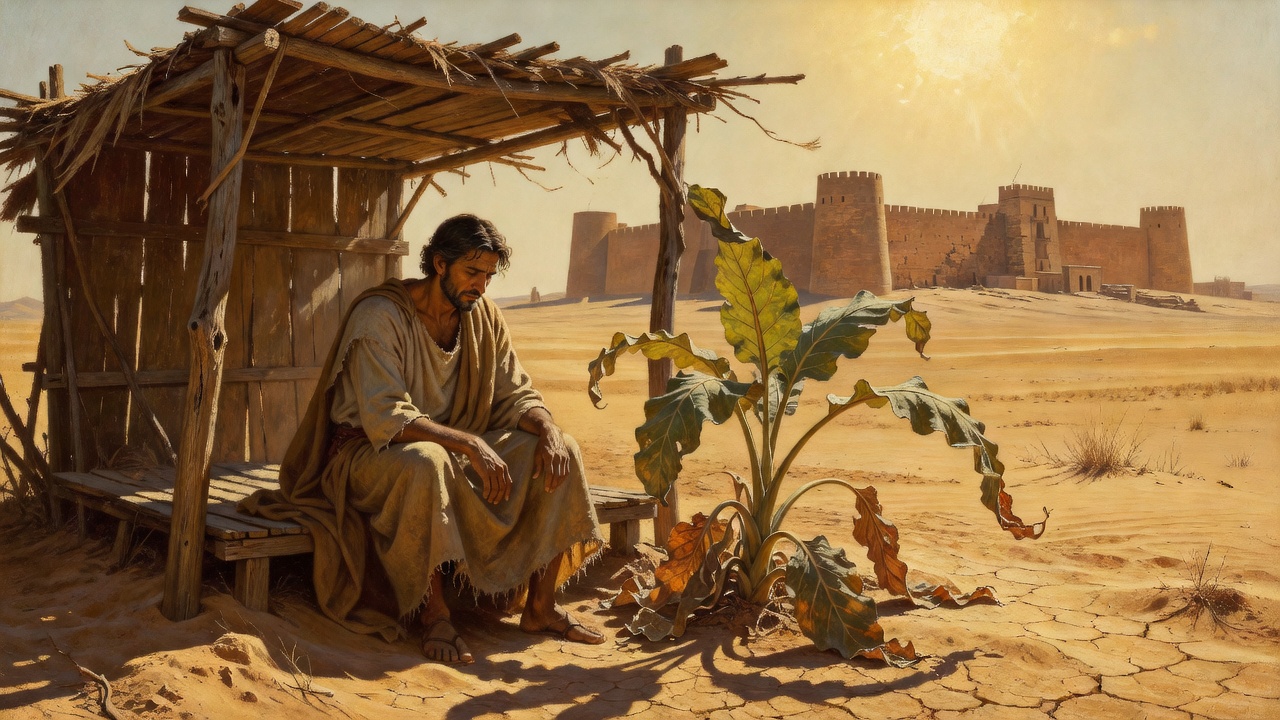
Mulina yai ena gwaꞌu ya pei, be ya anlogulogu. Habahim ya bagibagi haba somo Ninewa ai lisidi ya tubu bena ya ita. |alt="Diyona ya anlogulogu" src="32_Jon_04_03_RG.jpg" size="col" loc="Jonah 4:5-7-" ref="4:5"
6Habahim, Yaubada ya liba be mahina hudoꞌi ya in hasa, be Diyona ya faꞌanlogulogu, haba kamnana ya loholoho. Diyona nuwana ya amna wananaha mahina lisina yai.
7Bobonna ya ifi tatatali, Yaubada ena nuwatuhu yai, mwatamwata mahina wa ya faheyaya, yo fede, ya peꞌi.
8Maihala haꞌa ya kepama, Yaubada bolibolima gigibwalina ya fatowa, yo maihala gigibwalina Diyona kuluna ya sinai, be egoba ya tau peꞌipeꞌi, na iyen,
Ibe E peꞌi mate, ya loholoho.
9Yo fede, Yaubada ya libalau lisina, iyen,
Em dudulai somo be mahina te wa luluwen?
Alinana Diyona ya bui, iyen,
Maꞌegu dudulai be E manabala. Manabalana ni, ibe ya kamfunuhigu!
10Yaubada ya libalau lisina, iyen,
Mahina ni maihona esega ganahewana yai ya in, na bobonna ya peꞌi. Um hige somo u ginauli lisina yai, yo hige u faꞌin.
11Egu nuwatohatoha laꞌina haba doha somo, Ninewa duhu balabalamumuna ni ai lisidi? In moho ganahewana yai mate, dodoga loholohodi 120,000 ya diꞌoi, yo edi yosiyosi hinaga oulina doha.
Did you know?
Jonah's Anger and God's Compassion
- Jonah admits that he originally attempted to flee toward Tarshish precisely because he knew God is gracious, compassionate, slow to anger, and relents from sending disaster. His distress arose when God chose to spare Nineveh rather than destroy it.Sources: the Bible text itself · Tarshish
- Nineveh, the flourishing capital of the Assyrian empire, is described at the conclusion of the book as home to more than 120,000 people who cannot discern between their right and left hand, along with many cattle. God highlights this massive population to contrast divine compassion with Jonah's concern for a single withered plant.Sources: the Bible text itself · Nineveh
Notes written with AI assistance from open sources (Theographic Bible Metadata, CC BY-SA 4.0; Easton’s Bible Dictionary, public domain) and reviewed before publishing.
Places in this chapter
- Nineveh · 36.359, 43.153 · verse 11
Only places identified with high confidence are shown (90% or more according to the scholarly sources compiled by OpenBible). Period map: DARE (Digital Atlas of the Roman Empire), CC BY 4.0; modern map: © OpenStreetMap contributors; places: OpenBible.info (CC BY 4.0).
Credits and license for this translation
Buka Tabuna Tefadi
Mark, Acts, and selected excerpts of the Old Testament in the Buhutu language of Papua New Guinea
Buk Baibel long tokples Buhutu long Niugini
copyright © 2015 Wycliffe Bible Translators, Inc.
Language: Buhutu
Translation by: Wycliffe Bible Translators
This translation is made available to you under the terms of the
Creative Commons Attribution-Noncommercial-No Derivatives license 4.0.
You may share and redistribute this Bible translation or extracts from it in any format, provided that:
You include the above copyright and source information.
You do not sell this work for a profit.
You do not change any of the words or punctuation of the Scriptures.
Pictures included with Scriptures and other documents on this site are licensed just for use with those Scriptures and documents.
For other uses, please contact the respective copyright owners.
2015-10-06
Source: http://png.bible/bxh/ · eBible.org