Zechariah 9
Buka Tabuna Tefadi · Tap a verse to see its cross-references.

About this book
About Zechariah
- Easton's Bible Dictionary (1897) presents Zechariah as a prophet of Judah, the eleventh of the twelve minor prophets, and, like Ezekiel, of priestly descent. He calls himself the son of Berechiah, while Ezra calls him the son of Iddo, whom Easton identifies as his grandfather. Easton dates the start of his prophetic work to the second year of Darius, 520 B.C., about sixteen years after the first company returned from exile, and notes that he was a contemporary of Haggai.Sources: Easton: Zechariah · Zechariah
- Zechariah addressed people who had returned from exile. Zerubbabel, also known by the Persian name Sheshbazzar, led the first returning company and, in the second year after the return, built an altar and laid the temple foundation on the ruins of the house destroyed by Nebuchadnezzar. Joshua, son of Jozadak, was high priest under Zerubbabel, and Easton says the night visions were meant to console these returned exiles and stir up hope.Sources: Easton: Zechariah · Zerubbabel · Joshua
- Easton divides the book into two parts, chapters 1-8 and chapters 9-14. The first opens with a preface recalling the nation's past as a solemn warning, then eight visions in a single night and the symbolic crowning of Joshua; chapters 7 and 8, given two years later, answer whether mourning for the city's destruction should continue and encourage the people with the assurance of God's presence and blessing. The second part bears no date. Easton thinks a considerable interval separates it from the first and describes its two burdens as God's dealings down to the Advent and as glory, final conflict, and triumph in what he calls the latter day.Sources: Easton: Zechariah
- Easton explains the name Zechariah as meaning that Jehovah is renowned or remembered. A notable scene is the symbolic crowning of Joshua; Easton reads it as showing how the kingdoms of the world become the kingdom of God's Christ. Helem, named in Zechariah 6:10, is identified as one who returned from Babylon.Sources: Easton: Zechariah · Helem · Joshua
Notes written with AI assistance from open sources (Theographic Bible Metadata, CC BY-SA 4.0; Easton’s Bible Dictionary, public domain) and reviewed before publishing.
Kin ena Fuyoma
9Yelusalem dodogamiu!
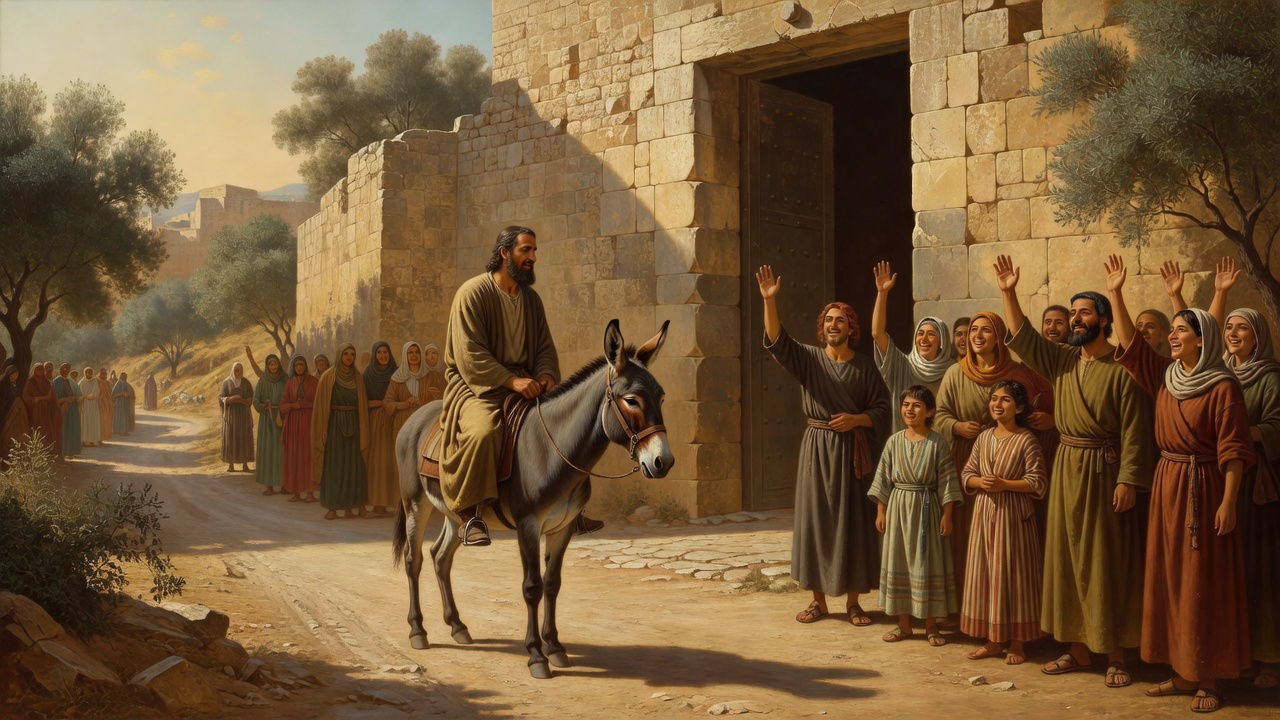
Nuwamiu ti amna yo au yoga laꞌilaꞌi.
Ami ita! Emi baꞌisa ya laoma lisimiu.
Ena laulau sa dudulai
yo waiyunu ya sai tawatawandi yo ya lei hafihafitidi.
Ya nuwa lidilidi be donki gubugubufwauna ya awai.
10Guyau iyen,
Yau haba saliyoti Isalaela yai E kamfahidi yo hiyala hosidi Yelusalem yai haba E abidi. Kukupidu hiyala yai sa fapaisowadi haba sa tapwaipwai. Em fuya tanuwaga yai, haba nuꞌu haisa ma afa haidadi sa fanuwa esega. Em Aba Baꞌisa mate gabogabo yai te ya fatubu ya lau ee–, gabogabo hahaisa yai, yo Ifeleti Hoꞌowana ya lau ee–, tanohi ana sigasiga.
Did you know?
Judgment on Nations and the Coming Peaceful King
- The oracle describes Tyre amassing silver like dust and gold like dirt before its fortifications and wealth are cast into the sea. Historically, Tyre was a dominant Phoenician coastal city whose merchants navigated the Mediterranean and gathered immense commercial wealth from distant colonies into its storehouses.Sources: Tyre · the Bible text itself
- Zechariah foretells judgment upon Philistine coastal cities including Gaza, Ashkelon, Ashdod, and Ekron, but notes that Ekron would become like a clan in Judah. Ekron was the northernmost of the five major Philistine cities and long stood as a distinct neighboring power before this prophetic vision of assimilation.Sources: Ekron · the Bible text itself
- The text calls the Daughter of Zion to celebrate the arrival of a righteous king who rides a young donkey and disarms the war chariots and horses of Ephraim and Jerusalem. Zion was the fortified southeastern hill of Jerusalem where David built his citadel, representing the royal center of the nation.Sources: Zion · the Bible text itself
Notes written with AI assistance from open sources (Theographic Bible Metadata, CC BY-SA 4.0; Easton’s Bible Dictionary, public domain) and reviewed before publishing.
Places in this chapter
- Aram · 33.511, 36.306 · verse 1
- Damascus · 33.511, 36.306 · verses 1, 2
- Hamath · Today: Hama · 35.136, 36.750 · verse 2
- Sidon · Today: Sandikli archaeological site in Sidon · 33.561, 35.372 · verse 2
- Tyre · 33.271, 35.196 · verses 2, 3, 4, 5
- Ashkelon · Today: Tel Ashkelon · 31.664, 34.546 · verse 5
- Ekron · Today: Tel Miqne · 31.777, 34.852 · verses 5, 7
- Gaza · Today: Tell Harube · 31.504, 34.464 · verse 5
- Ashdod · Today: Tel Ashdod · 31.757, 34.658 · verse 6
- Philistia · 31.664, 34.546 · verse 6
- Jerusalem · 31.777, 35.234 · verses 9, 10
- Zion · Today: Jerusalem · 31.777, 35.234 · verses 9, 13
- Euphrates · Today: Euphrates River · 31.004, 47.442 · verse 10
- Greece · 37.972, 23.727 · verse 13
Only places identified with high confidence are shown (90% or more according to the scholarly sources compiled by OpenBible). Period map: DARE (Digital Atlas of the Roman Empire), CC BY 4.0; modern map: © OpenStreetMap contributors; places: OpenBible.info (CC BY 4.0).
Credits and license for this translation
Buka Tabuna Tefadi
Mark, Acts, and selected excerpts of the Old Testament in the Buhutu language of Papua New Guinea
Buk Baibel long tokples Buhutu long Niugini
copyright © 2015 Wycliffe Bible Translators, Inc.
Language: Buhutu
Translation by: Wycliffe Bible Translators
This translation is made available to you under the terms of the
Creative Commons Attribution-Noncommercial-No Derivatives license 4.0.
You may share and redistribute this Bible translation or extracts from it in any format, provided that:
You include the above copyright and source information.
You do not sell this work for a profit.
You do not change any of the words or punctuation of the Scriptures.
Pictures included with Scriptures and other documents on this site are licensed just for use with those Scriptures and documents.
For other uses, please contact the respective copyright owners.
2015-10-06
Source: http://png.bible/bxh/ · eBible.org