Genesis 9
Luda yã takada kũ Bisã yão · Tap a verse to see its cross-references.
Luda bàka kunna kũ Nuhuo
1Akũ Luda arubarikaa dà Nuhugu kũ a nɛ́nↄ à pìńnɛ: Àgↄ̃ nɛ́ i àgↄ̃ kara à andunia pa. 2Nↄ̀bↄnↄ kũ bãnↄ kũ pↄ́ kũ òdi táa o kũ kùaonↄ kũ kpↄ̀nↄ nigↄ̃ á vĩna vĩ pínki. Ma ń náárɛ á ↄĩ. 3Pↄ́ kũ òdi táa onↄ pínki nigↄ̃ de á pↄ́ble ũ. Ma ń kpááwa pínki lákũ ma pↄ́ble kũ òdi butɛ zĩtɛanↄ kpàáwa nà yã. 4Ama àsun nↄ̀bↄ kũ odi a kùtu kpáro sóro, zaakũ a arumɛ a wɛ̃̀ndi ũ. 5Mani á aru kũ à de á wɛ̃̀ndi ũ fĩna boárɛ. Tó nↄ̀bↄ gbɛ̃ dɛ̀ ke tó gbɛ̃ a gbɛ̃dake dɛ̀, mani a aru fĩna bonɛ. Mani fĩna bo gbɛ̃ kũ à a gbɛ̃dake dɛ̀ɛa. 6Tó gbɛ̃ a gbɛ̃dake dɛ̀, oni a dɛ, zaakũ ma bisãsiri kɛ̀ ma taka ũmɛ. 7Àgↄ̃ nɛ́ i àgↄ̃ kara, à da anduniala àgↄ̃ kɛ dasi.
8Luda pì Nuhunɛ kũ a nɛ́nↄ dↄ: 9Ma bàka nigↄ̃ kú kãáo kũ á burinↄ 10kũ pↄ́ wɛ̃̀ndide kũ ò kú kãáo kũ ò bò gó gũnnↄ pínki, bãnↄ kũ bɛ pↄ́kãdenↄ kũ nↄ̀bↄsɛ̃ntɛnↄ kũ pↄ́ kũ ò kú zĩtɛanↄ pínki. 11Ma bàka nigↄ̃ kú kãáo. Mani í da anduniala mà pↄ́ wɛ̃̀ndidenↄ kakatɛ pínki doro. Í ni da anduniala à a kakatɛ doro. 12Akũ Luda ɛ̀ra à pì: Ma bàka nigↄ̃ kú kãáo kũ pↄ́ wɛ̃̀ndide kũ ò kú kãáonↄ ari gↄrↄ sĩnda pínkimɛ. A sèedaan dí. 13Mani ludambɛfɛ̃nɛda bo legũa ma bàka kunna kũ anduniao sèeda ũ. 14Tó ma tò legũ sìsi ludambɛfɛ̃nɛda bòa, 15lákũ ma bàka kú kãáo nà kũ pↄ́ wɛ̃̀ndide buri sĩnda pínkio, a yã ni dↄmagu. Mani tó í da anduniala à pↄ́ wɛ̃̀ndide kakatɛ pínki doro. 16Tó ma ludambɛfɛ̃nɛda è legũa, ma bàka kunna kũ pↄ́ wɛ̃̀ndide buri sĩnda pínkio ari gↄrↄ sĩnda pínki yã ni dↄmagu. 17Akũ Luda pì Nuhunɛ: Ma bàka kunna kũ pↄ́ wɛ̃̀ndide kũ ò kú andunia gũnnↄ pínki sèedaan gwe.
Nuhu nɛ́nↄ
18Nuhu nɛ́ kũ ò bↄ̀tɛ gó gũnnↄ tↄ́n dí: Sɛmu, Hamu, Yafɛti. Hamumɛ Kanaa de ũ. 19Nuhu nɛ́nↄn gwe gbɛ̃nↄn aakↄ̃. Ń burinↄ mɛ́ ò dàgula andunia gũn pínki.
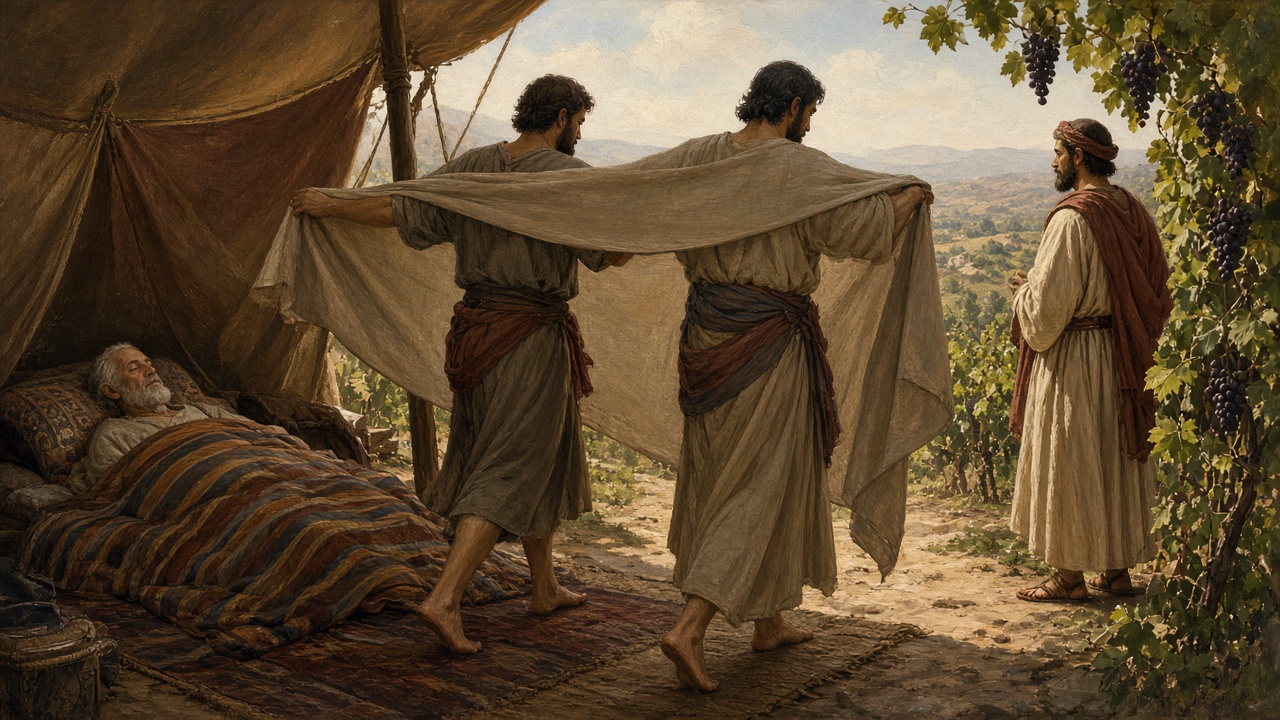
20Nuhu bi búbariimɛ, akũ à geepi líkpɛ bà. 21Kũ à sèwɛ̃ mì à kã̀, akũ a wutɛna pótompo a kpɛ́n. 22Kũ Kanaa de Hamu a de pótompo è, à bò à gɛ̀ɛ à ò Sɛmunɛ kũ Yafɛtio. 23Akũ Sɛmu kũ Yafɛtio uta zↄ̃kↄ̃ↄ sɛ̀ ò dì ń gã̀aa ń pla ò táa ò kũ kpɛo. Ń arɛ dↄna gu pãndea de òsun ń de pótompo ero yãi, ò gɛ̀ɛ ò kù ń de pótompola. 24Kũ wɛ̃ wère Nuhua à vù, à mà lákũ a nɛ́ kpɛde kɛ̀arɛ nà, 25akũ à pì:
Kanaa nigↄ̃ láari pↄ́ ũmɛ,
àkũ mɛ́ anigↄ̃ a gbɛ̃nↄ zↄ̀ kpɛde ũ.
26Akũ à pì:
Arubarikademɛ Dikiri, Sɛmu Luda ũ,
Kanaa nigↄ̃ de Sɛmu zↄ̀ ũ.
27Luda karana kɛ Yafɛtinɛ,
a burinↄ ń baka le Sɛmu burinↄ arubarikaa gũn,
Kanaa nigↄ̃ de Yafɛti zↄ̀ ũ.
28Í dana anduniala gbɛra Nuhu kɛ̀ wɛ̃̀ wàa do kpɛ́ basuppla akuri. 29À kɛ̀ wɛ̃̀ wàa siikↄ̃ kpɛ́ basuppla akuri, akũ à gà.
Did you know?
Noah's Covenant and the Words about His Sons
- God makes a covenant with Noah, with his descendants, and with every living creature that came out of the ark, promising never again to destroy all life by a flood. The sign is a rainbow set in the clouds, for all generations. One chronology dates this covenant to 2346 BC.Sources: the Bible text itself · God makes a covenant with Noah
- Genesis 9 says the whole earth was populated from Shem, Ham, and Japheth. Shem is explained as 'a name' or 'renown,' probably the eldest and the ancestor of the Israelites, though Japheth is also described as perhaps first by birth. Japheth means 'wide spreading,' a play on the Hebrew 'God shall enlarge Japheth,' and is linked to many tribes in the east of Europe and the north of Asia; Ham, meaning 'warm' or 'hot,' and hence the south, is called Noah's youngest son.Sources: the Bible text itself · Shem · Japheth · Ham
- Noah, a man of the soil, plants a vineyard, drinks the wine, and lies uncovered in his tent. Shem and Japheth cover him while walking backward, faces turned away, an act a dictionary calls filial piety and the occasion of the prophecy that Japheth's descendants would spread. The curse is spoken against Canaan, Ham's fourth son, because of what his father had done; one chronology dates the episode to 2345 BC.Sources: the Bible text itself · Japheth · Canaan · Noah gets drunk and Canaan is cursed
Notes written with AI assistance from open sources (Theographic Bible Metadata, CC BY-SA 4.0; Easton’s Bible Dictionary, public domain) and reviewed before publishing.
Credits and license for this translation
Luda yã takada kũ Bisã yão
Portions of the Holy Bible in the Busa language of Nigeria
copyright © 2005 SIM International
Language: Bisã (Busa)
Translation by: SIM
This translation text is made available to you under the
terms of the Creative Commons License: Attribution-Noncommercial-No Derivative Works.
( http://creativecommons.org/licenses/by-nc-nd/3.0/ )
In addition, you have permission to port the text to different file formats, as long as you
do not change any of the text or punctuation of the Bible.
You may share, copy, distribute, transmit, and extract portions
or quotations from this work, provided that you include the above copyright
information:
You must give Attribution to the work.
You do not sell this work for a profit.
You do not make any derivative works that change any of the actual words or punctuation of the Scriptures.
Permissions beyond the scope of this license may be
available if you contact
us with your request.
This translation is made available to you under the terms of the
Creative Commons Attribution-Noncommercial-No Derivatives license 4.0.
You may share and redistribute this Bible translation or extracts from it in any format, provided that:
You include the above copyright and source information.
You do not sell this work for a profit.
You do not change any of the words or punctuation of the Scriptures.
Pictures included with Scriptures and other documents on this site are licensed just for use with those Scriptures and documents.
For other uses, please contact the respective copyright owners.
2014-10-10
Source: http://ebible.org/bqp/ · eBible.org